




Cowboy Bebop (Netflix)
This might sound like a cliché, but I had a feeling that “Cowboy Bebop Netflix” (let’s christen the 2021 Netflix version this way) wouldn’t be a faithful adaptation of the original legendary 1998 anime series of the same name. Maybe because I was influenced by the film (trilogy/pentalogy) adaptation of the equally legendary anime series “Rurouni Kenshin,” where it was decided to adapt the story (i.e., the plot) a bit for some (presumably) higher goal. And in the end, these films turned out more than good (probably “Rurouni Kenshin” is the most successful anime-to-live-action film transition project).
Attempting to faithfully transfer (not to say copy) an anime title to a live-action film/series platform carries enormous risk, especially when we’re talking about titles considered classics, and “Cowboy Bebop” definitely falls into that category. If you don’t succeed in faithfully transferring the emotions the original evoked, rest assured that the ruthless anime audience will impale your adaptation on a stake. And “Cowboy Bebop” knew how to evoke very complex emotions (especially in older generations), because it dealt with some serious themes I wrote about in my review of this anime.
And because of that, I think Netflix decided to gamble by adapting quite a lot for the needs of the live-action series, as well as heading in a slightly different direction… well, at least I hope that’s what they were thinking…
And so the series arrived on Netflix… quickly reached “TOP 3/5/10” viewership in countries around the world… and quite divided audiences and film critics, with more inclination toward negative reviews.
However, is the situation with “Cowboy Bebop Netflix” really that bad? Will we reach a situation where we’ll eventually understand the (true) value of this adaptation?
Although (I hope) you know the general plot of the anime series, here we’ll briefly recap the Netflix version of the plot (for those who perhaps haven’t watched the anime), and then we’ll dive into the details.
“Cowboy Bebop Netflix” takes place in the year of our Lord 2171 and follows a group of bounty hunters (as in the original review, I’m too lazy to type out the full term, and the term “mercenaries” doesn’t fit now either) on the spaceship “Bebop,” who are trying to earn some money so they can eat something other than crackers from “Gardoš.” The original ship crew consists of lanky Spike Spiegel, a former mercenary of a dangerous criminal organization known as “Syndicate” which considers him dead, and Jet Black, a bearded dark-skinned mountain of a man who was once a member of ISSP (space police), whose honor was tarnished and cost him five years of his life due to a close friend’s betrayal in the police force.
This unusual duo is joined by Faye Valentine, a somewhat goofy bounty hunter with amnesia, as well as Ein, a cute (and smelly) Welsh Corgi with intelligence surpassing that of an average dog.
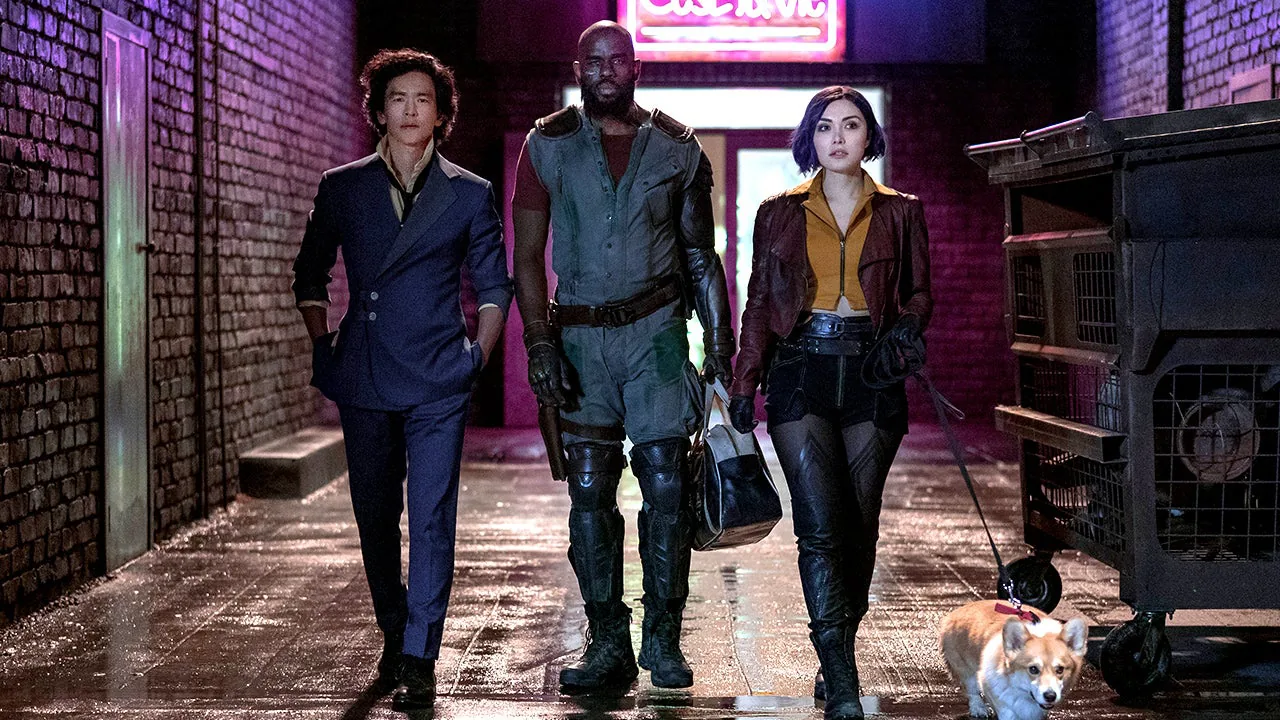
And so this unusual foursome constantly takes on “cases” (bounties), with the goal of catching criminals (at least) alive and getting some money.
Since I assume by now you’ve already read (I hope mine too) the anime review, let’s dive deeper into things that deviate from the original and which (most likely) disappointed the audience.
Ugh, I don’t even know where to start… maybe I should immediately draw parallels with the original, and then my impressions of “Cowboy Bebop Netflix”? Let’s try it that way…
Let’s start with the main heroes…
Spike Spiegel – in my anime review I described him like this (let’s go briefly with key traits):
“… a man many will easily relate to… … … a man of few words, who shows even fewer emotions (or shows them indirectly, most often through arguments and provocation and even a hostile attitude toward people he really cares about)… … … as an older man, he has a calm and cool-headed attitude, in dangerous situations his (former) impulsive nature and that passion for fighting and (deadly) conflicts occasionally surfaces. His unpredictable behavior and falling into dangerous situations often seem to subtly show that he doesn’t really see much value in his life, and that perhaps subconsciously he’s even searching for death… i.e., some kind of ‘resolution’… … … how can you not wonder how much depth and pain there is in this character…”
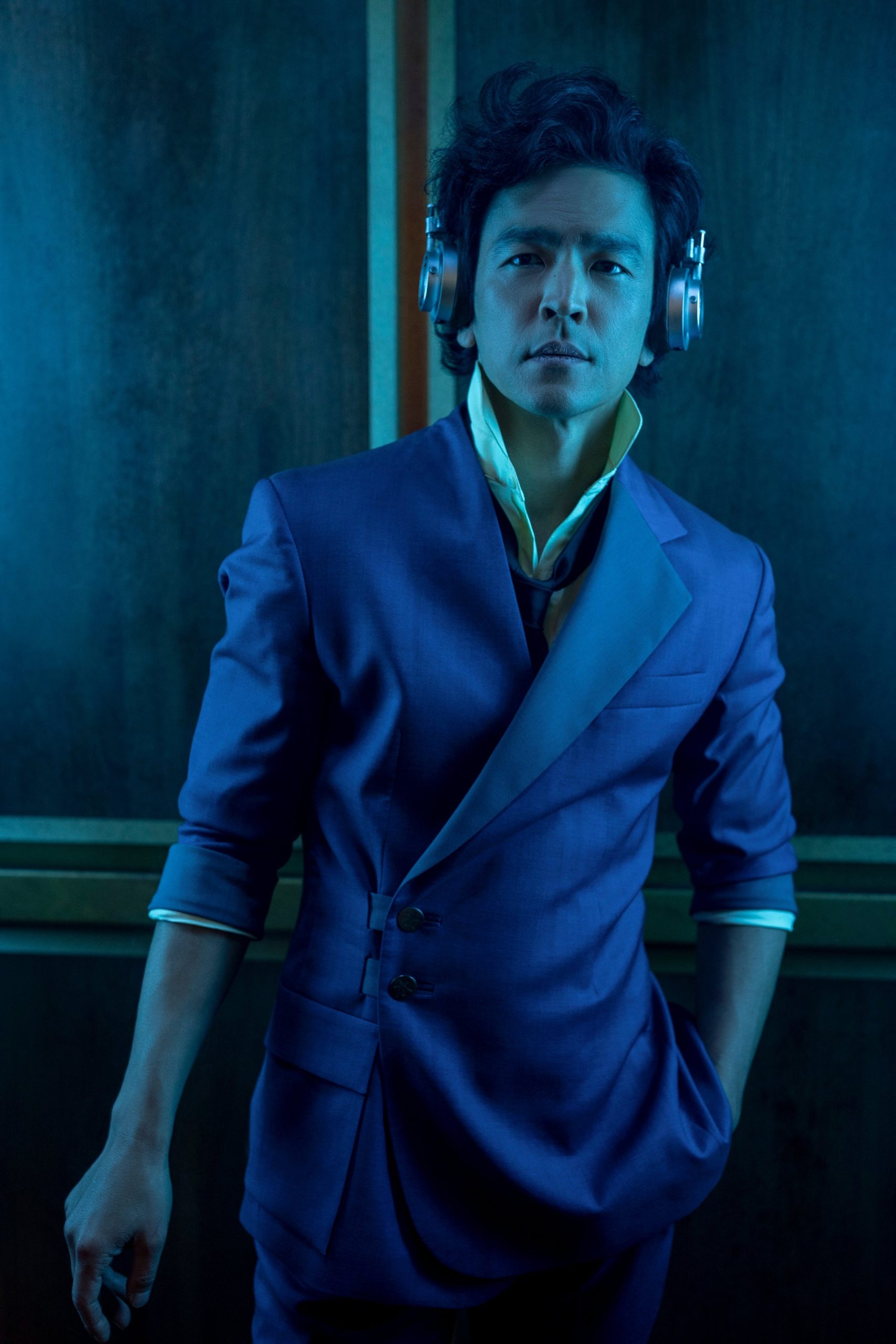
Netflix’s Spike, although he retained some traits of his anime counterpart, is still different. He’s much more talkative, comedic, goofier, wittier (better to say, more sarcastic)… but also somehow more vulnerable, more sentimental (especially when he remembers Julia) and often tends to be too careless and headstrong, but unlike his original, he also shows more that he cares about his friends. Yes, he doesn’t have that cool, dark, fearless lone wolf side of personality like animated Spike… but “Cowboy Bebop 2021” doesn’t explore such deep, complex, and dark themes as the original did (existentialism, loneliness, frustrations, mental health, etc.), but focused (especially in Spike’s case) on trying to forget an old love (Julia) and brotherhood, and to live in the present moment.
When all this is taken into account, I really couldn’t find fault with John Cho (who’s no stranger to drama, action, or comedy) for this version of Spike. The man is definitely the star of the series and carried it quite well on his shoulders.
Jet Black – my anime perception of this former policeman: “… also a man of few words, but the complete opposite of Spike in behavior. This 36-year-old grump is dignified, measured, authoritative (which no one on the ship respects), honorable and sometimes too much of a police character. He has an artificial/cybernetic arm… … … He has in himself (or at least believes he has) some kind of renaissance zen artist vibe: he prunes bonsai trees, cooks, reads, listens to jazz/blues music… … … He should be some kind of ‘archetype’ dad to everyone on the ship, though he’s relatively young and everyone sees him as an older brother… whom no one listens to…”
Jet in “Cowboy Bebop 2021” has slight similarities with his anime counterpart. What’s interesting is that he seems (and looks and is) much younger, he’s quite more impulsive, though he still tries to be the voice of reason (though here you don’t feel at all the failed “dad” authority from the original), he’s troubled by being barely present in his little daughter Kimi’s life, and moreover his ex-wife now lives with a detective he can’t stand (and they’ve really made him so you’ll get annoyed the moment you see him ^^). To be fair, sometimes he tends to resemble a ruffian more than a former policeman, though he’s still retained some kind of “code.” This version of Jet was relatively okay for me, and considering how he’s conceived here, I couldn’t really have many complaints about Mustafa Shakir’s acting (he had a great supporting role as a villain in the “Luke Cage” series).
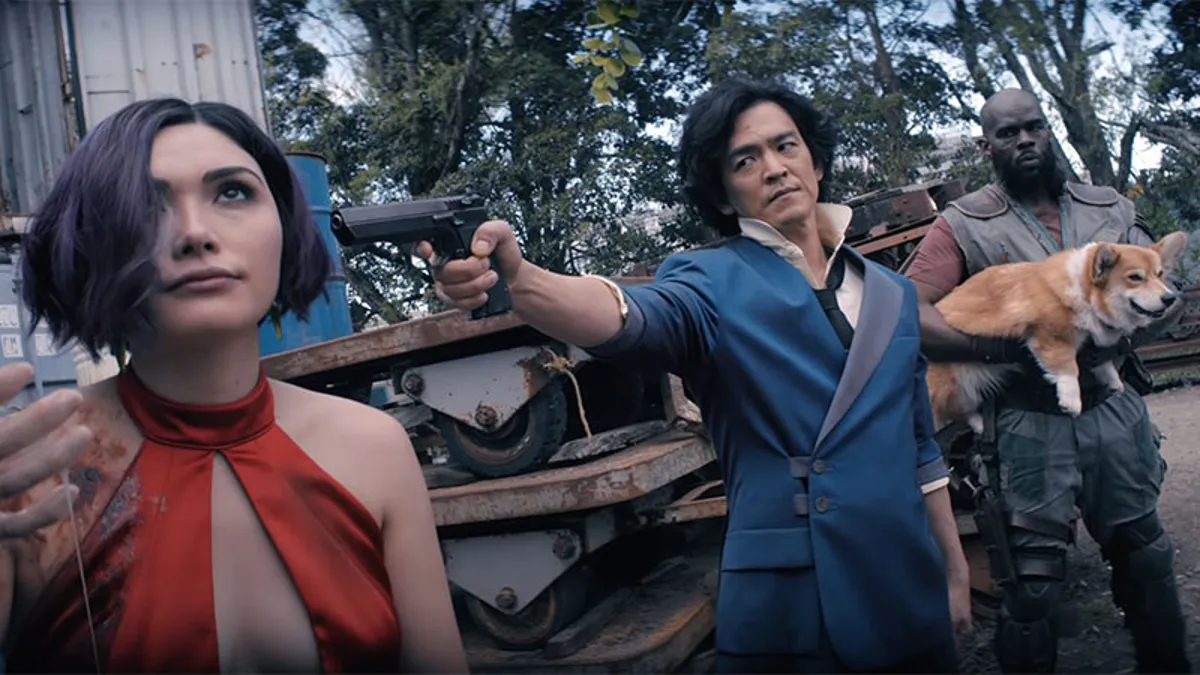
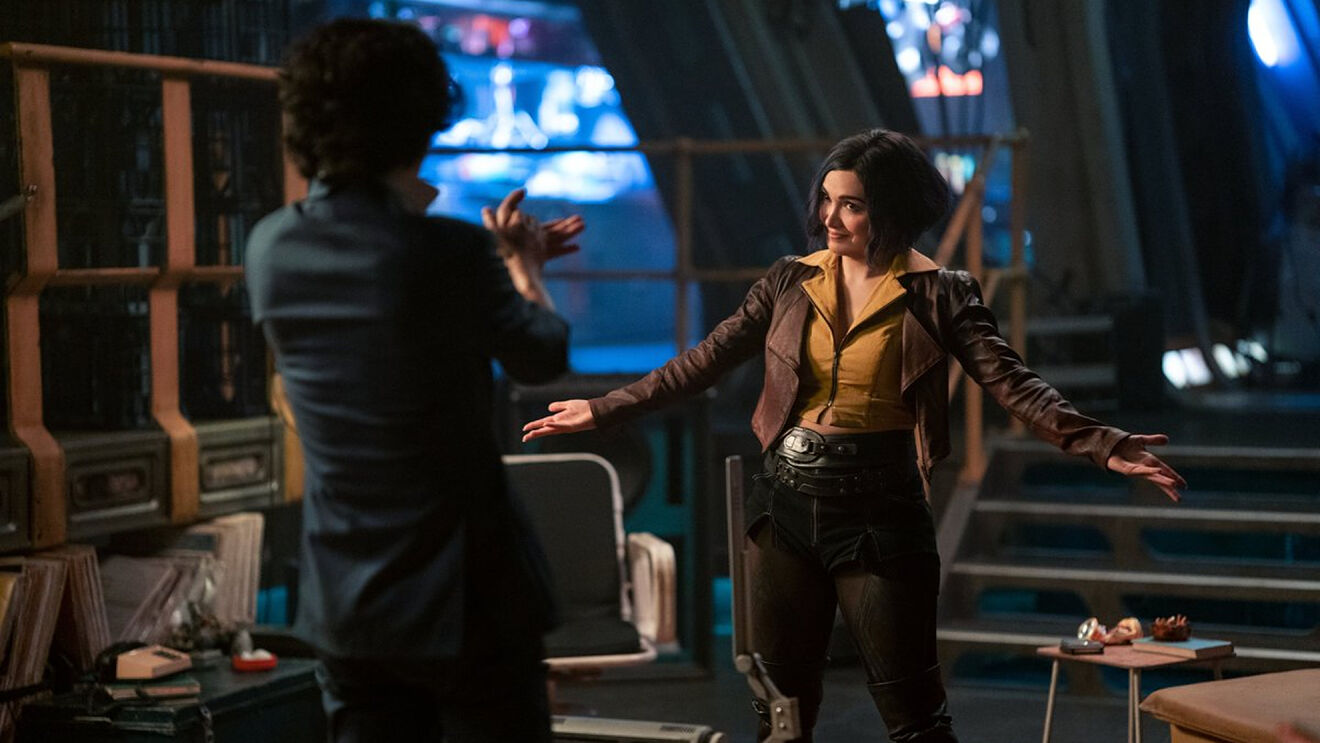
Faye Valentine – anime Faye is “a hot 23-year-old (or is she?) woman of attractive appearance who feels quite comfortable in clothes that reveal more than they cover. Although she behaves quite (freely) in accordance with her con-artist nature. She doesn’t have many bad habits… except she drinks… smokes… gambles… becomes occasionally unnecessarily aggressive… looks to trick and scam for money… however, although she appears attractive, strong, independent, and armed to the teeth with sarcasm on the outside, she hides inside a vulnerable girl who needs support and love, but is quite distrustful in showing emotions toward people”
Ugh, here Netflix went in a quite unexpected direction. Everyone hoped for a dangerous and sexy con-artist/gambler/seductress who presents herself as an alluring femme fatale… and we got one quite irritating, comedic, goofy, and naive bounty hunter, who tries to escape the clutches of amnesia and learn her past and who quickly gets under the skin of the leading duo (unexpectedly much faster and easier than in the anime), doesn’t even try so much to con them for money. To be honest, I don’t know why they decided on this move. The situation is even funnier and stranger that actress Daniella Pineda still gets under your skin and you can hardly find fault with her either (the actress is actually very beautiful and could have passed as her anime version if the series creators had wanted that).
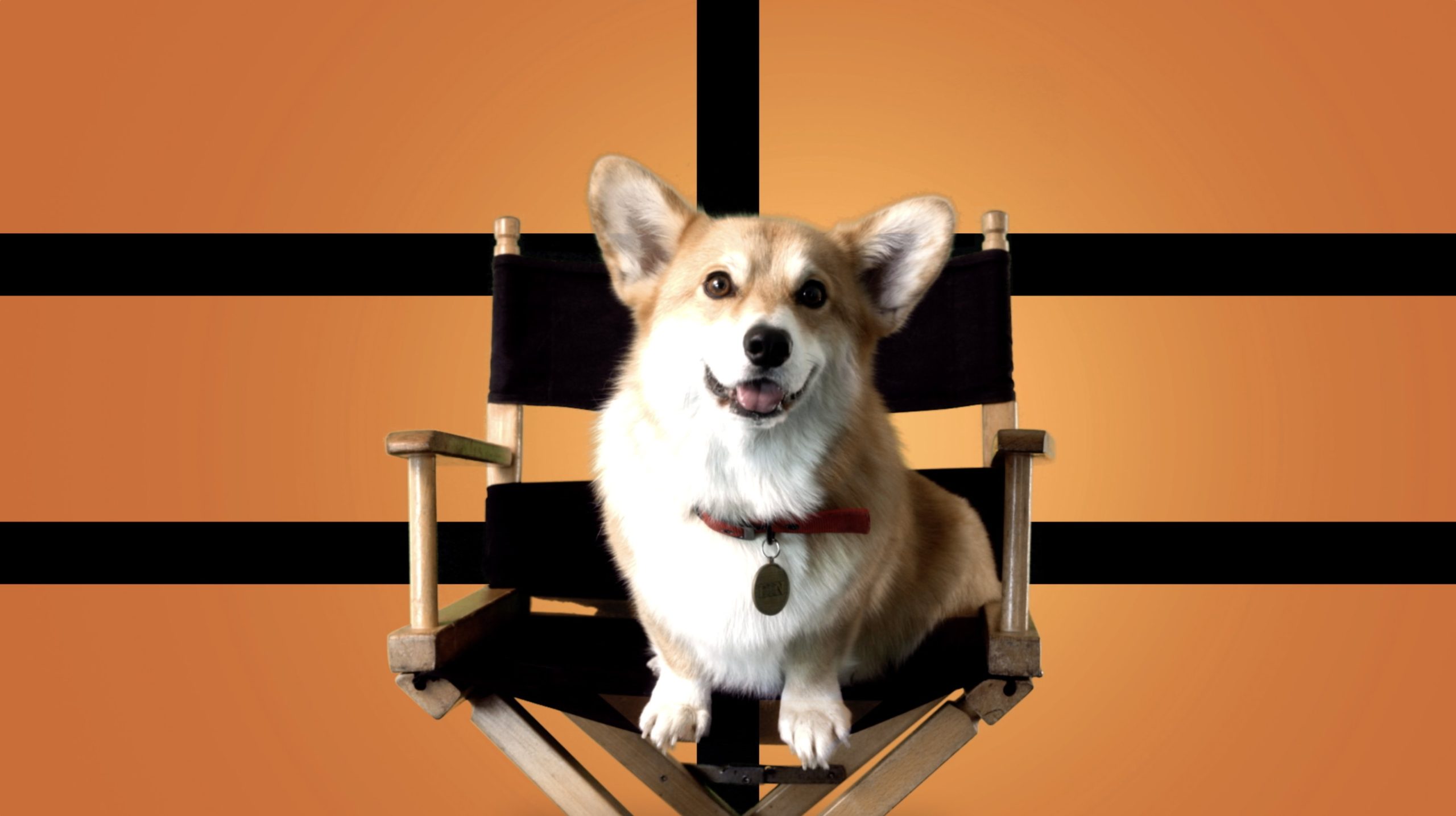
Ein – “A Welsh Corgi, to be precise. And a cute one. We’ve already mentioned that this is a mutt with a high IQ, so he can perform various actions that an average dog definitely couldn’t (you’ll see, they made him charming).”
Ein in this series is also a cute little mutt and will immediately charm you, so you’ll simply regret he didn’t have more screen time. Though the series explained his origin somewhat unclearly (on one hand, some testing was done on him, but you’re not sure if it affected his intelligence or made him into a walking projector… I know what I wrote sounds crazy, but it’ll be clear when you watch the series).
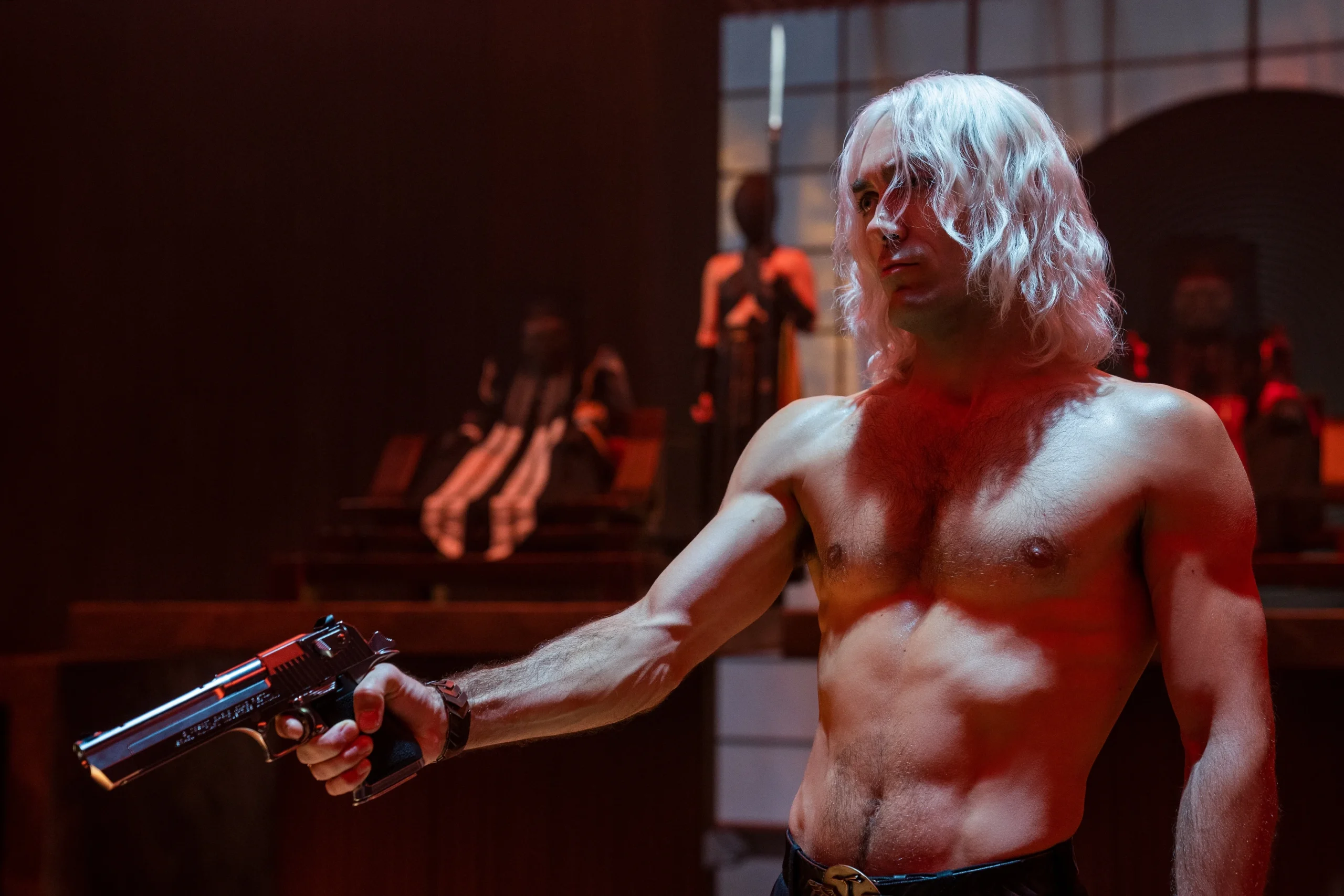
The biggest (pleasant/unpleasant?) surprise of “Cowboy Bebop 2021” are Julia and Vicious.
Vicious, the evil (cool) cold-blooded Spike’s sword brother quick with his blade, is presented here as… ugh, a frustrated wimp, with arrogance and an inferiority complex because of his father (one of the Syndicate leaders), who sees his son, who should someday succeed him, as a big failure. He’s quite a psychopath, who simply goes nuts when he learns Spike is alive and turns into some kind of crazy hybrid of Zedd/Rita from those first “Mighty Morphin Power Rangers,” who in every episode makes schemes against everyone alive (if you didn’t understand this reference, it doesn’t matter, we’ll pretend it didn’t happen, and I’m not that old, let me clarify right away XD). He’s constantly making plots (with the help of one person) and is like “whine, whine, you’ll see…” To be honest, it wasn’t really clear to me why they decided on this version of Vicious. I mean, it’s not that Alex Hassell did a bad job (moreover, I think he did a great job with what they gave him to work with), but we got some kind of wimpy/Calimero version of a villain who resembles an AliExpress version of Geralt.
Julia… is also an unusual surprise with large screen time. She’s married to Vicious and has accepted life with him because she’s convinced Spike is dead. She has to balance between the Syndicate and her mentally unstable husband whom she (must) support. However, everything changes fundamentally when she learns Spike is alive. Though it changes so much that viewers will probably be surprised, because she’ll start showing a quite devious and manipulative side of her personality and will work against both the Syndicate and Vicious in every way, in order to get back in contact with Spike. However, things around her will later get complicated beyond recognition (and will make quite a turn compared to the original series). Again, for this type of character profile, Elena Satine turned out to be a perfect hit (when you see her acting and look, everything will be clear), but again it wasn’t quite clear to me what the series creators wanted to do with this version of Julia, because she very little resembles the one from the series. To be honest, if they had decided from the beginning that Julia would be evil and vengeful toward Spike and that, united with Vicious, she makes his life miserable, I wouldn’t have said a word and it would have been an interesting turn, but like this… I don’t know, lukewarm water.
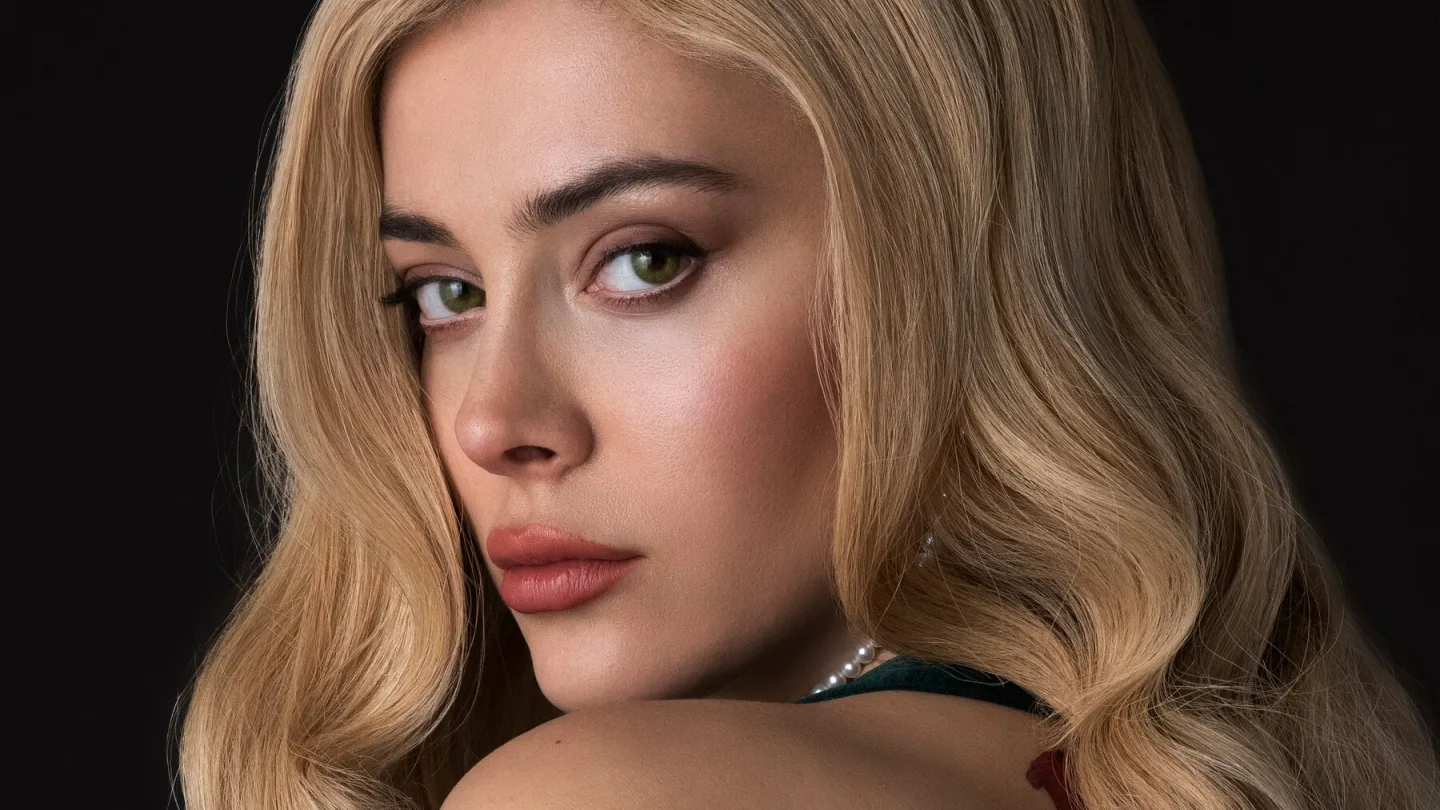
As I said, the episode plots present some of the (known) cases from the original series, often reworked for the needs of “Cowboy Bebop 2021.” In itself, it’s not such a bad approach (because they were surely looking at the long term for potential future seasons), though fans of the original series will certainly raise an eyebrow in many episodes.
A good part of the audience had objections to the visual style of the series, starting from the literal copying and bringing to life of the intro from the original series to the very appearance of cities, space, and characters. To tell you honestly, I didn’t experience the series as visually bad at all. Moreover, I think, considering how the whole series is conceived, that the visual approach to the series was excellent. That unusual hybrid of retro approach, “cheapness,” cheesy and goofy and what not, as well as playing with camera angles, gave a dose of some kind of charm to the series itself. Of course, it’s far from perfect, but it seems to me that they tried to transfer that animated vibe as much as possible. As they say, “almost, but not quite.” By the way, I really liked bringing the intro to life as a detail.
The action scenes were really great for me, and I enjoyed them, as well as the dose of comedy inserted into them. Spike Spiegel, as in the original series, is a master of martial arts and, expectedly, that detail was transferred here as well.
No one can really object to the music. Music from the anime + new compositions by eccentric Yoko Kanno. Excellent, not much to talk about. Period.
Now, why did this series prove to be a failure?
Because, in my opinion, it wasn’t given time and opportunity. Fans of the original series (and many critics) mercilessly cut down the series and criticized it for not blindly following the original series. And I think this series should have shined only in the second season.
The original series had its unique flair. I already mentioned it dealt with quite deep (and quite difficult) themes. “Cowboy Bebop Netflix” took only a small part of that, but I think that was perhaps the right move, because then the series would have become too gray and depressive, and the question is how much it would have “landed” with people unfamiliar with the original material if done as the original. The original “Cowboy Bebop” successfully combined tragicomedy and psychology, the question is whether a live-action adaptation could carry that. Then Christian Bale, Denzel Washington, Natalie Portman, Robert De Niro, Al Pacino and company would have to act…
Then, the plot and characters were seriously modified. But when I watched the last episode of the first season, how it ended and how it suddenly became gray and dark like the original series, I just thought how the series creators are now given great freedom to make the second season based on collected fan impressions. They can go in a completely different direction and make up everything that comes to mind for future seasons… or they can simply just switch to the vibe of the original (anime) series. I’m seriously telling you, especially you fans of the original series, think about this and watch the last episode and the tragedies that happened there. Spike could now, without any problems, be like his animated version, careless and distant. Jet could become taciturn and more stuck in the past. Faye could easily “mature” and become more cunning and sly and make more “schemes.”
There were comments that there was no chemistry among the actors, and yet, it seems to me they turned out to be quite a well-coordinated team.
Of course, there were also comments about the absence of the fifth crew member “Radical Ed,” though it was clearly stated that they were planned for the second season (they didn’t appear immediately in the original series either).
All in all, fans (maybe better to say, fanatics) and critics pretty much butchered “Cowboy Bebop Netflix” and led to it getting cancel status, i.e., that there’s no second season and that the series gets shut down, because it didn’t meet expectations (and therefore didn’t earn enough woolongs to justify further investment). Unfortunately, the hashtag #savecowboybebop won’t have a global effect like #savelucifer had… for the simple reason that it was precisely Netflix that saved the phenomenal series “Lucifer” and raised it to such a level with the remaining seasons that it’s now truly one of the top series ever… and now that same Netflix had to lower the curtain on its child, “Cowboy Bebop Netflix.”

I think quite a lot of time will pass before it’s truly understood how much potential the series missed because it was cancelled. Already there’s a larger fan base hoping the series will “resurrect,” and many series fans have said the series, in principle, turned out more than okay, and that they could watch it for a few more seasons. But as things look now, tough luck.
I’m not saying “Cowboy Bebop 2021” will reach cult status in the “cancelled series” category like “Firefly” or “Constantine” or some other title, but I think it will always orbit in the niche of series about which you’d say “shame, this could have lasted.”
And finally, the series creators themselves stated how much they’re great admirers of the original, and that they put hundreds of easter eggs into the series related to the original series, as well as numerous references to many cult science fiction series and various thrillers/dramas. And some of them are really nice/cool details. I think that also says a lot about the creators’ desire for this series to succeed.
But such is life. We’ll always have the original series and (for now) one season of “CBN.”
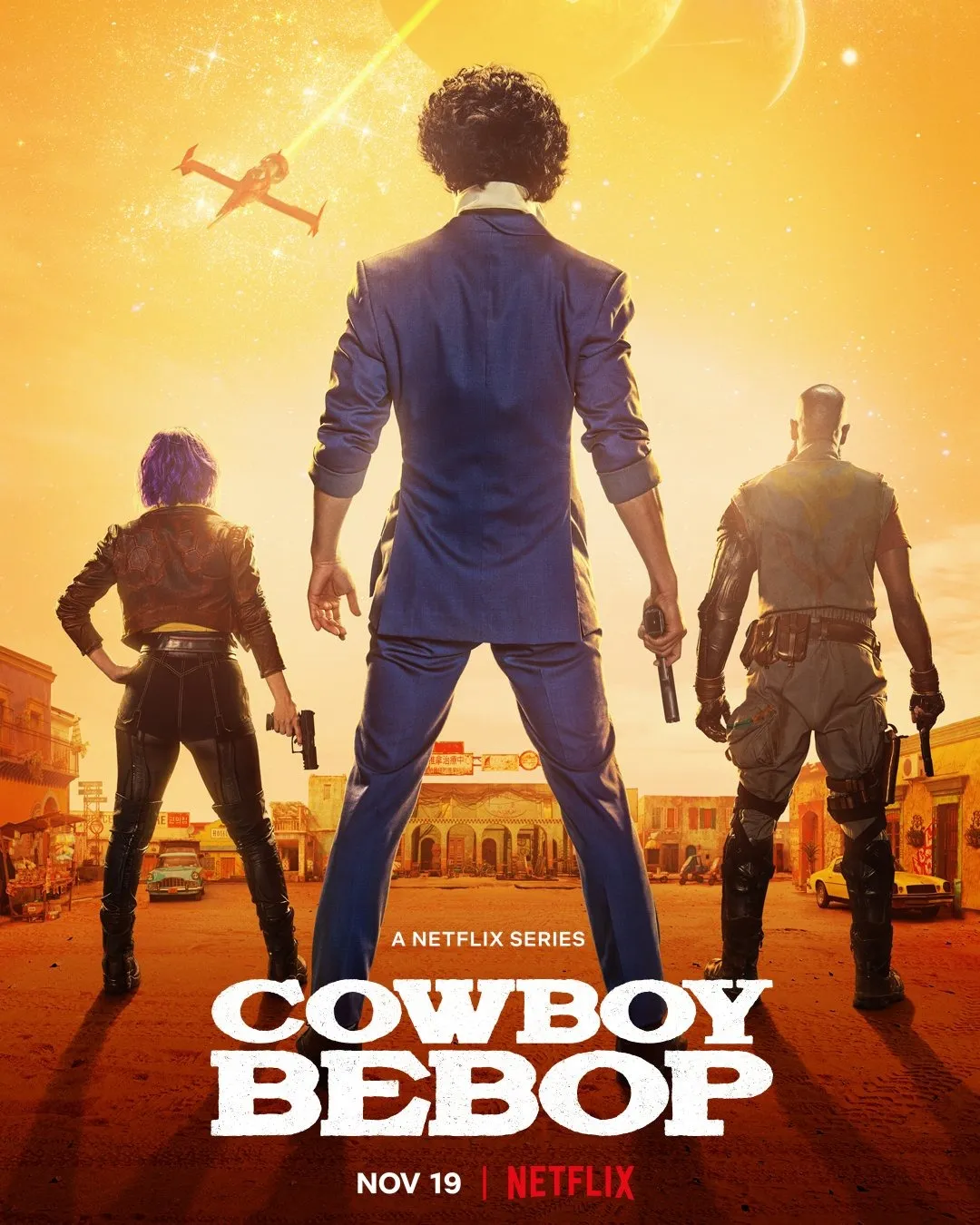
And so, dear reader, shall we end this review with the cult “See you space cowboy”? 🙂
Trailer
Teaser “Lost session”
Imdb | Rotten Tomatoes | Metacritic
Release Date: 2021
Format: Series
Number of Seasons: 1 (10 episodes)
Average Episode Duration: 55-60 minutes