



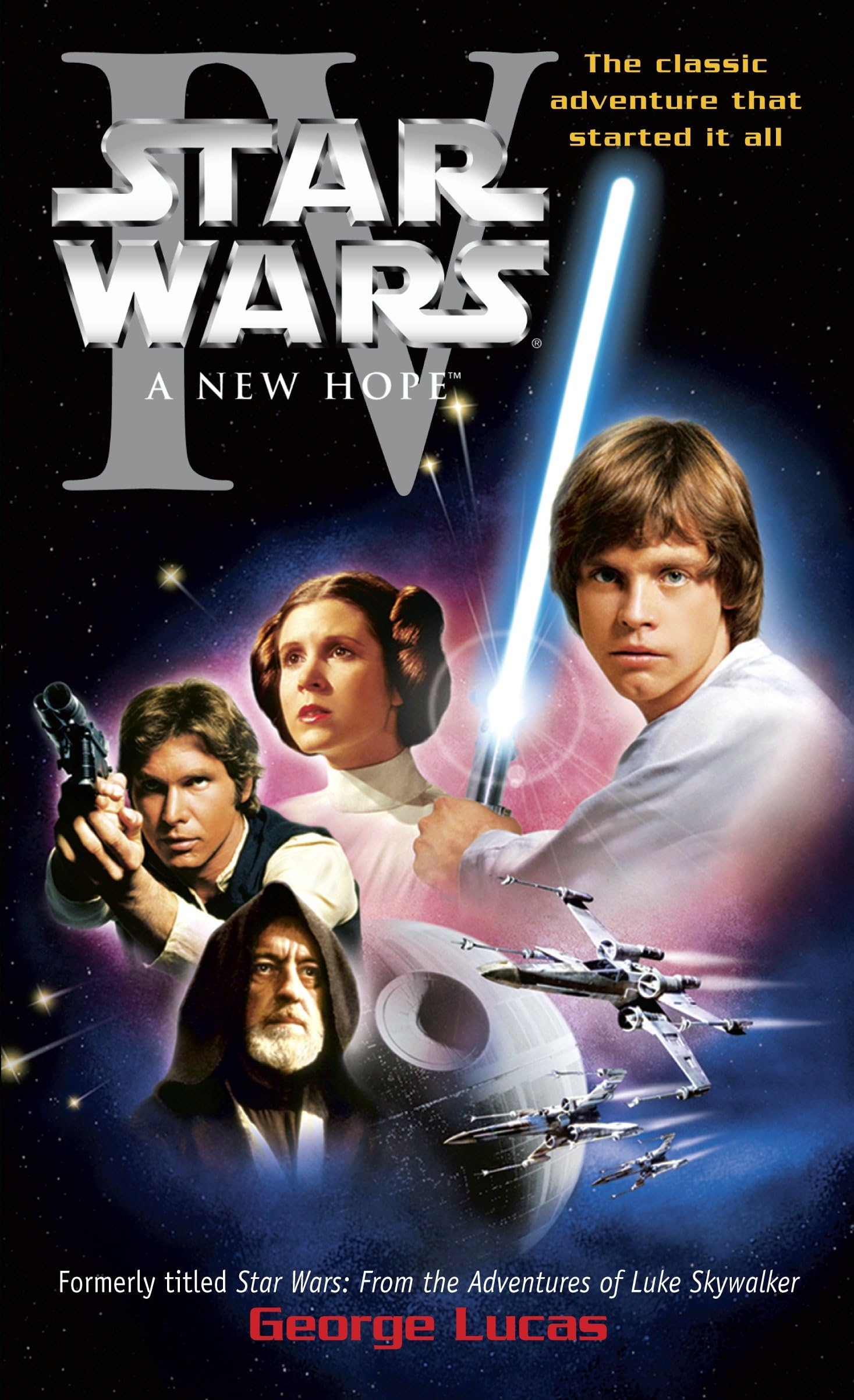
Star Wars: Episode IV – A New Hope
- Star Wars: Episode IV – A New Hope is a film that, despite enormous production problems, a modest budget, and widespread pessimism among the crew, emerged as one of the greatest miracles in cinema history.
- With a young, inexperienced cast and a great deal of improvisation, Lucas managed to craft a classic hero’s journey that is sincere, straightforward, and entirely without cynicism – and that is precisely why it still works today.
- The film didn’t just change the way we look at science fiction; it redefined the entire film industry, introducing the concepts of the blockbuster, merchandising, and fan culture as we know them today.
“Use the Force, Luke. Let go.” – Ben Obi-Wan Kenobi
Eeee, we’ve finally made it to Star Wars: Episode IV – A New Hope – the real Star Wars film.
It came out in 1977… nearly 50 years ago!
Writing about the significance of this film for the film industry (and the entertainment industry in general), as well as the various circumstances that surrounded it, would take several articles — but here I’ll just sketch a brief intro, and save the most interesting tidbits for the end.
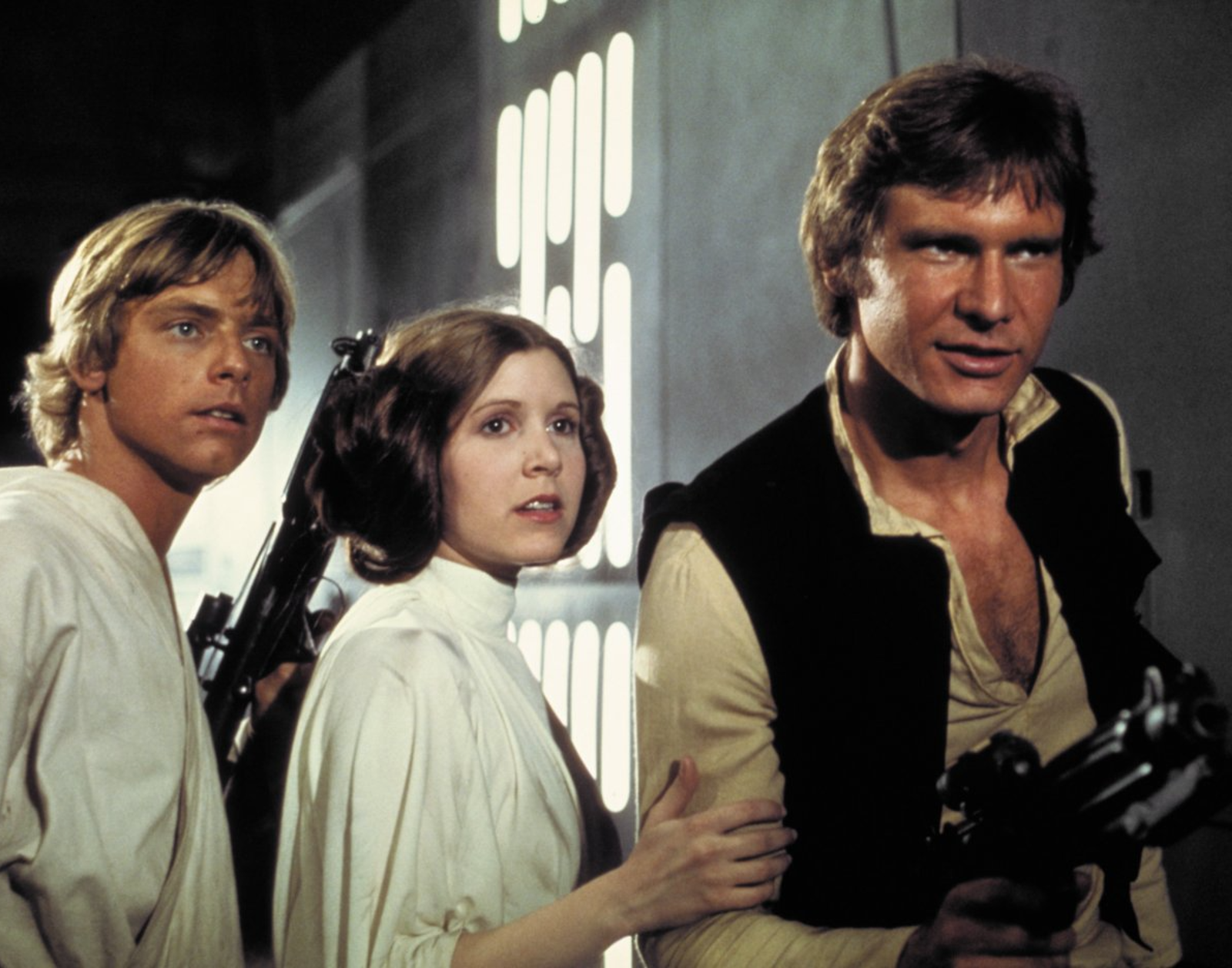
George Lucas had only directed two projects before this classic (THX 1138 and American Graffiti). He rewrote the screenplay multiple times – early versions featured a character named Anakin Starkiller (I think it’s pretty clear who that eventually became), many elements from the original script were later used in the prequel trilogy (Episodes I–III), the story was originally much more fairytale-like and less epic-action-driven, and was later “broken apart” into multiple films. It was also originally conceived that any prequel, if ever made, would center on Obi-Wan.
The film also faced considerable financial difficulties – it went three million dollars over budget due to various delays, bringing the final budget to 11 million dollars (keep in mind we’re talking about the seventies, and this was supposed to be a space epic – James Bond films had a similar budget at the time). And not even the cast or crew expected this “space project” to succeed. Lucas wanted young, unknown actors for the lead roles (Harrison Ford wasn’t even considered at first because he’d already worked with Lucas on a previous film), with more recognizable names in supporting roles (like Alec Guinness). Lucas himself was also notoriously difficult to work with due to his withdrawn nature – he gave actors very little direction on how to perform in scenes. On top of all that, they had problems with bad weather, and the props and sets kept breaking down, especially anything involving the robots.
So it’s nothing short of a miracle how Star Wars: Episode IV – A New Hope turned out in the end.
And how does it all begin?
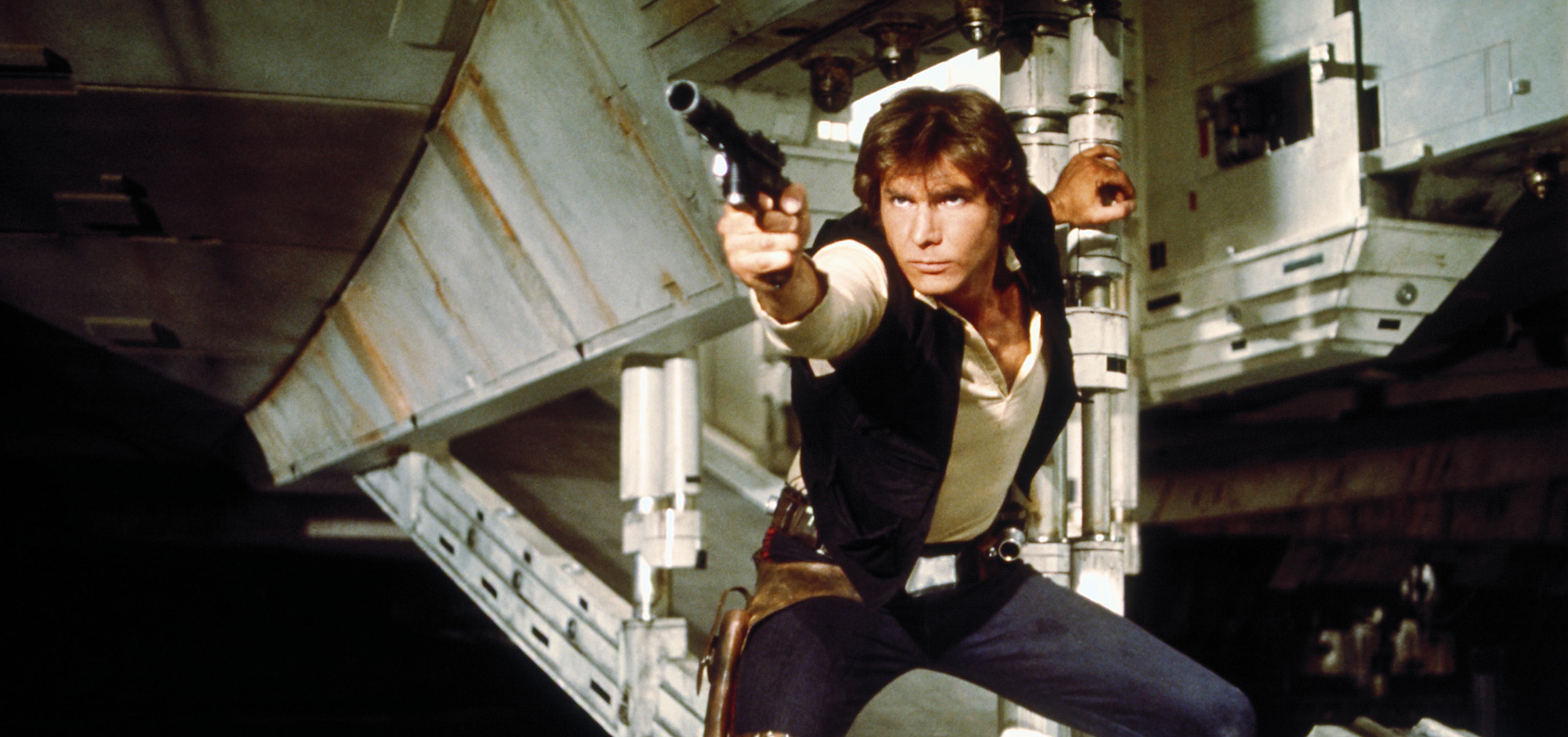
A war rages across the systems between the Galactic Empire (which grew out of the once-democratic Galactic Republic from the prequel trilogy) and a small but brave group of rebels (the Rebel Alliance). Princess Leia Organa, a secret leader of the Rebellion, manages to obtain the schematics for the Empire’s massive space station, the Death Star – a weapon capable of destroying entire planets without breaking a sweat. The Empire’s forces are commanded by Darth Vader, who succeeds in capturing the Princess, but not before she passes the Death Star plans to two droids (C-3PO and R2-D2) to try to deliver them to the Rebellion somehow. The droids manage to escape, but their pod crashes on the desert planet Tatooine, and through a series of coincidences, they end up in the possession of an old farming couple and their nephew, Luke Skywalker. While tending to the droids, Luke accidentally activates an audio-visual recording in which a certain young woman (Leia) appeals to someone called Obi-Wan Kenobi for help – and he connects the dots that she might be referring to an eccentric hermit known as Ben Kenobi.
Luke tracks down Ben with some effort, and Ben reveals details of his past (including the story of Luke’s father, though he tells it in a rather cryptic and sparse way), the Jedi Order, and the Force. Ben proposes that Luke join him on a mission to the planet Alderaan, where they are to deliver the plans to Leia’s father – and along the way, he would teach Luke about the Force and the Jedi way. Luke initially refuses, but changes his mind when he discovers that Vader’s soldiers have massacred his family.
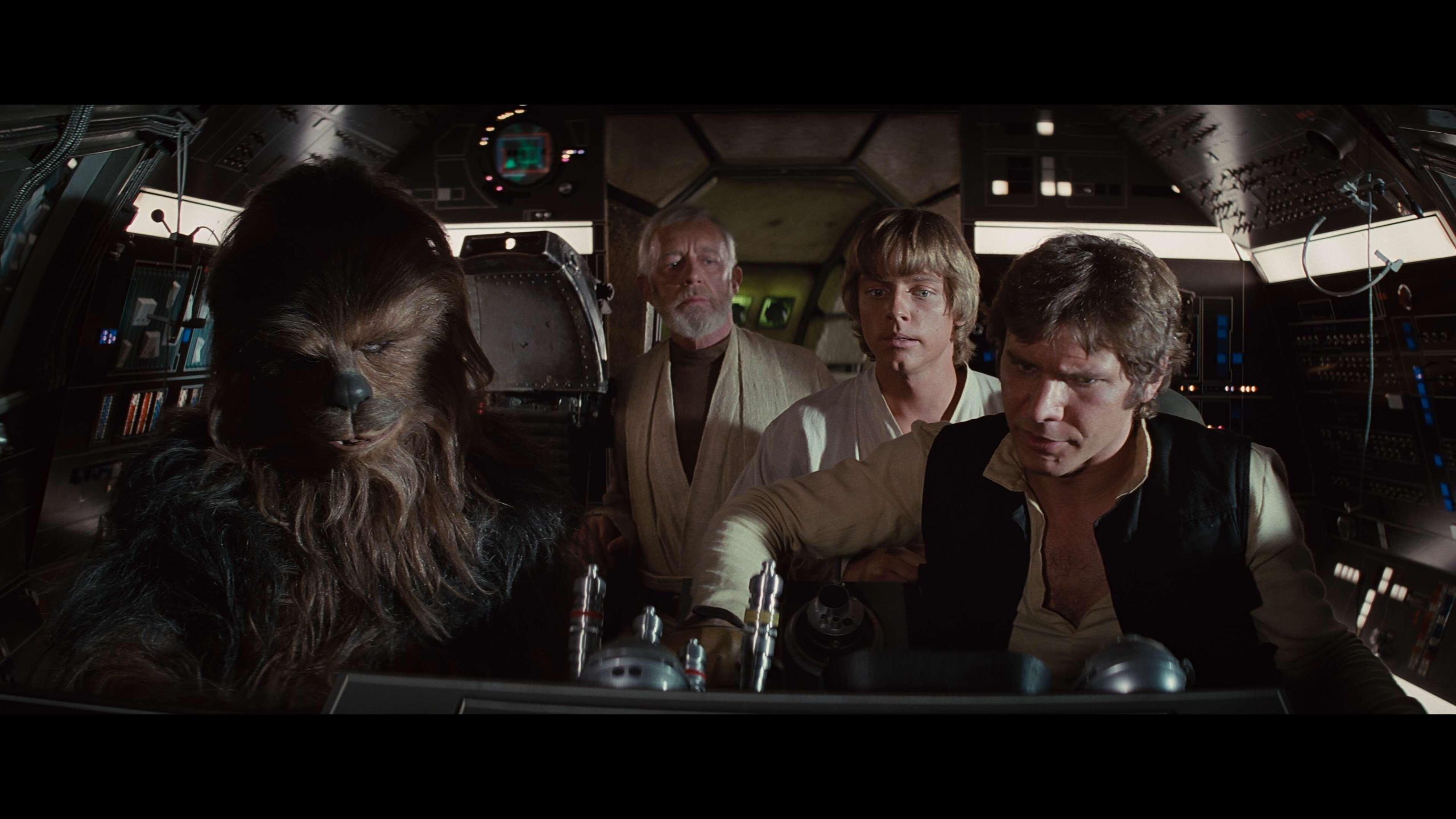
Luke and Ben (accompanied by C-3PO and R2-D2) make their way to a nearby spaceport (Mos Eisley) to secure transport to Alderaan. There they hire Han Solo (a smuggler, mercenary, and scoundrel who apparently owes money to everyone except Vader – though he is being hunted by a notorious crime lord, the infamous Jabba) and Chewbacca (a member of the Wookie species – tall, furry, and highly intelligent beings who communicate through their distinctive growling) who pilot an unusual craft called the Millennium Falcon.
However, where the planet Alderaan should be, there is now only debris – courtesy of the Death Star’s superlaser — and our unlikely crew finds themselves captured aboard that very weapon of mass destruction, where both Vader and Princess Leia happen to be.
Now – will all our heroes survive their encounter with Vader? Will Leia be rescued? And will two old acquaintances, both powerful in the Force, meet once more? You’ll find out in Star Wars: Episode IV – A New Hope.
Looking at it from a visual standpoint (and considering the budget, the technology, and the production problems), it seems almost unbelievable that this film was made in the late ’70s. The production used what was called motion control photography (used to create the illusion of object scale, later known as the Dykstraflex system), while everything else relied on models of various sizes and a whole lot of improvisation. Locations were changed (Tatooine, for example, was originally supposed to be a jungle planet, later switched to a desert environment – specifically the southern part of Tunisia on the edge of the Sahara), the weather worked against them, R2-D2 kept malfunctioning, Anthony Daniels (who played C-3PO) injured his foot because of the costume, and Mark Hamill sustained a visible facial scar in a car accident, which delayed reshoots…
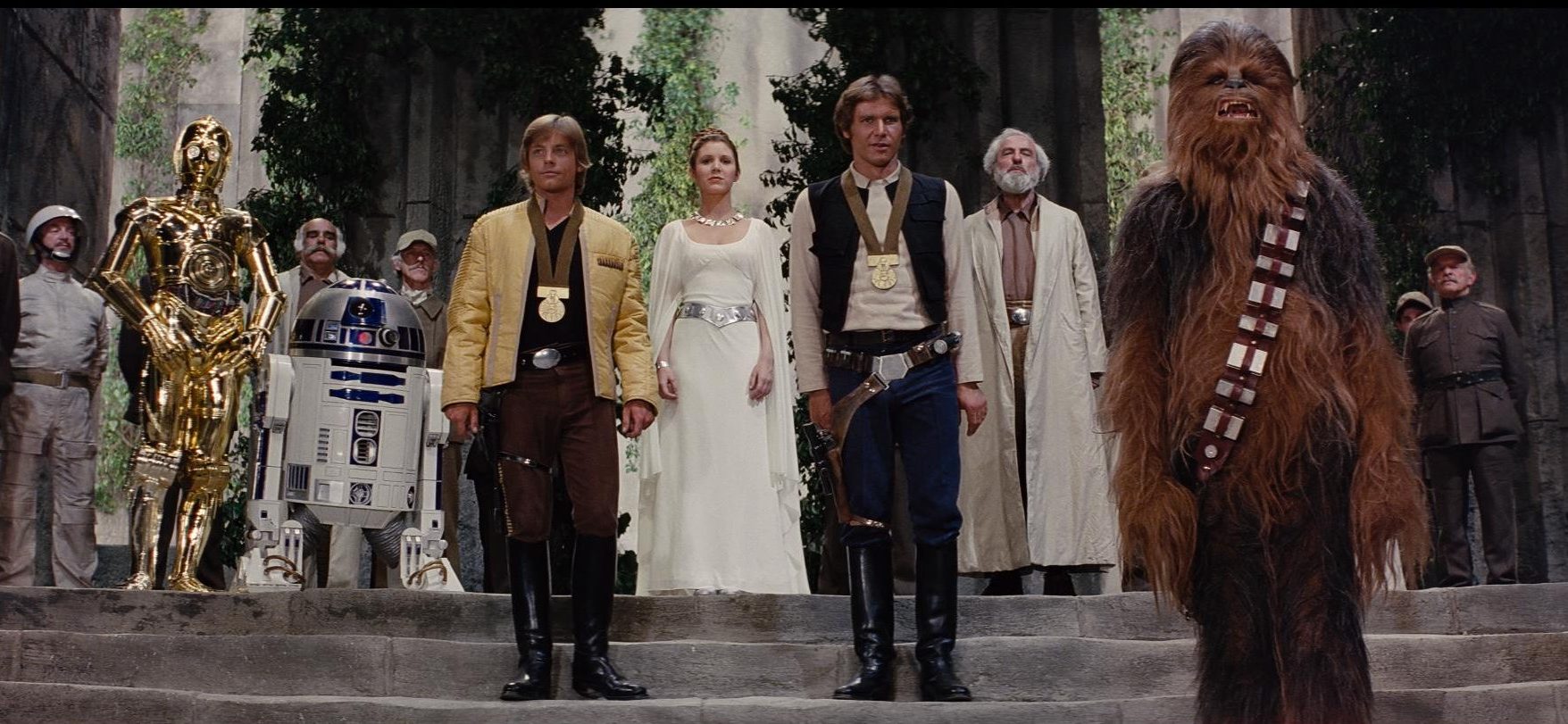
And then came post-production – a proper headache. At one point, Lucas insisted on replacing the editor, because the film looked completely different from his vision and included scenes he considered unnecessary (that version became known as the “Lost Cut” – you can find snippets of it online). Then there was the nightmare of incorporating the special effects…
John Williams was responsible for the music – and quite literally so, because Lucas had originally brought Williams on as a consultant to give his opinion on existing musical pieces he wanted to use. Williams told him it would be smarter to compose original music for the film… and we all know what legendary compositions came out of that decision.
Let’s talk about the performances.
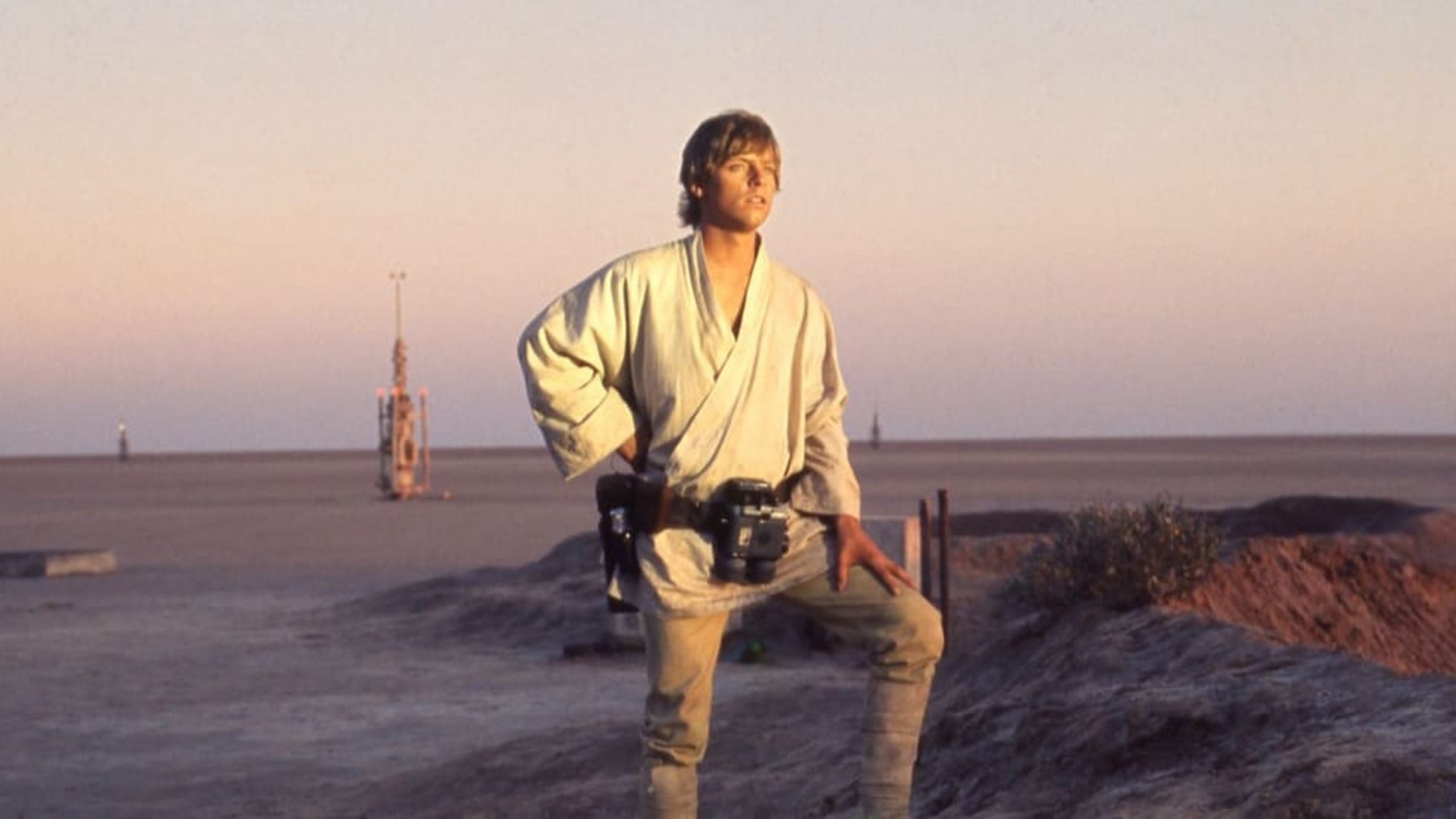
The legendary Mark Hamill as Luke Skywalker – you know, before this film he mostly had short supporting roles in TV series or the occasional movie. And then he simply won over audiences so completely that it became difficult to remain objective. At the time, you don’t get the impression he had exceptional acting talent, but somehow he comes across as genuinely spontaneous on screen (probably worth keeping in mind that he was only 24 and didn’t give off the vibe of someone with star ambitions – more like a geek thrilled to be acting in this kind of film). Still, he gave the character a charm that audiences fell in love with. Of course, his talent and hard work showed brilliant results in the subsequent films, though at some point he pivoted toward voice acting in various animated productions – Marvel and DC films where he played both heroes and villains, Avatar: The Last Airbender, Robot Chicken, and the role of Skeletor in Masters of the Universe… but of course, everyone will always recognise him most as the voice of the Joker in various animated films, series, and video games since the ’90s. And he’s also lent his voice to numerous video games (Gabriel Knight, Crash Bandicoot, Yakuza, Kingdom Hearts)… which should tell you why everyone alive adores this man.
Carrie Fisher as Princess Leia Organa – simply put, audiences will remember her in this role for all time. She appeared in countless films, series, and everything in between (including 30 Rock), but to everyone, she will forever be Leia. Though she was a young actress at the time, she managed to embody that (arche)type – a woman who is, on one hand, extremely vulnerable, and on the other, firm and resolute, at moments even arrogant… like a true princess. Later in her career she turned more toward writing books and screenplays. She was also one of the bright spots of the sequel trilogy. Though life wasn’t easy for her either – she struggled with bipolar disorder and substance issues related to it.

Harrison Ford, unlike the other two, was already somewhat recognisable (largely thanks to Lucas’s American Graffiti), and when he joined the SW team (after nudging Lucas somewhat shamelessly to give him the role) he was 35. But he pulled off the role of the arrogant softie (with an iron-clad sarcasm) beautifully, and Han Solo became one of the most iconic characters in cinematic history. Ford later grew into a mega-star with a belt full of legendary roles – Indiana Jones, the detective in the Blade Runner films, and countless dramas and thrillers. And now he’s got it made. He picks one film or series a year that strikes his fancy (with a $300 million fortune, he’s really not sweating the bills), the only thing still missing is an Oscar. But he did manage to win over a woman 22 years his junior at the age of sixty. And now we can catch him in a Marvel film too. He was working as a carpenter at 30. The man levelled up completely.
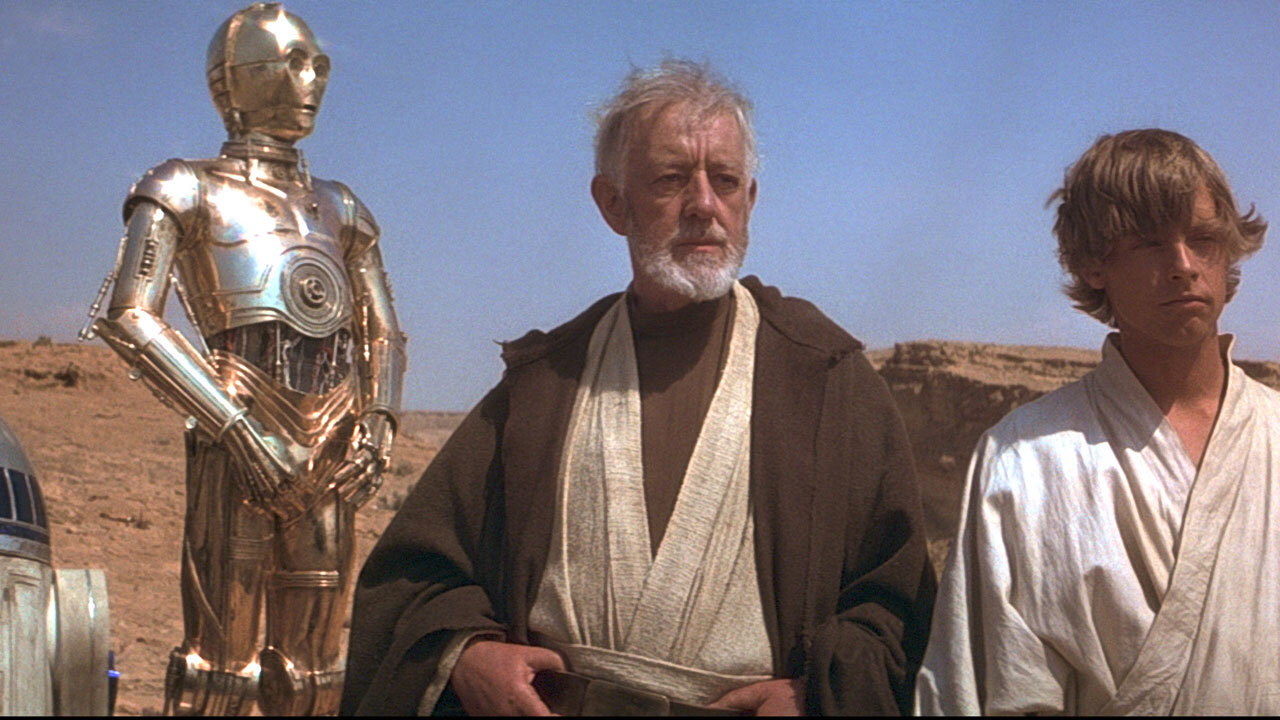
This section would be incomplete without mentioning the legendary Alec Guinness (winner of the Oscar for Best Actor in the iconic The Bridge on the River Kwai) as the aging Obi-Wan Kenobi. Alec Guinness as Obi-Wan Kenobi is, in fact, one of the most fascinating paradoxes of this film. On one hand, you have a supremely accomplished, classically trained actor, an Oscar winner, a man whose career most people can only dream of. On the other hand, you have a film he initially regarded as a charming sci-fi fairy tale for kids. And you can see it in his performance: Guinness is serious, composed, almost aristocratic — but never stiff. His Obi-Wan carries the weight of past mistakes, the wisdom of experience, and a quiet melancholy of a man who knows his path is drawing to a close. Ironically (and somewhat tragically-comically), it was precisely this role – which he didn’t particularly care for, and which he assumed would have little significance in his career – that became one of his most recognisable. So much so that Guinness later grew quite frustrated by the fact that children would approach him on the street with questions about the Force rather than about Shakespeare or his serious dramatic work. Nevertheless, without his gravity and authority, A New Hope would not have had the emotional stability that keeps the film “grounded” while lasers and spaceships fly around it.
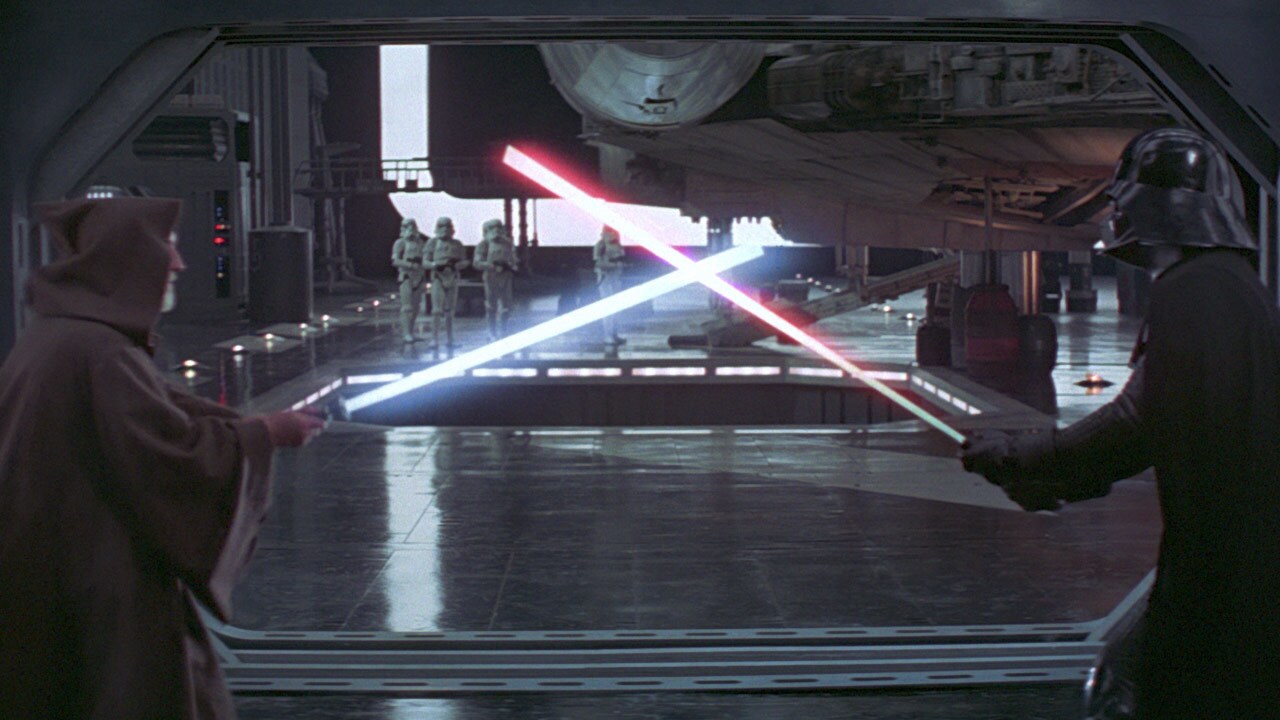
And then there’s Darth Vader. Although he appears relatively briefly in this film, his impact is enormous. The visual design — the black silhouette, the helmet, the mechanical breathing — instantly makes him an icon. David Prowse provided the physical presence, but it was the voice of the legendary James Earl Jones that added the cold, authoritative menace that makes Vader one of the most recognisable villains (or perhaps more accurately, antiheroes) in film history. Always calm, certain, relentless behind a mask that conceals every emotion. And that is precisely what makes him so terrifying.
The supporting characters also play an important role in the film’s charm. Tarkin (Peter Cushing) as the embodiment of bureaucratic evil — cold, rational, convinced that fear is the best instrument of control. The droids, C-3PO and R2-D2, serve as a comic counterpoint, but also as “the eyes of the audience” through which we enter this world. Their dynamic is almost pure slapstick comedy, but it never quite crosses (too far) into the territory of the irritating.
Thematically, A New Hope is a classic hero’s journey. Luke Skywalker is literally a character drawn from mythology – an ordinary young man from the periphery, the call to adventure, the refusal of the call, the mentor, the loss, the initiation. Lucas openly drew inspiration from the work of Joseph Campbell (The Hero with a Thousand Faces), and you feel it in every frame. But what sets the film apart is its simplicity: good and evil are clearly defined, hope exists even when it seems impossible, and the individual – however small – can make a great difference.
And that is precisely why the film still works today. A New Hope is not cynical. It is not ironic. It does not try to be smarter than it is. People genuinely believed – or at least tried to believe — in this story. And the audience answered with a standing ovation.
Finally, the impact of this film cannot go unmentioned. Star Wars is not just a film (and later a franchise) – it changed the way films are made, marketed, and experienced. The blockbuster as a concept, merchandising, franchises, fan culture – all of it owes an enormous part of its DNA to this film. Cosplay, video games, toys, and even its own day on the calendar (May the Fourth Be With You).
And so, when we watch Star Wars: Episode IV – A New Hope today, we’re not just watching the beginning of a saga. We’re watching the moment when film history turned in a new (and positive) direction… or perhaps more accurately, opened an entirely new dimension of cinema. And – perhaps most importantly – we’re watching a film that, despite all its problems, limitations, and doubts, managed to give us something incredibly rare: genuine cinematic magic that enchanted audiences.
And that is a Force not to be trifled with… hehe, do you get what I did there? No? Never mind (waves hand) “You get what I did there”? Still nothing? Well, it was worth a shot. 😁
And this magic turned an 11 million dollar budget into $775.4 million… now that’s magic!
A few more details worth mentioning:
- Lucas was so convinced the film would flop that he didn’t even attend the premiere – he went on holiday to Hawaii with his friend Spielberg, where he got the idea for a film about a certain charismatic archaeologist.
- Lucas decided to significantly reduce his salary in exchange for full merchandising rights – a move those around him considered idiotic (since at the time, toy profits tied to films were minimal).
- In early drafts of the screenplay, R2-D2 could speak in English.
- In this war, 2,002,795,192 inhabitants of the SW universe were lost.

Imdb | Rotten Tomatoes | Metacritic
Format: Film
Premiere: 1977
Runtime: 121 minutes