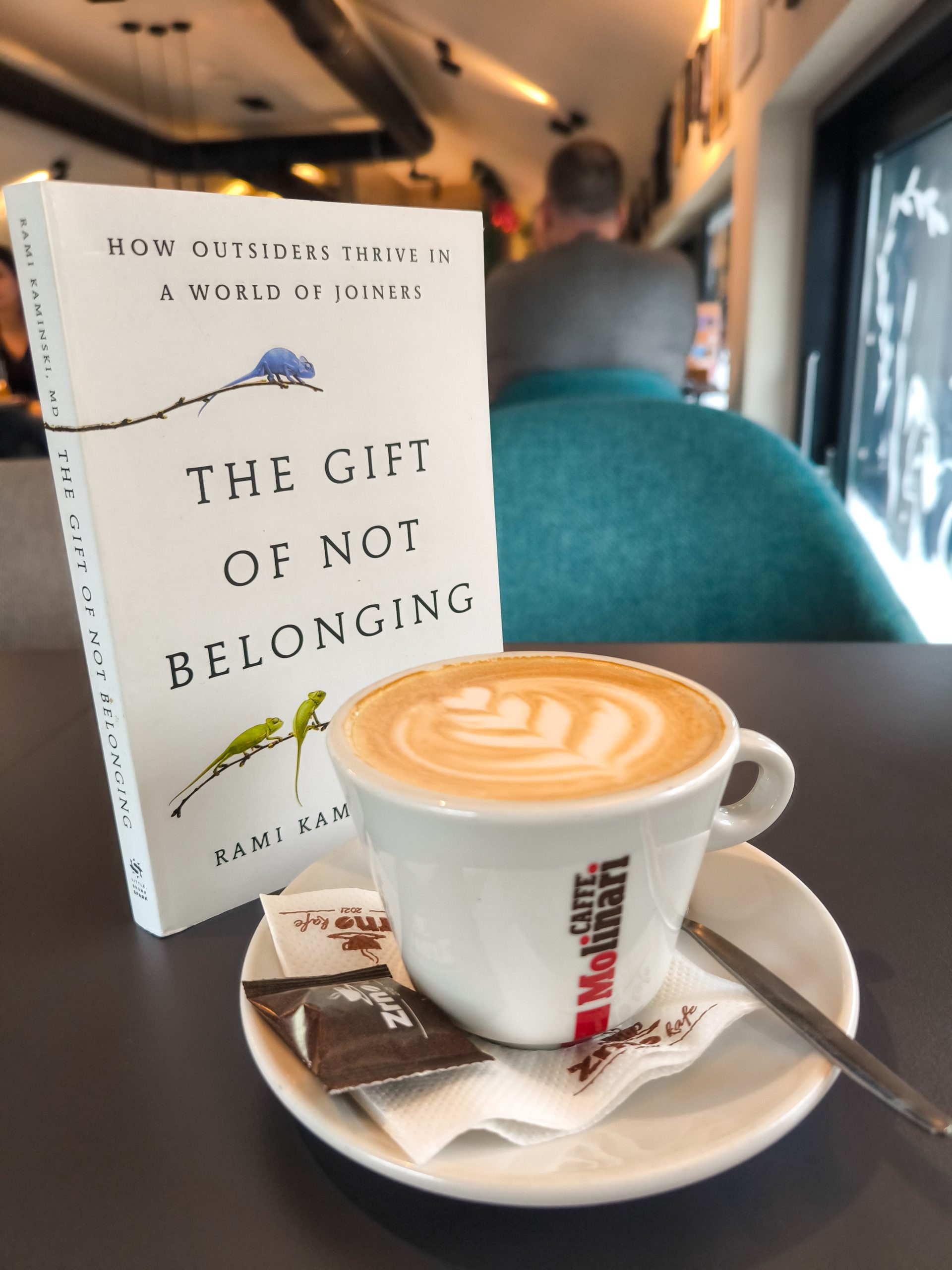







The Gift of Not Belonging
- “The Gift of Not Belonging” by Rami Kaminski introduces the otrovert as a personality type equal in standing to introverts and extroverts – a person who can fit into any social group, yet never feels a genuine inner need to belong.
- The book, divided into four parts, guides the reader through the profile, virtues, and life journey of the otrovert, explaining why these individuals are often misunderstood in a society that rewards “joining.”
- Written in an accessible style and free of unnecessary jargon, this book comes highly recommended for everyone – whether they recognize themselves or someone close to them in this personality profile.
“We must learn to regard people less in the light of what they do or omit to do, and more in the light of what they suffer.” – Dietrich Bonhoeffer
I’ve always known I was a specific sort. Not special (well, maybe I am – I’m an Aquarius if that means anything to anyone 😉), but specific. As a child, and through adolescence, I leaned toward introverted behavior, and as I got older, the ambiverted element of my personality grew significantly. However, there was something unusual about all of this.
My whole life I’ve had this feeling of being a kind of (objective and neutral) observer of the world. And it happens unconsciously – I somehow see through people and their nature. I can join any group, yet somehow neutrality suits me better. As if I’m everywhere, but belong to no one. For me, social connection is far more efficient and meaningful one-on-one than in a group – that’s when I connect more easily and can talk about deeper topics. I can adapt to any group setting without a problem, but that solitary element suits me just fine. I’ve always been a bit of a rebel – I can’t be a sheep following some “system,” especially if I don’t see the point of it, and the emotions of the majority can’t “sweep me along” if I don’t feel aligned with them, though I can temporarily “play” by those rules for the sake of a shorter period of peace. I always try to be kind and diplomatic toward people – until they push it too far (and kudos to anyone who actually manages to get under my skin in negative context).
I suppose I didn’t know that a good (large) part of my personality was otrovert.
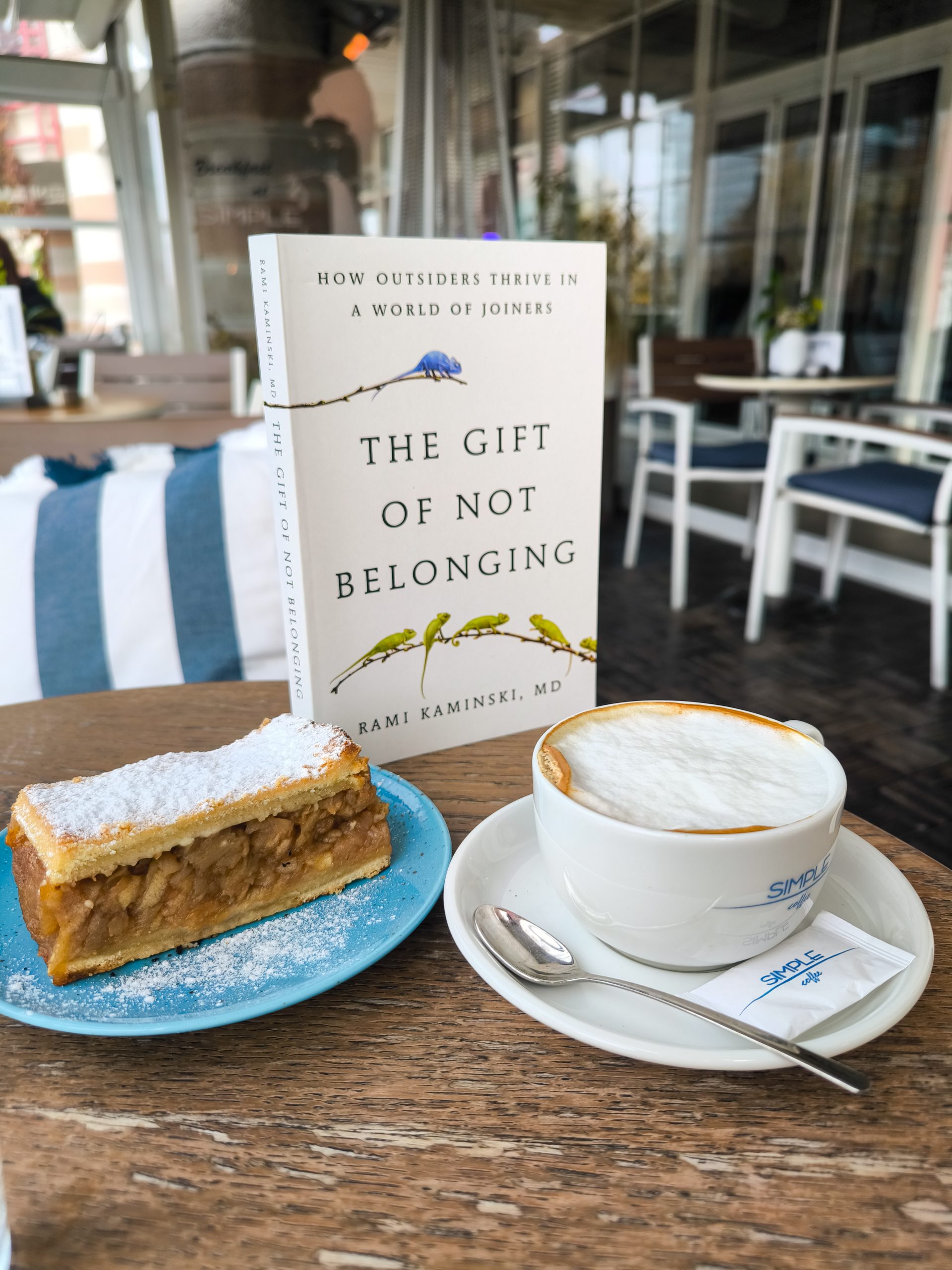
Rami Kaminski is considered a serious name (and a pioneer) with over 40 years of experience in psychiatry and treating all kinds of disorders. During his practice, he encountered people who had been diagnosed with various “disorders,” only for it to turn out that these individuals weren’t ill at all – they simply had a slightly different personality profile and were perfectly functional, just not well understood, especially in childhood.
These are people who can belong to various social groups without difficulty, but don’t have that inner pressure and/or need for belonging. Even when they do belong somewhere and become very well-liked (or even leaders), they can feel uncomfortable, isolated, and lonely – as if they never truly belonged to that group. They are often misunderstood by others, simply because our society is constructed in a way that imposes the idea that there must be an element of belonging to some group (on whatever basis). And if you think about it a little more carefully, all children are otroverts before they start school. They live in their own rich world of imagination, constructing their own “rules” through play, gradually getting acquainted with the real world, close only to their parents, some extended family member, or the occasional peer. Then comes the preschool/school period, and suddenly “rules” are imposed that are primarily designed for group behavior. And then the child who doesn’t see those behaviors as meaningful (for whatever reason) starts facing challenges – and if they decide it suits them better (to avoid discomfort or stress), they temporarily “play” by the group’s rules, but without any sense of belonging.
Kaminski established that there simply is such a personality type, one that deserves to stand on equal footing alongside introverts, extroverts, and ambiverts. Just as social hierarchies include alphas, betas, gammas, sigmas, and other categories, otroverts could (by my own free assessment) be described as a hybrid of Delta + Sigma + Zeta.
To summarize, some of the traits of otroverts would be: selectively social, they love meaningful conversations, they think before they speak, highly adaptable (they can lead a conversation and truly listen), not obsessed with Ego in social games, they have stable energy, a highly developed empathy, they’re good at “reading people” (this one I can personally confirm), they prefer authenticity and are drained by the performance and pretense of others, they like to build relationships (quality over quantity is the focus), they value communication with purpose (not just to fill silence), they’re excellent at connecting – like a bridge – people, ideas, and perspectives, and so on…
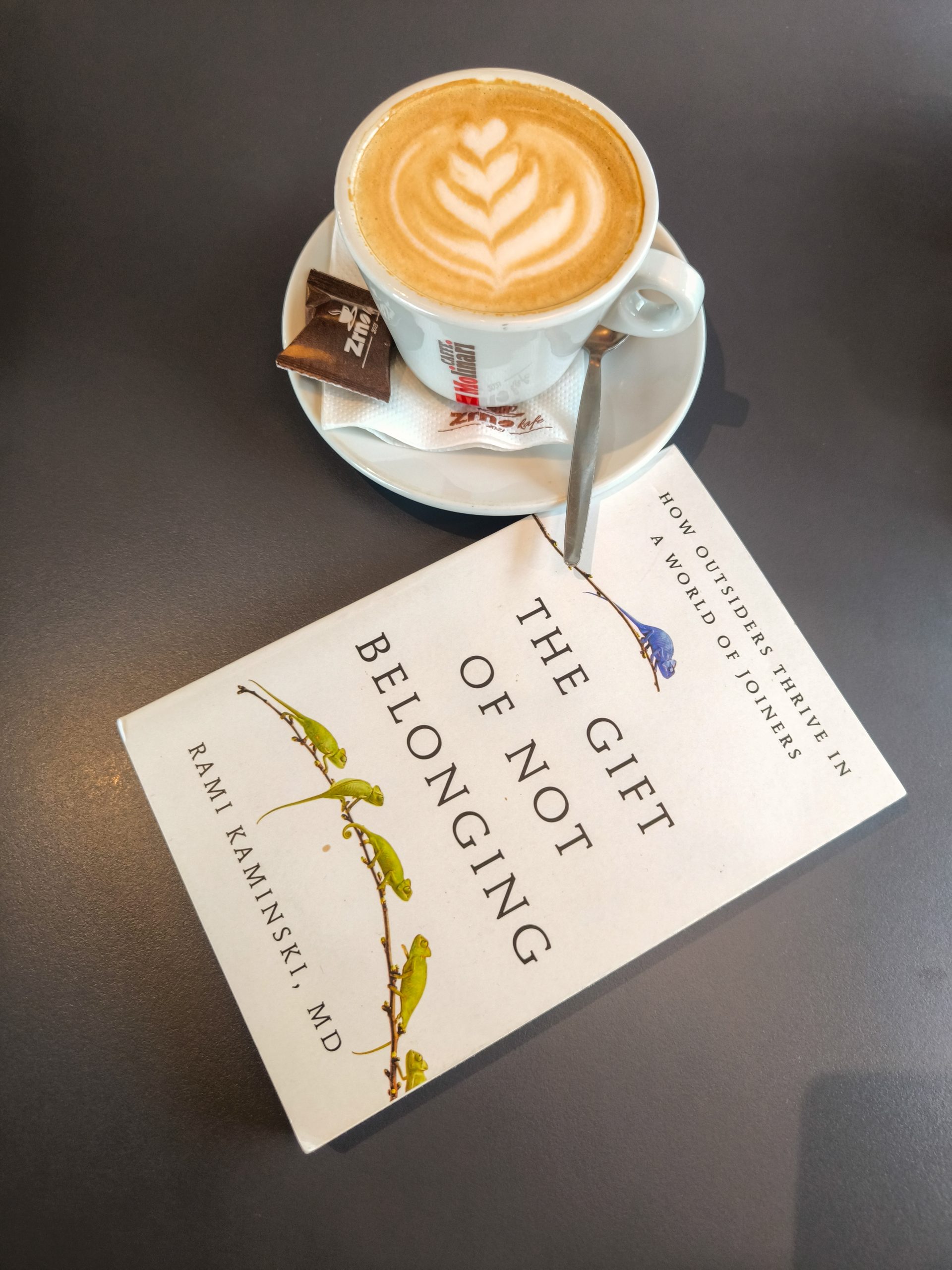
But let’s now get back to Kaminski’s book, “The Gift of Not Belonging”.
The book is divided into four parts/sections:
1. The Foundations of Non-Belonging
2. A World Made for Joiners
3. The Virtues of Being an Otrovert
4. The Otrovert Life
Through the first section, we discover what (or rather, who) an otrovert is, how the world misunderstands otroverts, their quietly rebellious nature, the pseudo-extroverted element of the otrovert, as well as their strong creative and empathic side.
The second section explains how we are all born as otroverts, but that the culture of the world is built to reward “joining” and frequently pressures people to “fit in.”
The third section explains how otroverts can be emotionally self-sufficient, their developed empathy and ability to form strong connections, as well as their distinctive self-confidence. Then there’s thinking outside of the Hive, and the richness of an otrovert’s inner world.
And finally, the last section walks us through the otrovert’s life – from childhood through the teenage years and adulthood, how they behave in romantic relationships, at work, and what they’re like in the later years of life.
At the end of the book, there’s a 40-statement test (where you choose how much you agree with each statement on a scale of 1 to 7) through which you can discover whether you’re an otrovert or not. (Fun fact: I landed exactly in the middle 😅.)
This is a book that, somewhat unexpectedly, reads very easily. Rami Kaminski is himself an otrovert personality type, and one of the pioneers in the field of psychiatry and the founder and director of the Institute for Integrative Psychiatry in New York. He is also the founder of the “Otherness Institute”, which researches and promotes awareness of how otroverts experience the world. All of this has contributed to the book being written in a way that’s easy to follow and understand, without being overly complicated.
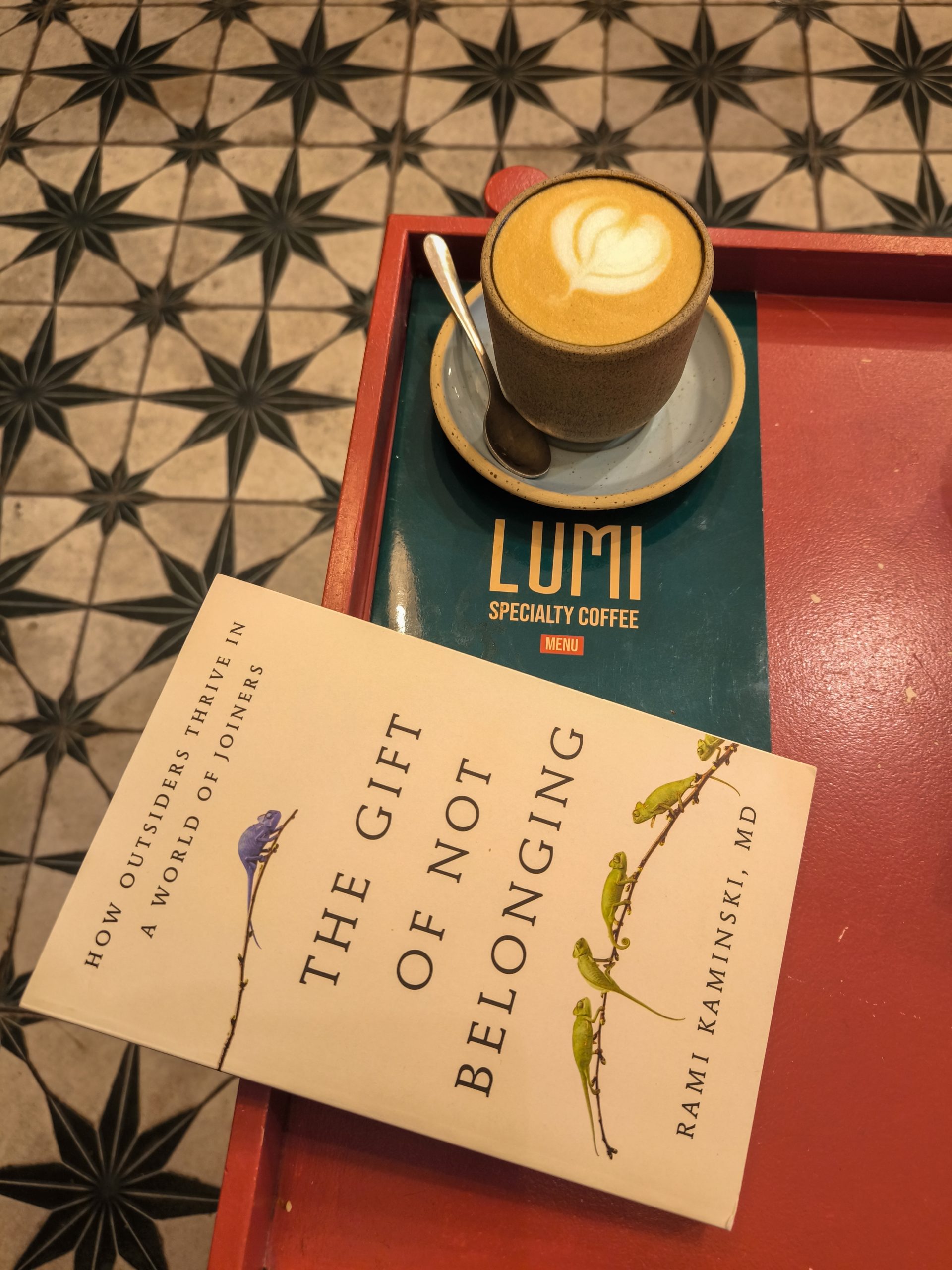
“The Gift of Not Belonging” is not some set of tools, techniques, or anything of that sort. It is simply a guide through the personality profile and way of thinking of people who are otrovert(ed). And that is precisely its strength. Perhaps this book will help you better understand your child, your spouse, a colleague at work, or a friend if they fit this personality profile. Or perhaps you are the otrovert who has always felt like they somehow function “differently” from the rest of the world.
As far as I’m concerned, this book deserves an absolute recommendation, and I think everyone should read it – for the simple reason that it sheds light on a new personality type… actually, I wouldn’t say it’s new; it has always existed, it’s just that people haven’t been able to clearly perceive and classify it. The author has, it seems, managed to bring together the most common and strongest traits and characteristics of these people who – although they can effortlessly join any group (and even lead it) – somehow always carry that inner sense of discomfort and non-belonging. Yet it is precisely here that the otrovert’s greatest strength reveals itself. The absence of a need to attach to a particular group means their self-worth as a person is not conditioned by the judgment of any specific group. They can respect rules when necessary, but they won’t follow them blindly if they don’t see real value in them. And precisely because they’re unburdened by social rules and expectations, they can form incredibly powerful connections with people on an individual level. And in the end, they have this “power” to – like a neutral observer – see the bigger picture of the world and its flaws.
A powerful path. But sometimes, just slightly lonely.
And for a closing fun fact – some well-known (historical) figures who are otroverts (or fit the profile): Albert Einstein, Frida Kahlo, Franz Kafka, George Orwell, Friedrich Nietzsche, David Bowie, Banksy, and many others…
And you, dear reader – have you ever had the chance to meet an otrovert? Or perhaps to recognize yourself as one? 🙂
Number of pages: 223