





When the Spine Says Enough
About six-seven years ago, I participated in one relaxed sparring match/analysis. Though several years had already passed since I put “pause” on my 10-year active martial arts training (because you never know when I’ll continue, there’s never an end there), some people thought that because of my great interest in martial arts (and studying literature and films about them), and my unpredictability, I could maybe give directions or ideas (and in the worst case, end up as a punching bag :D).
My young opponent decided to seriously approach this sparring, which he demonstrated with subtle (cinematic) loosening of neck and back, accompanied by the loud cracking of spine and neck vertebrae. My warrior instinct immediately spoke up “Oho, it seems he took this sparring match seriously.”
If this situation happened in some more recent time, my warrior instinct would probably say “Uh, instead of sparring better tell this guy to get a referral for someone to check that spine, otherwise trouble will await him in a year or so, his spine cracked like someone opened a lobster…”
😀
And now a bit more seriously…
Although all human organs (and body parts) are equally important and significant, many would say that some “holy trinity” of health (and importance) is brain, heart and stomach. Some of my (life and health) experience taught me to expand this with four more “factors” for good health (which are also important for healing) that we should pay attention to, which is:
- how we think and what our thoughts are like
- how we breathe
- how we chew (and what we bring into the body)
- how we hold our spine and what condition it’s in
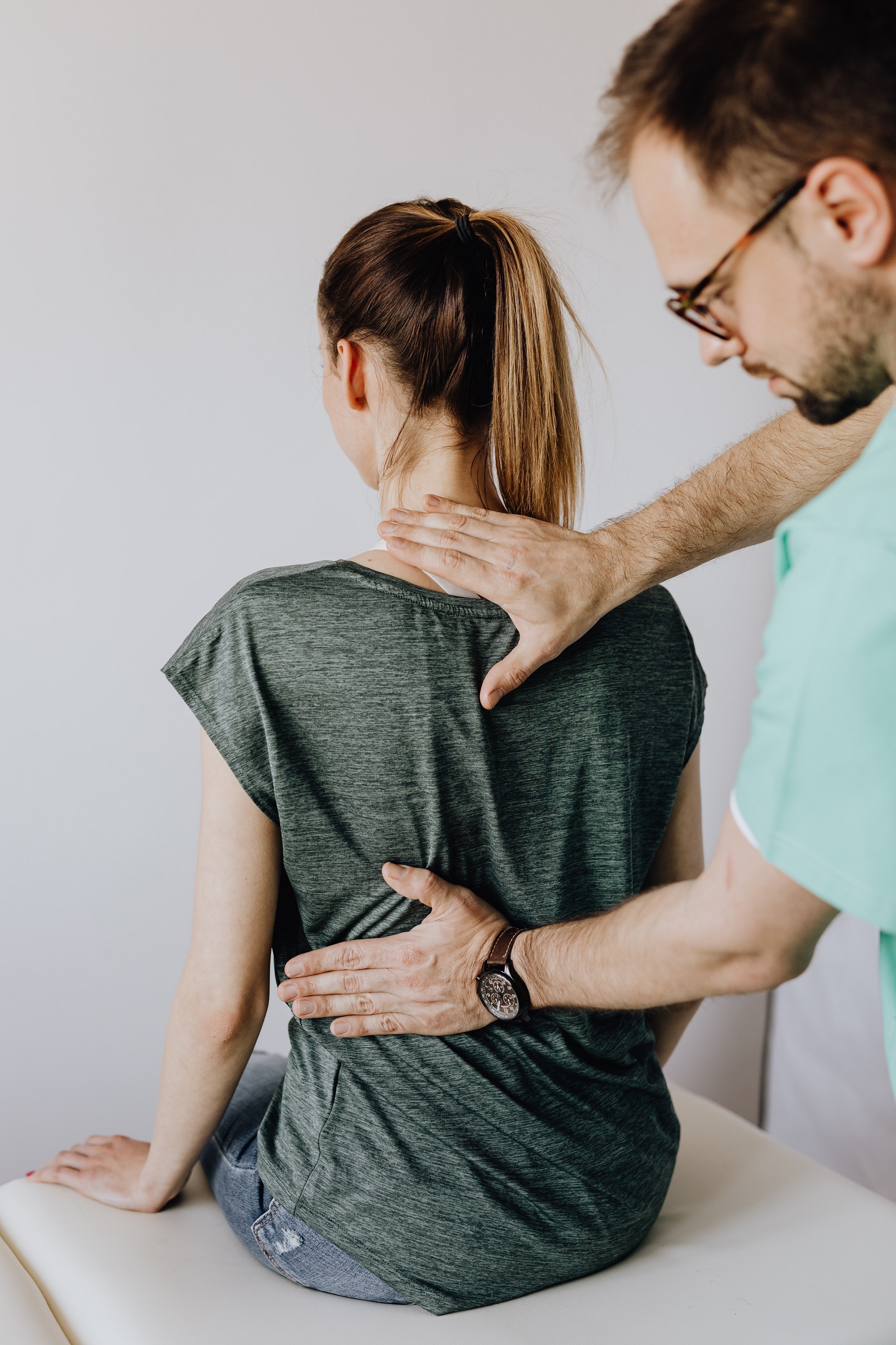
(Photo by Karolina Grabowska from Pexels)
“When the Spine Says Enough”… uh, I think the spine is something we take most “for granted.” That “combination” of bones (vertebrae), muscles, tendons, nerves and other tissues “holds” us 24 hours a day, our whole life. And generally we don’t pay attention to attention until something hurts somewhere (or, God forbid, cracks).
Our quite static (sitting) way of life at the computer (both at work and outside it) and TV, leaning over a book or mobile phone combined with stress, sooner or later comes due, in the form of the famous “back pain,” which most often hits the lower part of it (and all who’ve experienced that pain, boy do they know how it can hurt and complicate life).
Of course, physical injuries are a separate story.
But one of the aspects that can potentially quite scare the average person is when the spine is under such (long-term improper) tension that it sends a message that creates real panic.
Tightness in chest, tingling hands… oh God, heart attack, quick to the doctor, medicine for pressure and pulse and immediately to do tests… cardiologist says “heart in good condition.” What the heck?
Leg tingles, feeling of slowed walking… maybe it’s stroke or whatever, quick to the doctor… doctor says, “everything’s fine”… how the heck?
Feeling of anxiety in whole body, tingles, as if some ancestor is pressing your body with their karma… and you recently did chakra cleaning and spiritual healing and should feel light and pleasant in your body… maybe need some priest or shaman too?
And have you maybe tried paying attention to the spine? Maybe your spine is sending you a simple message “Fatty, lose a few kilos, I’m bending from this belly of yours, I’ve pushed all organs from torment, that’s why your heart pumps like crazy! Straighten up when you sit! Put a cushion under lower back! Reduce leaning over the phone!”
Maybe someone will think “neither longer introduction nor shorter books,” what’s all this for?
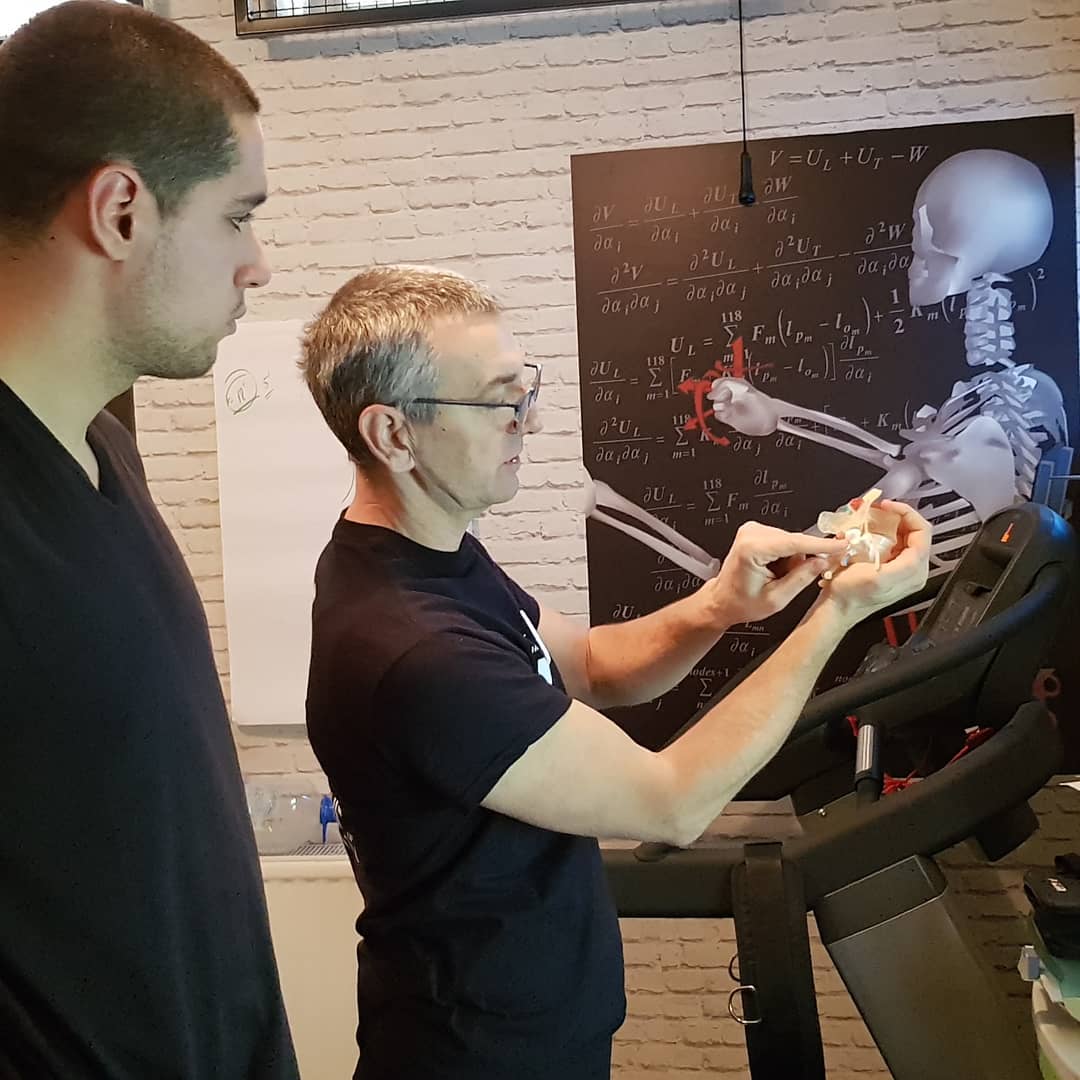
Aleksandar Dejanović got his doctorate at DIF, and if his biography is to be believed, his life revolved quite a bit around the spine (or let’s christen it as a field, “spinology”) and kinesiology (science of movement, i.e., biomechanical body movements). Lately he’s become quite famous for his “Athos Academia” in Novi Sad (which according to the website, consists of “a team of scientific researchers dedicated to validly scientifically-proven diagnosing of neurological and muscular dysfunctions, spinal column functioning disorders and locomotor system as a whole with the aim of finding the best solution using conventional scientific and alternative methods”). And he became popular on social networks as “Dr FitBacks” where on his profile he posts some of the exercises he does with clients or how they diagnose and research spine problems.
As they say, if he’s some fraud, boy did he make an effort, kudos to him. 😀
And now seriously.
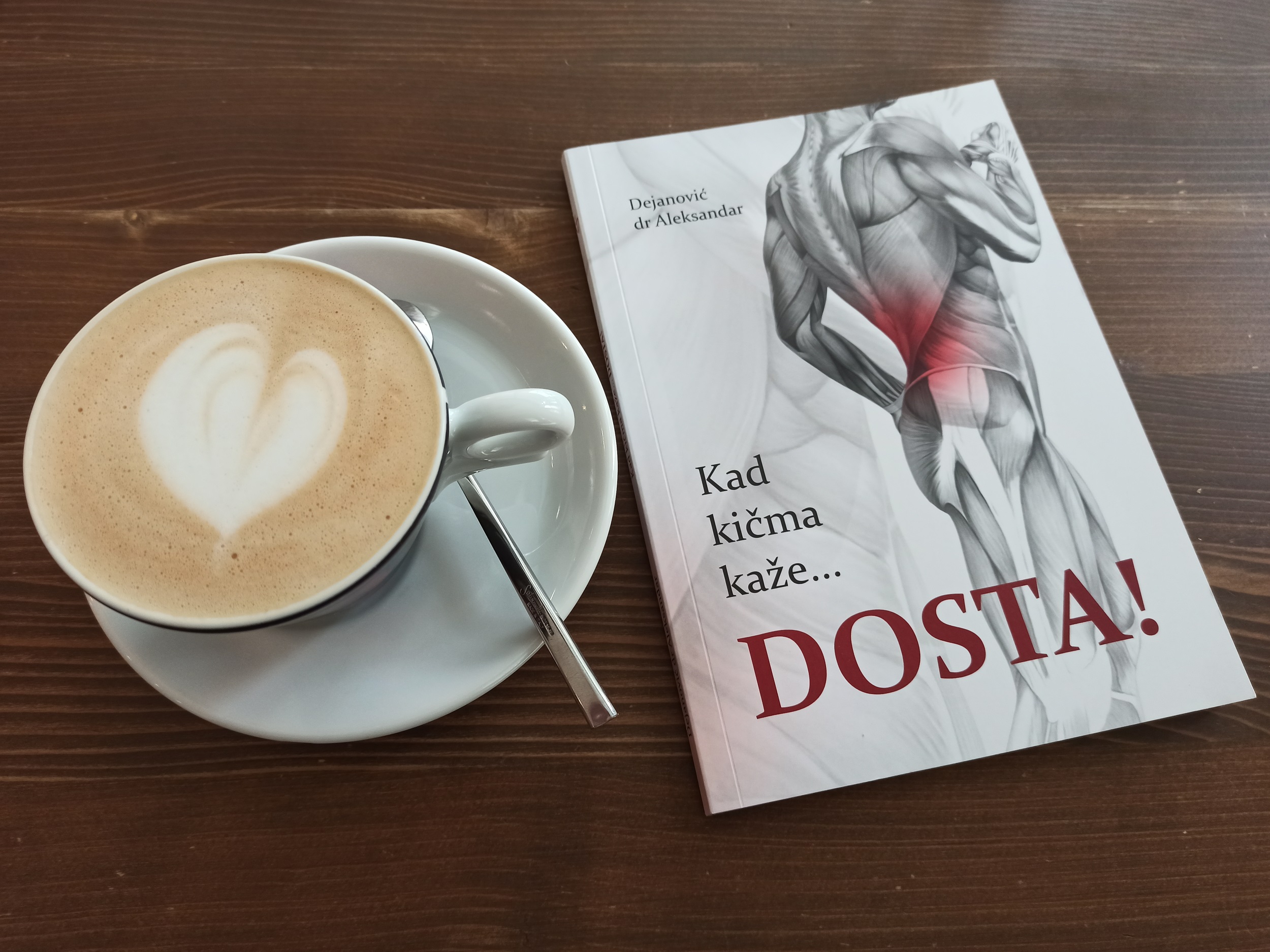
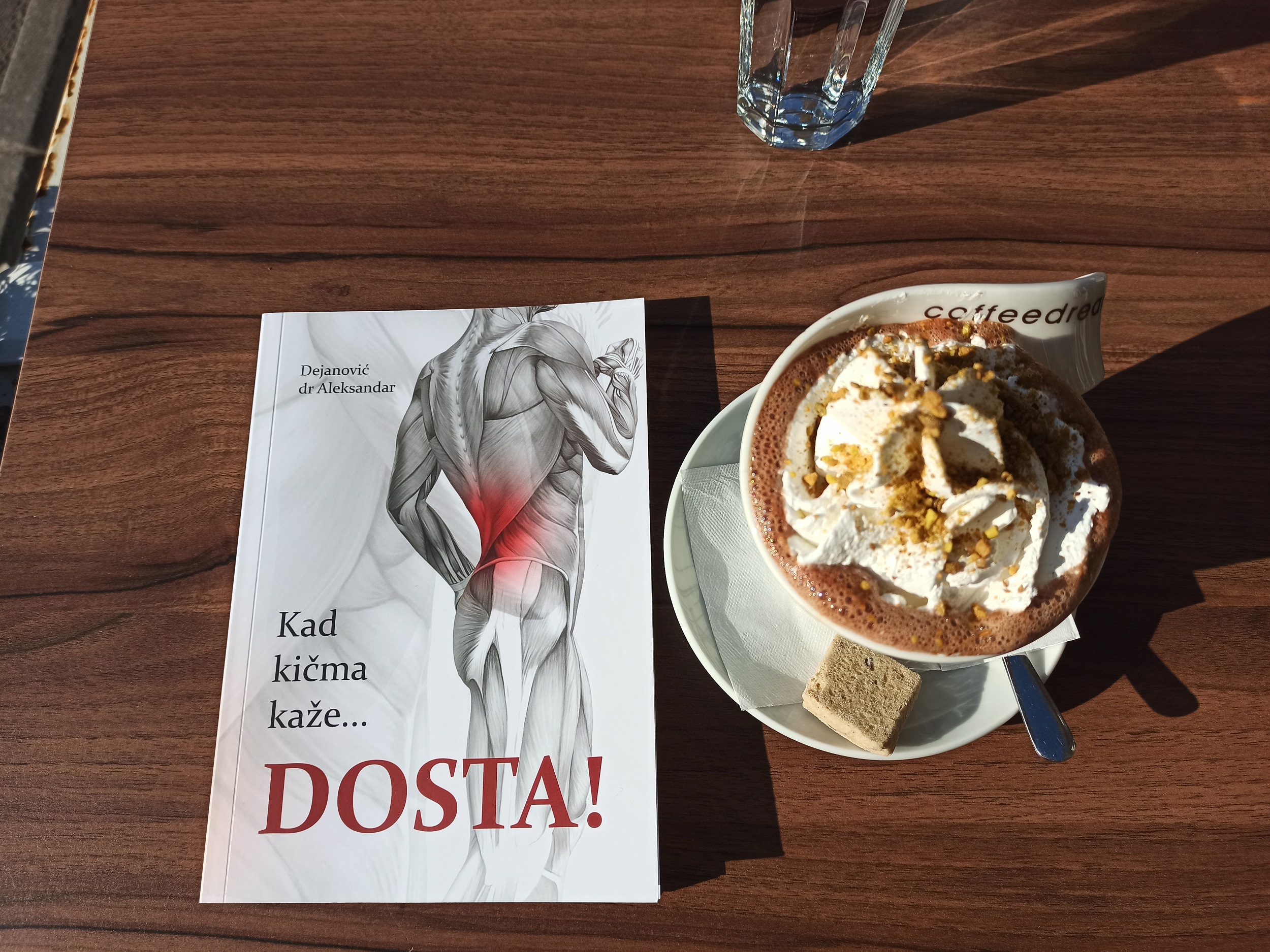
“When the Spine Says Enough” is Dr. Aleksandar Dejanović’s first book. Although my blog doesn’t deal with reviews of books from the physical health domain, the reason for its review is simple.

The book is incredibly simply written in layman’s terms, to the limits of banality! Really. Almost 97% of the book you’ll understand even if you have no serious knowledge about the spine or kinesiology (3% goes to some terms that maybe aren’t known to everyone, but don’t affect understanding the book at all, but that 3% will certainly be understood by, e.g., fitness instructors).
What’s “When the Spine Says Enough” about?
The little book is, roughly speaking, divided into quite a few small chapters of (un)usual and likeable names, which already from the title clearly tell you what their topic is:
- Do you have back pain?
- When bed and spine quarrel!
- In the morning when hands shorten…
- Morning coffee + toilet (r)evolution
- And morning gymnastics?
- Spine doesn’t love car but we adore it!
- And are we allowed to sit on fitness ball?
- Choice of chair, table and work space
- Lounging, laptop in lap and other mischief
- When vacuum cleaner goes crazy, spine draws the short straw
- Pregnancy – body transformation with spine’s discontent!
- Hey, did your disc slip too?
- Ah, that swimming and painful back…
- Right choice of sneakers – who cares?
- When “cycling” chafes the spine
- Walking – aspirin for your back
- Sidewalk, painful joints…
- Daily spine care – not so hard!
- Fatigue – patiently waits for its moment!
- What spine loves – and what not…

If I had to describe the little book “When the Spine Says Enough” in layman’s, simplified terms, I’d say it’s a collection of simple advice and directions on how to make life easier for our spine (and thus for us), to reduce pain(s), act preventively, as well as to strengthen it. Also, it’ll show us what are the most common mistakes we make in everyday life, which exert (unnecessary) burden on the spine and, when accumulated, can make us an (unnecessary but serious) problem.
As you see, you’ll get quite a few concrete pieces of advice. Also, you’ll get quite a few generalized pieces of advice, which shouldn’t be taken as criticism of the little book, but as a reminder (and reasonable distancing by the author) that we too should engage more around some things we often take for granted (e.g., the author will explain which type of pillow is suitable depending on sleeping position, but won’t tell you “buy exactly that one,” because you must research yourself). An interesting situation happened to me when I recently bought (by coincidence) a pillow in one store. In principle I’d see approximately (cheaper) prices on the website, try two-three in the store to see which seems to suit me most, and buy that one and done. Since the pillow I thought I’d buy wasn’t in stock, I thought I’d come some other day, but the saleswoman insisted I try some seven-eight pieces of other pillow models, because, as she herself said “what’s written on the internet can’t be more accurate than trying.” Since I’d already been paying a bit more attention to the spine for a longer period, I thought about her words, but also my thinking. Really, I spend a third of the day on a pillow (okay, maybe less, but I’d like to spend at least a third), maybe I really should pay attention to that detail too, and not be guided by the logic “my great-grandfather slept with a stump under his head and lived to 107 years”… because I remembered that same ancestor was probably more physically active, breathed cleaner air and ate healthier food without additives… maybe I should pay a bit of attention to these details as much as I can (and of course, in accordance with my financial possibilities).
I won’t go much into details from the book itself, because the above-mentioned chapter titles are quite clear by themselves (or to use an old Serbian word, self-explanatory). The book is really simply written in everyday vocabulary and can be read in a very short time (it has only about 100 pages and larger font).
However, this is a book you’ll occasionally return to. Someone might say, upon reading it, that here there’s too much advice and details and that you’d have to set aside an additional hour or two each day for all mentioned actions to be performed. You know what, whoever has serious spine problems will use every piece of advice if it’ll help them.
But I see the advantage of this book in taking “details” that suit you for starters, that are easily applicable to you, to slowly adjust the spine with small actions (tweaking) and see if it works for the better. Even if it’s just that, in the morning when you wake up, you walk around the apartment for a few minutes before the toilet without immediate loosening and stretching, that you pay attention to how you sit on the toilet bowl, that you don’t keep your hand in pockets while moving, put a small cushion under your back on the chair, occasionally get up and walk for a minute or two, and not sit for several hours without budging.
And walking… lots, lots of walking. Not just because the book’s author said so, but because I got this information from an 80-year-old uncle, and from a masseur, and from a physical therapist, and from a general practitioner. Yes, walking is generally good for health, but it’s also medicine for the spine because it strengthens the lower back.

And finally, one more piece of information: Dr. Aleksandar Dejanović also has the title “McGill Master Clinician.” Dr. Stuart McGill is “professor emeritus” who for more than thirty years has been dealing with clinical research of problems causing pain in the spine (i.e., lower back) and rehabilitation. So that should say something about the author’s knowledge when it comes to the spine.
All in all, “When the Spine Says Enough” is a little book that doesn’t hurt to have in your library, if you care about your spine to some extent. 🙂
I see that in the author’s edition a translation of Dr. Stuart McGill’s book “Back Mechanic: The Secrets to a Healthy Spine Your Doctor Isn’t Telling You” also came out, which maybe wouldn’t hurt to study on some occasion either.
And you, dear reader, what kind of relationship are you in with your spine, are you its servant or master? 🙂
(Note: this review is the author’s position, based on his modest experience and knowledge from this field. The review’s author doesn’t have classical education from the field of general medicine and/or kinesiology, so take the review only as friendly direction and one more experience of a person who wishes you the best for your physical health and spine health. In case you feel symptoms/pains anywhere on the body that could be of a more serious nature, immediately contact your doctor. And if you think you’d need additional help and directions, or that our medicine simply “gave up” on your spine, maybe it doesn’t hurt to contact the author of the book “When the Spine Says Enough” too 🙂 )
Dr. Aleksandar Dejanović’s profile
“Athos Academia” website
Book price: Athos Academia