





Maneki-Neko
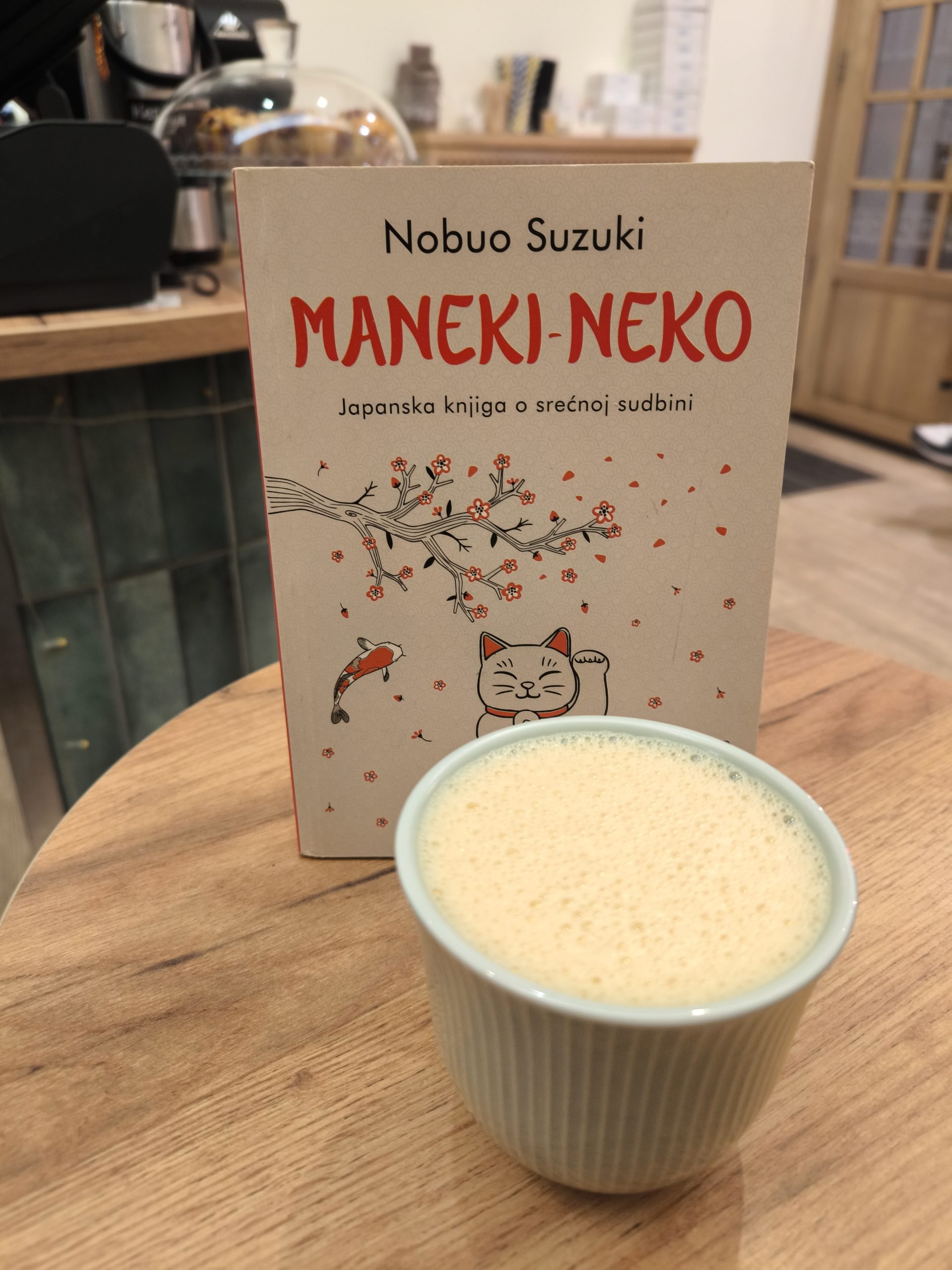
- “Maneki-Neko: The Japanese Book of Lucky Destiny” by Nobuo Suzuki is not a typical self-help book, but rather a cultural guide through the Japanese (and broader Asian) perspective on happiness, with the maneki-neko cat as its central metaphor
- The book is organized as a collection of short chapters on various symbols and rituals of luck, carrying the message that happiness is not a goal to be chased, but a byproduct of a way of life and a positive mental framework
- It is recommended for lovers of Japanese culture looking for a light read for inspiration, but it shouldn’t be read as a life-changing guide — some topics feel underdeveloped, and the Japan it describes comes across as somewhat idealized
“Luck helps sometimes – work, always.” – Japanese proverb
At first glance, judging by the title, “Maneki-Neko: The Japanese Book of Lucky Destiny” by Nobuo Suzuki looks like yet another feel-good book about happiness and how to achieve it, belonging to a similar wave of titles inspired by Japanese philosophies such as ikigai, wabi-sabi, and the like…
However, this book takes a different path. Its focus is not to teach you “how to be happy” through universal recipes. Instead, “Maneki-Neko” sets out to inform and familiarize us with how Japanese (and Asian culture in general) views the concept of happiness. It somewhat feels as though the book’s goal is to introduce us to a cultural system of thinking, where happiness is not a goal, but a byproduct of a way of life.
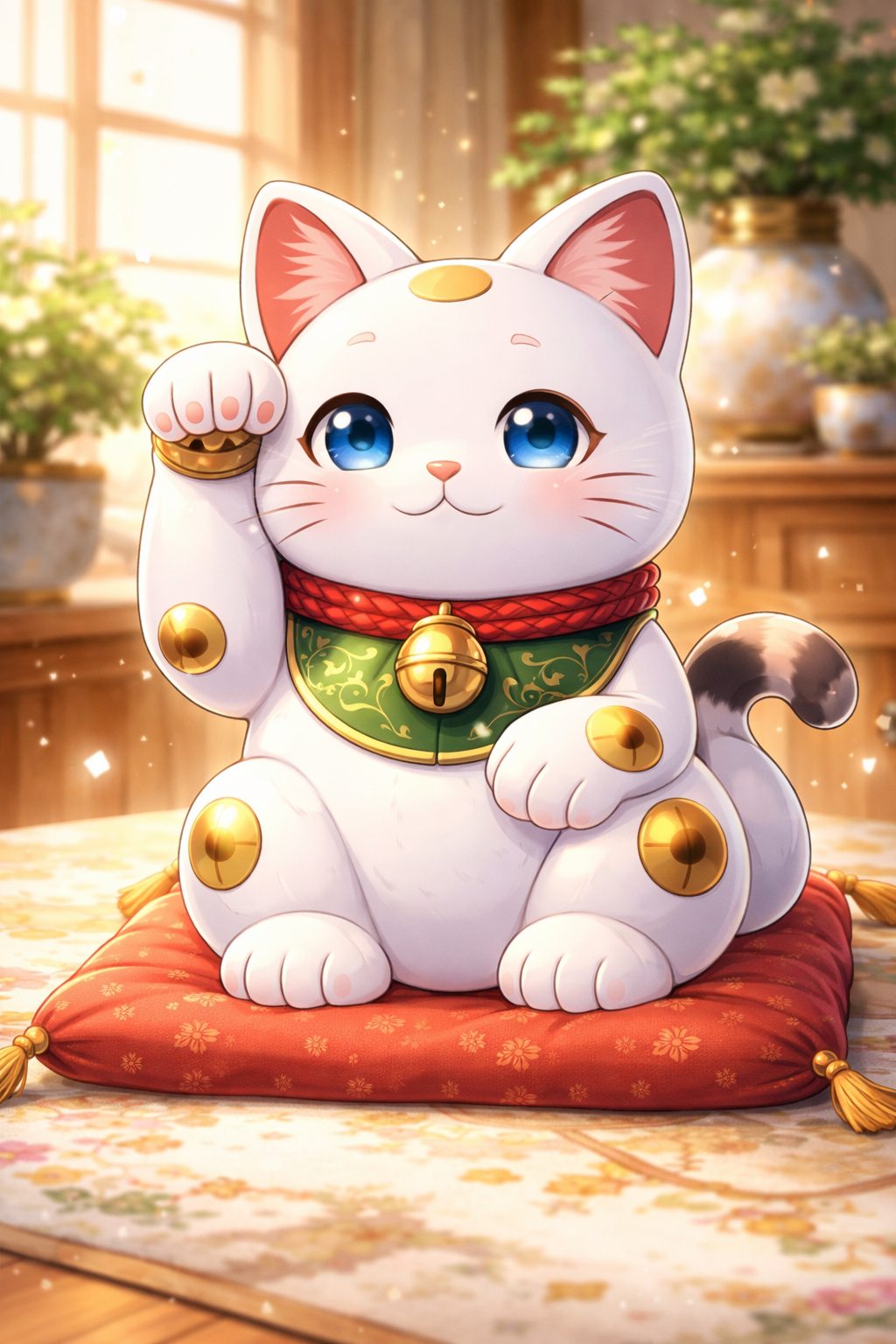
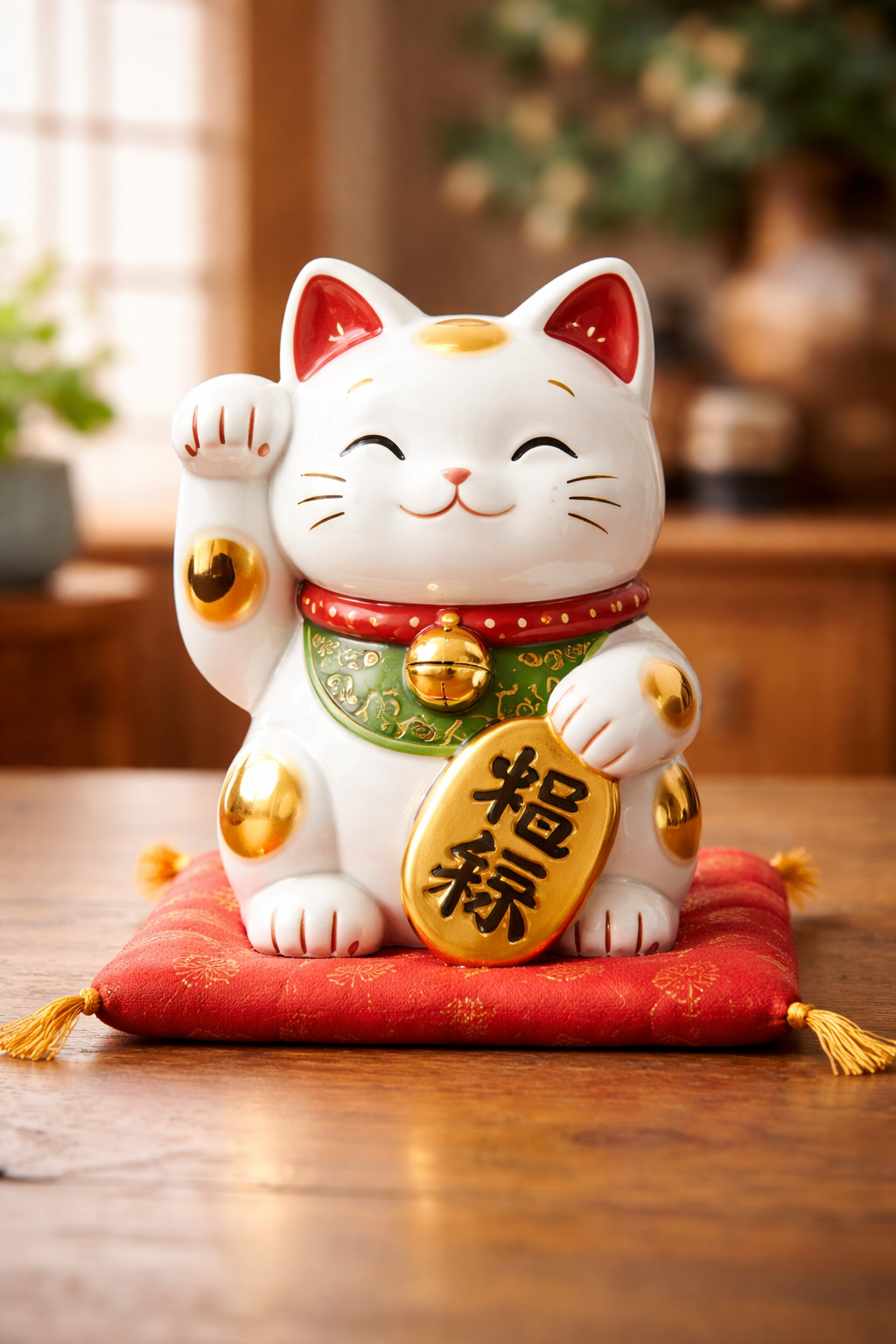
As can be inferred from the title, the central symbol around which everything revolves is the maneki-neko, the cat with a raised paw that “invites good fortune.” However, although you’ve seen this figurine in nearly every Chinese shop where it can be bought for a few hundred (or a few thousand) dinars, and you’ve heard that it supposedly brings luck and makes for a charming decoration… the maneki-neko is not just a charming decoration. It is a metaphor that reminds us that happiness doesn’t come on its own. It is invited, but also built through actions.
The book is not a classically linear read with a straightforward narrative. It feels more like a collection/mini-guide through the perspective of happiness as seen through various elements and concepts. We will thus become acquainted with the cat with a raised paw, dreams and figurines, the treasure ship (takarabune), gods of poverty and prosperity, the seven gods of fortune, the law of attraction, the Hong Kong dragon, Indian rituals for luck, Warashibe Chōja, a thousand peace cranes, the three circles of happiness, fortune cookies, Kit-Kat as a lucky chocolate bar, lucky ears, the daruma, and so on and so forth. Each of these chapters is, in principle, conceived in the same way — short stories from Japanese history, explanations of traditional symbols, everyday habits and rituals, and reflections on ways of thinking.
The author also attempts to explain to us that the maneki-neko is a philosophical approach to life, not merely a symbol (or a charming souvenir). The point isn’t which color the cat is (though that matters too!) or which paw is raised (it makes a difference!), but rather the belief that stands behind (any) symbol in general. Because if a person believes that something attracts happiness, they become more open to the world, recognize opportunities, and (re)main persistent. In other words, sometimes the belief that, for example, a certain object or ritual brings luck becomes a trigger for positive behavior.
Although the author of “Maneki-Neko” doesn’t use technical terminology, the reader can notice a parallel with modern psychology, as in many of the concepts of happiness described in the book we can recognize aspects such as:
- The placebo effect (i.e., that belief influences the result/outcome)
- Self-fulfilling prophecy (our expectations shape the future, i.e., the outcome)
- Ritual → stability → reduction of anxiety
This book makes it clear that Japanese symbols of luck will not “magically” solve problems, but are only meant to give a person a certain mental framework (or motivation, or even what we might call positive superstition) that will encourage them to take action.
The style of the book is simple and unobtrusive and can be read relatively quickly. The book is also structured so that it can be read in no particular order (that is, you can start from whichever topic seems interesting to you).
However, “Maneki-Neko” is not without its flaws (the book, not the cat… cats and dogs are always perfect!) and one should be aware of what we mentioned at the beginning — that this is not a self-help title, but rather an informational book with interesting facts on the subject of the Asian view of happiness. Some readers may get the impression that this book romanticizes Japan as a harmonious system (the reality is far more complex), or that the topics, while interesting, are perhaps insufficiently developed, and that not enough attention is given to how many of these elements can be applied to a Western lifestyle.
“Maneki-Neko” is not a book that “changes your life”… and this may well be perfectly fine. The book doesn’t try to “sell” you anything, except perhaps the perspective that happiness is not to be chased, but recognized and cultivated through small acts (or small things).
If you’re looking for hardcore psychology or a “how to summon the Japanese god of luck in three steps” guide, you won’t find it here. But if you love Japanese culture (ME! ME! ME!), want to get a little inspired and informed on the topic of happiness, or want to be encouraged to make some object or ritual a part of your life as a step toward happiness, then “Maneki-Neko” might just be an interesting read for you.
Now if you’ll excuse me, since luck still hasn’t brought me a million euros so I can travel to Japan for three months like some kind of nobleman, I’m off to order every Japanese symbol I can find on Temu. 🤣
And you, dear reader — do you have a lucky cat somewhere in your apartment (or office)? 🙂
Number of pages: 181
Where to buy in Serbia: Vulkan | Delfi