





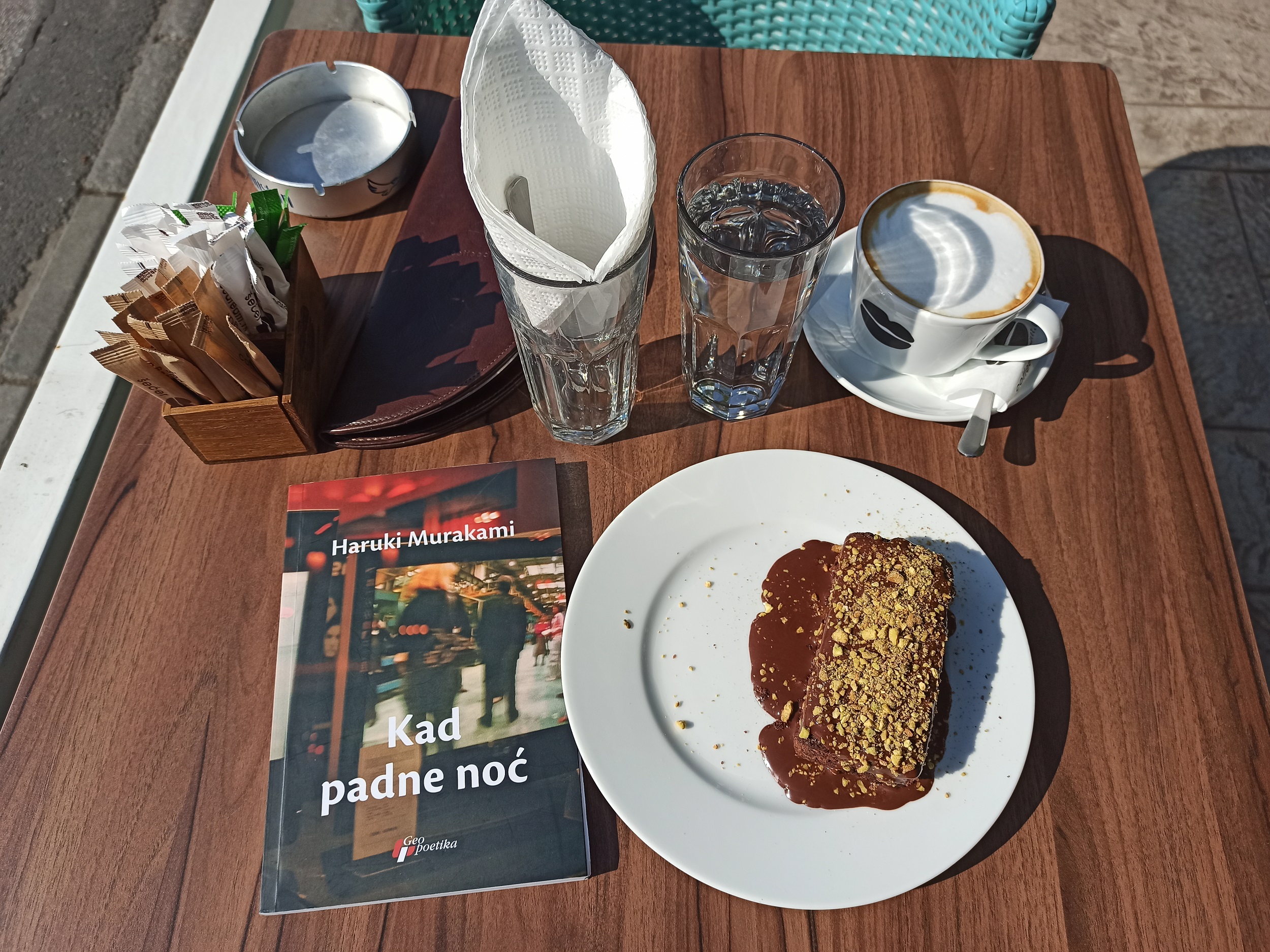
After Dark
What’s the probability that to the question “Which author first comes to mind, if the writing style is such that you’re not sure at what moment reality and fantasy begin to overlap, and you’re no longer sure what’s what” you’d answer with Haruki Murakami? 😀
Maybe it wouldn’t even be a surprise that a large number of people give precisely this answer.
But that’s simply the beauty of Haruki Murakami’s earlier works. And that includes his short novel “After Dark.”
The novel’s plot is set in a very short period – all events occurred in only seven hours, from midnight to seven in the morning, on one chilly Tokyo night. Five lost souls will, whether indirectly or directly, experience their fates being intertwined through strange events and unusual interactions.
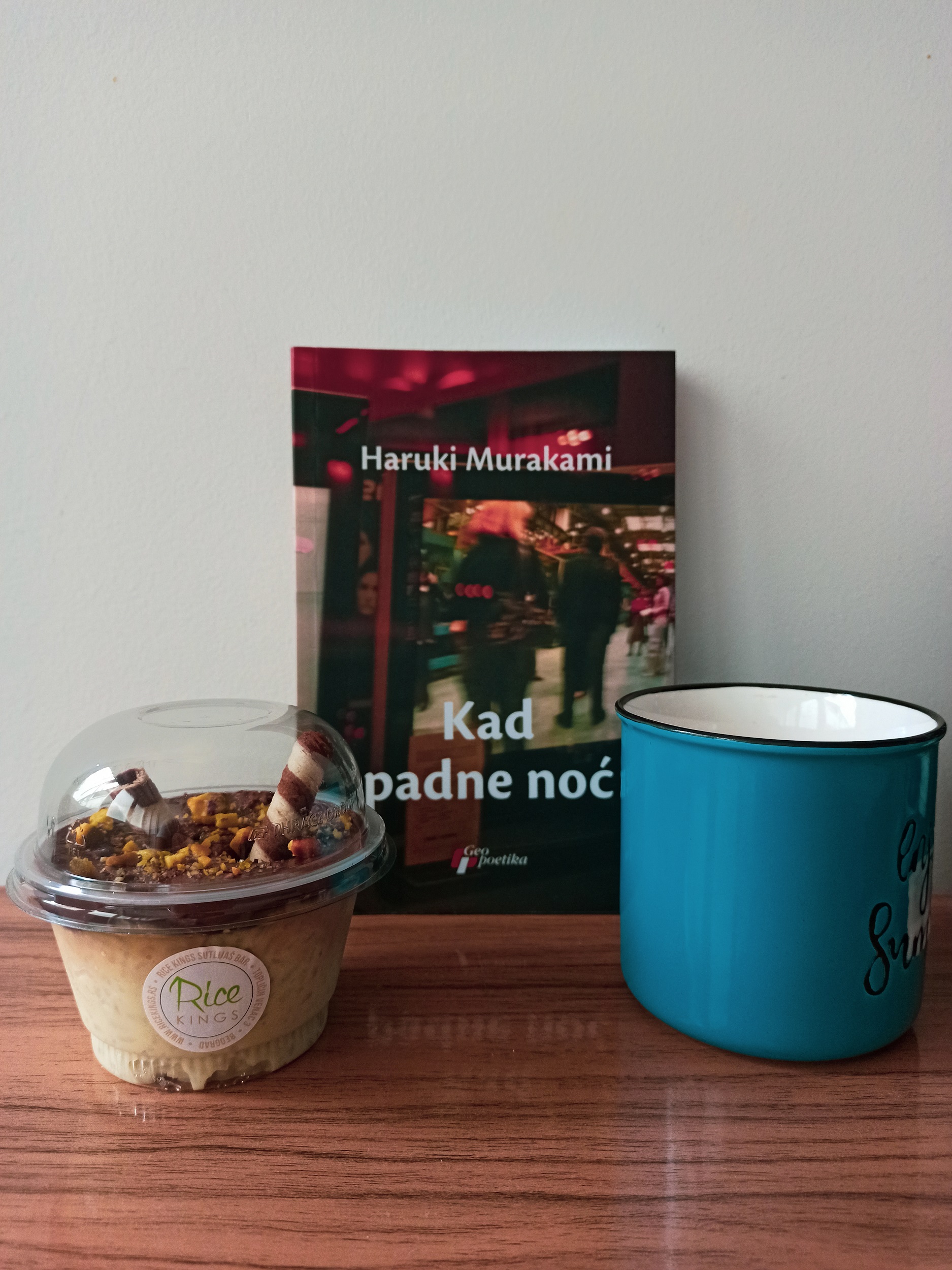
Mari Asai is a taciturn 19-year-old girl who spends nights outside the house in various bars and streets with a book by her side, obviously fleeing from a family situation. Optimistic and simple Tetsuya Takahashi is a student who plays trombone but wants to devote himself to legal sciences. Just and pragmatic Kaoru is a manager in one “love hotel” and used to wrestle. Shirakawa is a strange programmer who works all night on a big project, but before that beat up a prostitute in the love hotel (guess twice who’s that hotel’s manager). And the fifth person is Eri Asai, Mari’s older sister, who spent the whole night sleeping. Slowly, nothing here is as unusual and weird as it sounds… of course it’s even more unusual and weirder, after all this is Murakami. 😀
The novel is divided into several chapters of different lengths that take place chronologically. In fact, this novel too is, like many of Murakami’s, two novels in one. On one hand, the main heroine is Mari Asai and her interaction with people like Takahashi, Kaoru and the beaten prostitute, where she conducts more or less (un)interested conversations with these people on the topic of their lives, and only in front of Takahashi does she open up a bit on the topic of her life, as well as the unusual relationship with her sister Eri.
And on the other hand we have Eri Asai, who’s sleeping the whole time… and her situation is eerie and on the edge of some thriller/horror. For starters, someone’s in the room and observing everything. And that’s us and Murakami! We’re like some “observers” who don’t interfere in events (if you’ve watched the “Marvel” series “What If,” you’ll understand the association). We observe “unusual” situations happening during the night (Eri’s restless breathing, TV that turns on-off by itself, mysterious masked figure who at one point observes Eri while she sleeps, Eri’s temporary “disappearance” from the room and other strange situations). And we absolutely have no idea what’s happening with Eri in that room.

Here enters that specific “Murakami style,” where touch between reality and fantasy is lost. What’s happening with Eri Asai while she sleeps? And is she really sleeping? Is she in some kind of coma? In some parallel world? Is she a “prisoner” of some mysterious force? Or is she simply too tired and needs rest?
And what’s happening with the real world and its heroes, what drama motifs of “After Dark” are hidden there? Well, most often it’s like in other Murakami novels – as his heroes’ lives intertwine, so do loneliness, self-existence, love, empathy, sadness, illusion, disappointment, melancholy. This is a story about alienated people of the new age, escape into the world of dreams and isolation.
This short Murakami drama has two, let’s say, deviations from most of his novels.
The first is that it uses quite a few symbolic motifs like night lighting, darkness, television, music and some other details, which should aim to enable the reader to try to interpret themselves what’s really happening in the novel. And the second is that “After Dark” doesn’t have a classic ending. The novel ends unexpectedly early and leaves quite a few unanswered questions, and leaves it to us readers to (try to) conclude what was our heroes’ fate. Does the next night bring some new stories of our heroes? Is Eri Asai still in some unusual dream/nightmare? Or should we imagine some further future and how our heroes then live their lives?
Though such “open-ended” novels (which allow us to imagine and interpret events ourselves and then draw a conclusion about what could happen next) are always interesting (at least to me), in the case of the novel “After Dark” it seems to me we have too little information to be able to “focus” our imagination on what could happen next. I don’t think we should know everything (then the point of imagining about the final outcome makes no sense, right?), but there should be a bit more clarification of some heroes’ motives and in what direction some events could unfold, so we’d know where to go with our imagination.
The novel is short (about 150 pages) and reads relatively quickly and is written typically “Murakami-esque.” 😀
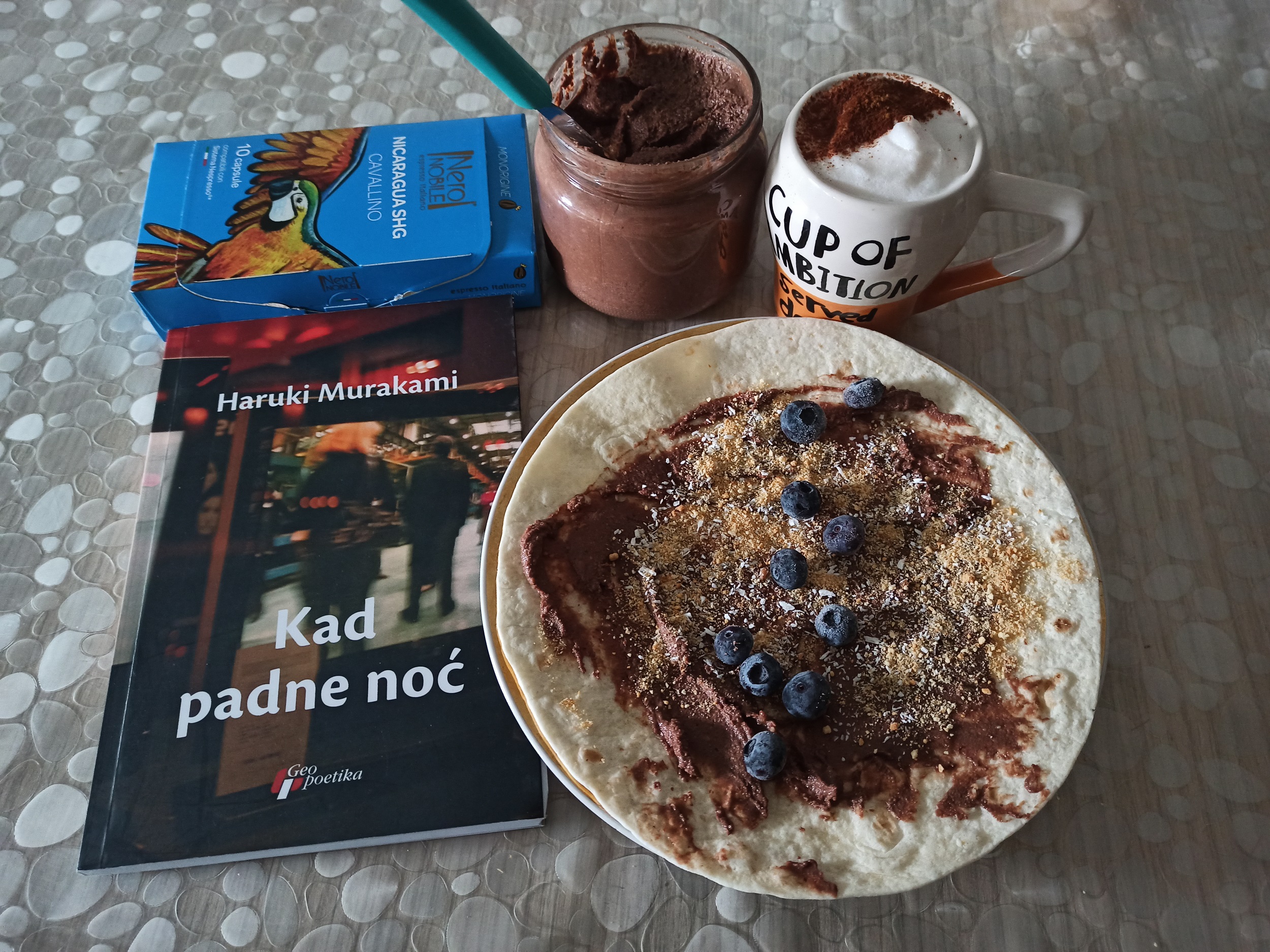
As far as I’m concerned, I’d place this novel in the same category as the newest “First Person Singular” – it’s not a bad novel, but it’s not something brilliant either. It’s simply OK reading (at least for me as his fan), but I wouldn’t exactly suggest it as a first novel to someone who’d want to get acquainted with Murakami’s opus. Maybe rather something about running? 😀
And you, dear reader, what happens with you when night falls? 🙂

Author’s website
Book price: Geopoetika | Delfi | Vulkan | Makart
Ratings (and purchase) on foreign sites: Goodreads | Amazon | Audible | Bookdepository | LibraryThing | Waterstones