





No Longer Human
If you thought only Russian, English, and (occasional) French classics could delve into the theme of human soul despair, just wait until you see what Osamu Dazai and his “No Longer Human” will do to you in less than 120 pages!
What all can fit on 120 pages? Well, let’s say, the writer’s farewell letter, in the form of a quasi-autobiographical memoir, a work that entered the classics of modern Japanese literature, and is considered the second best-selling Japanese novel, after the legendary “Kokoro” by Natsume Sōseki?
Yes, that’s what awaits you here.
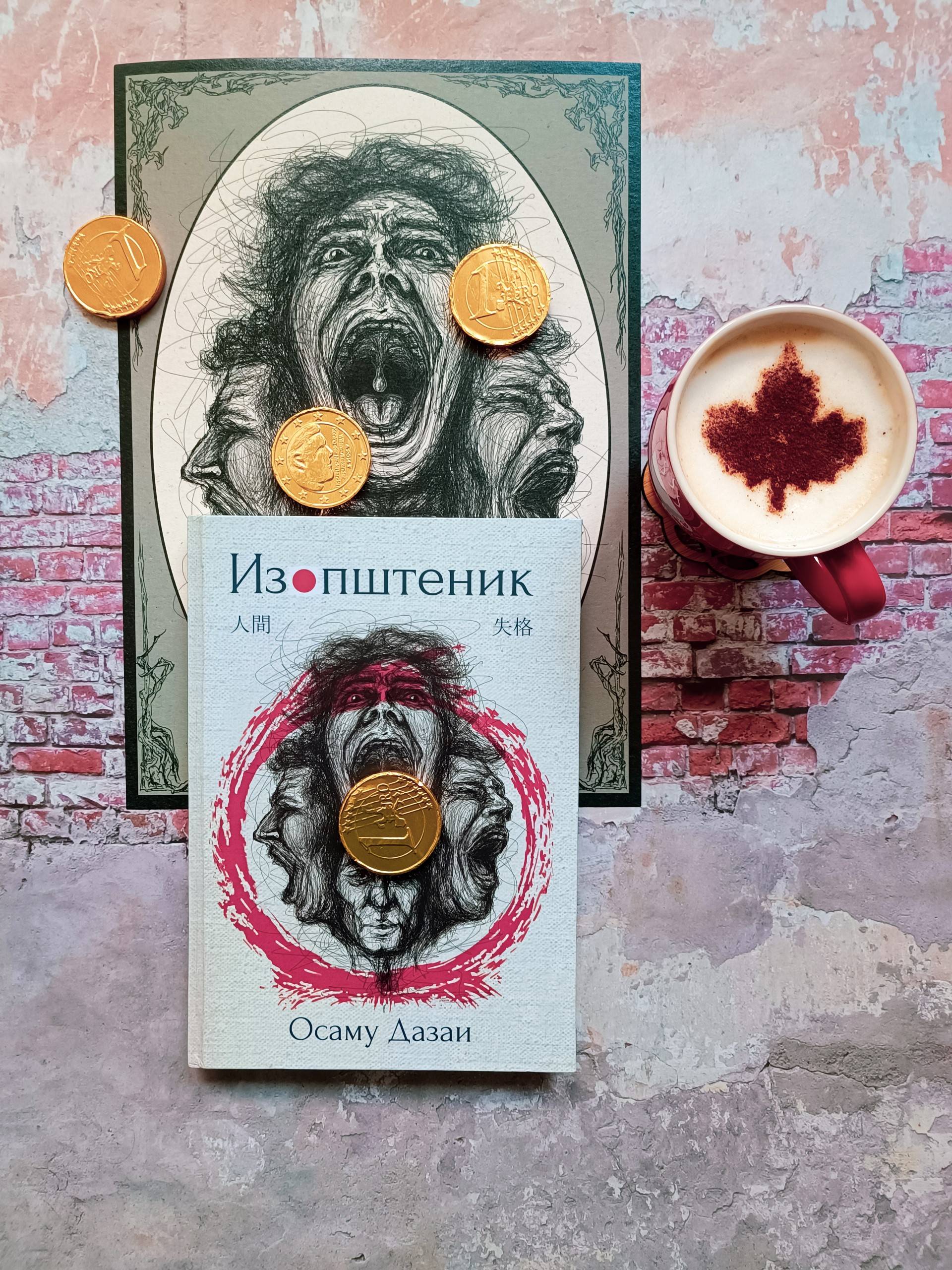
“No Longer Human,” from the first moment you pick up the book, evokes a feeling of unease, starting from the title page, i.e., the book cover (regardless of whether you bought the book in the “Žir” or “Tanesi” edition), which clearly indicates that we’ll immerse ourselves in something complex like the human psyche and soul.
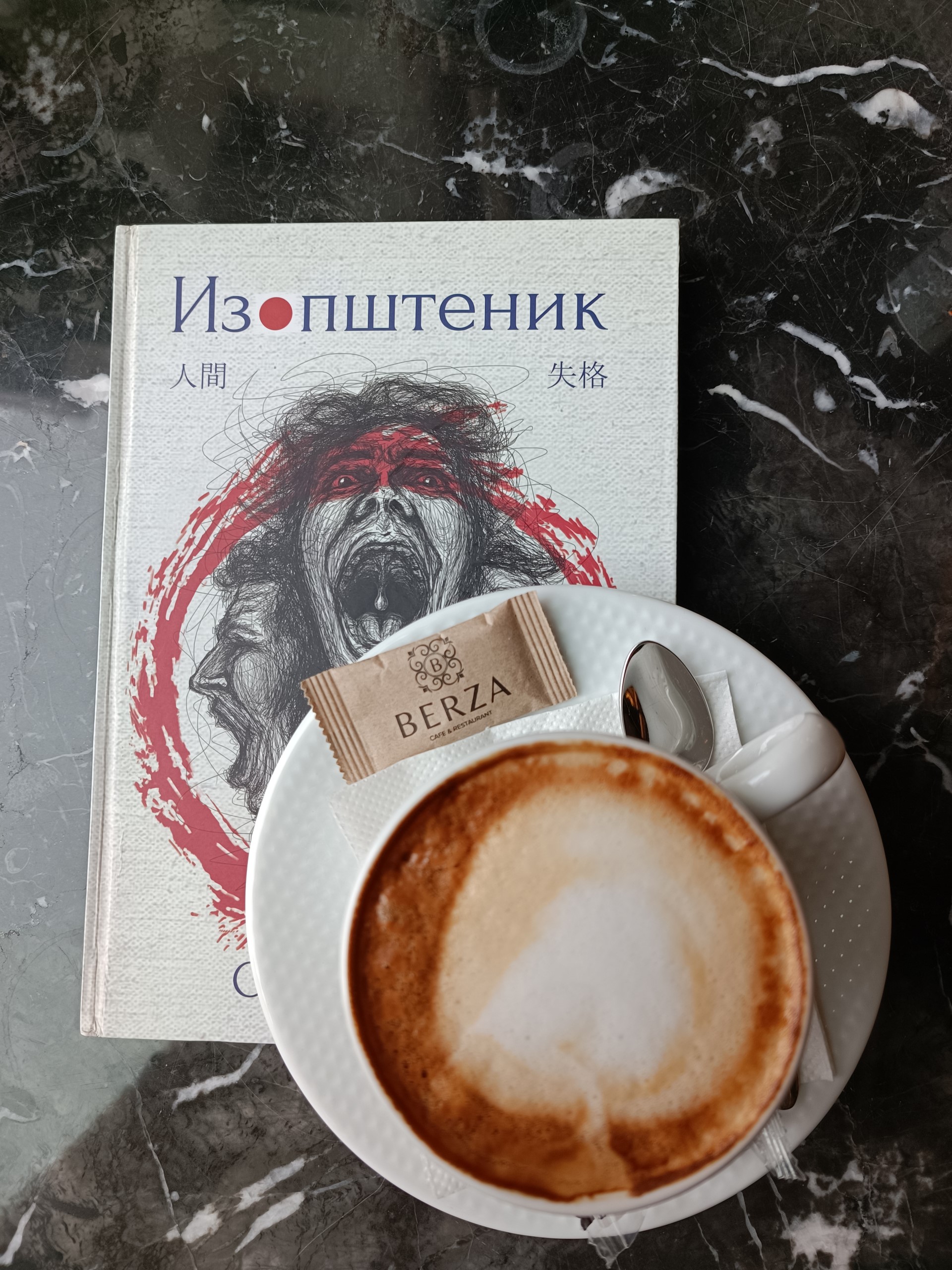
So, after you’ve swallowed the lump in your throat because of the cover, the first introductory sentence “I saw three photographs of that man” will (again) awaken unease in you, and “The First Notebook” (the novel is divided into three chapters, i.e., “notebooks,” plus an introduction and epilogue) begins with the sentence “I have led a life full of shame.”
Even if you’re (like me) a person who doesn’t like “heavy” novels, “No Longer Human” will draw you into its vortex of dark emotions in its own strange way and won’t let you go until you finish it.
And those emotions you’ll experience and feelings that will accompany you… darkness, anxiety, pain, confusion, rawness, disappointment, occasional bursts of empathy for the main character, cruelty, emptiness, lethargy, sadness, sarcasm, occasional bursts of hope, self-examination…

The main character of the novel is Yozo Oba (the titular “No Longer Human,” who is, in fact, nothing but a fictional version of the writer). However, when it comes to Yozo Oba, using the word hero even in a general sense is too strong a word, it makes more sense to use the term protagonist, because in Oba there’s nothing worthy of admiration for you to award him the title of hero in any sense. I don’t know, even calling him an anti-hero is somehow praiseworthy for him.
The novel follows (relatively quickly) Oba through his growing up, from life in a family environment to the period when he “lives relatively independently”… yes, there’s a reason every word is in quotation marks…
Yozo Oba is a person who survives his life. Emotionally survives it. The reason is that he lives in constant fear of being left without love, and on the other hand, he believes he doesn’t deserve love and that, again, fills him with fear. And when you fall into such a vicious circle, it’s very important to recognize that hell you’ve fallen into and pull yourself out of it as soon as possible with willpower and discipline or with someone’s help, right?
Unfortunately, Oba doesn’t succeed in that… to be fair, he doesn’t even try.

But to receive even a bit of love and recognition from anyone, Oba is ready to do anything. To keep silent about others’ cruelly painful words and humbly smile and shrug his shoulders, to blindly follow some people without much thought, to make a fool of himself when needed… Oba often emphasizes how he makes a clown of himself whenever necessary, precisely out of fear of being rejected.
But this doesn’t help him at all through his growing up, so he tries to find (weak and quite destructive) comfort in art, alcohol, prostitutes, and joining a leftist movement. However, he doesn’t succeed for a moment in easing his bitterness and fears. Alcohol simply serves him to babble nonsense until he falls asleep, he doesn’t experience prostitutes as a way to fulfill his fantasies, urges, or heal frustration, but literally experiences them (in some strange way) as some kind of worthless beings with whom he can find an occasional moment of peace (or as he said about them, “more like something resembling idiots or lunatics, yet in their embrace I could find calm and sleep soundly”), and even he doesn’t seem to understand why he agreed to be in the company of leftists, when he neither shares their beliefs nor knows what they actually do (actually, he has an idea, but it doesn’t concern him much), and potentially endangers his life.
He has almost no friends, except Horiki, and if you have a friend like Horiki, you’re better off being alone or keeping 17 starving cats in your apartment. Horiki is also some kind of artist who constantly babbles something (and that suits Oba, because one of his fears is precisely that, in communication with people, that uncomfortable silence will occur), takes money from Oba, and he’s the one who introduced him to the world of alcohol and leftists.
In school, two things were predicted for Yozo Oba: that he’d become a skilled painter and that women would fall in love with him. The first didn’t really come true, but the second did, and in a quite strange way.

For some reason, Oba with his (weak) behavior is like a magnet for some very unusual women. Whether they’re manipulators, blindly naive, vulnerable, or very sharp, for some reason they were all weak for his immature and feeble behavior and tolerated his drinking.
His family increasingly distanced themselves from him (especially after his suicide attempt with a woman, in which only he survived), and he was effectively without money and support (except for occasional help from his older brother and a man close to his father, whom he called Flatfish), so he had to scheme to get money for alcohol (either working as a comic strip artist or forcing the woman who was with him at the time to pawn her belongings).
Simply, Yozo Oba is destined for a tragic fate. Actually, it’s not destined for him, he chose it himself because of his weakness.
And that’s one of the reasons why “No Longer Human” is a phenomenal novel, despite the heavy theme.
Somehow, you get the impression that the author (since this is, in fact, Dazai’s life story) doesn’t expect to awaken any remotely positive atmosphere in the reader toward Oba… somehow you feel that the closest “positive” (?) emotion you can feel for Oba is pity, which is, in itself, defeating, isn’t it?
It’s incredible, you know… Yozo Oba is simply a psychologically weak person who yearned for love and attention, it was his essential need, and if it had been provided to him somewhat, perhaps his life would have gone a different way. You want to blame his parents for lack of understanding, that those were different times when parents didn’t know psychology (though the situation isn’t better today either), that he was unlucky with friends, that his karma is heavy… but the moves he makes through life, due to his lethargy and fear, simply don’t allow you to feel any sympathy for the protagonist… as I mentioned, there’s nothing in him that deserves to be called a “hero,” even in the colloquial sense for someone to whom a novel is dedicated.
Despite everything, you don’t stop reading about the experiences of this tortured soul, left to itself which, on one hand, blames the world, and on the other hand, doesn’t have the strength to take a single correct step because of its weakness and fears, which make it willing to turn a blind eye to some very terrible things… perhaps you wouldn’t be wrong to say that Oba is inhuman (which is one of the translations of this novel by another domestic publisher) with some of his actions.
Despite the heavy (quasi-autobiographical) theme, this novel reads incredibly quickly.
I think it’s really hard to find a novel that manages in so few pages to shake the reader, presenting them with a person experiencing suicide attempts, social isolation and depression, and constant pessimism.
Somewhere I read (unfortunately, I can’t remember where) that a person wrote how they themselves suffered from depression and how they managed to “snap out of it” after the novel “No Longer Human.” I think there’s some weight to that statement. For many people, fighting depression and difficult family circumstances often requires professional help. But for some people, often just reading certain works can be a wake-up call for certain things. For example, for many, Oba’s actions can awaken some kind of disgust that makes a person wonder if someone can really be so weak, without the desire to change and fight against weakness and not allow themselves to go down that destructive path. You’ll surely wonder at some point whether Oba is a mentally ill person or is simply so mentally and spiritually weak and immature that he’s unwilling to fight with life.
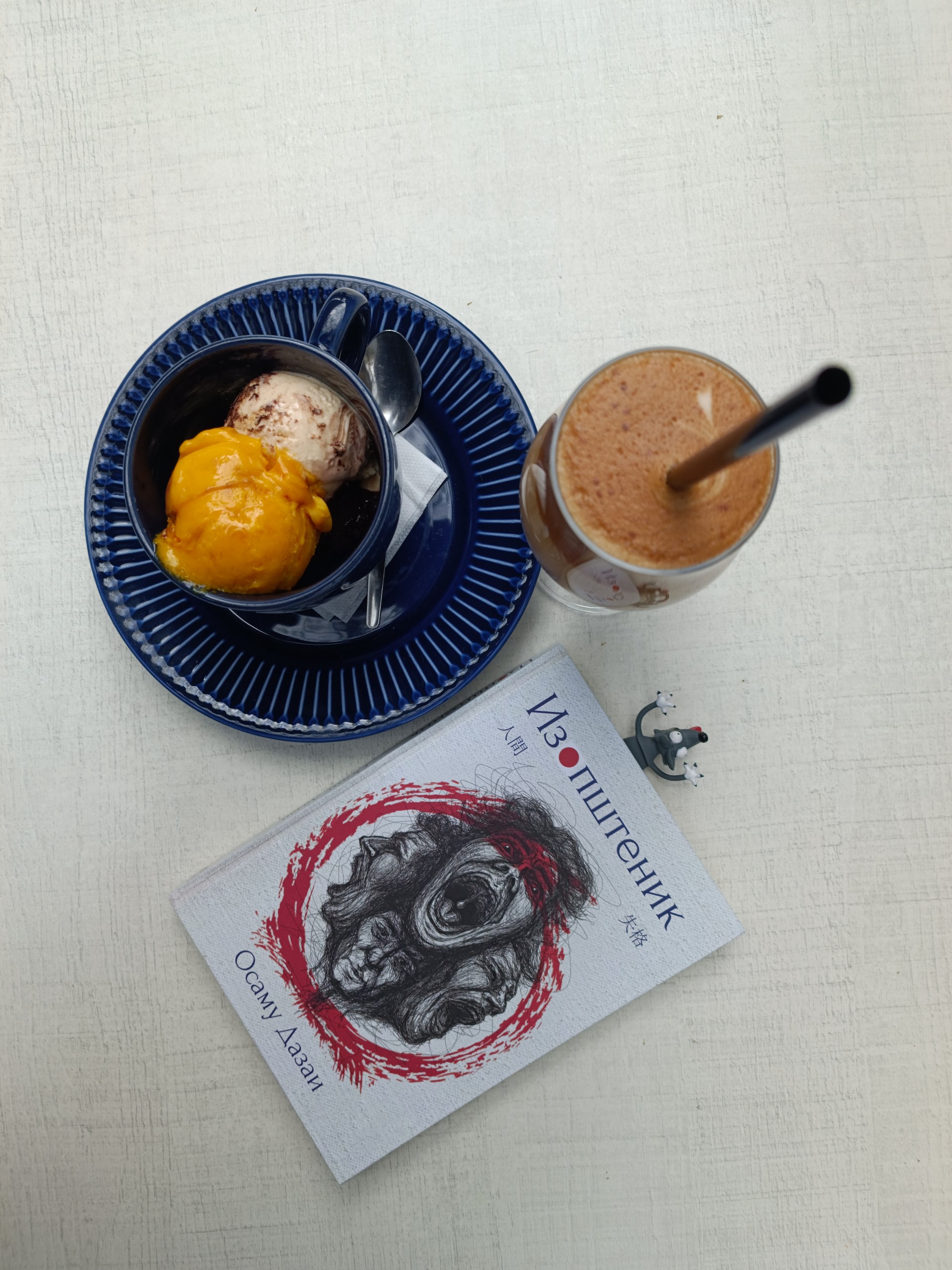
As you can see, “No Longer Human” by Osamu Dazai has complexity on several levels.
By the way, “No Longer Human” is this author’s last (completed) novel.
Be sure to read this writer’s biography, you’ll understand this quasi-autobiographical novel/memoir much better.
Because the work “Ningen Shikkaku” (in the original Japanese) is, when impressions settle a bit, justifiably, a masterful novel.
It had such an impact on popular Japanese culture that “No Longer Human” was adapted into a graphic novel done by a popular horror manga artist, there’s also a film, and anime titles have been made that are connected with this book and/or the author (and those titles are “Aoi Bungaku” and “Bungo Stray Dogs”).
And so, I think it’s clear to you that this is a title not to be missed, although it’s a heavy theme.
But after a short break, I think I’ll be able to dare to read Dazai’s penultimate novel, “The Setting Sun.”
And now excuse me, I’m going to watch “Bungo Stray Dogs.” 😀
And you, dear reader, do you think “No Longer Human” or “Disqualified from Being Human” is a better title? 🙂
P.S – If you bought the book in the “Žir Publishing” edition, pay attention to the small pictures in the lower left corner… and then try, as they used to do long ago, to quickly flip the pages, like rapidly.
Book price: Žir izdavaštvo | Tanesi | Vulkan (versions 1 and 2) | Makart
Ratings (and purchase) on foreign sites: Goodreads | Amazon | Bookdepository | Audible | LibraryThing | Waterstones