




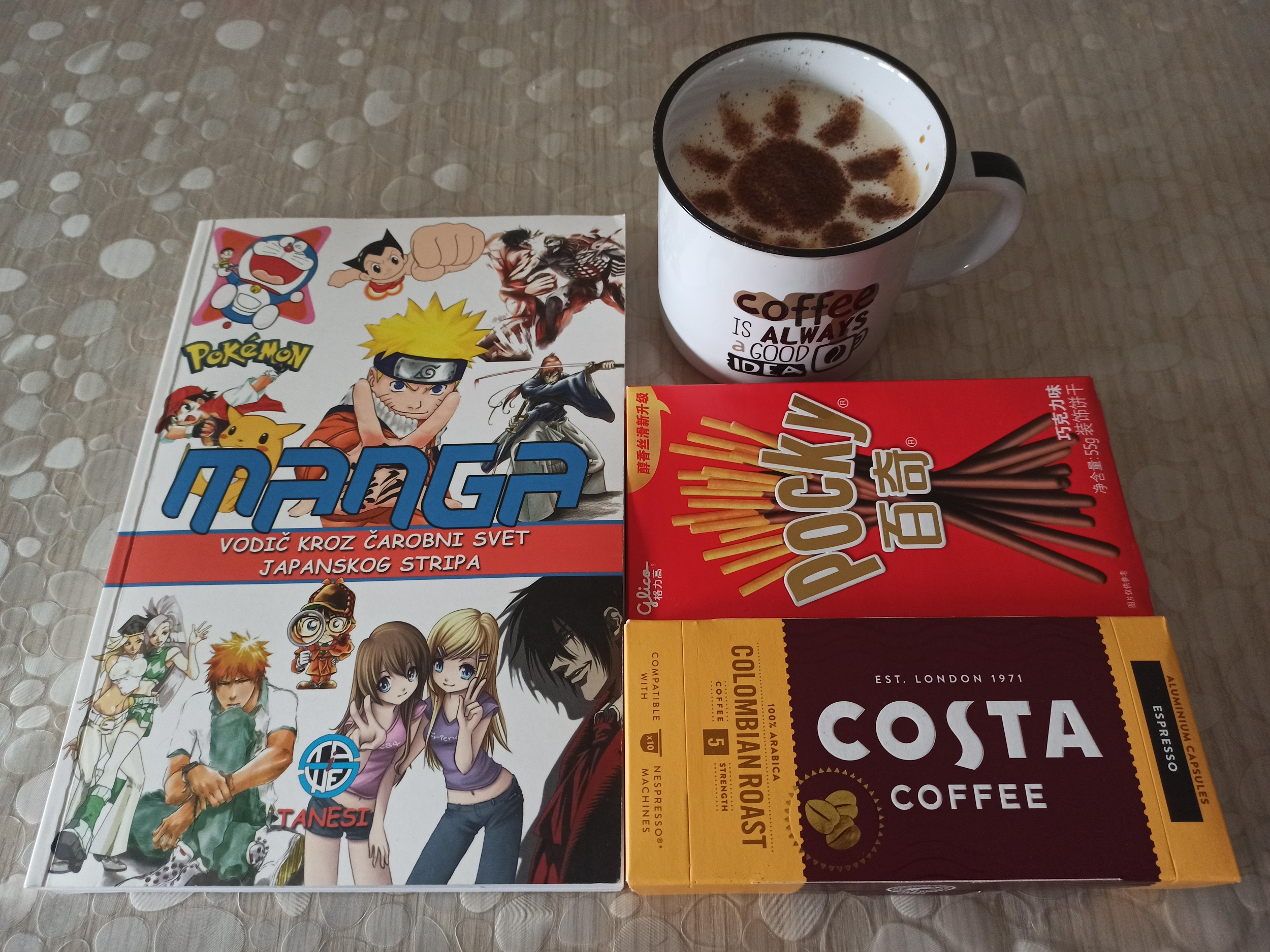
Manga
There’s a high probability that, if you belong to the millennial generation and younger (honor to older exceptions), you’re familiar with the term anime, i.e., Japanese animated series. There are divided opinions about them. Parents’ opinions are mostly that these series are mostly full of violence, perverted and often can’t connect why the heroes are most often elementary/high school students, and rarely college students or adults, and on the other hand touch on some quite serious themes. And on top of that, many also see young people “masquerading” in unusual costumes (cosplay) and walking around the city like that. In translation, they consider them generally harmful.
Life’s truth is everything can potentially be both harmful and useful, but it depends on the (mental makeup) of the person and environment in which they develop, i.e., grow up.
If you remember, for many years a “witch hunt” was conducted (though it still periodically becomes relevant now) when it comes to video games that they encourage violence, that at one point science had to stand up to prove that’s not true (moreover, that in moderate doses there are benefits). If some child grew up in conditions where parents neglected them (either through aggression/violence, or by buying things to compensate for their emotional absence), if they were primarily raised by the street, and school (e.g., other students) bullied them, if they were constantly bombarded (manipulated) by media information encouraging fear, just any trifle was enough to push that child over the edge into chaos.
It’s not that one chocolate bar guilty for 130 kilos gained and health problems, but unhealthy diet for decades back and tons of (unnecessary) eaten food to compensate for some emotional deficiency.
So let’s summarize this introductory part for any parents reading this. Dear parents, when you enabled internet for your child (and you must enable it at some point, if you don’t want them to lag behind today’s society, because, what can you do, that’s our society), be assured that in a short time they easily figured out how to access America’s porn industry and horror films with exploding limbs and spilling guts. Japan was, after all, after World War II, for decades under US influence, so many of their perversions, they simply animated… and then continued on their silly path. 😀
And besides, if you’re not aware, read research encompassing famous “Disney” cartoons, which increasingly draw conclusions that, although not visually violent, psychologically many of them were quite twisted and stereotypical, and we weren’t even aware…
And so, to (again) summarize the story for parents, if you have dilemmas about anime titles, inform yourself more about them, because there’s a reason why a large number of adults watch these series too. Some of them hide many phenomenal life messages and themes from which we can learn a lot. And they’re also very entertaining. 🙂
And if you look at some creations of “Ghibli” studio, I guarantee it’ll change your (generally negative) image of them.
“Princess Mononoke” is, for example, considered, generally, a film classic.
For (I hope, sufficiently mature) young people, I boldly proceed from the assumption that, if you’re reading this blog and know my positions and worldview generally, that you’re smart enough to distinguish what’s healthy and what’s unhealthy in anime titles.
Now, what’s this unusual introduction for that probably had a “wtf” reaction from people who know anime?
Well because today’s topic is a review of one book that can be useful for everyone. 🙂
“Manga: A Guide to the Magical World of Japanese Comics” (hereafter: “Manga”) is a story about what many also know as “Japanese comics.” Yes, yes, those are those black and white comics in booklet form read in opposite order from standard books and comics.
For those who (maybe) don’t know, to roughly summarize, anime are precisely screen adaptations of those comics.
Manga became relevant in Serbia only (I’d say) in the last ten years. First they shyly appeared in bookstores in English editions, and now it’s no surprise to see them translated into Serbian too. Now they also have their (deserved) shelf in bookstores, just as “Marvel” and “DC” comics always had, Italian wave with “Martin Mystère,” “Zagor,” “Mr. No,” “Alan Ford” (“Better to seem a fool than fall out of the train”) and many other comics.
Now, why is this book/guide “Manga” a good thing?
Because it introduces us, primarily, to (phenomenal, yet eccentric) Japanese culture, and explains how the manga/anime phenomenon influenced the world and its pop culture, as well as vice versa.
The “Manga” guide can be roughly divided into two parts.
The first part will take us through the concept of “manga,” its history, general division of manga into age/target groups (shonen, shojo, seinen and josei) and who they actually encompass, as well as what (countless) genres exist within manga (martial arts, family themes, fantasy, horror, Japanese history, yakuza, animals, culinary, magical girls, mecha, ninjas, occult/religious motifs, politics, business themes, romance/love, sports, superheroes, video games and various other genres).
The second part describes some of the most popular manga titles. It touches on their plots, main heroes’ goals, as well as what Japanese motifs influenced the (author’s) creation of that manga and what significance it has for Japanese culture. You’ll get to know some of the most popular titles such as Doraemon, Naruto, Attack on the Titans, Full Metal Alchemist, Hellsing, Berserk, Akira, One Piece, Bleach, Rurouni Kenshin, Death Note, Mobile Suit Gundam, Conan, Dragon Ball, Astro Boy, Pokemon, GTO, Sailor Moon, Yu-Gi-Oh and many others.
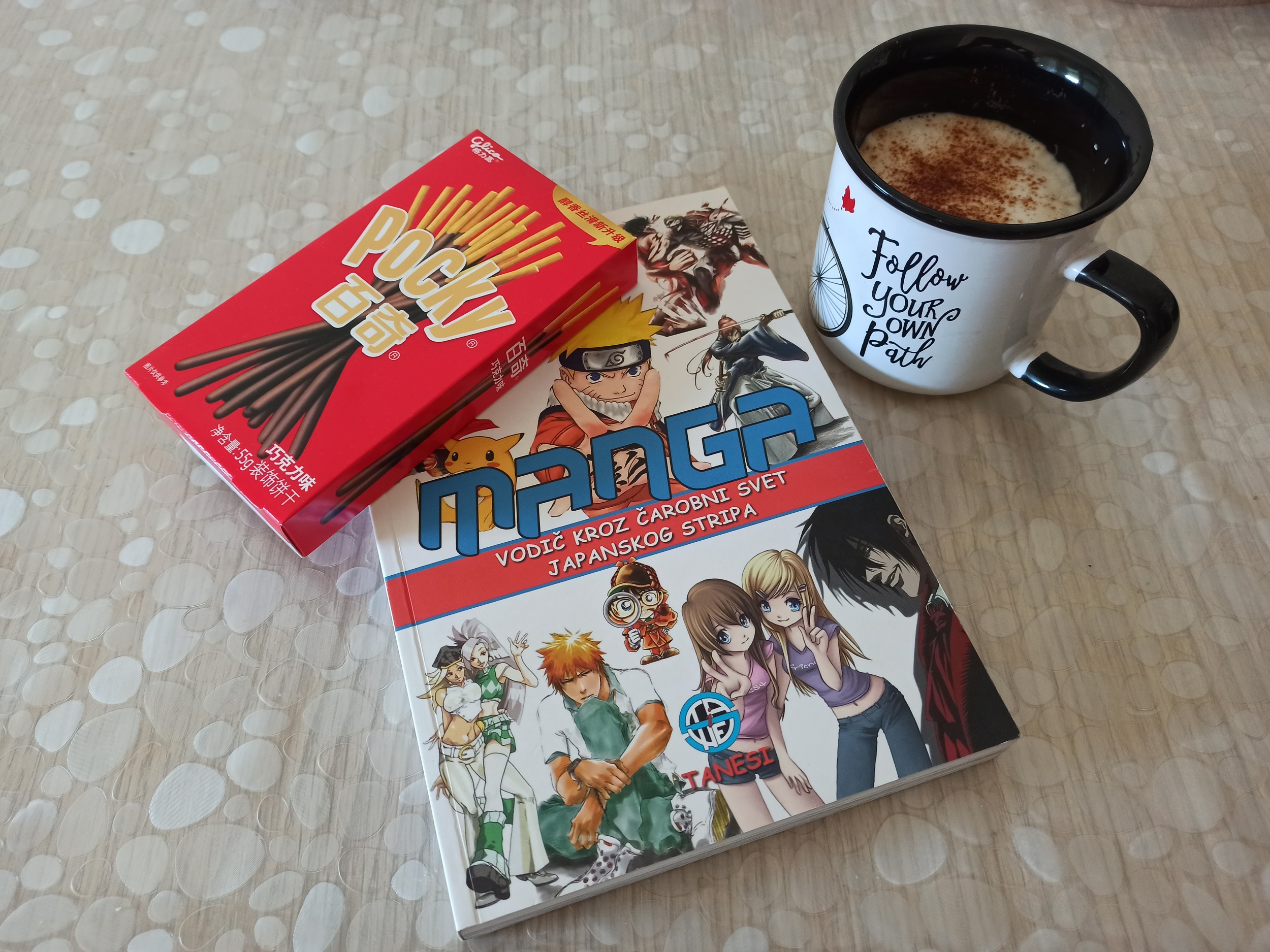
Of course, a large number of mentioned manga experienced their animated screen adaptation. Even if you lived under a rock without internet access and have an aversion to Asia generally for God-knows-what (unfounded) reason, you couldn’t help but hear these expressions: Dragon Ball (and of course, nothing without “dragon b*lls” or screaming “kamehamehaaaaaaaaaaaaaaaaaa!”), Naruto (and some brat screaming “shadow clone!”), One Piece, Death Note, Pokemon, Yu-Gi-Oh (and again at least one brat in the block who played those cards and screamed “yugioooooooooooo!”), Bleach (there’s some idiot in my block who always screams “BANNKAIIII!!!” when trying to squeeze out one more rep with weights because he lives in the belief that screaming extracts some additional strength potential………..oh wait, that’s me… never mind, ignore the previous statement…) and some other names you wondered what the hell they mean.
And now, a bit seriously.
The “Manga” guide is quite solidly done. As I said, it tried to cover manga’s origin itself, genres, as well as some of the most popular titles. It’s filled with a large number of drawings/prints from various manga, and the central part (which divides the guide into two parts) is done in color.
I think it’s quite precisely done explanation of both concepts and titles themselves (yet again, sufficiently in layman’s terms for everyone to understand). Of course, everyone will always find some remark, i.e., how they would interpret something (and I who’m not at all some manga expert had a comment or two), but hand on heart, the point of this “Manga” guide is also to be elementarily written so everyone can understand it. Fans would certainly love for 10 experts to gather to do a detailed guide, but then we’d get an encyclopedia that young (unemployed) people couldn’t easily afford (because hahaoya and chichioya would probably unanimously yell “Nani?! Tondemonai! Anata no heya ni iki nasai!”), and young (employed) and older (employed) would know the “Infostan” bill is still priority, and that it’s not exactly an investment worth eating meat only on Sundays (and if you happen to have a spouse, they’d probably also yell “Nani?! Tondemonai! Anata no heya ni iki nasai!”).
What’s super about this “Manga” guide?
Well it’s that it’s truly for (almost) everyone.
It’s primarily informative/educational in character.
It’s a great gift for someone who loves Japanese culture or wants to get to know it a bit better in this way, i.e., through manga medium. Those who truly love and follow the manga/anime world will certainly be delighted with this gift. And considering a good part of described manga has been adapted to screen, maybe it’ll give you an idea what to watch (or read).
A good thing is the “Manga” guide can also be read by parents, to understand a bit better what it is that captivated their children (and generally young people) with this world. And who knows, maybe you’ll like that world too and discover something new and interesting. And especially if you have a younger child, you can also in more subtle ways guide them through this manga/anime world, because there are many, many instructive things to read/watch for life generally.
And you, my kawaii reader, how much do you know the manga/anime sekai? 😀
Book price: Tanesi | Vulkan