





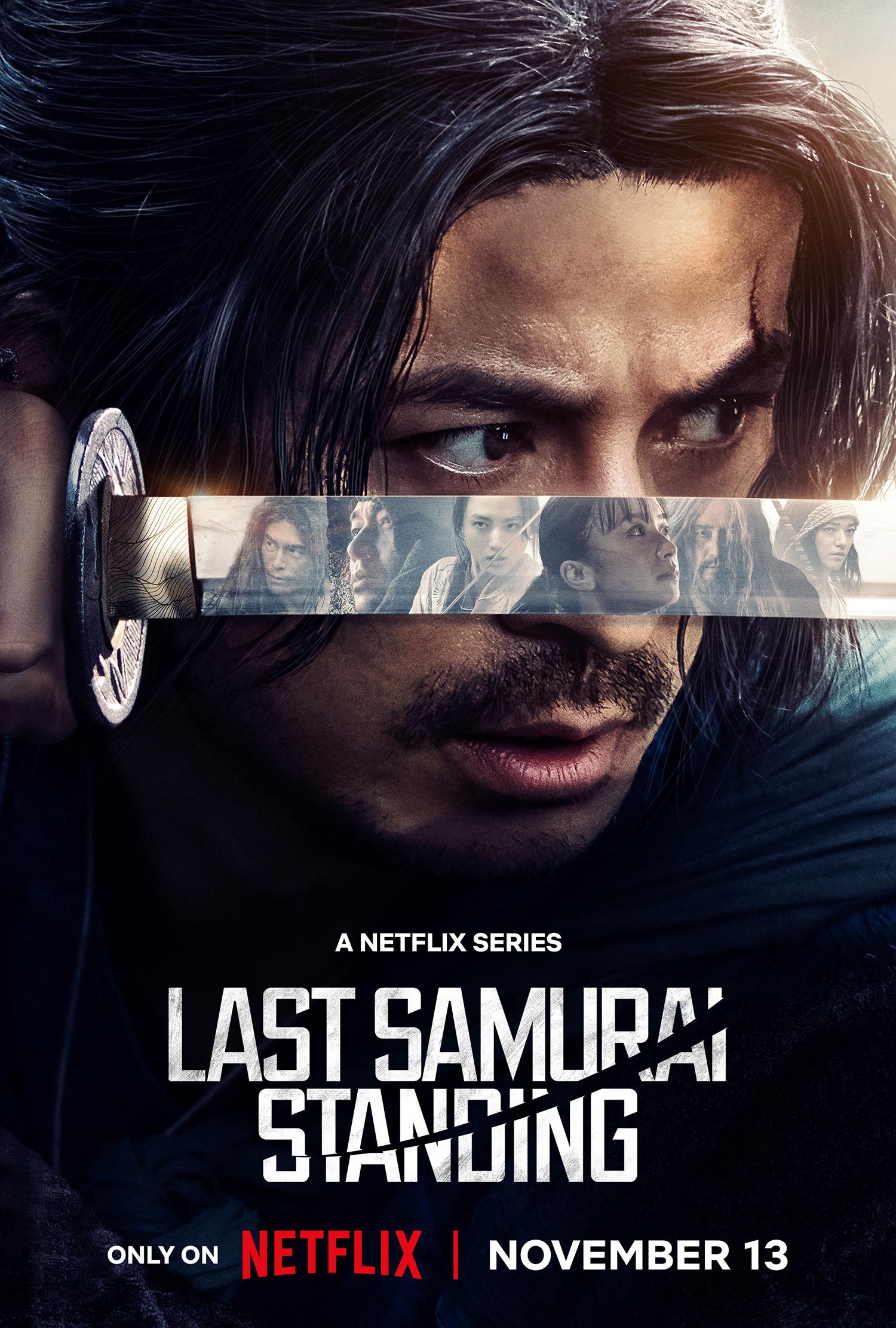
- “Last Samurai Standing” takes us to the Meiji period, where an impoverished former samurai, Shujiro Saga (once the infamous hitokiri Kokushu) enters a lethal game called “Kodoku” (seven checkpoints on the road to Tokyo, with name tags taken from other contestants) to win the prize money that could save his ailing family.
- Comparisons to “Squid Game” miss the point entirely; what actually holds your attention are the layers of subplot woven into the main race: Saga’s past and the Kyohachi-ryu heirs, the motives of the other contestants, the mysterious Organizer and his backers, and the investigation led by Okubo Toshimichi and Kawaji Toshiyoshi.
- With superbly choreographed action, a convincing late-19th-century atmosphere and solid acting headed by Junichi Okada, season one delivers on expectations and leaves plenty of cliffhangers for what comes next.
“A samurai was, essentially, a man of action.” – Inazo Nitobe (Bushido: The Soul of Japan)
If you’re on the fence about watching because of comments claiming that “Last Samurai Standing” is just a new take on “Squid Game“… don’t pay attention to them. The fact that it has contestants and a prize doesn’t automatically make it derivative or even comparable to “Squid Game”… that’s like saying the Korean hit’s true predecessor was “Mortal Kombat“… makes no sense whatsoever… at least not if season one of “Last Samurai Standing” is anything to go by.
Welcome to Japan. It’s the Meiji period (late 19th century). This is the era of expanding Western influence on Japan (culture, dress, technology, and so on) which has left the samurai class in rapid decline, banned from carrying katanas (except for the police), and stripped of every privilege they once had, material and otherwise. In short, samurai are now a relic of the past, reduced to (quite literally) paupers. There’s no more need for regional wars, and why would anyone reach for a blade when rifles and cannons have arrived from the West.
But this is also the era of cholera. Shujiro Saga, a former samurai, has just lost his little daughter to the disease, his wife is sick as well (and it’s anyone’s guess how long she’ll hold on), and his young son is at daily risk of falling ill. They live very modestly, so there’s no money for medicine or a doctor. Then comes a stroke of luck in the middle of misfortune (or maybe not): Saga comes across a mysterious announcement for a martial tournament in Kyoto, to be held at a temple (Tenryu-ji), with a prize of an astronomical 100,000 yen (today that would surely be a few million dollars). So Saga sets off for Kyoto.

When he arrives at the temple, he finds a huge crowd of contestants of every stripe waiting there (though mostly former samurai). To everyone’s surprise, a police officer appears as the “host” of the event and explains to the participants that they are part of a game called “Kodoku.” Each participant receives a wooden tag with his name on it, and the task is to pass through seven checkpoints on the road to Tokyo. The catch is that at each checkpoint a contestant must hold a certain number of tags in order to continue… and those tags have to be taken from other contestants… by the way, did I mention that nearly all the contestants are former samurai and that they’re all armed?
Naturally, quitting isn’t an option, and any attempt to run or drop out (or the loss of your own name tag) earns you a bullet to the head. The contestants are watched at almost every step (especially in populated areas) by police armed with rifles, who aren’t allowed to intervene unless the rules are broken.
To say that the opening at the temple makes “Mortal Kombat” look like toddlers scuffling in a sandbox is an understatement. Saga manages to survive the slaughter without killing anyone, and along the way becomes a kind of protector to one of the contestants (a young woman with no combat experience at all), because she reminds him of his daughter…
What makes “Last Samurai Standing” genuinely interesting – and what holds the viewer’s attention – is that several layers of smaller storylines are woven into what looks like a straightforward main plot (reach the finish line, keep your own head, shorten a few others).
For starters, our protagonist has a rather heavy history. The opening scene shows us that Saga took part in the final conflict (the Boshin War) that brought about the Meiji era and the period of peace that followed. But that day on the battlefield left its mark on him and made him realize the age of the samurai was over: even though the outcome had already been decided, a volley of gunfire and cannon fire came from an unknown direction and killed nearly all the samurai on both sides — and that day would haunt him for the rest of his life.
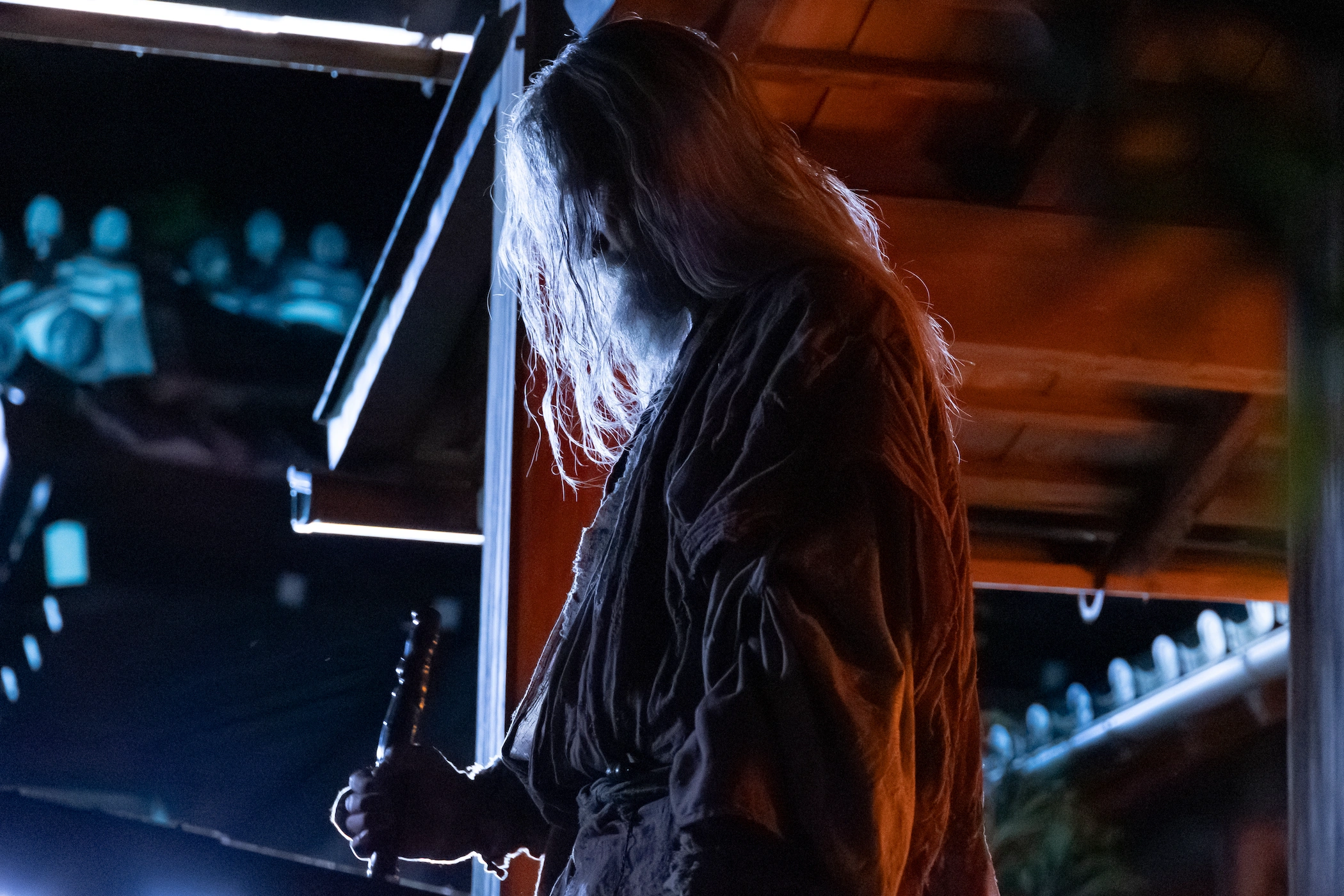
Since then, Saga hasn’t picked up a sword in more than ten years, and whenever he tried to draw the katana from its scabbard, his hands would start to shake and the strength would leave him. Cowardice, rust, fear of war trauma? None of the above… during the war Saga wasn’t some rank-and-file samurai, but a man who carried a specific “title” — hitokiri Kokushu (“Kokushu the Manslayer”). In other words, he was a samurai of the highest skill and a genuine angel of death on the battlefield. And he knew that the next time he drew that sword, he would “become” that infamous killer all over again.
On top of all that, Saga has no memory of his childhood – only that he was adopted, along with seven other children, by a mysterious samurai who taught them an ancient killing art (Kyohachi-ryu), and that once they grew up, an even more mysterious head of the “house” (Gentosai) ordered the “brothers and sisters” to kill each other off, since there can be only one heir to the Kyohachi-ryu style.
We also learn about the pasts of several other “Kodoku” participants and their motives for entering this lethal contest.
And then there’s the question of who exactly the mysterious Japanese businessmen backing “Kodoku” are (entertaining themselves and placing bets on which samurai will clear each stage of the “race” first, much like the mysterious aristocrats in “Squid Game”), as well as who the mysterious “Organizer” of the game is – someone with enough pull to bring the police over to his side to “assist” him in enforcing the rules.
It also turns out Gentosai isn’t happy that all the orphans and heirs to Kyohachi-ryu are still alive…
There’s a national dimension to all of this for Japan as a country, too. One of the most important men of the period, statesman Okubo Toshimichi, together with Kawaji Toshiyoshi, the head of the police, is trying to work out why so many former samurai are gathering in one place – is this a new attempt at rebellion, or something else…
Naturally, the first parallel that came to mind was the “Rurouni Kenshin” series and live-action films, since they’re set in essentially the same period (the Meiji Restoration): the modest (impoverished) protagonist was, during the war, one of the key military figures operating largely from the shadows as a hitokiri; he has a connection to a high-ranking official (Okubo) that he refuses to use for his own benefit, only in the interest of preserving peace; he’s aware the age of the samurai has passed and will do anything to protect those close to him; and, of course, he’s the heir to a distinctive fighting style (learned under a mysterious master) that often gives him the upper hand in combat.
What’s interesting is the difference between Saga and Kenshin when it comes to taking a life. Kenshin clings fiercely to his decision never to use the sharp edge of the katana (and to the risk that failing to kill someone might drag him back into the mental state he was in as a hitokiri), whereas Saga avoids drawing the sword at all – but in certain situations he won’t hesitate to turn the sharp edge and take a life once he’s pushed into a particular state of mind (see the scene where the police execute contestants trying to quit the game). For Kenshin, his past as a killer is something he has accepted but set aside in order to live a quiet life; for Saga, that killer element is somehow always present.
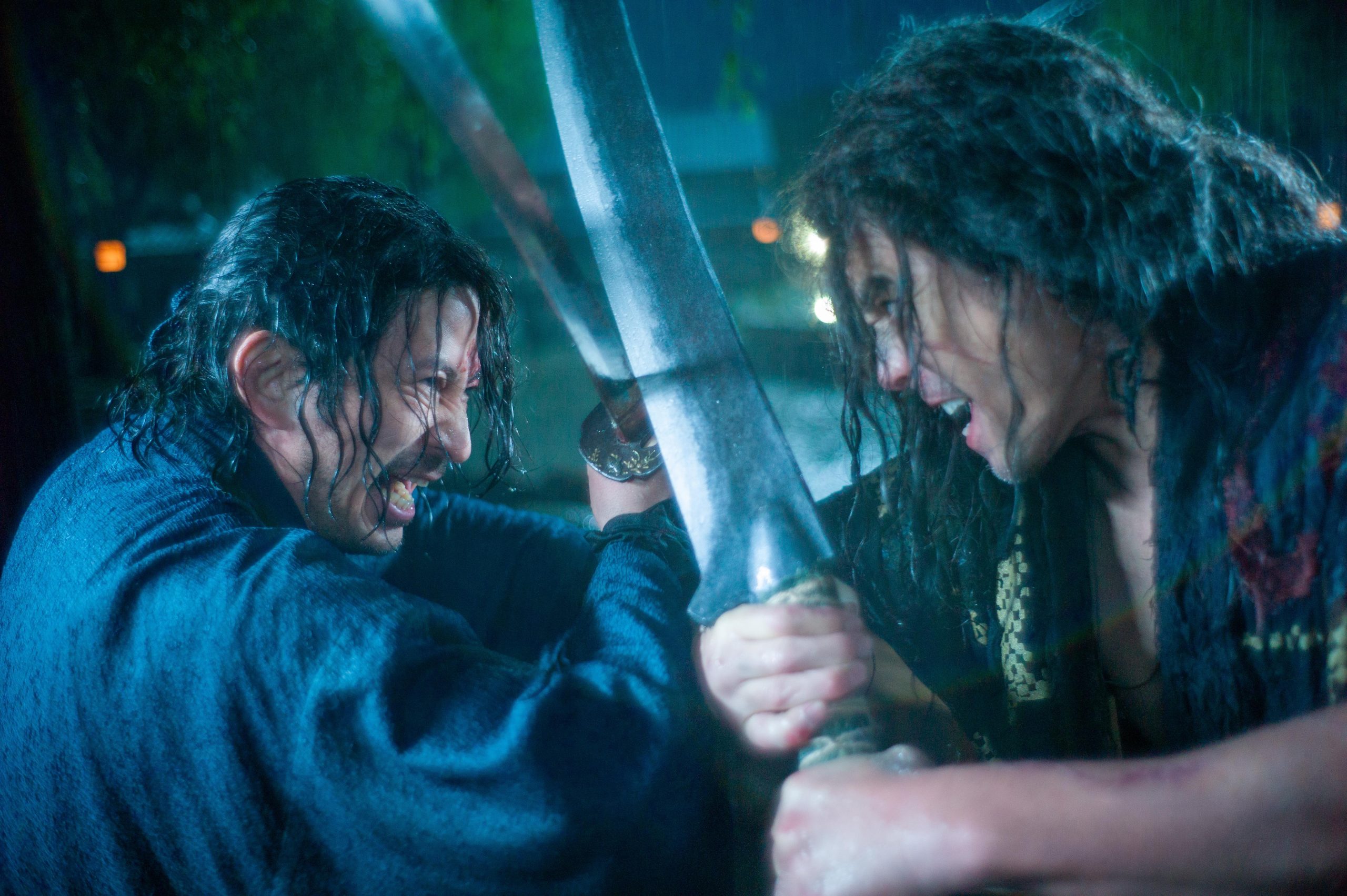
The action in “Last Samurai Standing” is superbly executed. The lead actor (who is also a producer on the series) doubles as the action choreographer, and he’s made sure the confrontations are genuinely dynamic, tense and remarkably realistic – while sitting just on the edge of the supernatural (the speed of the swordplay, arrows that subtly change direction) in order to convey the skill of veteran samurai (as well as ninja and archers) in combat. Whether it’s the chaotic melee at the temple in the opening, clashes between smaller groups, or samurai duels in the villages, top-tier action is guaranteed.
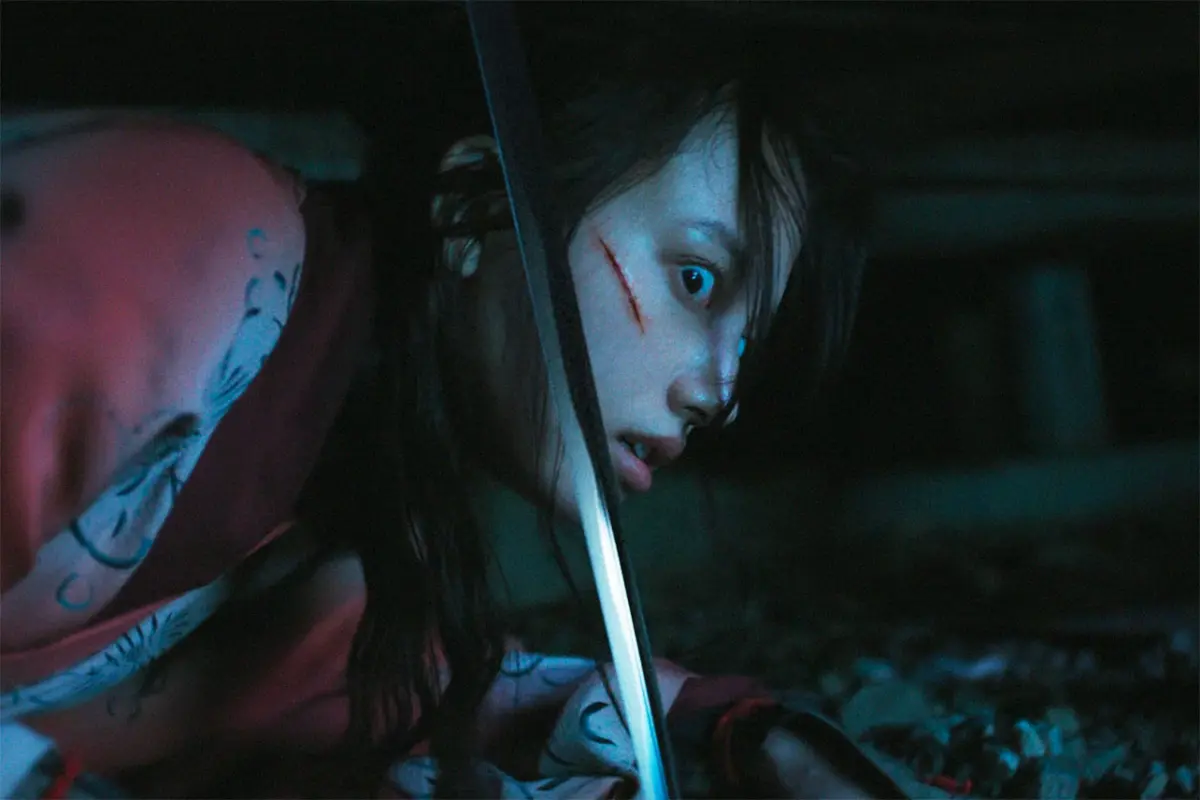
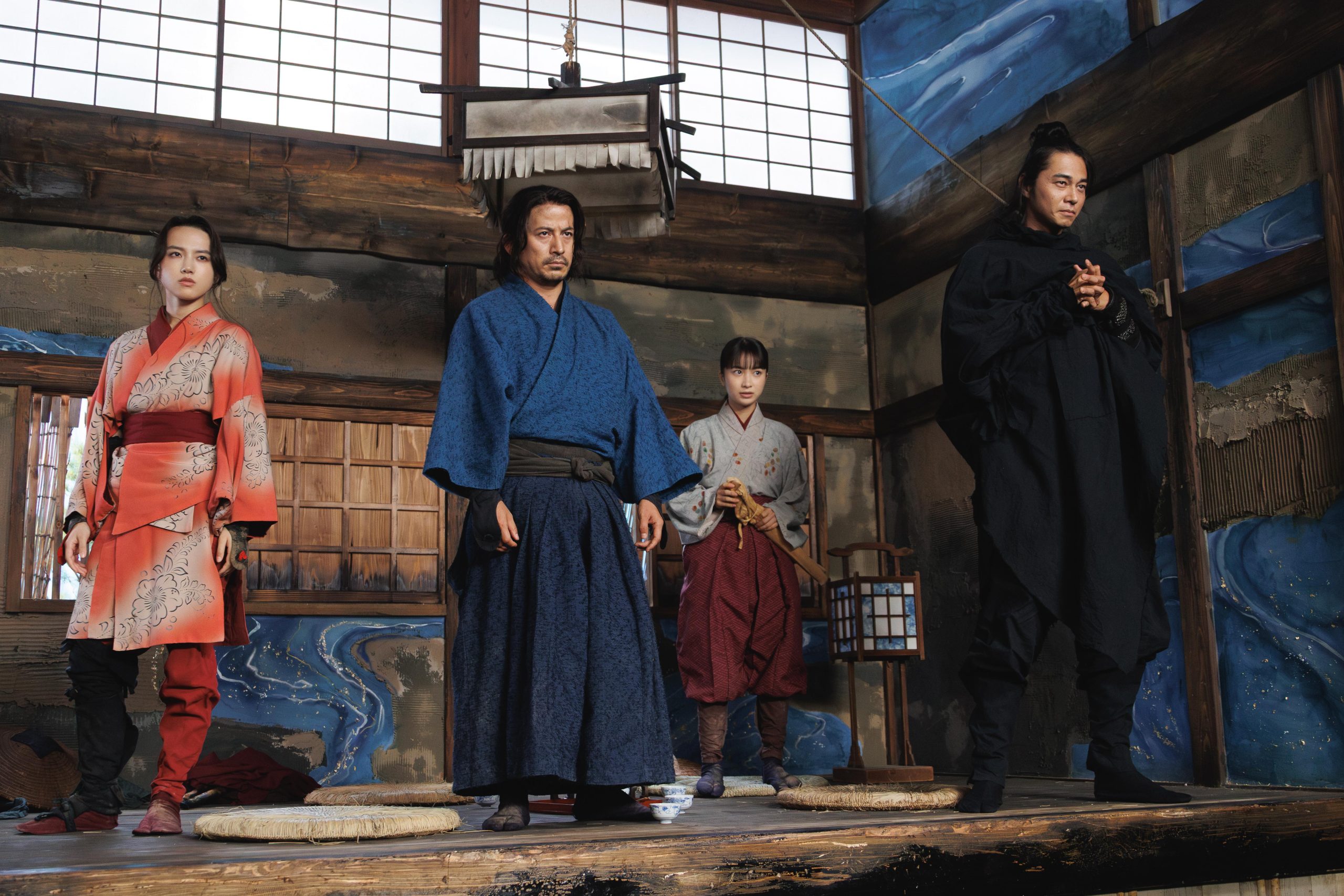
Visually and musically, the series is just as well put together and really captures the atmosphere of late-19th-century Japan (or at least I think it does going by pictures and texts, since I wasn’t around back then 😁), from the look of the locations to the costumes.
The acting is on a very respectable level too. Junichi Okada dominates, of course (samurai films are nothing new to him, and interestingly he’s also a member of a J-pop band), and the actor who breathed life into the feral Bukotsu deserves a mention, as does the one who played Kawaji.
All in all, “Last Samurai Standing” met expectations with its first season, and audiences will surely be waiting impatiently for a second, because plenty of cliffhangers have been left hanging. We can certainly expect even more action, but also the clearing up of a lot of, well, uncleared-up things.
Either way, the series comes recommended.
Rating: 4.00/5
For fans of: the “Rurouni Kenshin / Samurai X” series and films, Battle Royale-style premises, and samurai films in general
Trailer
Imdb | Rotten Tomatoes | Metacritic
Format: Series
Number of episodes: 6
Premiere: 2025
Average episode length: 50 minutes
Where to watch: Netflix