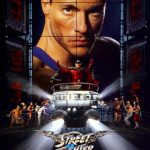




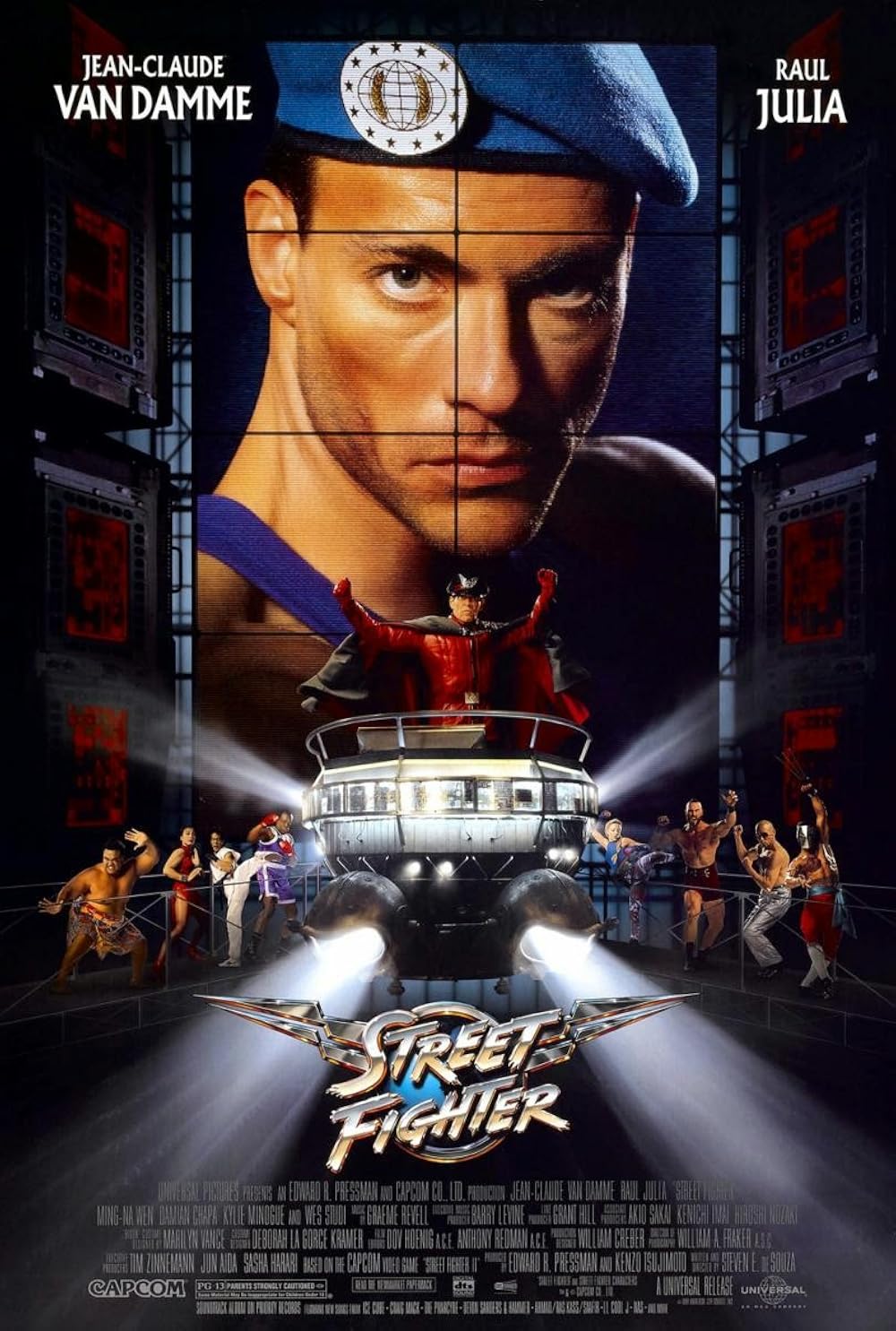
- “Street Fighter” (1994) follows Colonel Guile as he tries to free hostages and bring down General M. Bison in the fictional Shadaloo City… without a single tournament (which has always been the heart of the SF games).
- The plot is chaotic, the dialogue is painfully clichéd, and the production was such a mess that it’s a small miracle the film was finished on time at all. The bright spots are Raúl Juliá in his final big-screen role, the comic Dee Jay, and the final showdowns where we finally get to see (a few) moves from the game.
- The film gets a low rating and is recommended purely for nostalgia, as a warm-up for the new “Street Fighter” arriving on October 16.
“For you, the day Bison graced your village was the most important day of your life. But for me, it was Tuesday.” – General M. Bison
A smoky arcade in the ’90s. INSERT COIN written in huge letters across the screen. The sound of a token dropping through the machine. And then you hear the famous voice of the arcade announcer:
“Round one… FIGHT!”
In just a day or two (October 16), the new “Street Fighter” hits theaters, directed by Kitao Sakurai. At first glance the name doesn’t ring many bells, but he has worked on projects like Netflix’s “Beef” and “The Eric Andre Show.” The cast includes Andrew Koji as Ryu (great in “Warrior”), Noah Centineo as Ken, Callina Liang as Chun-Li, Jason Momoa as Blanka and Cody Rhodes as Guile. With a lineup like that, this will either be a flawless victory or a cheerful (sad?) “GAME OVER!”
But before we drop a new coin in for the new movie, it’s time to return to the scene of the crime. The year is 1994. “Street Fighter II” rules every arcade, every kid knows how to pull off a Hadouken, and Hollywood decides to turn it into a movie. Starring Jean-Claude Van Damme. On paper, it looks like a guaranteed hit. What could possibly go wrong?
As it turns out… almost everything…
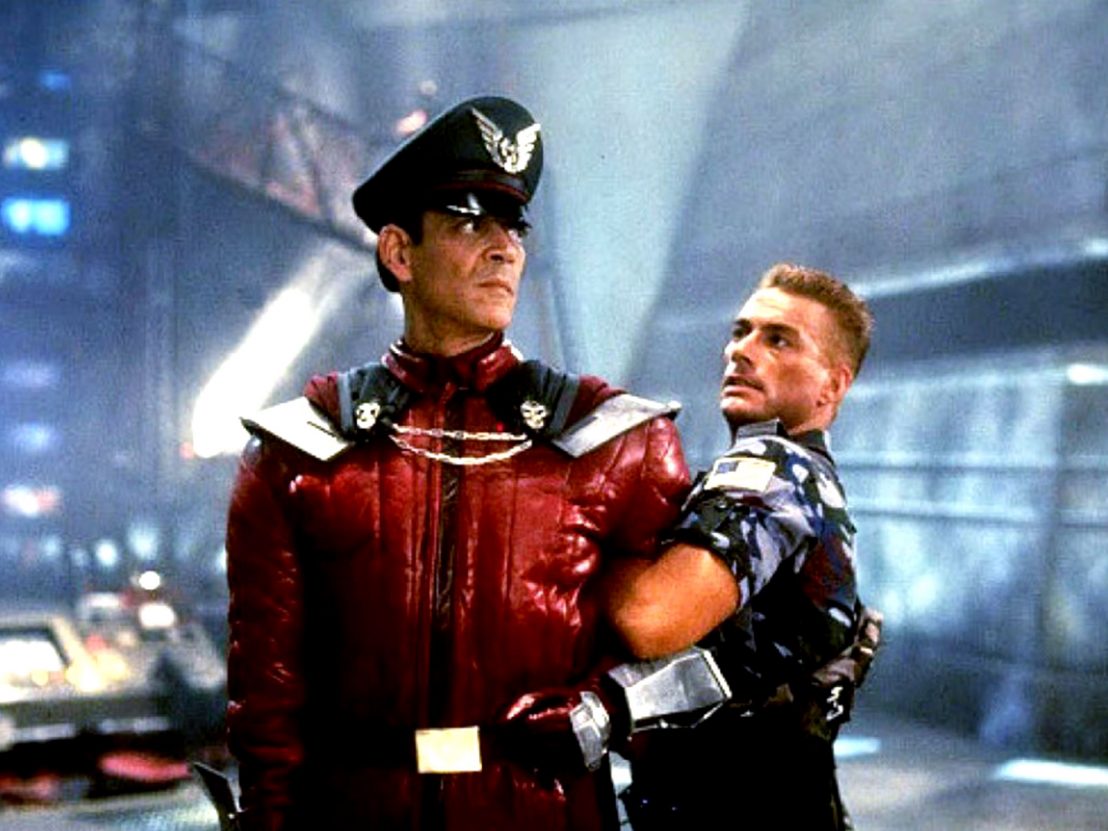
Welcome to Shadaloo City, a fictional little country tucked away somewhere in Southeast Asia, torn apart by civil war. General M. Bison is holding 63 Allied Nations relief workers hostage (because the United Nations are just so old school 🤣) and demands a $20 billion ransom within three days. On the other side is Colonel Guile, who (of course) doesn’t negotiate with terrorists and sets out to “handle it” himself, preferably with a single flying kick. But this isn’t just their story.
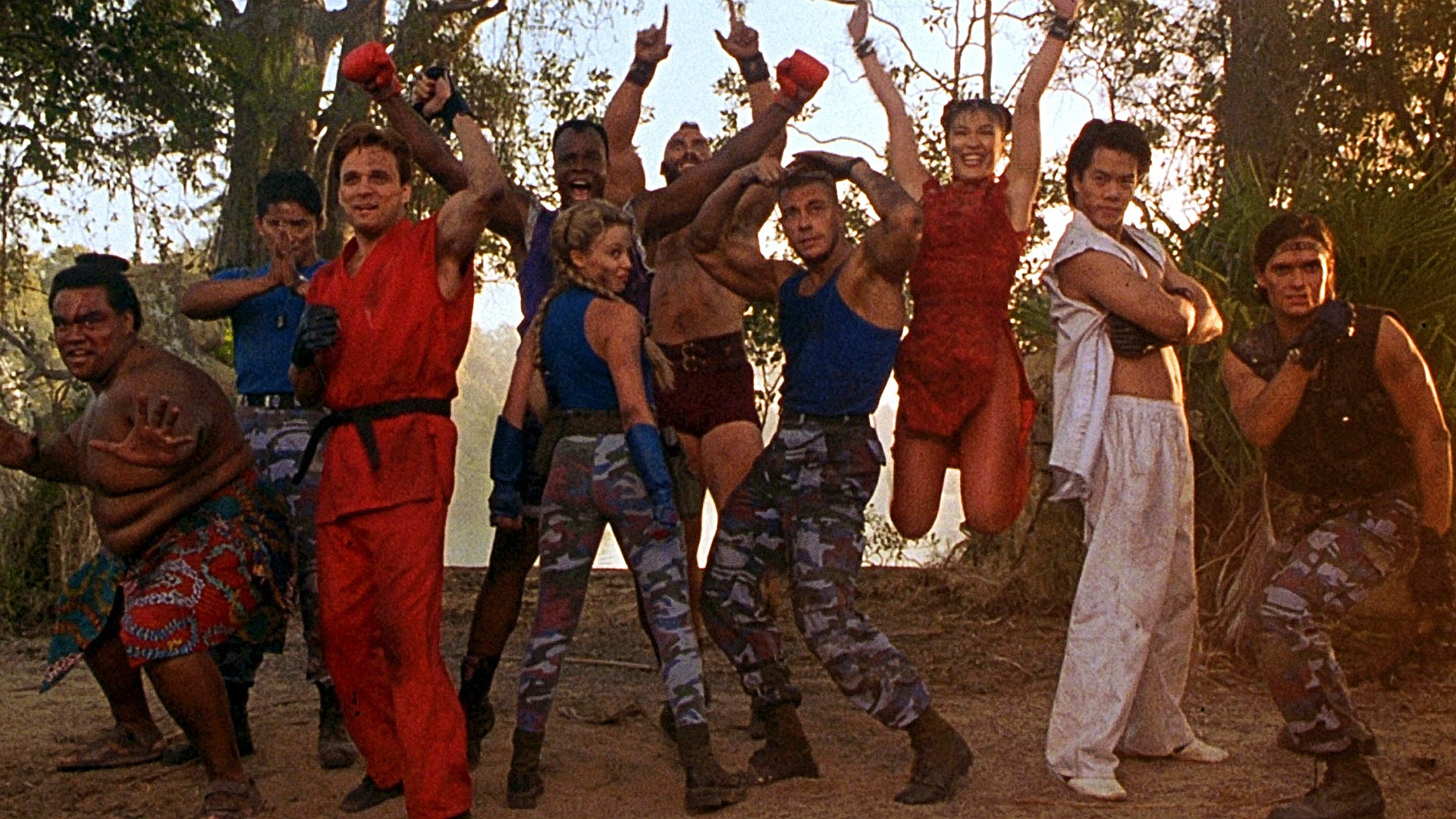
Guile’s buddy Charlie has been captured and ends up in the lab of Dr. Dhalsim (who, by the way, is also Bison’s prisoner). There he is turned into the green Blanka through a combination of steroids and brainwashing with political spee… er, I mean, ugly images and footage. Ryu and Ken are, here… pfffft… get this… small-time con men trying to sell fake weapons to arms dealer Sagat. 🤣 Chun-Li is a TV reporter who, with her crew (E. Honda and Balrog), tries to get close to Bison because of her own personal agenda/vendetta. Almost every character from the game is here, but almost none of them is who they are in the game. Well, except Vega, who briefly prowls around a cage…
And that tournament, the one every game in the series revolves around? Gone. Nope. Nicht. Zero. Writer-director Steven E. de Souza (who worked on legendary titles like “Die Hard,” “48 Hrs.” and “Commando,” among others) later explained that he didn’t want a generic martial arts movie. He wanted a mix of “Star Wars,” James Bond and a war film. The result is neither the first, nor the second, nor the third… and it isn’t “Street Fighter” either.
But if we look objectively at how the film came together, it’s a good thing they managed to finish it at all. There were plenty of reasons why, but here are the most interesting ones:
- Capcom financed most of the $35 million budget and insisted the film come out in December 1994, no delays.
- Van Damme’s fee alone took almost $8 million. After him and the late Raúl Juliá (Bison), there wasn’t much left for the rest of the cast, so the roles went mostly to lesser-known actors.
- Because Juliá was seriously ill, the shooting schedule was turned upside down, and the actors sometimes learned the fight choreography just a few hours before a scene. For a film whose central theme is fighting, with no time to rehearse the choreography… yikes…
- The actors’ union in Australia (where the film was shot) demanded that an Australian actor be cast, and Cammy was the only role still open. De Souza found out about Kylie Minogue (who had been suggested to him) from the cover of a magazine.
- Capcom wanted a PG-13. After the cuts, according to de Souza, the film ended up with a milder G rating, so a swear word was added in post-production to “bump” it up to PG-13. Good grief…
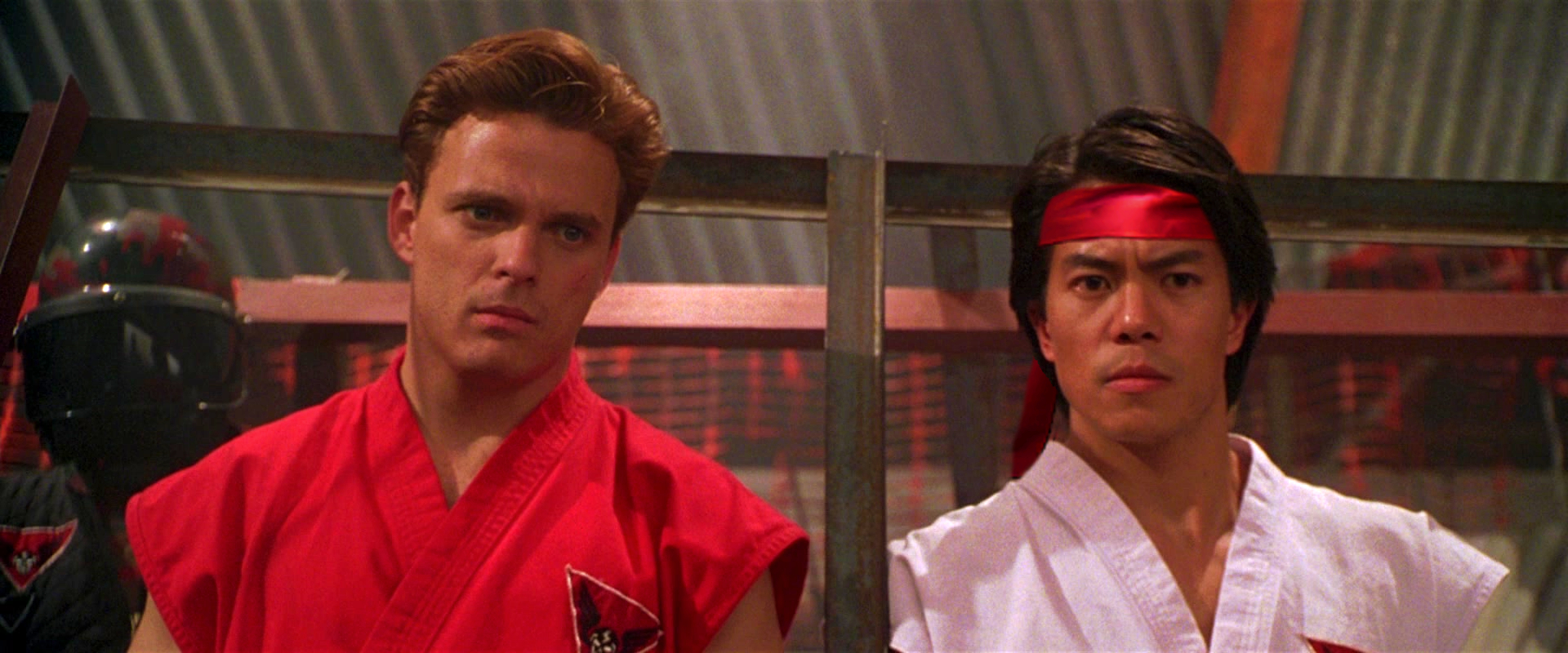
And our Jean-Claude Van Damme? Years later, de Souza said in interviews that the star had a serious cocaine problem during filming (and before and after). Apparently, even the person hired to keep him away from drugs turned out to be a bad influence himself. Van Damme kept showing up late to set, so other scenes had to be shot out of order, which slowed down an already rushed production even more. And sadly, it shows. His Guile acts like he escaped from a Saturday morning cartoon (high), complete with that famous (non-)American accent for a colonel in the U.S. Army. Add to that the cheesy speech to the troops before the attack (Trump probably drew inspiration for his own speeches from this one), a villain who prints his own “Bison dollars,” a secret lab for creating super-soldiers, explosions everywhere… and you get a film stitched together from the clichés of ’80s and early-’90s action movies.
If there’s one reason to watch “Street Fighter” today, it’s Raúl Juliá as General M. Bison. Known for films like “The Addams Family” and “Kiss of the Spider Woman,” for his Broadway roles and serious dramas, he took this part because his sons were huge fans of the game. And all the while, he was already seriously ill with stomach cancer during filming. He died on October 24, 1994, two months before the premiere, and the film is dedicated to his memory. Despite everything (the illness, the weak script, the chaos on set), he plays Bison as if it were Shakespeare. He delivers every monologue with such theatricality and relish that you can’t take your eyes off him. Critics at the time mostly agreed that he was too good an actor for this material, but too much of a professional to give anything less than his best. He was posthumously (and deservedly) nominated for a Saturn Award for Best Supporting Actor for this role. And that “Tuesday” scene from the start of this review? One of the better villain lines in ’90s cinema.
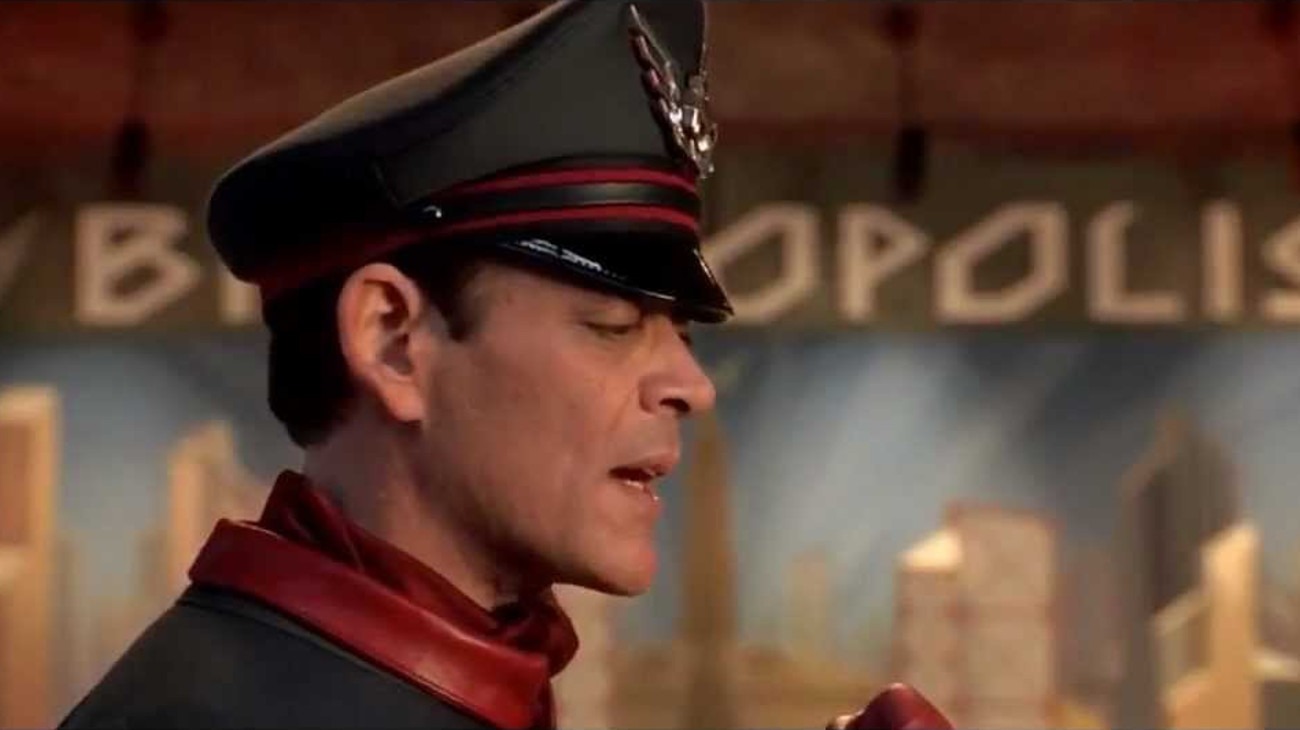
Dee Jay (the Jamaican kickboxer and musician) also deserves a mention. In the film he’s played by Miguel A. Núñez Jr., and they turned him into Bison’s computer expert, who’s there (above all) for the money. His comments, few as they are, are exactly what makes the film bearable. While everyone around him plays it deadly serious, he’s the only one who seems to know what kind of movie he’s in. The highlight comes near the end when, as he’s running away, he explains to the simple-minded Zangief that Bison is actually the bad guy, after which Zangief switches sides on the spot. There’s no real logic to it (in fact, it feels a little brain-dead), but it’s fun.
The rest of the cast isn’t really worth mentioning. That includes the charming Ming-Na Wen (who apparently washed away all her bad karma, because her career took off after this film) and Byron Mann (who also went on to better roles). As for Kylie Minogue… well, lucky she discovered her talent for singing before this. I don’t think acting would ever have put bread on her table…
Only in the finale (when the Allied forces storm Bison’s base) does the film remember what its title says. Ryu and Ken fight Sagat and Vega, E. Honda wrestles Zangief, and Guile and Bison face off in a duel.
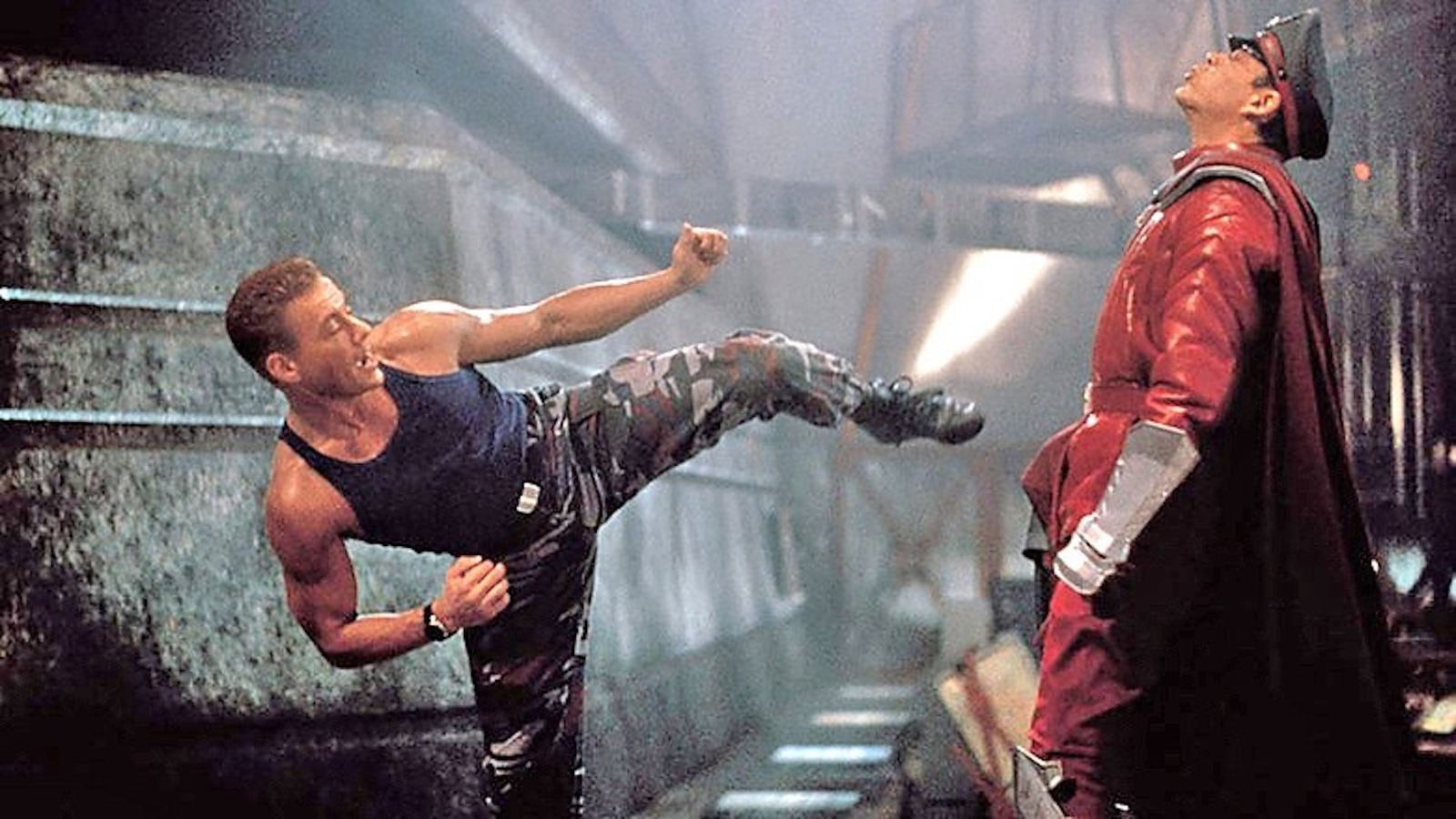
And there, at last, we see (a few) moves lifted from the game. Bison’s suit comes with electric weaponry and boots that let him fly (every fan will recognize the nod to his Psycho Crusher). In the end, Guile sends him into a wall of monitors with a finishing kick, striking a pose that takes you straight back to standing in front of the arcade cabinet. It’s not the level of choreography we’d expect today (and it wasn’t anything special even for the ’90s), but for fans of the game, it was the only moment when the film actually looked (at least a little) like “Street Fighter.”
The craziest part of all… “Street Fighter” wasn’t a financial flop at all. On a $35 million budget, it made around $99 million worldwide, and Capcom still earns money from it today through home releases and TV broadcasts. Critics were merciless (12% positive reviews on Rotten Tomatoes, 34/100 on Metacritic), and fans of the game were disappointed. Over time it became a cult classic… I don’t know who I’m kidding: 1995’s “Mortal Kombat” is a small masterpiece next to “Street Fighter”… but I guess “Street Fighter” became a cult classic for some people for the same reason films become cult: they’re so bad they’re almost entertaining… I suppose…
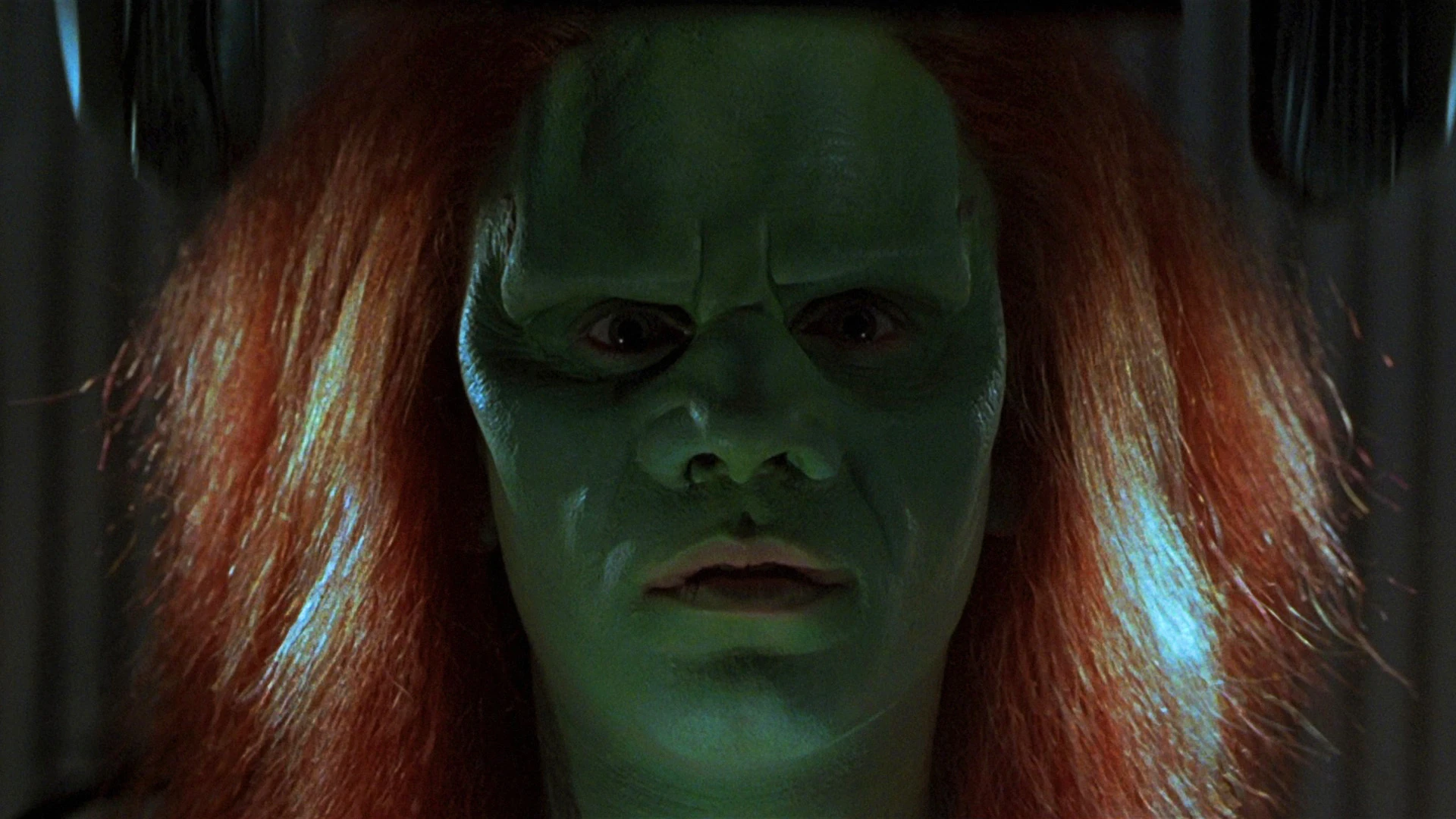
All in all, 1994’s “Street Fighter” is a real dud. A strange plot that ignores the essence of the game, Van Damme at what is probably his worst, cliché piled on cliché, and a film that was shot in a hurry and doesn’t hide it. Even for the biggest fans of the video game and of the “Muscles from Brussels” (I genuinely love his movies, but I just can’t turn a blind eye to this one), it was a tough pill to swallow. But Raúl Juliá, Dee Jay and the final showdown are enough for one nostalgic viewing… if only to remind yourself how low the bar is for the new film. Then again, as we saw with 2021’s “Mortal Kombat,” nostalgia is no substitute for quality… We’ll see on October 16 whether Hollywood has learned anything in these 32 years. Though with “Street Fighter: The Legend of Chun-Li” (2009), which, believe it or not, is twice as bad as this film, they clearly didn’t learn their lesson. But a small indie “Street Fighter” project did teach them one, though that’s a story for another time…
Rating: 1.75/5 (only because of Juliá as Bison, Dee Jay’s comments, and because I’m a fan of the “Street Fighter” video game series; otherwise the rating would be much lower)
Worth your time: …uh, only if you grew up with “Street Fighter II” in the arcade (and the later games) and want to warm up before the new movie (better turn the heating on, then)
IMDb | Rotten Tomatoes | Metacritic
Format: Film
Runtime: 102 minutes
Released: 1994
Where to watch: Netflix (currently)