






Neon Genesis Evangelion
“If Neon Genesis Evangelion were a person, I would need serious professional help after working with them” – Sigmund Freud (Viennese neurologist, considered the father of modern psychotherapy)
Saying that “Neon Genesis Evangelion” is a serious mindfuck wouldn’t be an exaggeration. Although the series came out almost 28 years ago, this title doesn’t stop intriguing with everything it offered viewers.
This is a serious series, but truly serious, a real psychological… or rather psychiatric? 😅
What’s it about?
In the year 2015 (some 15 years after the global cataclysm known as “Second Impact”), teenager Shinji Ikari is summoned by a special paramilitary organization (“NERV”) to come to the futuristic city Tokyo-3. And Shinji has plenty to see, because he arrives in the city at the moment when the “UN” is fighting against an Angel, a mysterious monstrous being from space, except that humanity’s entire military arsenal and technology can’t even scratch the mysterious being.
During that battle, Shinji somehow reaches NERV’s base, where he’s forced by his father (Gendo Ikari, by the way, NERV’s director) to pilot a mysterious machine/biorobot(?), without any preparation or training, and to defeat the Angel within, well, three minutes, otherwise everyone’s dead and humanity is doomed to extermination…
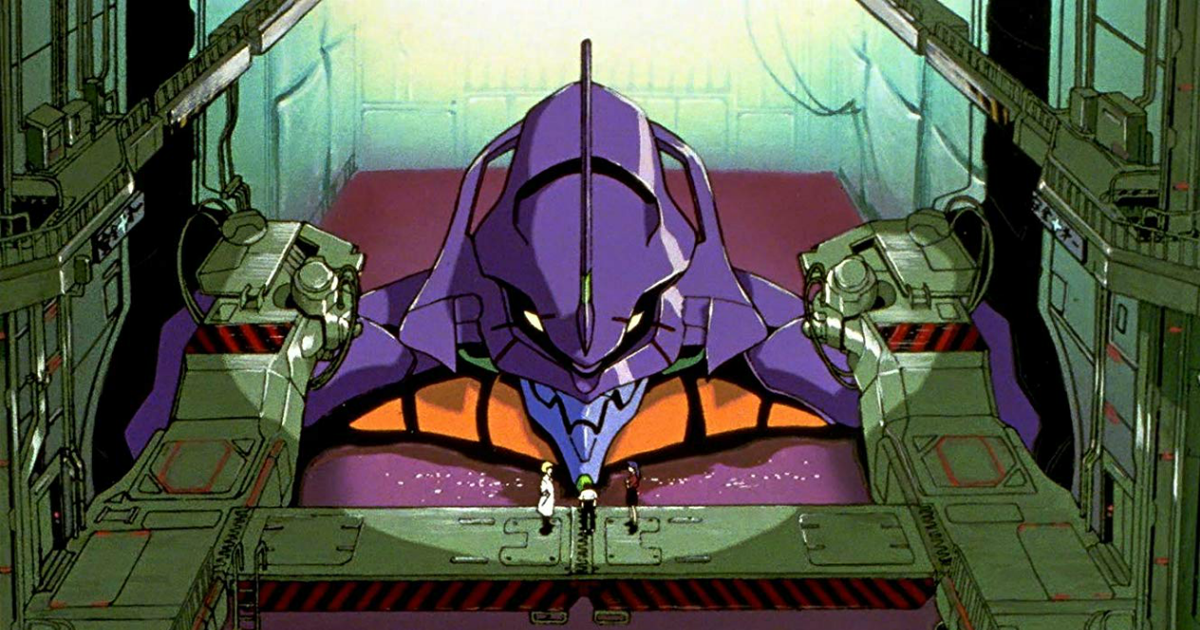
And so our Shinji becomes one of the last bastions of defense piloting a huge cool robot in battle against villains, fighting through hormone surges and horniness due to being surrounded by hot women and girls, and ultimately becomes a hero worthy of admiration and humanity’s champion.
If we were kidding…
Almost everything about the previous sentence is (more or less) false.
Here’s why…
To start, I shortened the plot description for the simple reason that it covers quite a lot of different information that will be revealed to you during the series, and revealing many of them would be a serious series spoiler. I’ll just mention a few details, just to tickle your imagination.
The relationship between Shinji and his father is so complicated at its core that you truly don’t understand why Gendo is so distant from his son, often looks down on him, and seemingly isn’t aware how much because of him his son has become such an unconfident and pathetic person.
The mysterious beings that humanity named Angels have quite unusual (and nebulous) forms and behavior patterns, and each is smarter and more powerful than the previous one.
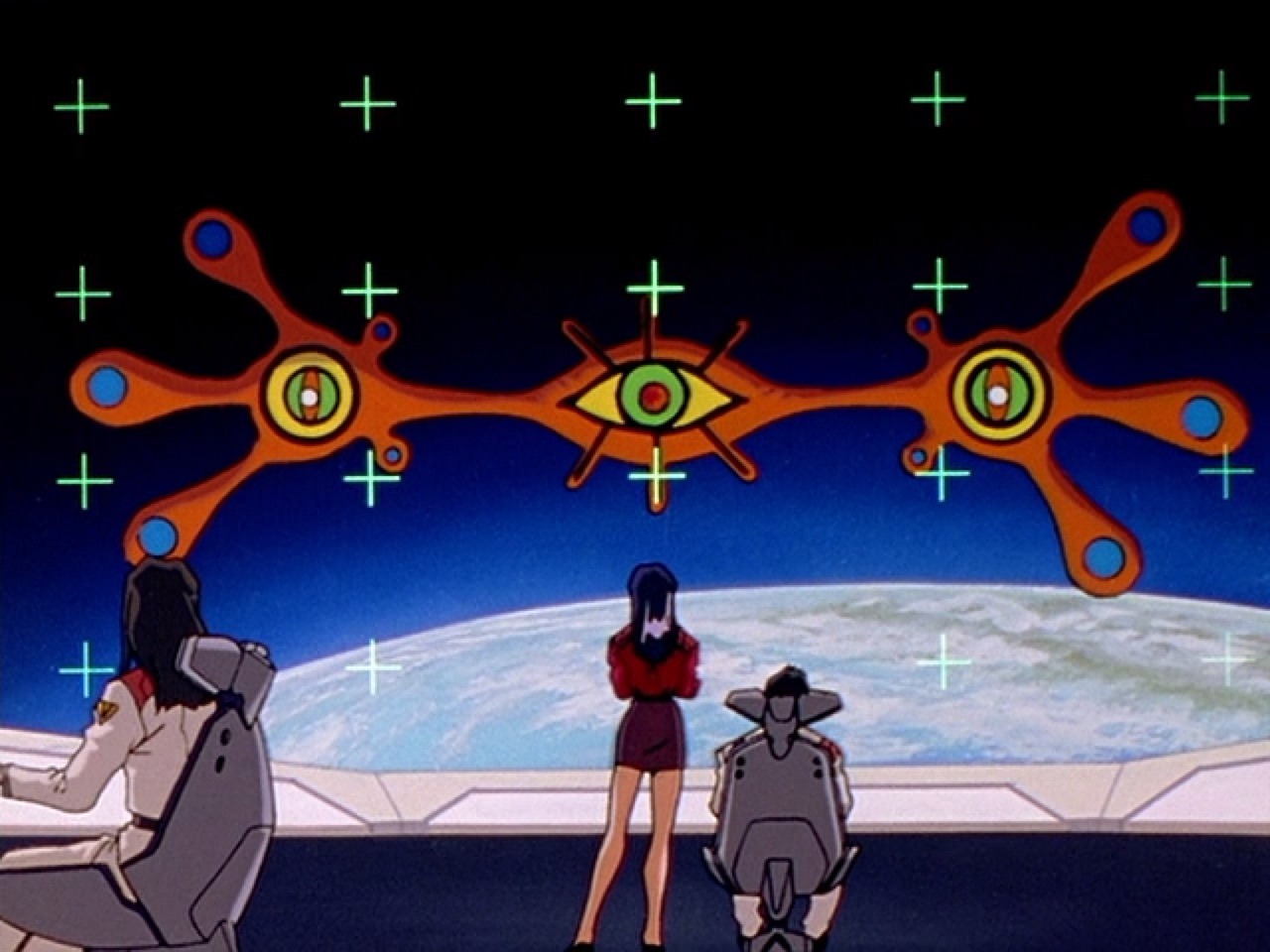
However, individuals in NERV as well as the organization (a council of old men) overseeing them (“SEELE”) are aware of the significance of the Angels’ arrival on Earth, and that it has ritual significance.
But why do Angels persistently appear only in Japan, precisely in the city Tokyo-3, and their only goal is to reach NERV’s base, which they seem to find intuitively? As if “something” is calling them?
What’s hiding in the “basement of NERV” organization?
Who is, in fact, pilot Ayanami Rei whose history is unknown, who often has “robotic behavior” and who only shows a slight dose of humanity in the presence of Shinji’s father?
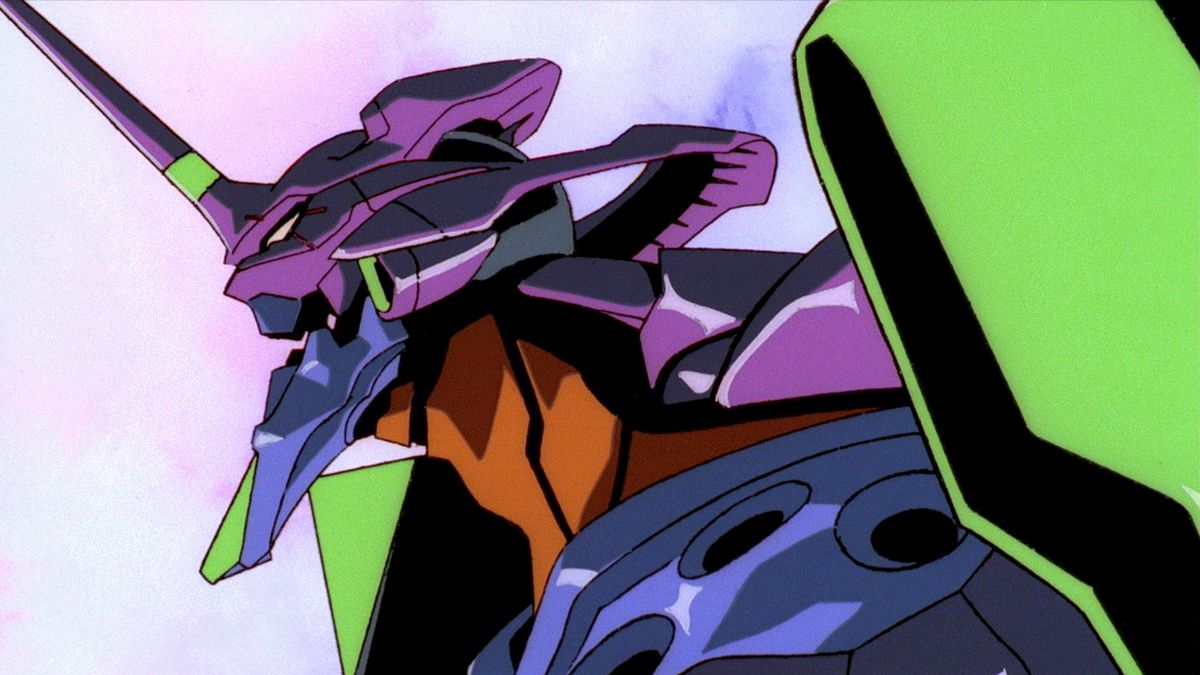
What are, in fact, the Evangelions (Evas)? Because they don’t seem to be classic giant robots (mecha), and they’re not some kind of cyborg units either? Why do they have too human a form and, although they should be just some unusual machines, it seems like they have their own consciousness too?
Why does Shinji say the interior of the Eva has the smell of blood… but also says he feels some sensations and smell that remind him of his late mother… or Ayanami Rei?
Why is pilot Asuka so rude to everyone?
And finally, perhaps the most mysterious question… what is the “Human Instrumentality Project,” which at some point should be activated and which only two people in NERV and a bunch of old men in SEELE know about?
Did any of the mentioned questions intrigue you? Don’t worry, there are many mooore…

What are the stars of the series “Neon Genesis Evangelion”?
Believe me, there are many. I don’t know where I’d start, because there are several that are quite obvious, while being equally important.
Interpersonal relationships – this is a series that clearly shows how complicated people are, while simultaneously being incredibly vulnerable when it comes to relationships. Likewise, the series seriously delves into analysis of our psyche and touches on many personality archetypes and primal relationships and conflicts:
Misunderstanding between absent father and sensitive son – Shinji is incredibly embittered, insecure and pathetic because his father rejected him for some “career” of savior of humanity. He so craves even a crumb of tenderness from his father that he’s willing to pilot the Eva, although because of that he experiences serious psychophysical traumas during battles with Angels, which often bring him to (near) loss of life or nervous breakdown.
Trauma due to parents’ death and attempt at aggressive “self-construction” as a personality – Asuka experienced terrible trauma in childhood and, as a solution to cope with the world, decided to “speed-grow” and take on a persona (or better said, mask) of an overly confident and arrogant person who doesn’t want to emotionally connect with anyone. However, without proper guidance, such a seemingly strong Ego is actually incredibly fragile, and whoever “hits” the trauma can knock it down like a house of cards and the person has little chance of recovering after such a blow.
Hypocrisy and “being wise to others” – Although he’s pathetic as he is, Shinji has noticed well that adults are often incredibly big hypocrites. They tell him it’s his job to pilot and fight and experience traumas in battles with Angels, while they command from the safety of the base (like generals in headquarters sending soldiers to their death). Officer Misato Katsuragi (who is his guardian and friend) tells him he should be braver, not be bitter toward his father and lower his guard around people a bit, while she herself is furious at her late father for always being absent, finds it hard to emotionally connect with men, and on the other hand yearns for physical contact and to be with someone, to belong to someone, even if that someone reminded her of her father by behavior.
Fear of rejection and desire for recognition – this is perhaps the leitmotif of the series. It’s best seen in the question “Why do you pilot Eva” which is often heard in the series. Why are our main heroes willing to go through terrible traumas? If they don’t pilot, will no one love them? Will no one give them recognition? Will the world forget them? Will they be pathetic to themselves and others?
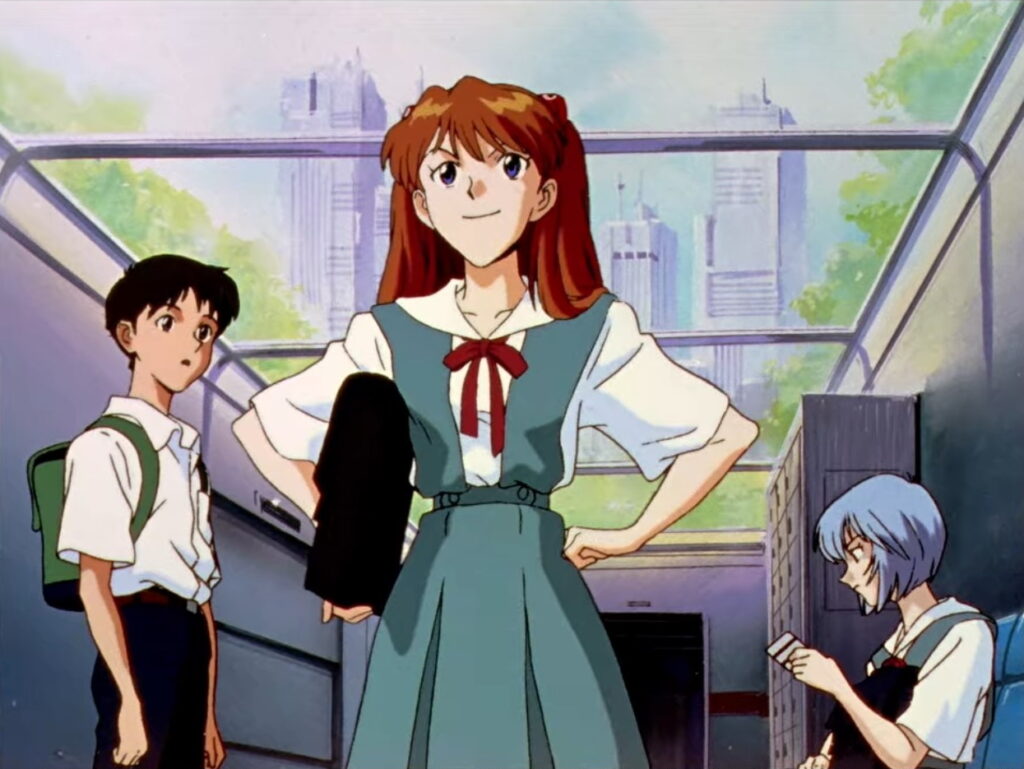
The main heroes of the series “Neon Genesis Evangelion” are brilliantly done in one detail, and that’s that they’re incredibly “human.” Pathetic, insecure, arrogant, corrupt, weak, with a slight hint of hope before the apocalypse:
Shinji Ikari – the titular hero is such that you’re not sure what to think about him. Unlike most anime heroes aged 13-18, Shinji is, well, really pathetic. You might say, a spoiled and frustrated brat, constantly fearful and who, on one hand, yearns for contact with others, and on the other hand keeps distance from everyone because he believes no one actually loves him and that he’ll only not be hurt if he builds a “wall” around himself. He’s furious at his absent father who didn’t give him love or understanding, and when he’s given the opportunity to be the savior of the world, he just whines, complains, acts pathetic about how hard it is for him and so on. From the perspective of various (live-action and animated) films and series, you’ll rarely encounter such a pathetic main hero who will just annoy you with his indecisiveness and be very unlikable to you… until you change perspective a bit and ask yourself “how else should a 15-year-old feel who lost his mother when very small, and his father essentially abandoned him”? You’d say “he should, damn it, toughen up,” but on the other hand, Shinji has always been of quite sensitive emotional makeup, built “walls” to protect himself from additional blows of life… and now he should pilot a strange “robot” that seems to be “alive”? And how can it be easy for you if you’re moreover a depressive, anxious person who has a phobia that makes socialization difficult?
Ayanami Rei – ah, one of the series’ phenomena. What to say without revealing too much, because she’s one of the key elements in Shinji’s father’s mysterious plans. A girl who behaves like a robot (or rather has a mix of autism and some kind of schizoid disorder), talks like a robot, doesn’t feel the need to communicate with others, nor to have her own opinion or express emotions voluntarily. The only moments when at least a little “humanity” appears in her is when she communicates with Shinji’s father. However, she manages to cooperate with other EVA pilots, but only during specific field action. Later it’s revealed that she isn’t what she presented herself as (better said, what others presented her as). Interestingly (especially if you google a bit), her character had a great influence on the anime industry, and especially on the popularization of moe type girls (again, google it).
Asuka Langley Soryu – at first glance a typical example of the popular alpha girl. Of Japanese-German-American origin, this red-haired girl is bursting with confidence and arrogance, proud of her effort and talent that enabled her to become an EVA pilot. From the start she doesn’t have a good relationship with Shinji (whom she constantly bullies and humiliates, and has more or less constantly the same comment for him, which has become one of the series’ recognizable signs, which is “anta baka!?” On the other hand, you can’t help but wonder if this is that old “who fights, loves”…)… and with Rei the situation is no better (whom she literally considers a robot/doll without emotions and Shinji’s father’s pet). However, through the series we discover that with her things aren’t at all as they seem and that her motive to be (and must remain) an EVA pilot is quite painful.
We should also mention operations director Katsuragi Misato, who took on the role of Shinji’s guardian as well. Although at first she seems like a quite impulsive and straightforward type, she’s a very complex and lonely person who shares with Shinji frustration toward her (late) father, as well as indecisiveness toward one certain charismatic man with whom she has an interesting past.
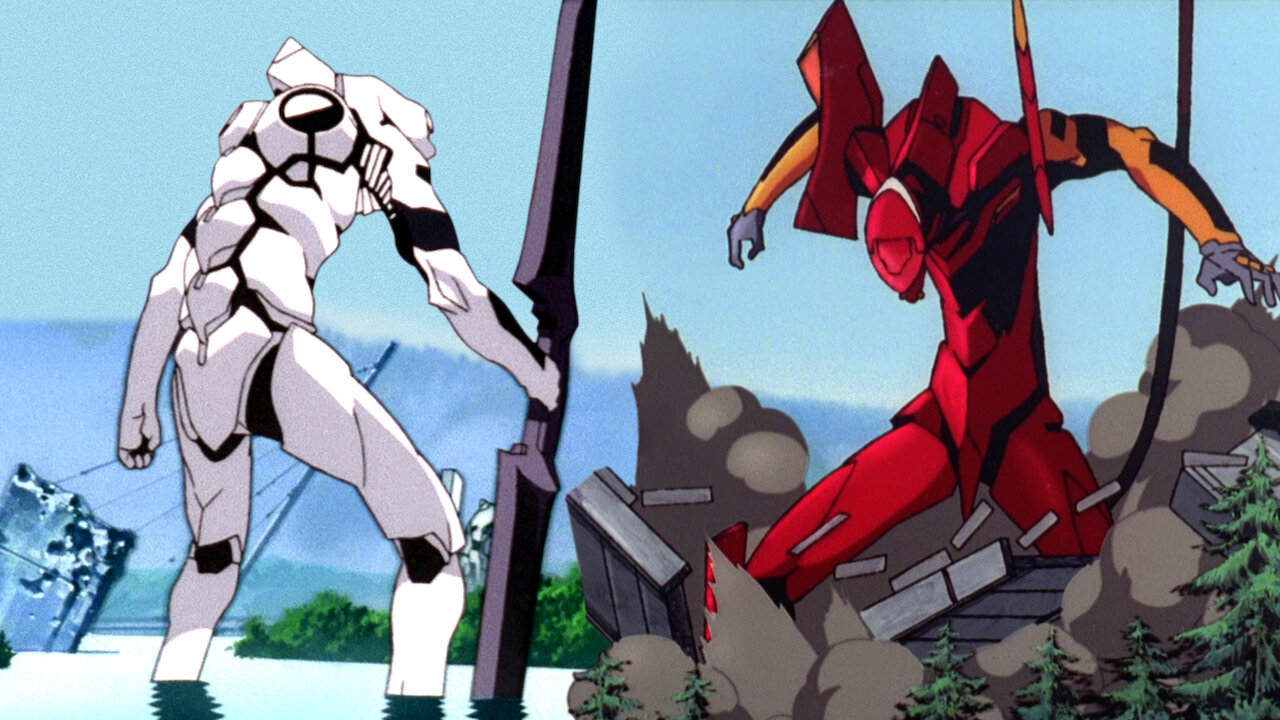
We already mentioned earlier what some of the motifs “NGE” deals with are, but there are many more which I won’t now go into deeper detail about, so I’ll just list some of them: depression, apathy, isolation, (in)ability to cope with nervous breakdown, nihilism, (homo)sexuality, works and theories of Sigmund Freud that are subtly woven into the heroes’ behaviors, religious ideas (Christianity, Islam, Gnosticism, Kabbalah), meaning and existence of God, nature of human evolution, Adam and Lilith, apocalypse, whether clones have souls, freedom of choice… as you can see, a lot is woven in here.
What’s also an interesting detail is how much subtle (and obvious) symbolism is woven into the series: when Angels are destroyed, an explosion appears that takes the form of a cross; SDAT player (SONY version of walkman) as a symbol of isolation and escape from reality (but also the only connection with a parent); berserk EVA (warning to human arrogance not to play God); bloody sea; biblical significance of the number 7; MAGI supercomputers whose names are inspired by the three wise men; “Marduk Institute” inspired by Babylonian deity; sex and pregnancy as a way to continue a person’s existence; penetration; SEELE’s logo inspired by biblical description that God has seven eyes; NERV’s logo symbolizing Adam and Eve’s sin; Shinji’s loss of Ego resulting in his physical disappearance and many other hidden interesting symbols…
For me perhaps the most memorable symbol of the series is the defensive field generated by each EVA when piloted. For the A.T. Field (Absolute Terror Field) I got the impression it symbolizes our Ego, which is proof of our existence, but simultaneously represents a barrier that protects us from people.

I already mentioned that “NGE” is a mindfuck. What you need to keep in mind is that a seriously heavy mindfuck starts already halfway through the series.
But the last two episodes… that’s an ultra-serious heavy mindfuck.
Why is that?
Here’s a small spoiler, but a very important one.
The mysterious “Human Instrumentality Project” happens in the last two episodes and although they take place in Shinji’s mind, they technically take place in humanity’s collective consciousness too and resemble a theater stage when a monologue takes place, where everything is dark and the spotlight is pointed at the main actor… and then 40 minutes of deep psychoanalysis of the main hero and his conversation with himself (or better said his subconscious… or rather, the collective subconscious) ensues… and humanity’s fate depends on Shinji’s realization of what he truly wants.
Yes, it’s truly twisted and confusing as it seems, and the ending leaves quite a few open questions about what Shinji actually chose in the end.
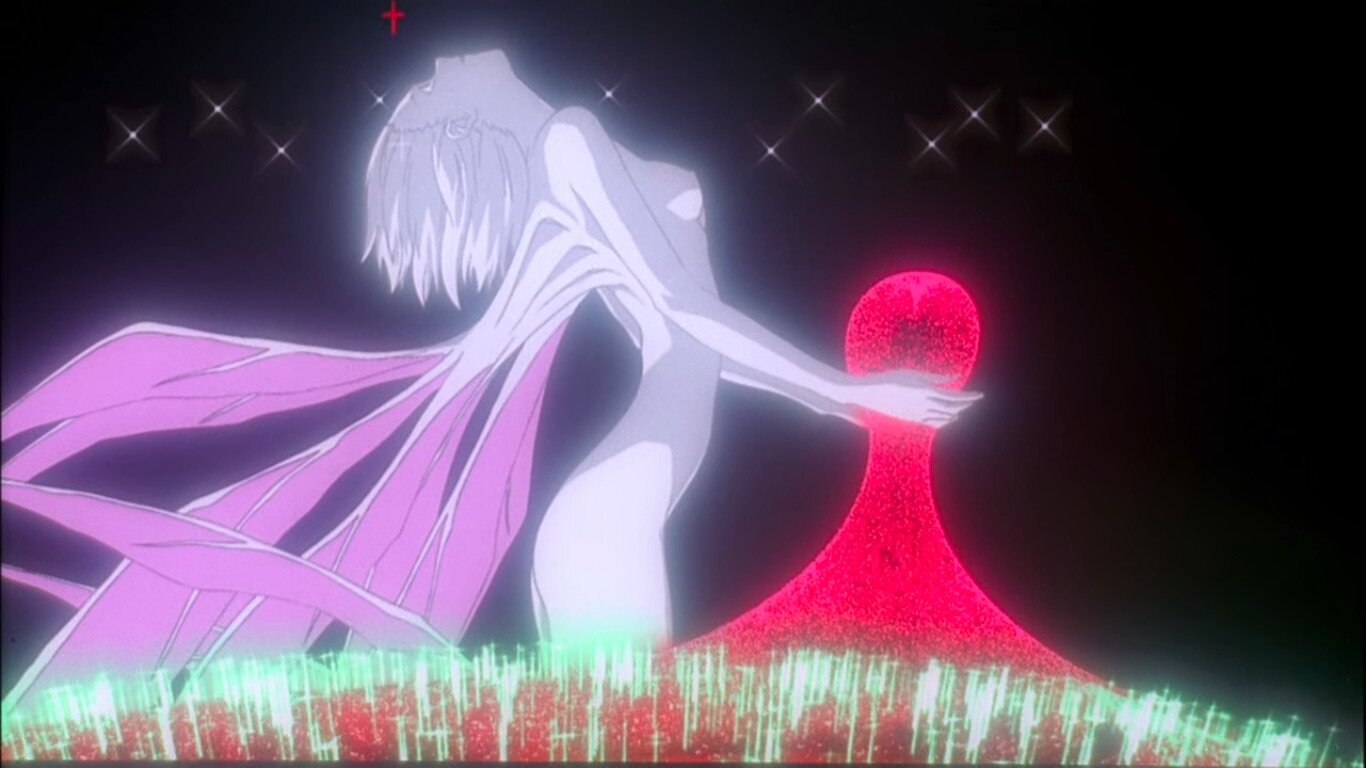
Now, a small semi(digression): a year after the series’ release, “Rebuild of Evangelion” came out with which the series creator wanted to tell the events from a different perspective (retelling), and consists of two parts: “Death and Rebirth” (which you can skip, because it’s more a retrospective of the first 24 episodes in film form) and “End of Evangelion” (hereafter “EoE”). Now, “EoE” is what interests us. Namely, “EoE” represents the altered last two episodes of the original series. The “Human Instrumentality Project” still happens, only now it’s told from a slightly broader perspective and includes what’s happening in the minds of other main heroes too. Keep in mind that, although the series ending by some logic should be the same, it seems quite visually twisted (not to say eerie). The beach scene and Rei’s character (whoever watched the series knows what I mean) still make me uneasy… And also, Shinji has now managed, because of some of his actions, to be even more pathetic.
Now one more small semi(digression): at the moment of writing the review I quite accidentally read that there’s a live action scene lasting about 10 minutes, which follows up on “EoE” and which literally leaves… well, I’ll leave you to watch it, and you’ll just see what this does for the series…
All in all, “Neon Genesis Evangelion” is a brilliant, complex and at moments (very) dark series, which actually reflects the psychological state of its creator, Hideaki Anno. Anno confirmed that at the time of making the series, he was dealing with heavy depression, but also got interested in mental illnesses and psychology, which he wove into the series’ characters, so, according to him, Shinji has an Oedipus complex (and scientist Ritsuko has an Electra complex), and Rei, besides being schizoid, is moreover a manifestation of Shinji’s unconscious. Likewise, Shinji’s entry into the EVA unit associates with Freud’s “return to the mother’s womb” and safety and the familiar, and on the other hand, his attempts to no longer pilot is something like an attempt at growing up and maturing.
I know, I know, the man wove in here both Freud and Jung and Schopenhauer and Kierkegaard, and it seems very confusing, but as the series unfolds, all this will be clearer and more logical to you… probably.
Summa summarum, watch the series. It pulled the anime industry out of crisis during Japan’s great crisis of the 90s and influenced a large number of series and films. And that says something…
And you, dear reader, was this review as incomprehensible and confusing to you as it was to me who wrote it? 🤣
Trailer | Imdb | Rotten Tomatoes | MyAnimeList
Release Date: 1995 | Format: Series | Number of Seasons: 1 (26 episodes) | Average Episode Duration: 20 minutes