





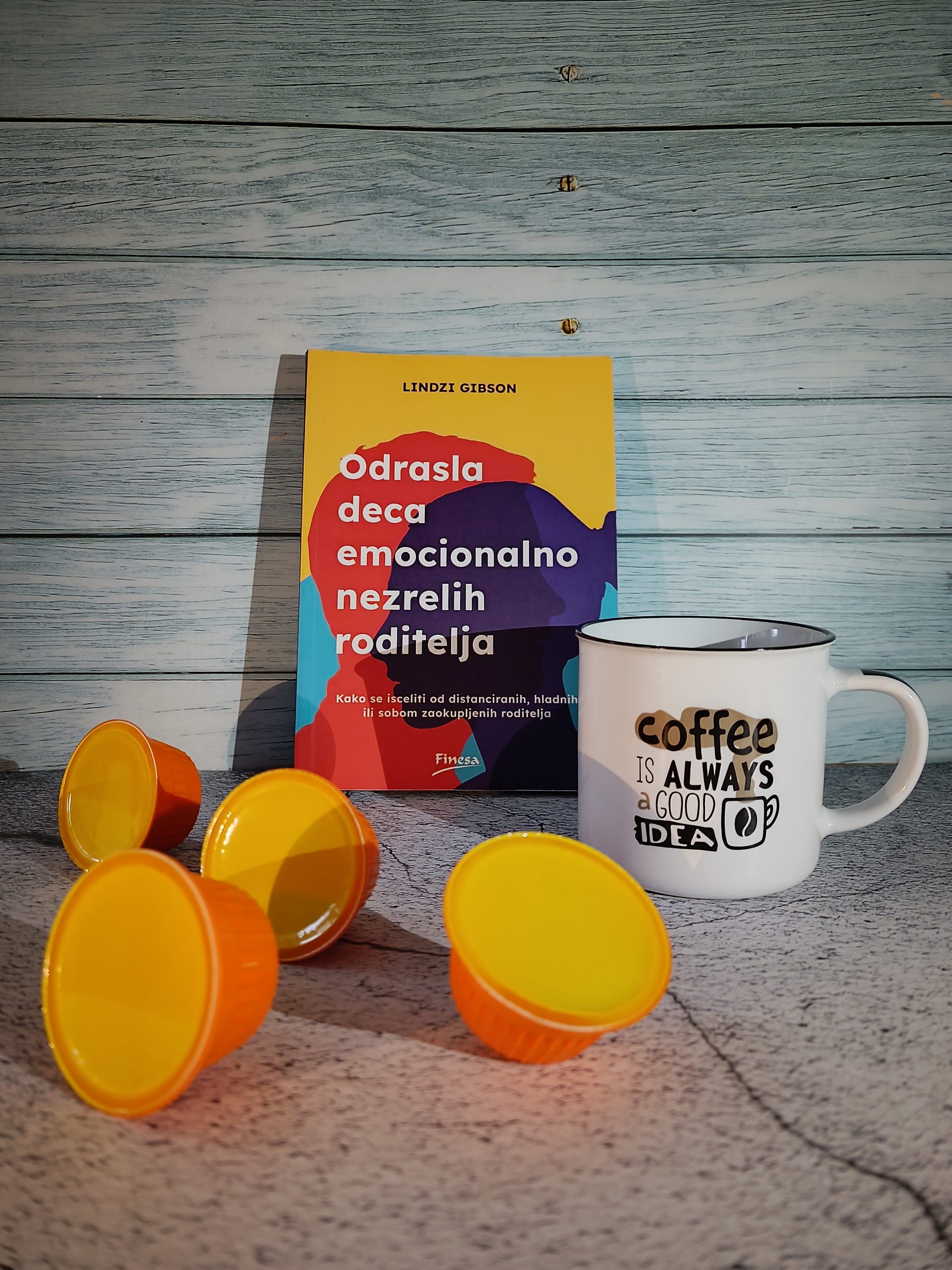
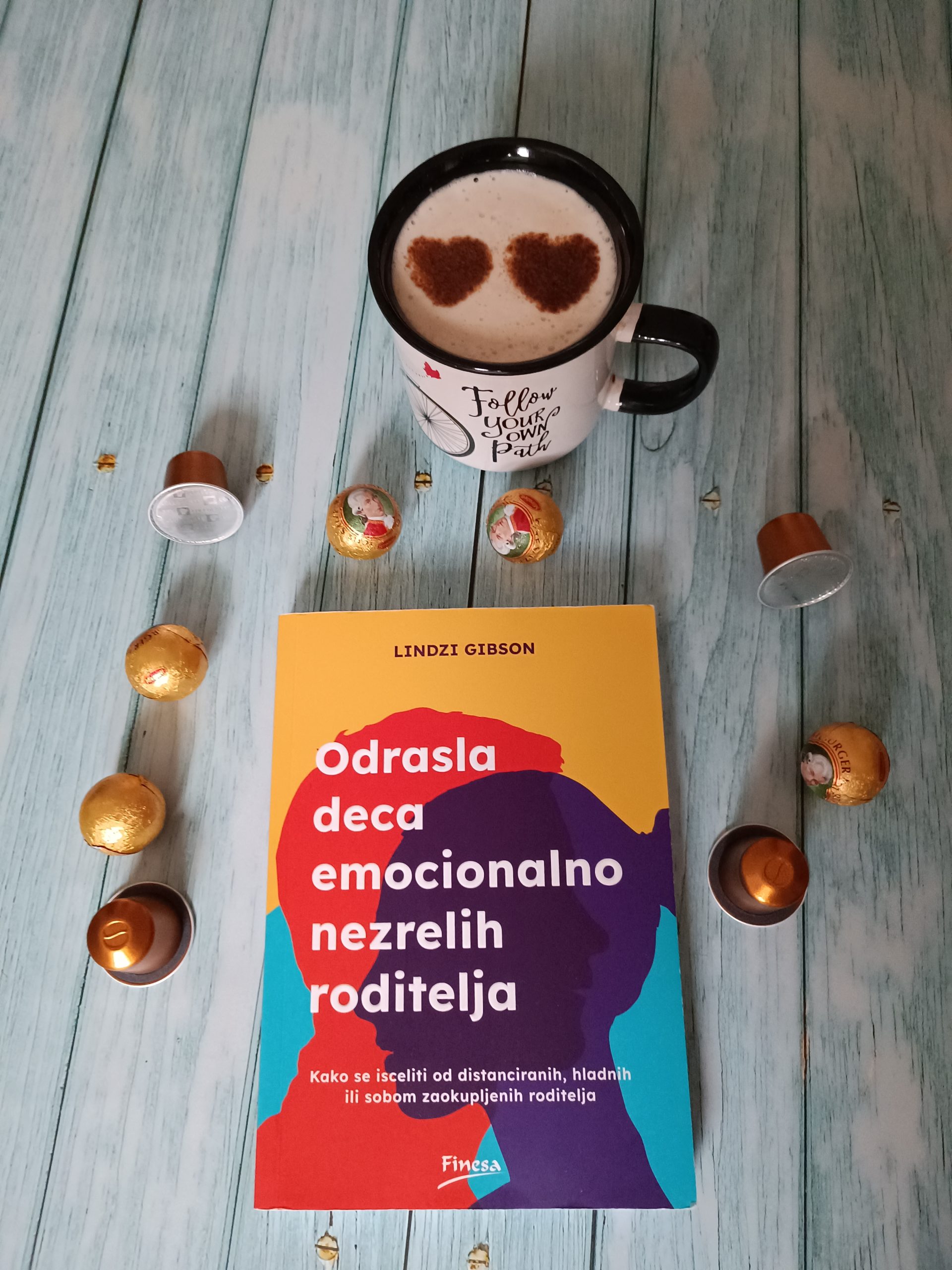
Adult Children of Emotionally Immature Parents
Let me tell you openly at the start… there’s a high probability you won’t feel indifferent while reading the book “Adult Children of Emotionally Immature Parents.”
Because it delves into truly serious subject matter.
Lindsay Gibson is a clinical psychologist who specialized in individual psychotherapy with adult children of emotionally immature parents. Given that she lives and works in America, I don’t doubt at all that the woman is “swamped” with work. Now, she decided to share her knowledge, research and practice with us so we might better understand our parents, and ourselves as current or future parents.
There’s a high probability (especially when you take into account this region and what the peoples in this area have been through over the decades) that you grew up with one (or both) emotionally immature parent(s). And that through growing up you often felt some kind of “emptiness,” anger, loneliness, frustration or feeling of abandonment. You’d try to “shake off” that feeling or perhaps others (i.e., parents and environment) “shook it off” for you with the attitude “what are you complaining about, you have a roof over your head, toughen up, don’t be a wimp, in my time it was worse, today’s generations are all somehow weak/feeble, look at that guy how he made it, etc etc…”
However, in my encounters (i.e., work with people), I’ve noticed (as have, thank God, many others) that people very often transfer their behavior patterns and attitudes from one (emotional) relationship to another, from one job to another. And then at one point they realize they’re in conflict with themselves. They recognize they’re behaving like their parents (although they feel they shouldn’t behave that way and that it only harms them in relationships with others) or that they’re not at all sure how they should behave (as if they’re “torn” or “stuck”).
Now, the fact is there’s no school for parents. There are no rules, everything is practice and God help the child turn out somewhat normal. Parents will (generally) try to do the best they can (if they’re normal and mature).
But likewise, the child didn’t choose to be born. And if they’ve already come into this world, somehow it seems logical that it’s the parents’ obligation to either leave their “demons of the past” “aside” (easier, but not overly correct path) or to defeat them (harder, but definitive approach) and to do everything they can to enable the child to mature into an independent and mature individual, who can think with their own head and, based on their knowledge and experience (combined with the knowledge and experience of their parents and environment… and if wise, with constant learning) make the best moves in the future. And one of the elements of the aforementioned maturity is also “emotional maturity.”
And what I like to add, “children aren’t made in a factory to all come out the same from the production line and all behave the same, which is why, at least to me, the constant comparison with other children (who, moreover, have different parents and grew up in different environments) is often an idiotic approach to parenting.” I also like to add that, “the process of making children isn’t called ‘cloning’ for a reason, which is why it’s idiotic for a parent to expect the child to be the same as them, feel the same as them and think the same as them when they grow up.”
Feel free to say I’m a naive idealist and romantic and that all this is nice in theory, but practice is different. The state, work, not enough money, children don’t listen, “in my time there was no coddling and pampering and what’s wrong with me” (it turns out such people are missing quite a lot), “school is important, then everything else,” “I’m sacrificing for this family” and so on and so forth…
“Adult Children of Emotionally Immature Parents” is a book that’s more important now than ever to read. I don’t doubt that, if your parents were born in the period, for example, 1930-1960 (even the 70s), and especially if you lived in a smaller place (which isn’t always the decisive factor) and were of more modest financial means (also not always the decisive factor), that you experienced some kind of (emotional) disappointment in your parents (or one of them) which later quite defined your approach to people, challenges and life in general (keep in mind, it’s a separate story if you experienced, God forbid, physical and severe psychological abuse). This book might give you the chance to find some “peace with yourself” and clarify some things about your parents’ behavior.
Likewise, if you’re a member of a later (that is, younger) generation and are already a parent (or planning to be), this book might “shake you” in the sense of which (emotional) mistakes to avoid in relationships with your children, but simultaneously also with your emotional partner.
That is, “to pass on the virtues of ancestors, and leave their ‘demons of the past’ in the past.”
“Adult Children of Emotionally Immature Parents” is divided into ten chapters:
- How Emotionally Immature Parents Affect Their Children’s Lives in Adulthood
- How to Recognize an Emotionally Immature Parent
- What a Relationship with an Emotionally Immature Parent Looks Like
- Four Types of Emotionally Immature Parents
- How Different Children React to Emotionally Immature Parenting
- What It’s Like to Be an Internalizer
- Breakdown and Awakening
- How to Avoid Falling into the Emotionally Immature Parent’s Trap
- Finally Free from Roles and Fantasies
- How to Recognize Emotionally Mature People
As you can already notice from the chapter titles, this book doesn’t mess around with generalized theory and attempting to be a feel-good book, but from the very start aims for the center and addresses quite ticklish (and for many painful) topics.
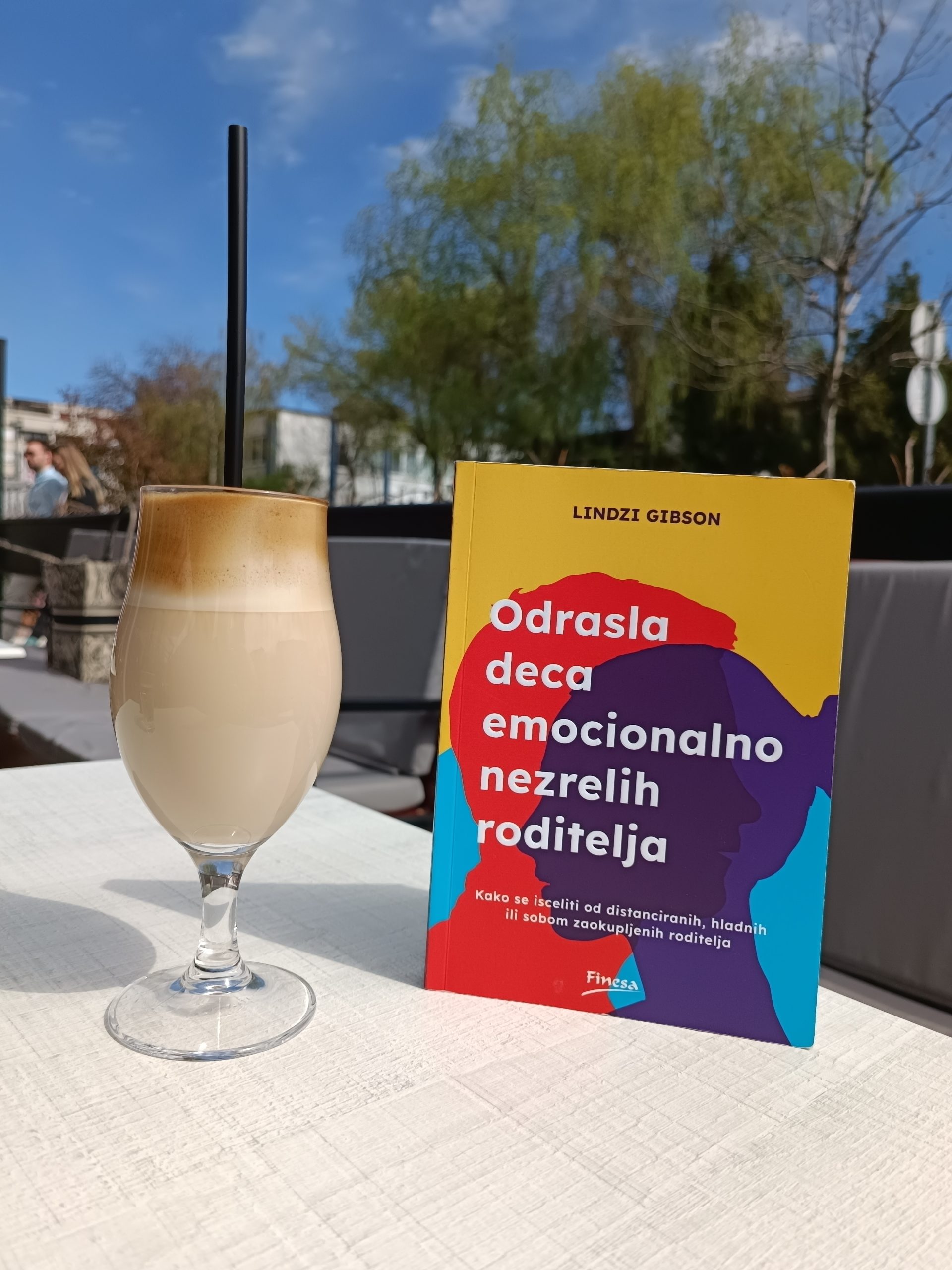
“Emotional loneliness comes from insufficient emotional intimacy with other people. It can begin in childhood, due to emotional invisibility from your parents, too preoccupied with themselves, or it can appear in adulthood when emotional connection is lost. If this feeling is present throughout life, it indicates the probability that as a child you didn’t receive sufficient emotional response.
Growing up in a family where parents are emotionally immature is actually a lonely experience. These parents can look or behave quite normally, caring for their child’s physical health and providing them with meals and security. However, if they don’t establish a strong emotional connection with their child, an emptiness will appear in the child, where true security could have been.
Loneliness due to the feeling that you’re invisible to others is a fundamental pain, just like physical injury, except it’s not visible on the outside. Emotional loneliness is an unclear and personal experience, not easy to notice or describe. We can call it a feeling of emptiness, as if you’re alone in the world. Some people have described this feeling as existential loneliness, but there’s nothing existential about it. If you feel it, it means it comes from your family.”
What do you say, a deep thought extracted from the book?
This is how the very first chapter begins…
Boom and crash from the very start, directly.
So in the first chapter we’ll see what emotional intimacy is, and what loneliness is (and how children cope with it), why the past repeats, or why we feel guilt for not being happy. And there’s also the feeling of being trapped due to caring for parents. Or how due to parental rejection our self-confidence is low. And we’ll see how many people hide loneliness under success as an adult.
The second chapter deals with defining maturity, as well as what personality traits are connected with emotional immaturity. There’s also the theme of why there are so many emotionally immature parents, as well as what are the deeper effects of emotional closure. The book will touch on which emotional limitations create incomplete (emotional) development, as well as how, in fact, big the difference is in the quality of thought between emotionally mature and immature people.
The third chapter shows us what a relationship with an emotionally immature parent looks like (difficult/impossible communication, they provoke anger, use “emotional contagion,” don’t engage in emotional work, give emotionally with difficulty, resist repairing relationships, focus on mirroring, their self-confidence depends on the child’s compliance, perceive the parental role as sacred, involvement matters to them, not emotional intimacy, as well as having an inconsistent sense of time).
The fourth chapter describes each of the four types of emotionally immature parents (emotional, driven, passive and rejecting).
The fifth chapter is especially important, because it explains to us the origin of healing fantasies that children have, as well as how they affect relationships in adulthood. And then it touches on how we develop the self-role (i.e., “masks” to function in the family) and how parents influence its development. The author will then explain two styles of coping with emotionally immature parents (internalization and externalization).
The sixth chapter deals with people who internalize and their traits (perceptiveness, strong emotions, strong need for connection, strong instinct for genuine interaction, shame about the need for help, feeling “invisible,” often not recognizing abuse as something that actually happened, performing most of the emotional work in relationships).
The seventh chapter analyzes what the true self is (our true nature) and what “it” truly wants from us and how to awaken it in ourselves. It also clarifies that sometimes an awakening of anger is necessary, that we care for ourselves, that we stop idealizing others, as well as awakening our strengths and virtues and new sets of values.
The eighth chapter deals with avoiding falling into various traps of emotionally immature parents. Children (as well as when they become adults) often fantasize that the parent(s) will change, and then realize they must change their expectations of parents and develop new methods for maintaining a (somewhat) functional relationship (distanced observation, approach that assesses and respects the other side’s maturity, exiting the old self-role).
The ninth chapter explains what family patterns restrict children. Also, they confirm that it’s okay to have the freedom to be imperfect (and primarily human), to have your sincere thoughts and feelings, to have compassion for yourself, to act in your own interest, express yourself freely, and, if necessary, set boundaries, even to suspend contact if needed. It’s okay to have the freedom to approach old relationships in a new way, as well as to want nothing from your parents.
And, for the end (tenth chapter), how to recognize emotionally mature people – realistic people of trust, who respect and show spontaneous reciprocity and are receptive.
And through all these chapters, the author will cite numerous examples from practice (i.e., her work with various clients), as well as various practical exercises for which you’ll often need just a couple of minutes or possibly paper and pencil.
When it comes to the book “Adult Children of Emotionally Immature Parents,” somehow I don’t feel the need to go into much philosophizing as a conclusion. I already said some of my thoughts at the beginning, and I wouldn’t write too much on this blog on this topic (maybe on another one in the near future 🤫).
The book is truly easy to read. Each of the 10 chapters (the book has about 230 pages) is written in simple language, without much involvement in professional terms, so even people without some knowledge of psychology can easily follow the book’s flow. In fact, the only prerequisite for this book is that you’re open-minded and willing to face potentially uncomfortable revelations concerning your parents’ behavior patterns (and most likely yours too).
At the end of the day, “Adult Children of Emotionally Immature Parents” doesn’t aim to give you ammunition so now you can perhaps point fingers at your parents and tell them “aha, here’s proof you’re to blame for me being this way (bad, weak, coward, insecure, sad or something sixth).” Even if they (maybe/probably) are to blame, the painful truth is this book won’t give you back lost time. But it will give you necessary explanations and tools for how to position yourself going forward. Also, it won’t be an excuse if you behaved toward your parents like the Antichrist, while everything was fulfilled for you on the material and intellectual and spiritual and emotional level.
But likewise it doesn’t give an excuse to (emotionally and intellectually capable) parents to justify themselves with “I’m just like that.” That excuse can be “used” for themselves only by those parents who don’t have the emotional and/or intellectual abilities to recognize their (bad) behavior toward children (and spouse) and aren’t willing to work on themselves. But they’re already hard enough on themselves, and that’s why this book is potentially very useful because of the tools in it you can use to deal with such people.
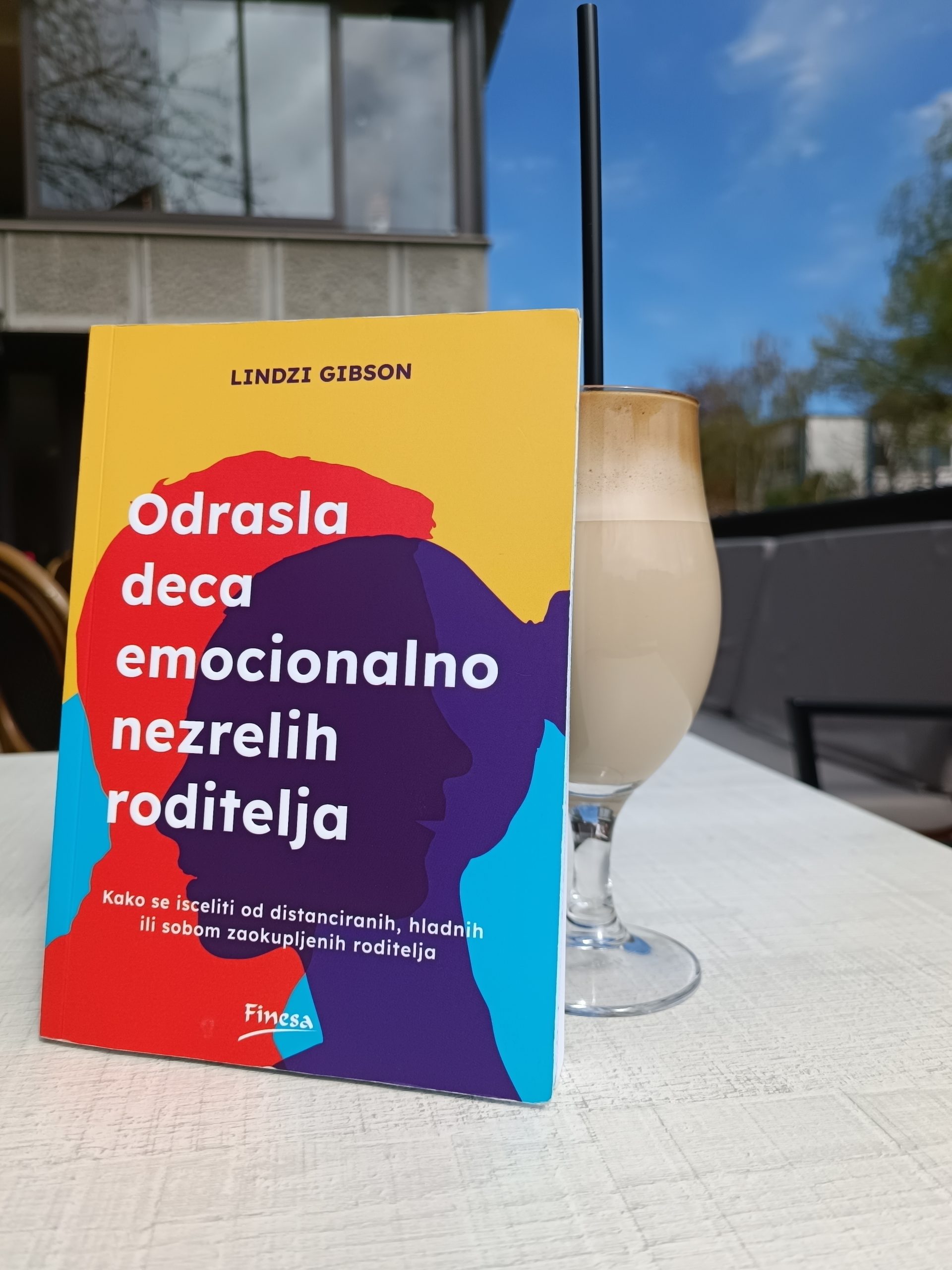
And that’s why this book is, in a way, a warning for (current and future) parents that there’s truth in “everything starts at home” and that “we shouldn’t allow the street to raise our children.” But precisely this “everything starts at home” presupposes that as parent(s) you’ve set healthy foundations in your family. A family dominated by a narcissistic, aggressive (or passive) and/or unfeeling parent(s) where it’s more important to satisfy the interest of I (as an individual) rather than WE (as a family) isn’t a functional family and it’s quite certain that (in the vast majority of cases) it’s not fertile ground for the child to develop into an (emotionally) mature individual. Because then the street will easily take such a person “under its wing.”
And that’s what we don’t want, right?
And that’s why this book instantly ended up not only on my “special shelf,” but also became part of the literature in my work with people.
And because of that “Adult Children of Emotionally Immature Parents” deserves absolute recommendation.
And you, dear reader, did you perhaps recognize from the text some behavior patterns in yourself or your parents? 🙂
Author’s website | Book price: Finesa | Delfi | Vulkan
Ratings (and purchase) on foreign sites: Goodreads | Amazon | Audible | Bookdepository | Waterstones