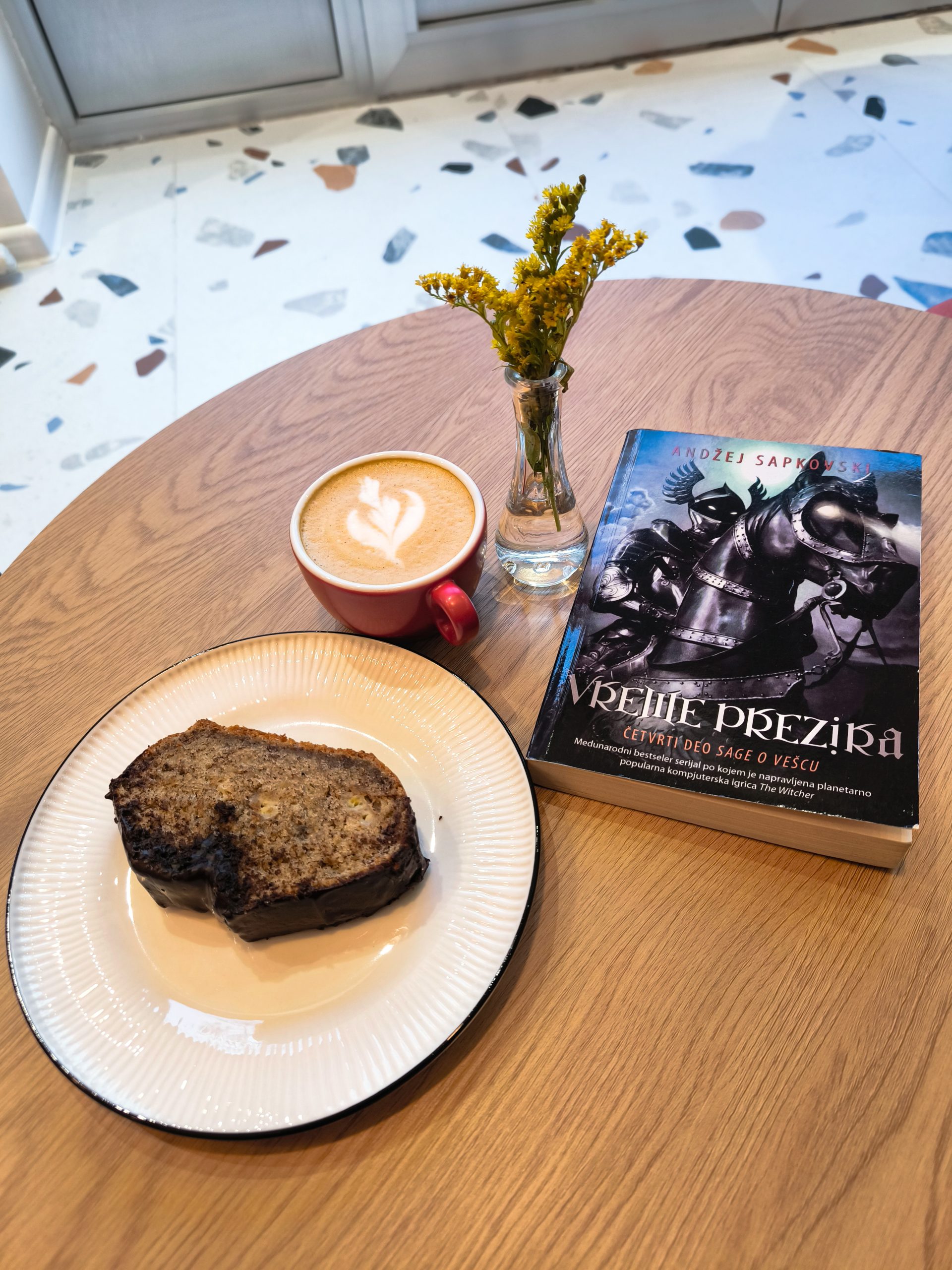







Faust
“If we meet someone who owes us gratitude, we immediately remember it. How many times, however, have we met someone to whom we owe gratitude, and we didn’t remember it” – Johann Wolfgang von Goethe
Ah, Heinrich Faust… for friends, Faust… for pupils and students for whom it was required reading, known as “oh no, what is this now, I understand nothing, where’s the summarized version.”
Though many believe he’s only a made-up character, there are claims (and records) that in the period between 15th and 16th century (period known also as “German Renaissance”) there lived a man who was truly named Johann Georg Faust, and he was a very educated man. That he dealt with alchemy, astrology, magic and was good connoisseur of medicine, and during his travels through Germany apparently in some cities was very welcome, in some tolerated, and in some persona non grata because of dealing with black magic. Supposedly he perished in explosion during one of his alchemical experiments in one hotel room (“Hotel zum Löwen”) and the scene… uh, wasn’t exactly the best.
In legends/folklore, Faust is known as very educated and successful scholar who became dissatisfied with life and human potential. At one point he concludes pact/contract with Mephisto (somewhere he’s the devil himself, and somewhere his representative, known also as “King of Crossroads”), and in exchange for his soul that would serve devil after death, Mephisto offers Faust chance to be young again and live through all earthly pleasures that interest him.
But let’s not go into deeper analysis here now, but turn a bit to Faust version written by Johann Wolfgang von Goethe. More precisely, here we’ll address the first part of his work, “Faust.”

In Heaven, God and Mephisto make a bet. Mephisto claims he’ll divert Dr. Heinrich Faust (God’s favorite) from righteous path, while God is convinced temptations won’t prevent Faust from finding spiritual peace.
We find our protagonist in a room, surrounded by books. He’s depressed and frustrated. He’s fifty years old. He mastered all (then) important disciplines (philosophy, medicine, law and theology), but is still disappointed in limit of human potential. Moreover, he believes dedicating life to science didn’t help either world or him, nor was there reward for it. Since he’s fed up with everything, he turns to magic, hoping to find some answers. However, even here he started losing hope, already thinking about taking his own life.
When, there’s Mephisto who materializes before Faust, introducing himself as unnamed traveling student, who is, because of Faust’s (not exactly perfect) pentagram on the door, now trapped and can’t exit Faust’s premises. However, because of that they can make pact, in which Mephisto promises to help Faust in whatever he wants, but Faust doesn’t want to just let this mysterious being go. Because of that Mephisto resorts to cunning and demonstrates his power – summons spirits who with their song put Faust to sleep, and rats manage to “gnaw” pentagram and Mephisto disappears.
However, devil wants to come for his own, so truly the next day he visits Faust and offers him unique opportunity. Mephisto promises Faust he’ll serve him for his lifetime, however, when Faust, excuse me, “kicks the bucket,” then he (i.e., his soul) will serve Mephisto. However, Faust isn’t naive either, because he’s convinced Mephisto as servant will surely ruin his earthly life (because what the hell prevents devil from screwing with man), therefore Faust proposes bet/agreement/pact – If Mephisto succeeds in providing Faust such (transcendental, yet earthly) pleasures and experiences that Faust no longer wishes to progress in life but wants to be “trapped” in some moment (full of pleasure), he’s ready to die that instant and become Mephisto’s servant. Faust signs contract with blood and without reading fine print, realizes he signed all property over to Mephisto… well, that wasn’t it, but pact was simply made.
And therefore, straight to the club, VIP box, Dom Perignon for 10,000 euros and pros…
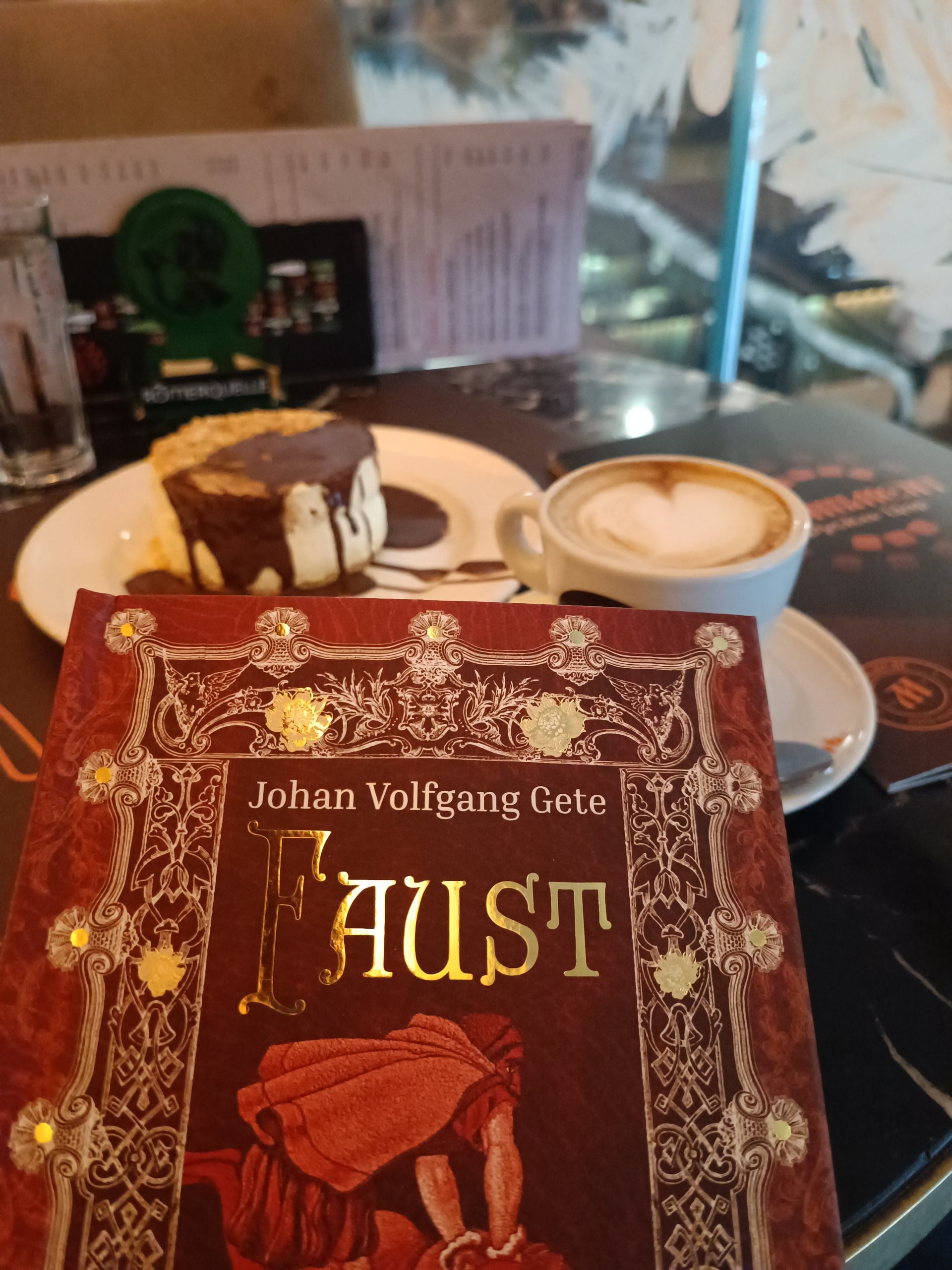
Mephisto leads Faust to one tavern to see what partying is. However, Faust isn’t too impressed by people in tavern, nor Mephisto’s manipulations of guests.
Then Mephisto leads Faust to one witch, who prepares him potion that rejuvenates him 30 years (so he can, you see, better enjoy pleasures).
And soon Faust meets (young) Margaret (nicknamed Greta, and somewhere Gretchen), by whom he’s enchanted. Greta, though very very pious and innocent (in every sense), herself becomes intrigued by (now young) Faust, but still cautious.
Faust asks Mephisto to help him win Greta, however, Mephisto has no power over Greta (because of her piety and purity), so therefore helps him indirectly (through jewelry and charming Greta’s neighbor), and leaves main “work” to Faust.
However, though at first glance everything seems to go as it should, things get complicated.
Faust (with Mephisto’s help), manages to seduce Greta. However, to have moments of privacy, Faust gives Greta sleeping potion for her (strict and traditional) mother to drink, but this leads to her death.
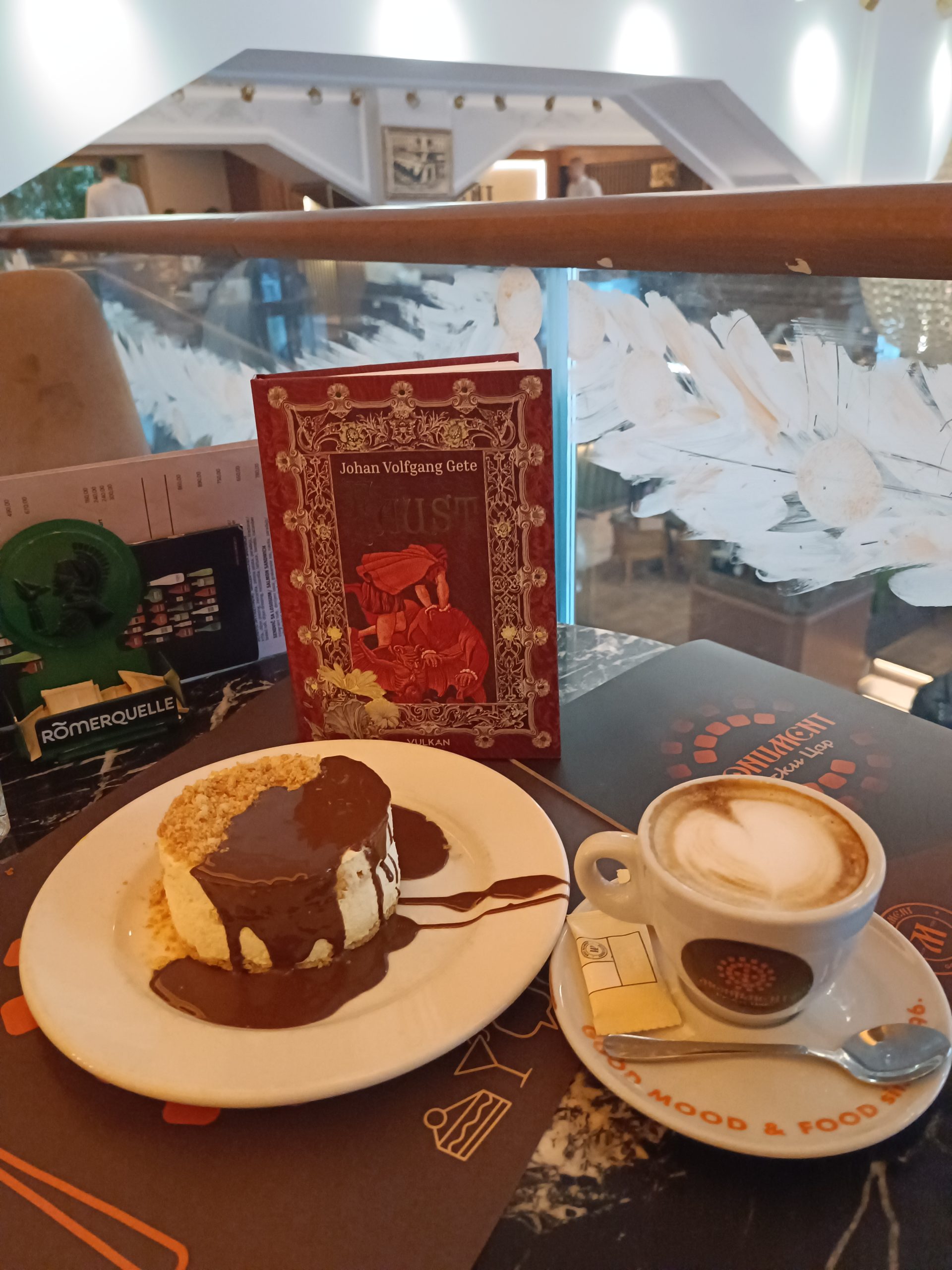
Soon after Greta becomes pregnant, which leads to sullying her honor, which especially affects her brother, soldier Valentine, who challenges Faust to duel. However, Faust (again with Mephisto’s help) kills Valentine, and abandons Greta and leaves her to her painful fate.
A year has passed. We find Faust and Mephisto at annual orgiastic “party” of witches and demons (which happens on Walpurgis Night, April 30), and during party, Faust gets vision of Greta in chains and despair and begs Mephisto to find and save her, if possible.
Faust finds Greta in dungeon, sentenced to death, and they try to pull her out of prison before dawn breaks. However, Greta doesn’t want to avoid punishment for her sins. She killed her mother, got pregnant, drowned her child, caused her brother’s death too, and she’s accepted that for her the only peace is in death and if she can get God’s forgiveness.
The end of this tragedy finds us as Faust and Mephisto flee from dungeon while hearing Greta calling out her love’s name. Mephisto claims to Faust her soul is condemned. However, heavenly voice intervenes with proclamation she’s saved.
And this would be briefly (and relatively) roughly retelling the tragedy “Faust.” Since it’s a classic (and required reading for high schools and colleges), I really didn’t see the point to interrupt plot halfway because of suspense, because we all know how the story unfolds. 😅 And on the other hand, if you forgot (or didn’t read), I gave you briefly this tragedy’s plot, so, well, you know for your general culture.
As for this part (and realistically, every other book), many things are subject to reader’s interpretation, so for me only remains to share with you some of my view of this tragedy (because the point isn’t just to copy analysis from other sites)… but again not to write too much, because otherwise this review will be read for three hours. 😅
Whether you like Faust as character or not, and how much you can understand his motives or not… well it can say a lot about your view of human race. Because, in a way, Faust is personification of human race, with all virtues and flaws, which in this tragedy are simply drastically magnified.
At the beginning, Faust visibly represents that rational part of us, which wants to understand world around him, but also penetrate into some deeper world essences, both from concrete and metaphysical side. Simply, he wants to know “both what and how and why,” to understand world’s essence, but also go even further into transcendental. His position is man must constantly learn, but on the other hand he’s tormented by limitations of human mind’s capacity.
Later, Faust (with Mephisto’s “help”) becomes that other side of man, that emotional side… though maybe not so much from aspect of emotion itself (like love), as much as passion, desire, impulsive urges, infatuation…
In a way, Faust is also symbol of man’s eternal struggle to reconcile these two sides that are in each of us. But he’s likewise symbol of rebellion against tradition and limitations, as well as struggle against man’s impotence (because of his limitations) to be equal to God, but why he’s ready to “push” himself even beyond boundaries of impossible aiming to achieve his goals (“titanism”).
It’s interesting that the motif of man’s fall from Paradise and wandering in search of some kind of redemption can be recognized in Faust (though which, especially in Faust’s case, comes much later). But he is, in the end, person who spiritually doesn’t falter, which gives hope his soul can be saved.
On the other hand, Mephisto is presented quite atypically for the time how people otherwise experienced devil. Here we see him as elegant gentleman full of sarcasm, to whom purpose God assigned him is boring. Though he wants to sow random chaos, somehow it seems he does everything in service of good and God, so he got a bit bored and so came bet with God. He’s presented as great skeptic and equal proponent of both materialism and nihilism.
It’s also interesting he’s not presented as such powerful being as (devil otherwise) is experienced, because he has his power only on territory of northern medieval Europe, and doesn’t use so much big and dangerous magics, as much as tricks and illusions and treacherous crimes. Because of that noble and honorable characters (like Margaret) don’t like him and sense something’s not right about him, which is why he’s disgusting to them.
Devil is symbol of eternal negation in “Faust.”
Margaret/Greta/Gretchen is one young, beautiful and uncorrupted soul, who becomes object of Faust’s desire. And since she doesn’t manage to remain immune to his charm, she falls madly in love with him. In the name of love, she’s willing to do everything to spend time with Faust, though likewise makes unintentional mistakes that lead to death of her mother and brother, sullying her honor because she entered extramarital relationship, but also murder of her illegitimate child to save it, i.e., free it from this world. Greta symbolizes humanity’s naivety and goodness, but also infatuation of person who because of love is ready to do many thoughtless things. But she’s likewise symbol of person who takes responsibility for her sins and hopes for redemption.
Though appearing briefly, we can mention Wagner, young scientist who’s Faust’s assistant and collaborator (whom Mephisto soon replaces in that “position”) who believes in power of intellect and reason and that books and science can fill man’s emptiness.
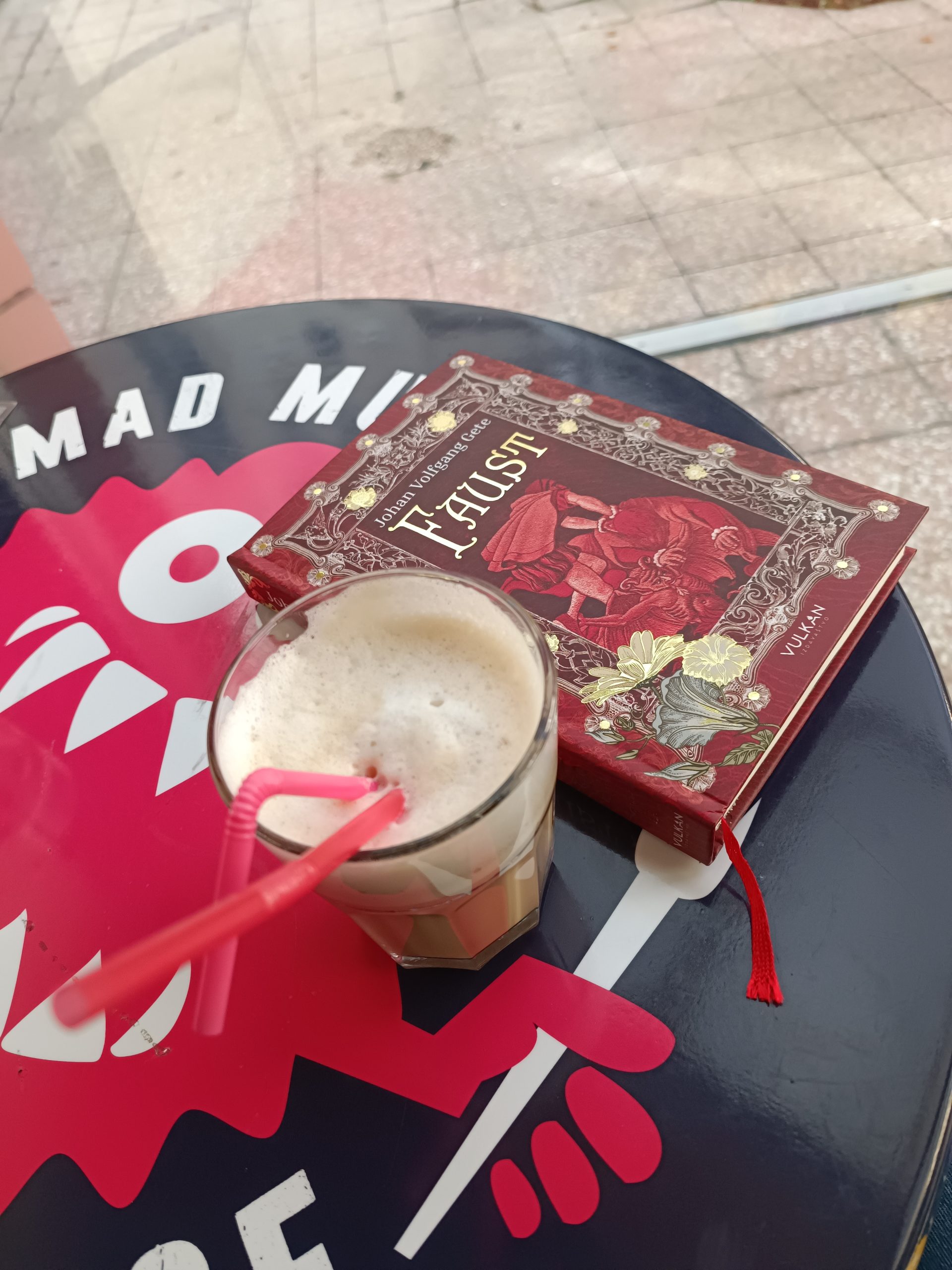
Almost entire “Faust” is in form of dialogue that rhymes. “Faust’s” rhyme style (which can sometimes be playful and sarcastic) is called Knittelvers… not that this information will be useful in pub or café, but there, you learned something new (and useless for 99.3% of population).
Though the first part’s (remember I wrote that at text’s beginning, explanation coming soon) ending of “Faust” is in principle positive (i.e., good), this work is classified as dramatic verse that belongs to genre (i.e., literary type) of tragedy.
At first glance, reading “Faust,” you wouldn’t be wrong when you’d say for titular hero (because of his initial thoughts and some thoughtless actions) he’s more example of antihero than hero of his story. However, in literature he’s considered great tragic hero (and his tragedy many connect with aforementioned “titanism”).
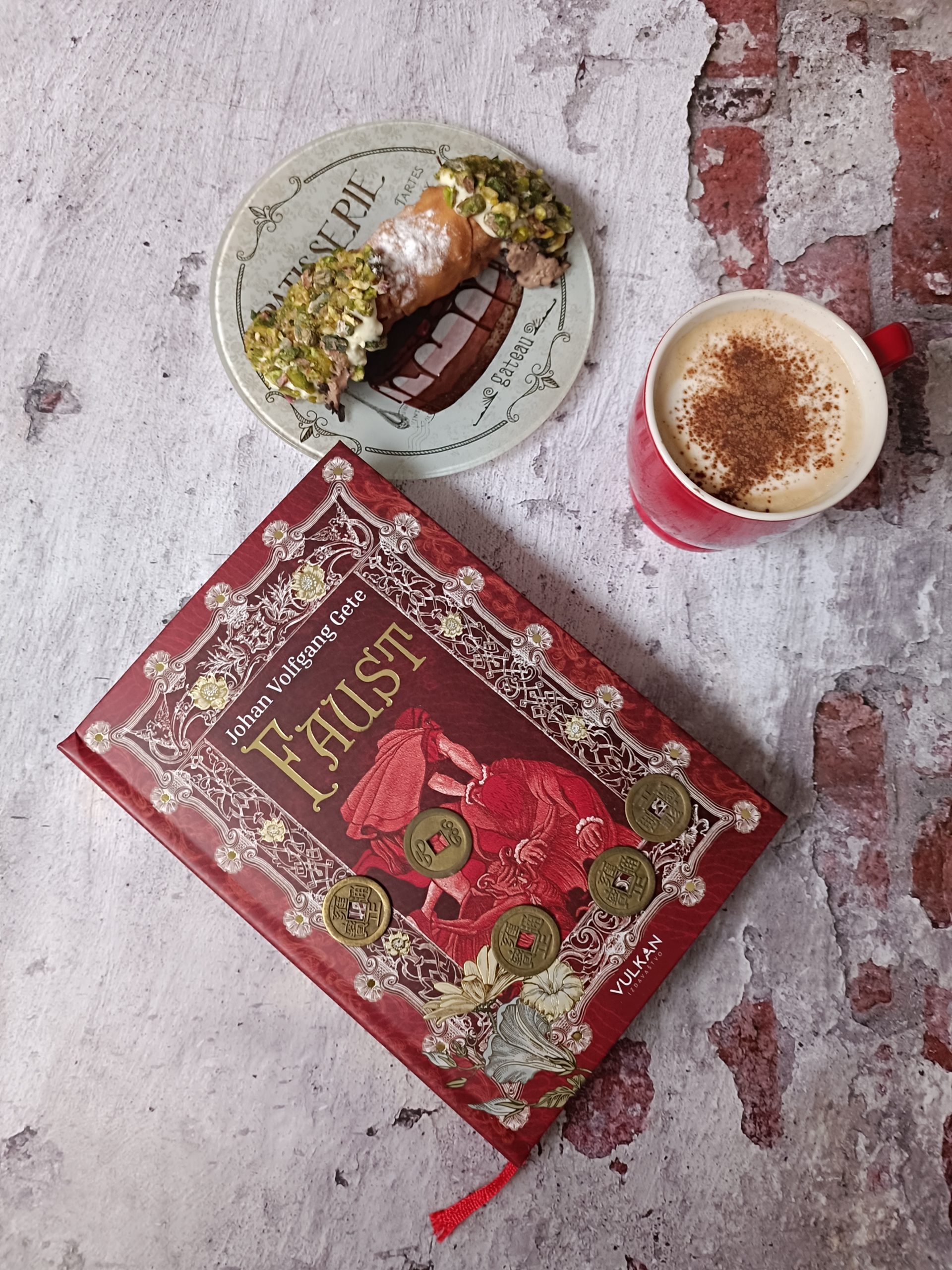
Now, why did I write earlier “first part of Faust.” Namely, “Faust” consists of two parts (or big chapters) and often you’ll encounter in bookstores that mostly first part is sold. But likewise, second part can be found for sale, as well as complete edition. There are several reasons for this, but these two are somehow most likely and most logical: Goethe devoted most of his life to writing Faust (he wrote it for 57 years). First part (which we addressed here) was published in 1808. He finished second part in 1831, and died the next year, when it was then posthumously published. Also, first and second part of “Faust” differ quite a bit, because in second part, focus isn’t so much only on Faust (i.e., on his soul) but also on social phenomena of psychology, politics, history, mysticism and generally various philosophical themes, and second part doesn’t lean too much on events from first part (but, logically, these aren’t situations where you wouldn’t read second part while skipping first).
Interesting fact is (though there’s not too much documented about it) that there existed original version of Faust (“Urfaust”) which at the very end in one sentence drastically changed Margaret’s fate.
To say something about writing style or how easily or difficultly it reads, truly is individual feeling whether you love literary works in rhymes and acts.
After so many years from first reading “Faust” (I think it was required reading for me in high school?), to me now this work wasn’t so interesting to read from standpoint of literary style, as much as from standpoint of messages it sends. Though more than 200 years have passed from publication (first part), messages remained universal. About man’s desire for understanding world around us (including transcendental), but also desire for enjoyment in those bodily and material things, to readiness to renounce part of us (like our soul) for achieving our desires, as well as whether we can find way to redeem ourselves for our sins and be forgiven (and primarily forgive ourselves).
All in all, “Faust” is work everyone should read at least once in their life. This work is without doubt Goethe’s magnum opus, because as Goethe is (almost unanimously) considered greatest German writer and German literature divinity, so likewise his work “Faust” is placed in same category (greatest work of German literature).
And that deserves this work be read at least once.
And you dear reader, would you also have some so great desire you’d sell your soul for its achievement, as Faust did? 😈
Book price: Vulkan | Delfi | Makart | Dereta
Rating (and purchase on foreign sites): Goodreads | Amazon (US) / Amazon (UK) | Waterstones | Barnes & Noble | Audible (US) / Audible (UK)