







Be Useful
“First of all, rest is for babies and relaxation is for retired people” – Arnold Schwarzenegger
From the moment of its appearance, the book “Be Useful” became an instant bestseller. People would say “of course, it’s Arnold Schwarzenegger, whatever appears with him, it’ll sell, regardless of quality.”
However, when you poke around the internet a bit, you see people truly have positive comments about the book, even some sites that are otherwise brutal in reviews showed benevolence.
If you ask me, it’s not without reason.
You can love or not love Arnold, as well as his films or political career. But you can’t not respect what he’s achieved. Born in Austrian town Thal (better said, settlement, because even today it barely has over 2,000 inhabitants), with not exactly ideal childhood (quite strict upbringing, with frequent aggressive “outbursts” from his father). World War II just ended, you live in defeated country full of depressed people, and the career awaiting you can only be some craft. And if you want to be an athlete, eventually skier or cyclist.
And one kid turned to bodybuilding and dreams toward America.
Here I won’t deal much with his growing up or careers as bodybuilder, actor and politician (you probably already know a lot, and you have here the documentary “Arnold” review too) nor what he’s like as a person and similar, but we’ll focus on his book “Be Useful.”
The book is divided into seven chapters (since I read in English, translation will be a bit freer, in accordance with how I experienced the chapters):
- Have a Clear Vision
- Never Think Small
- Work Your Ass Off
- Sell, Sell, Sell
- Shift Gears
- Shut Your Mouth, Open Your Mind
- Break Your Mirrors
In the first chapter, Arnold makes it known how important it is to have vision, and that CLEAR vision of what we want with our life, and that people precisely feel lost (“I don’t know how I ended up in this situation”) because they don’t have vision of what they truly want. So Arnold believes there are two ways to build vision (start “small” and work on it until it crystallizes or start more generally, “broad” until clear vision “sharpens”), but in any case it’s important not to complicate too much. In translation, be concrete with your vision. Also, he’s aware vision is something people search for their whole life, but that’s why it’s important to have small goals too and be consistent, to create momentum for bigger challenges. And don’t forget visualization (but not in the way it’s presented to us today). The essence of everything is that when you have clear vision, it’s easier not to choose bad life decisions. And that it’s important you can look at yourself in the mirror… both figuratively and literally.
If you are stuck, if you are struggling to figure out a clear vision for the life you want, then all I care about is that you make little goals for yourself to start building the momentum and that you create time and space every day to think, to daydream, to look around, to be present in the world to let inspiration and ideas in. If you can’t find what you are looking for, at least give it a chance to find you.
The second chapter talks about goals. You should have big goals, but should also give yourself 100% to them, even if we don’t achieve specifically set goal, we’ll surely still achieve something significant. Likewise, we shouldn’t let people who say “NO” to everything (naysayers) for their reasons, shape our life. And achieving a goal doesn’t mean game over – it means it’s time for new goal, new challenge, again giving 100% to something new.
Wenn schon, den schon. Roughly translated, it means “If you are going to do something, DO IT. Go all out.”
As the third chapter says, you must work hard if you want to achieve something, because as they say, “hard work never betrayed a man” (note: provided he also worked smart and with clear vision). Arnold clearly draws parallel with exercise. Repetitions, repetitions, repetitions, to build quality base, to be ready for new challenges and not slip on nonsense. Though repetitions are boring, they must be pushed through; they can hurt, but that pain is temporary, and also serves to pull us out of comfort zone. Of course, pain (like life’s temptations) serves as test whether we’ll give up or continue forward. Schwarzy will (like many before him) emphasize we all have 24 hours at our disposal and we’re not as “busy” as we present to ourselves and others (just look at how much time you spend daily on social networks or how much time you spend thinking about how you should do something) – in translation, we don’t lack “hours” in the day, but clear vision for that “wasted” time. Of course, sometimes we have vision, but time we must spend achieving it paralyzes us, but even then we must work if we want to achieve our goal (to go, as I like to say, “step by step”).
Let me put it another way: busyness is bullshit. We are all “busy”. We all have things to do every day. Obligations and responsibilities. We all have to eat, sleep, pay the bills. What does that have to do with putting in the work to reach your vision? If it matters to you, make the time.
“Sell, Sell, Sell” is a chapter where Arnold sends message it’s not enough to have some vision, idea or product, but you must also present it to the world, that you also “expose” yourself to the world through communication. Likewise, you must understand your customer/client to know how to “sell” them your idea (or literally sell your product). However, before you “sell your story” to someone else, the first customer to whom you must sell it – is yourself (and how to do that, I’ll leave you to read in the book). I really liked the part talking about people who won’t understand your idea or will underestimate you and how you shouldn’t promise others castles in the sky then. He also excellently explained that the person across the table (say show host where you’re guest) has their own goal to win, but you don’t owe anyone to be only you “on the carpet.”
…no one who puts microphone in front of your face and asks you a bunch of question is doing it as a favor for you. They have their own agenda, whether thats a way to fill up column inches, coaxing out controversial statement that gets more attention, or in some cases just trying to make you look like an asshole.
You dont owe them anything. You definitely don’t owe them the answer they think they deserve. This is your time as much as it is theirs. This is your opportunity to tell your story and sell your vision as much as it is their opportunity to craft whatever narrative interests them.
“Shift Gears” touches on how negative outlook on the world brings almost no benefit. Nobody cares about your complaining, especially if you don’t offer concrete solution and(or) aren’t willing to work hard. You’re to blame yourself if you waste time constantly complaining about something, worrying about scenarios that most likely won’t even happen or reading articles that stir anger and frustration in you. It’s also important we change our view on failure, as part of growth process and approaching goal, because it’s not failure that “kills” our vision, but giving up on it. Likewise, as we should change view on idea of failure, we should similarly position ourselves with idea of risk.
The worst thing that can happen when you do the work to overcome adversity instead of quit in the face of it is that you fail again and learn one more way that doesn’t work. Then that just forces you to switch gears, which gets you one step closer to your goal, because now you are more likely to be heading in the right direction.
Really, what do you have to lose?
The saying goes we were given two ears and one mouth, so we’d listen more than we talk, and Arnold agrees. We should be curious about life and world around us, ask (good and concrete) questions and absorb important information like sponges. But all this should also make us humble and submissive, not behave like the smartest. And likewise, put that acquired knowledge to use. Realistically, when you look at Arnold’s life, he was always during advancement surrounded by people more competent than himself, because he saw what failures due to arrogance do to a person.
Having patience and humility to listen well is an essential ingredient of curiousty, and it is the secret to learning.
And finally, “break your mirrors” sends message not to be turned only toward ourselves, but to focus on others too, to help others according to our abilities, and be aware we always possess some knowledge or skills that can serve others. Arnold always emphasized that for his success (besides ambition and hard work), people he met during life who helped him reach heights he reached were important, both as bodybuilder, and as actor, and as politician. And during his careers he realized how beautiful it is to help others. And as many helped us (in various ways), we too should sometimes set aside our Ego and turn to helping others.
“Break your mirrors!” he said. “Yes, indeed – shatter the glass. In our society that is so self-absorbed, begin to look less at yourself and more at each other. Learn more about the face of your neighbour and less about your own. When you get to be thirty, forty, fifty, or even seventy years old, you will get more happiness and contentment out of counting your friends than counting your dollars. You will get more satisfaction from having improved your neighbourhood, your town, your state, your country, and your fellow human beings than you will ever get from your muscles, your figure, your automobile, your house or your credit rating. You will get more from being a peacemaker than a warrior. Break the mirrors.”
“Be Useful” is a book that (at least in original, English edition) reads incredibly quickly and easily. It’s written in very simple and understandable language, without much “heavy” philosophy and is permeated with examples from both Arnold’s life and other people’s lives. And as far as I see, when it appears in physical edition here, it shouldn’t have more than 200-250 pages.
Arnold Schwarzenegger is now 76 years old, but still has clear consciousness and sound mind (aside from the fact he was always a bit eccentric and silly), and left a mark in every “branch” he touched (bodybuilding, acting and politics), and in each wanted to be the best (“Mr. Olympia” seven times, one of the biggest if not the biggest action film star, governor of California, which for decades has been one of the world’s most powerful economic forces). He experienced great ups, but also downs. He was very direct, but also learned when to be tactical. He didn’t have exactly nice childhood, but managed to create a good life for himself later.
And it’s not that he doesn’t have some smart life lesson to share, without much faking (or as Americans would say, “no bullsh*t”) and fantasizing. He always had vision of what he wants in life, and when he’d achieve some goal, he’d move toward the next. For many people his whole life was just a big mass of muscles with heavy Austrian accent and bad English without any talent. But he tirelessly worked on himself and moved his boundaries, and tried to demolish beliefs other people had about him and tried to change some standards, as well as set new ones.
And now he’s an old man. With hot tub, jacuzzi, dwarf donkey and pony, as well as piglet and puppy. Has money he can’t spend. Invests in businesses and launches various organizations. Films some film/series or commercial when it blows his way. Still trains. No one can do anything to him. So why not say how some things work… at least from his life’s perspective.
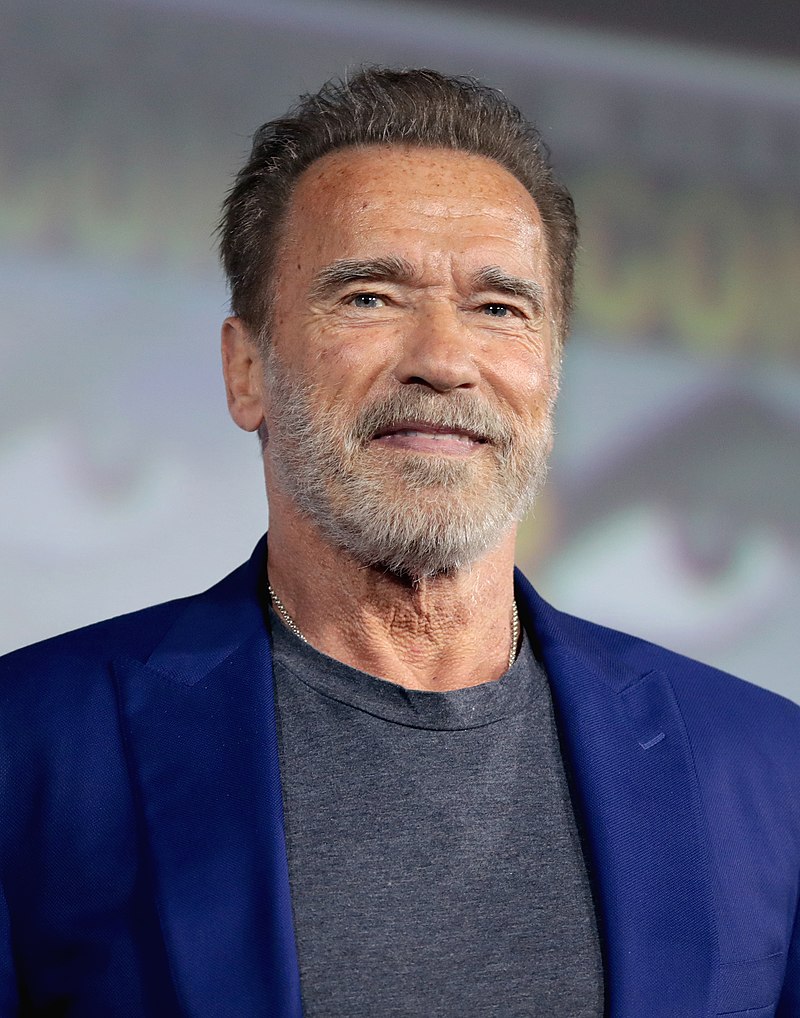
And it’s not that he didn’t live through it and learn some important (and hard) life lessons.
And maybe we also need occasional reminder that without clear vision, ambition, hard work, self-promotion, rejecting pessimism, careful listening to the wiser and helping others, some big and meaningful things in life can’t be achieved.
Unless times have changed so much those aforementioned values lost… well, their value.
But recommendation from me for this book, to which it’s worth occasionally returning, as a reminder.
And you, dear reader, will you also read the book “Be Useful”? 😊
Book price: (at time of writing review not yet published in Serbia)
Rating (and purchase on foreign sites): Goodreads | Amazon (US) / Amazon (UK) | Waterstones | Barnes & Noble | Audible (US) / Audible (UK)