




American Gods
Next year it will be exactly 20 years since Neil Gaiman’s American Gods first appeared, a book that very quickly became an instant classic. It swept up every major award you can sweep up in the realms of sci-fi and fantasy (Hugo, Nebula, Locus, Bram Stoker…), and it’s been showered with top ratings and praise from both readers and literary critics.
And all of that is deserved, if you ask me.
I first read this book many, many years ago. To be honest, I think I read it too young and that I actually didn’t understand a lot of it, and missed even more. It stayed in my memory merely as “an interesting book.” And the years went by.
Then in 2017 the TV series based on the book appeared. Season one thrilled audiences (season two a bit less), and American Gods came back on my radar. I wanted to watch the show, but I thought it might be a good idea to reread the book first, especially since I had forgotten so much about the plot that I only remembered some vague details and events.
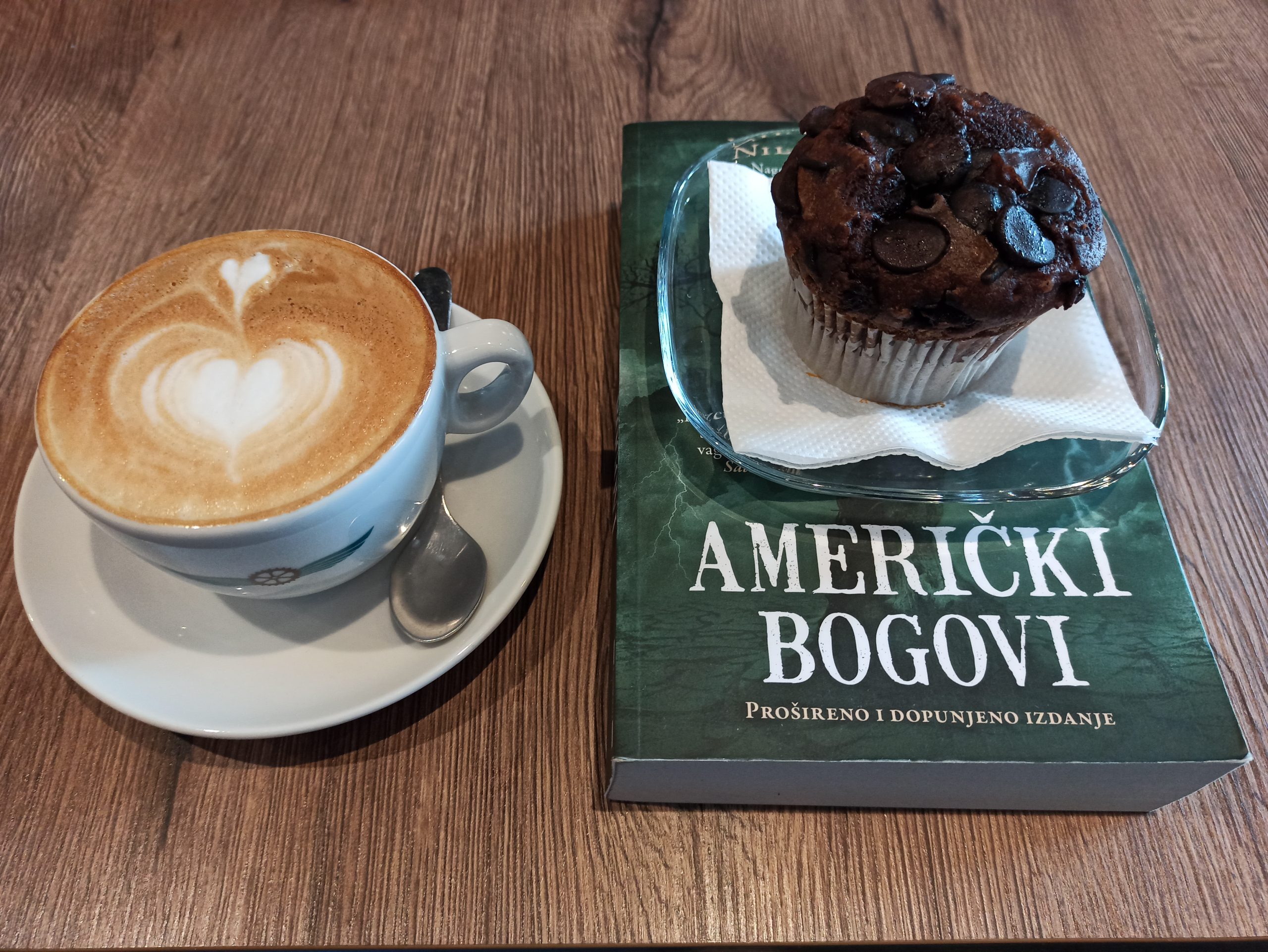
So I went and got myself (i.e., bought) the expanded and updated edition of the book, which clocks in at a nice 550 pages.
And I didn’t regret it. Wow, what an adventure!
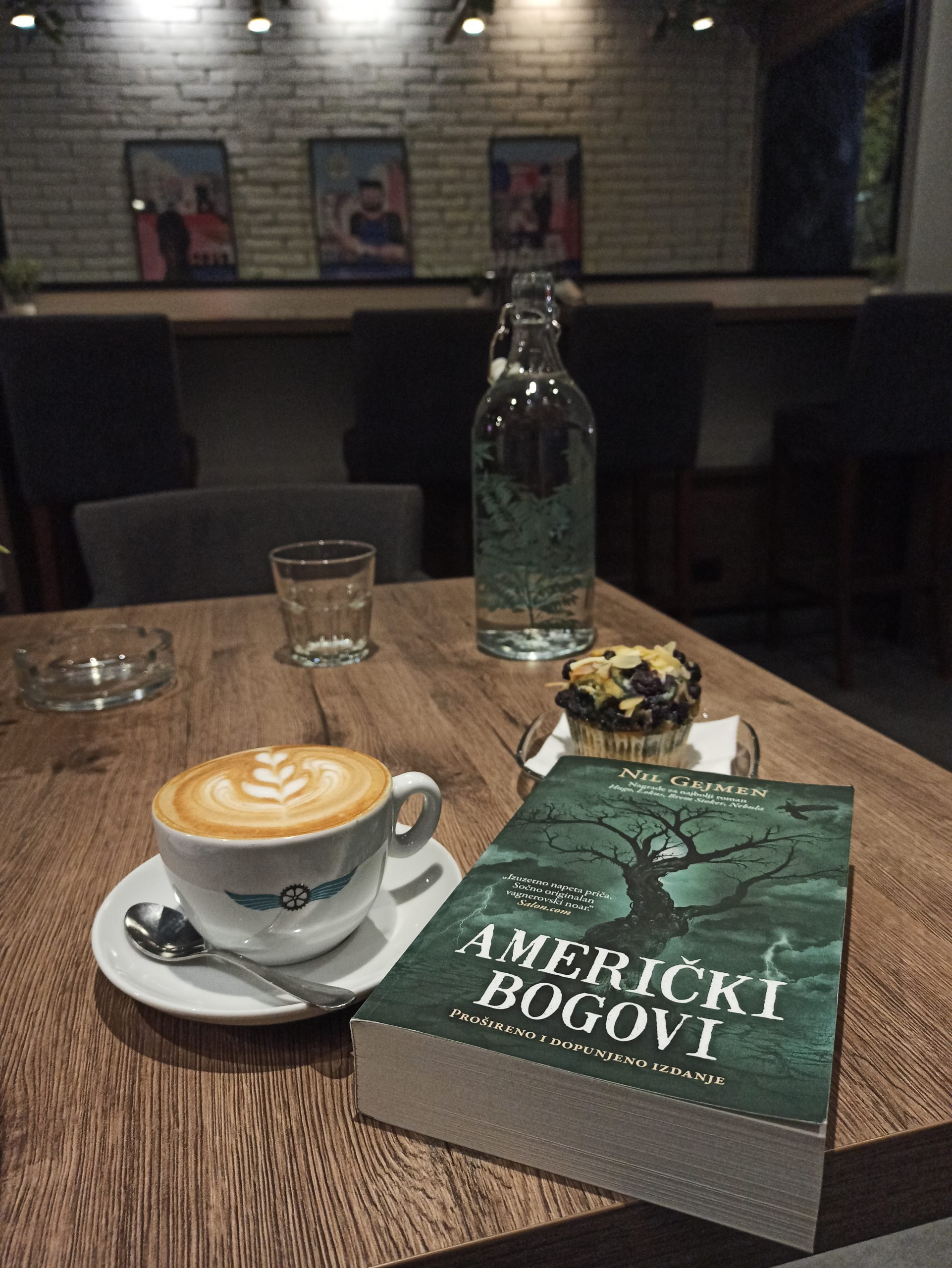
What’s even more interesting is that I didn’t read the book in one breath. On the contrary, I read it slowly over many weeks. For some reason, I wasn’t in any rush to finish it. And when I finally reached the last page, I realized I’d been reading it for so long that it felt like watching a series—where every week (or every other week) a new episode of Shadow and Wednesday’s adventures would drop. 😀
And the adventure begins…
A guy named Shadow, a few days before being released from prison, finds out that his beloved wife Laura and his best friend have died in a car accident, which completely breaks him. After he gets out, he catches the first plane to make it to the funeral. There he learns that the death of the two people closest to him involved drunk driving, an open fly at high speed, and a gearshift and… well, you get the picture. That crushes him even further. What does it matter that he’s out of prison now, when he’s lost everything he cared about?
And then our broken, lost, and hopeless Shadow meets an unusual and charismatic man called Wednesday, who offers him a job as his bodyguard (and driver). Shadow accepts, without really knowing why.
So as they travel by car across America, Shadow has a series of very strange conversations with Wednesday, trying to figure out who this mysterious man really is. At first, he assumes Wednesday is some slick conman (he certainly behaves like one), who uses various tricks to get the money he needs while meeting with a variety of bizarre people he seems to be recruiting for “something.”
But as time goes on, Shadow realizes things are much stranger, more unreal, and more serious than he’d imagined, and that his job is anything but simple. Especially when he discovers that Wednesday is, in fact, the American manifestation (or incarnation, really) of the Norse all-father Odin. And that the people he meets at Wednesday’s “meetings” are actually manifestations of gods, mystical beings, and heroes from various mythologies and eras: Thor, Loki, Czernobog, the Zorya sisters, Anansi, Anubis, Thoth, Bast(et), Horus, Ishtar, Wisakedjak, Elegba, Gwydion, Kali, Ganesha and many more. As you can see, this story weaves in gods from America all the way to Asia.
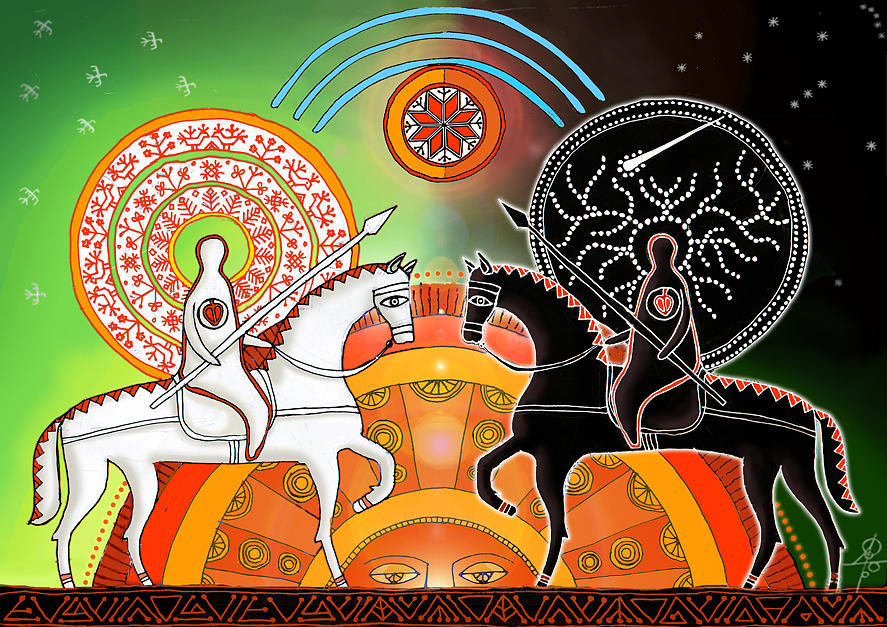
But why have these great, legendary, all-powerful gods been reduced to mortal-level nobodies living off petty scams, welfare, smuggling, prostitution, or selling peppers at a market stall? Simply because, as time passed and technology progressed, the original immigrants (both those who came willingly and those who were brought by force) believed less and less in their gods, stopped worshiping them, stopped making offerings, and gradually forgot them. And because of that, the “old” gods lost almost all of their power and now barely survive, both physically and magically.
And as if it weren’t enough that the old gods were weakened, they also became a thorn in the side of the new gods born from the modern age—like Technical Boy (god of the internet and technology, presented as a chubby kid), Media (goddess of television and pop culture), then the Intangibles (gods of the stock market and modern finance), then Mr. Town, Mr. Road, Mr. Stone, and Mr. Wood (who embody conspiracy-theory-style forces and act like spies), as well as many other new gods of the 20th and 21st century (cars, plastic surgery), led by their boss, Mr. World (god of globalization).
It quickly becomes clear that Wednesday (Odin) is trying to gather all the remaining old gods who still survive in modern America, because it’s fairly obvious that a great war is coming. A war for the soul of America and the future of one group of gods.
And in the middle of all that is an ordinary mortal, our large and (generally) quiet friend Shadow—a man all the gods know more about than he knows about himself, and who somehow seems to be very important to them. But although Shadow is clearly mortal and has no powers, he keeps having strange (supernatural and mythic) dreams for reasons unknown, and from time to time his dead wife Laura appears as… well, a sort of undead/zombie person whom Shadow accidentally (and unknowingly) “resurrected.”
Which group of gods will win? Does Wednesday have a hidden agenda? Does Laura get a shot at redemption? Is there a happy ending for Shadow or is his fate sealed? All these questions (and many more) are resolved (hopefully) if you read American Gods.
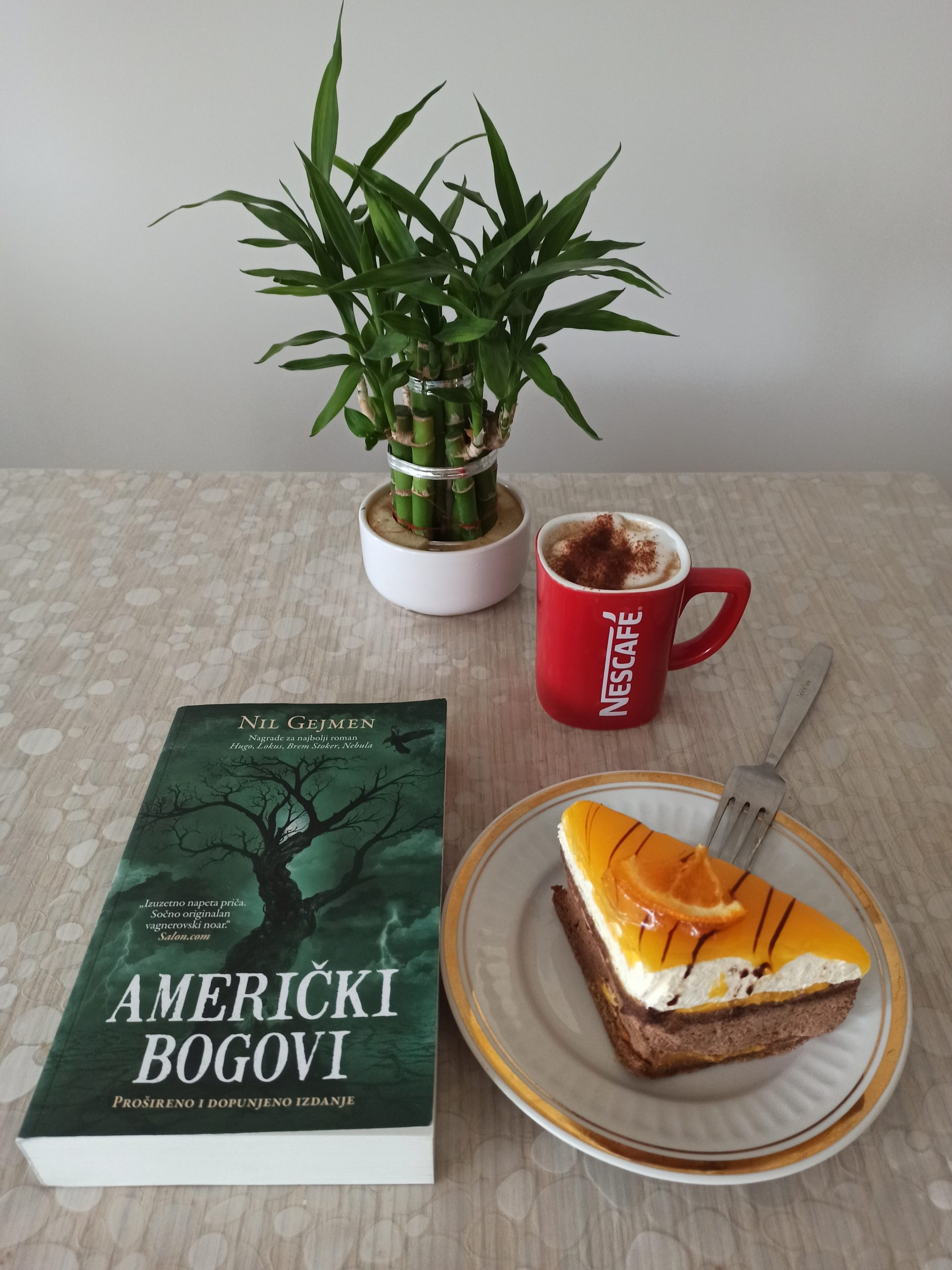
One of the big strengths of this novel from the very beginning is the cryptic tone that runs through the dialogues and descriptions, giving us room for broad (but interesting) interpretations of various events and the symbolism behind them. One fun detail is that Shadow keeps playing around with coin tricks during his travels, mainly to entertain himself (and pass the time). Beyond the fact that he doesn’t realize for a long time that some coins he carries have special powers (like protecting him from death—or bringing someone back to life… oops!), Shadow’s coin tricks can also be seen as one of the (not-so-flattering) symbols of the modern world—where illusion is everything, where the trick is to distract attention at the right moment, and where deceiving even the people closest to you is sometimes considered acceptable if it gets you what you want. (This came to me right when I was entering the epic finale of the novel.)
Then again, maybe I interpreted it wrong… which is actually another strength of the book: you feel like no interpretation is entirely wrong, and you don’t really want the author to come out and explicitly explain what he meant (for example, when it comes to questions like “what does it mean to be American?”).

The main theme of the novel (at least in my opinion) is the search for meaning and the essence of life—and the idea that maybe humans are never meant to fully grasp it. We’re only meant to search, to get as close as we can, and maybe capture fragments of it (you know, the old “it’s not about the destination but the journey” idea), while the full truth is reserved only for the gods. At one point Shadow really does glimpse truths beyond mortal comprehension, but they start to “evaporate” from him at great speed, until he eventually forgets what it was he knew.
And maybe another central theme is the attempt to answer the question: “When are we truly alive?”
As I mentioned, another big plus is the dialogue between Shadow and Wednesday and/or the other gods (as well as Shadow’s moments alone with his thoughts). Sometimes the exchanges are witty and humorous, sometimes cryptic, sometimes sarcastic, sometimes dark—but never boring.
We also shouldn’t forget the descriptions of the gods and various mortals (and their unique personalities) that Shadow encounters. Many of them will stay with you for a long time, no doubt about it. Even the little town where Wednesday hides Shadow for a while (under the pseudonym Mike Ainsel), with its residents who are both strange and boring at the same time, feels like a peculiar entity cut off from the rest of the world (and for good reason :D).
Neil Gaiman also inserts interesting “interludes” into Shadow’s adventures, where we jump back hundreds (even thousands) of years into the past and follow stories of the first settlers, explorers, and conquerors of America—their origins and adventures, and the mystical events that tie them to the gods of their homelands. Or we jump to events happening parallel to the main plot in other cities, where we briefly follow encounters between old and new gods. These interludes round out the central story nicely and prevent it from ever becoming monotonous (though the chances of American Gods boring you are pretty minimal :D).

Naturally, with so much focus on modern times, it was impossible for Gaiman not to pack in references to modern American pop culture (the greater irony being that Neil Gaiman is British X) ), from TV shows and songs to specific locations.
Despite the complex themes, events, numerous characters, dialogues, descriptions, and occasional jumps between present and past, American Gods is surprisingly quick and easy to read. In this novel Gaiman clearly shows his storytelling talent and creativity—both in his descriptions and in his wild ideas about how to “steer” the plot.
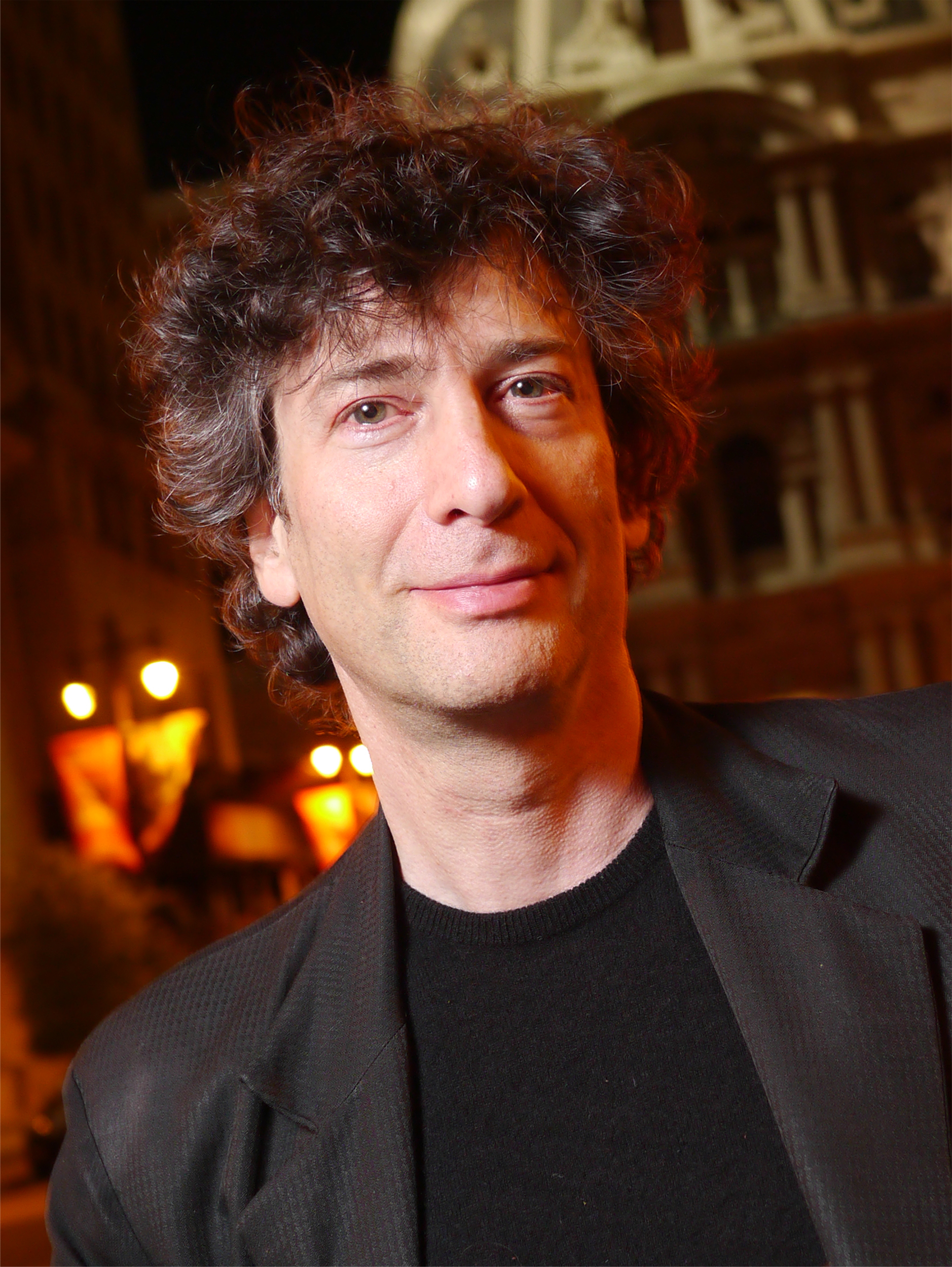
All in all, this is an excellent novel. Like its author, it’s far from perfect, but it’s devilishly entertaining, twisted, eccentric, mysterious, and full of interesting themes. It’s definitely one of the modern fantasy classics and absolutely worth reading. Of course, fans of Neil Gaiman’s work (and there are plenty of those) should not miss it (though I doubt they have :D). And besides, whenever Neil Gaiman touches mythology, it always turns into pure fun.
After this, we’ll see how the show holds up…
And you, dear reader—do you believe that old or new “American gods” are walking across America today? 🙂
Author’s website – Neil Gaiman
Book price: Laguna | Vulkan | Delfi | Makart
Ratings (and purchase) on international sites: Goodreads | Amazon | Bookdepository | Audible | Waterstones | Penguin Random House