






Chicken Soup for the Soul
In ancient times, inspiring and heartwarming stories were rare and traveled slowly. You’d hear them from reliable sources (or at least you believed they were reliable). You’d find them in books, and your heart would fill with optimistic energy; you’d regain some faith that the world wasn’t completely doomed. Honestly, you’d even feel motivated to change yourself and maybe even change the world.
Then the internet came along… followed by all sorts of websites where people could confess anonymously, and social networks where they began sharing their stories (first Twitter and Facebook, and nowadays Instagram has become a full-fledged player too).
And suddenly, the (digital) world became overrun with angels in human form—spreading goodwill, rescuing poor children and lost friends, turning into revolutionaries who apparently have answers to every problem troubling this planet, offering advice on how to become happy (while they’re miserable themselves) and successful (while praying their salary doesn’t arrive late because the overdue utility bills are arriving at the speed of light), and being “constantly asked” for guidance by hundreds of (imaginary) people…
Let me tell you something—and honestly, I don’t care if someone takes this the wrong way (“Oh, somebody decided to go hard! Yes! Tell them everything and send them to hell”—says the subconscious), though I really don’t want to offend anyone (“And so much for going hard… I, the idiot, actually got my hopes up”—subconscious again). But I want to share this based on my own experience with people (and the internet).
At least 80% (if not more) of the “beautiful things” people claim they did/said or the touching/romantic/dangerous/divine/revolutionary scenes they supposedly witnessed… are lies. Massive lies.
Some might say, “But come on, aren’t you some kind of optimist, someone who believes in people? Kind of like a coach/whatever? And now you react like this to positive stories? That doesn’t go together.” You’re right—it doesn’t go together, not when there’s this much lying involved.
Not long ago, I wrote an article about exaggeration and bragging in the business world titled “Didn’t Happen (Business Version),” addressing the need for people to glorify themselves professionally. I suppose this intro is my prelude to a future piece, “Didn’t Happen (General Version).” 😀
What business and “general/life” worlds have in common is the need for (self)promotion and validation. And besides that, the Ego gets frustrated when it sees others experiencing powerful scenes or successes—so why shouldn’t it happen to him too… at least fictitiously… because hey, who’s going to check?
There’s even a phrase for it now: “Pics or it didn’t happen.” That’s how far human fabrication has evolved—there’s literally a phrase defining the phenomenon.
How can you tell people are making things up in these posts/comments? One visible marker is the Ego’s need to dominate the narrative—and you can feel it in the writing. When people invent things they said/witnessed, the Ego leaks to the surface far more than it should, often without the person realizing it. Even when the writer is the main character, the constant “I” becomes suspiciously prominent.
Why do people do this? Dissatisfaction with their own life combined with a huge Ego, low confidence, and microscopic self-esteem. The reasons are many.
Don’t get me wrong. I’m not some naive guy who believes people are always honest (my work involves dealing with people, for heaven’s sake ^^). People lie (“You mean often?”—subconscious), and sometimes they just… decorate things a little.
As I once (sarcastically) coined for the business world: “If there are as many amazing business people as LinkedIn claims, then why the hell is the business world in such terrible shape?” And so the more informal version was born:
If so many ‘angels’ (if social media is to be believed) walk this planet, why isn’t the Earth turning into paradise, but instead becoming hell on Earth?
I think it’s because most of the noble deeds people brag about online never actually happened. And in this bragging and fabrication contest, Balkans and Americans seem to dominate (or at least we’re the loudest online, which might be why I get that impression :D).
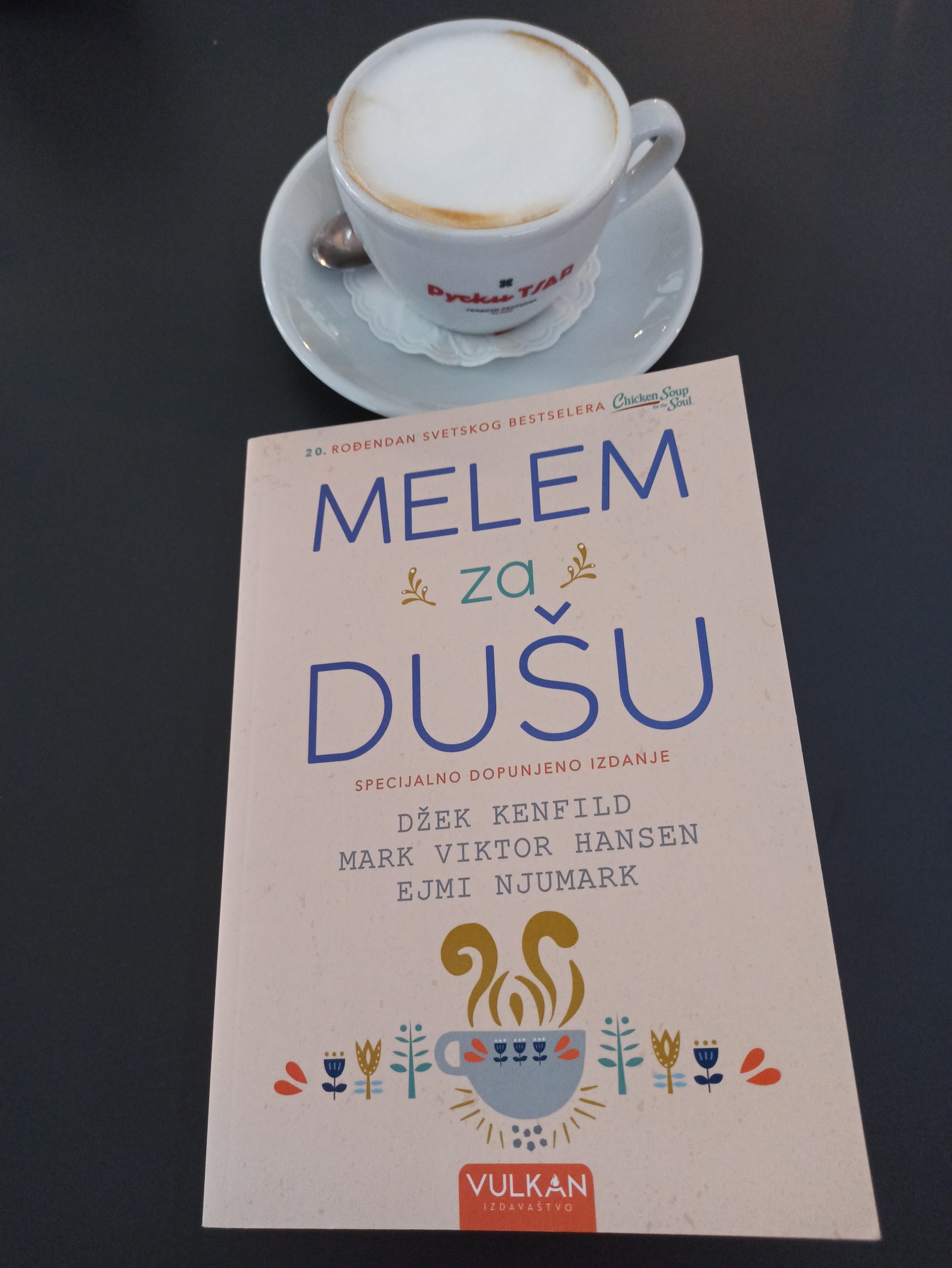
So what’s with this (lengthy) intro? Because of the iconic book Chicken Soup for the Soul and its 20th anniversary edition.
Globally recognized motivational speakers Jack Canfield and Mark Victor Hansen once had the idea of gathering many instructive/inspirational/emotional stories they witnessed (actively or passively) throughout their business and personal lives, and combining them into a single book. They also contacted many successful and famous people across the world to collect their stories, thoughts, anecdotes, and notes to include as well.
That’s how Chicken Soup for the Soul was born—eventually spawning hundreds of editions for different demographics (youth, religious readers, love & relationships, pets, music, sports, and everything else), becoming a self-help classic and a bestseller for years (it even holds a solid rating on Goodreads—which is known for brutally harsh reviewers).
Besides Jack Canfield and Mark Hansen (and Amy Newmark in the updated edition), contributors include Deepak Chopra, Dan Millman, Robert Holden, Mastin Kipp, Virginia Satir, Nick Ortner, Bob Proctor, Tony Robbins, Henoch McCarty, and many names you’ve probably never heard of (neither have I, honestly), plus many anonymous authors.
Chicken Soup for the Soul is divided into six broad sections:
1. Love
2. Learning to love yourself
3. Parenting
4. Learning
5. Living your dream
6. Overcoming obstacles
7. Miscellaneous wisdom
So why is this ultimately a lovely book worth reading (and gifting)?
The stories are warm, inspiring, and they take you through a spectrum of positive, encouraging, and touching emotions (unlike the average Twitter/FB/Confession post which is more likely to trigger a “give me a break” or “oh please, you liar” reaction). You don’t get the sense that the writer is bragging (“You mean showing off… just say it already—damn your self-censorship”—subconscious), but that the point lies in the event itself and the lessons revealed through it.
You feel like you’ll read something meaningful and uplifting, and after each story you feel a bit better—like some faith in people and in yourself has been restored. And honestly, stories and anecdotes are one of the best ways to learn, don’t you agree? 🙂 That’s also why this book makes a good gift: it’s not a typical self-help book (even though it’s categorized as one).
The book is easy to read, each story averages about two or three pages, so it works well as a bedtime reading ritual. One story, two, three—and that’s enough.
Maybe Chicken Soup for the Soul isn’t something extraordinary… what I do know is that I’ve learned many life lessons from stories and anecdotes (both mine and other people’s), whether spoken or written. And I never had the feeling that these stories were entirely made up (or at least not blatantly fabricated ^^).
Simply put, these stories are chicken soup for your cold (sad, discouraged, pessimistic) soul. And sometimes chicken soup is the only thing that helps, isn’t it? 😀
And you, dear reader—do you know a story that’s truly “chicken soup for the soul”… and not from Twitter/FB/Confessions? 😀
Chicken Soup for the Soul
Jack Canfield | Mark Victor Hansen
Book price: Vulkan | Delfi | Feniks-libris | Dereta
Ratings (and purchase) on international sites: Goodreads | Amazon | Bookdepository | Audible | Waterstones