





Yu Yu Hakusho (Netflix)
Hmmm… I must admit I didn’t know how to start reviewing the live action adaptation of the classic “Yu Yu Hakusho,” which we’ll call “Yu Yu Hakusho (Netflix)” or “YYH(N)” for review purposes. The anime version (like manga) has respect and a solid army of fans who are lovers of this retro fantasy/martial arts title. “Netflix” has had more misses than hits so far with anime title adaptations, and audiences are always ready to greet them with knives (but let’s not wrong souls, the successful ones “Netflix” honestly did well and deserved praise).
And because of that they apparently decided to approach smartly this time… or better said, cautiously. Nicely leave everything to Japanese directors, filmmakers, actors and studios, don’t “Westernize” anything or worry about inclusion or LGBT or something fourth. In translation, like Mujo in a space rocket – load the pigs and don’t touch anything.
However, what came as a big surprise is that “Yu Yu Hakusho (Netflix)” has only five (5) episodes!? Yes, you read that correctly. True, those episodes last on average 55 minutes, but anime “Yu Yu Hakusho” (in its anime format) had 112 episodes, so you’d expect the live adaptation would have at least ten episodes to cover one part of the series.
So something had to be cut, reworked and changed to make somewhat sense, right?
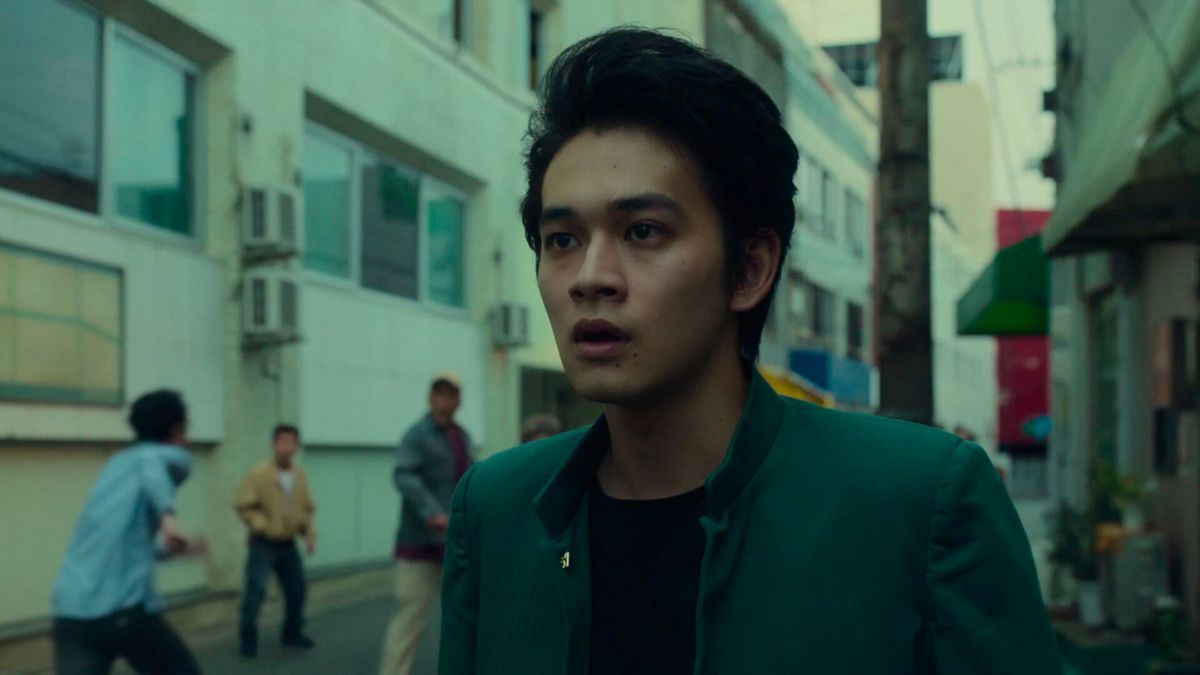
You have the anime version’s plot here, and here we’ll go through it speedily, because there are some changes compared to the original.
Yusuke Urameshi is, as you probably know, a punk and delinquent, but with a big heart. Because of that he sacrificed his life to save a child from being run over by a truck. But what caused this tragedy? A few hours earlier, one ugly insect came from demon world (Demon World) to ours, and infected (or better said, “possessed”) the truck driver who started sowing chaos, and a little later also Yusuke’s death.
Now deceased Yusuke (i.e., his soul) is greeted by an unusual girl (hybrid of Death and Charon) named Botan, who should lead him to spirit realm (Spirit Realm) where Koenma (son of King Enma/Yama) should judge him whether he goes to Heaven or Hell. Instead, Koenma offers Yusuke to return him to life if he decides to become a detective for supernatural (Spirit Detective), which Yusuke, after a little consideration, accepts.
Into this whole story is also entangled Kazuma Kuwabara, also a delinquent from the same school as Yusuke, who sees him as his great rival, whom he hasn’t succeeded in defeating in a fight so far, and who moreover discovers he also has talent to sense supernatural.
However, for these two to have any chance of fighting supernatural, they need to train their bodies, but primarily their spiritual energy (reiki). And for teacher they get an unusual old woman named Genkai, who tortures them to unconsciousness, to become somewhat competent.
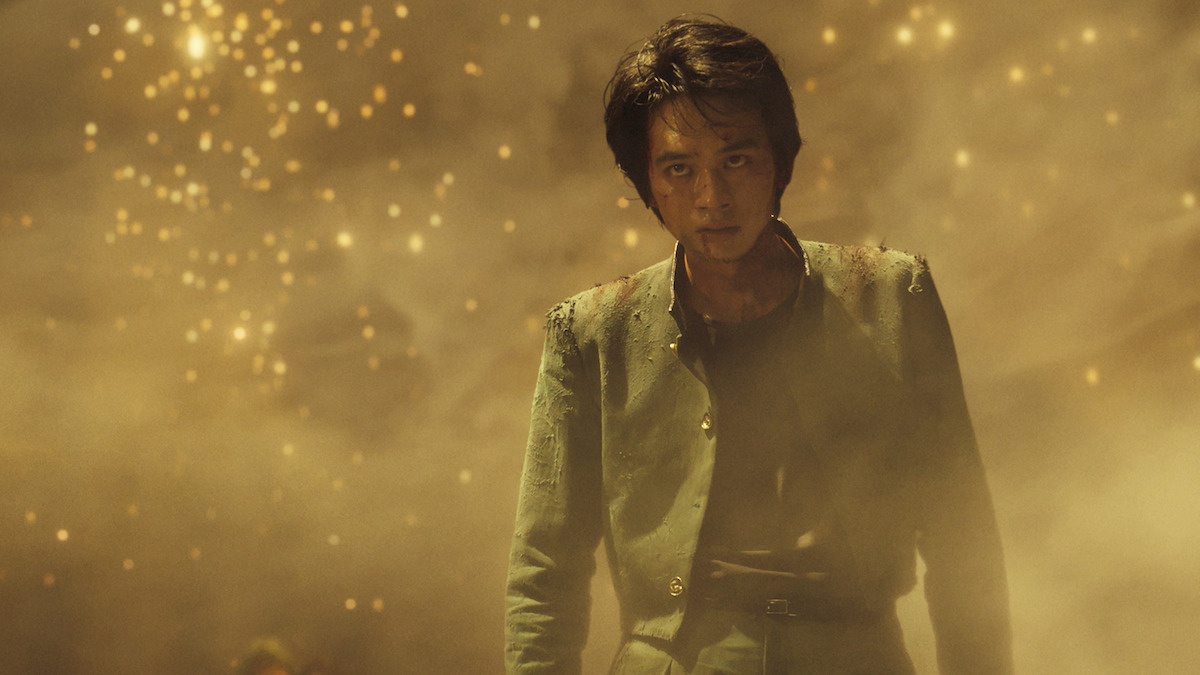
One detective case, which includes returning three powerful artifacts stolen from spirit world, will bring Yusuke to meeting supernatural beings (I already mentioned in the anime review, these are yokai). And while one of them, wannabe-Hulk named Gouki came into possession of a sphere that sucks out people’s souls for his own interest, Hiei came into possession of a mystical dagger to find his sister, and Kurama took a mirror that grants all wishes to save his human mother (you have in the original review the story why yokai wants to save a human).
And the main villain is mysterious businessman Sakyo, who intends to create a portal that will connect demon and human worlds, and make chaos. And his bodyguard, Toguro (himself yokai), wants to go to demon world to find himself a worthy opponent for fighting, because it seems the human world has nothing to offer him.
And how this strange tangle will unravel, you’ll find out if you watch “Yu Yu Hakusho (Netflix).”
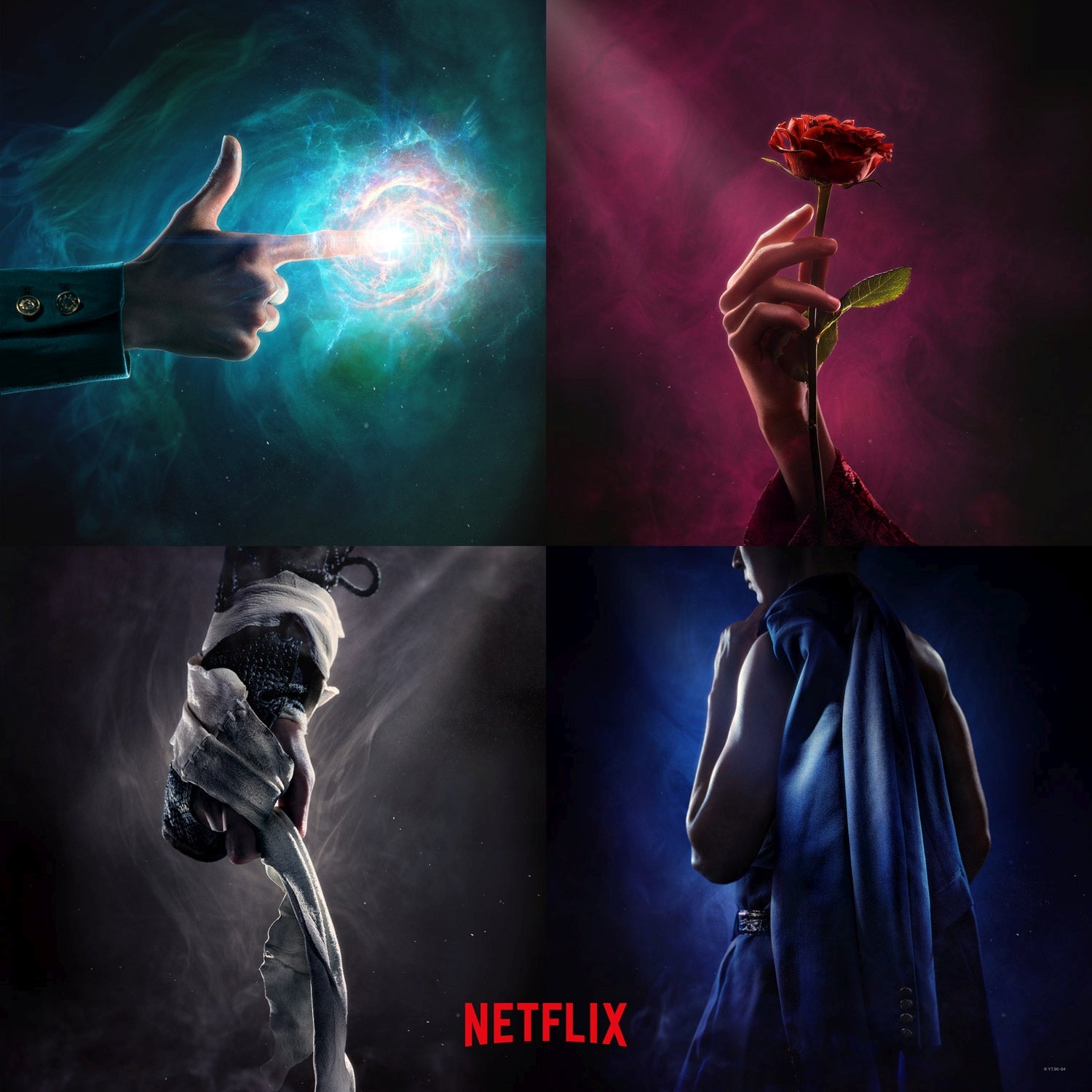
As can be noticed, the plot is in some parts tailored similar to the original, and in others changes more seriously so everything could fit into five episode format, which meant many (good) elements of the anime series had to be cut (entire chapters like Genkai Tournament and Beasts of Maze Castle), some had to be drastically modified (Spirit Detective Arc and Dark Tournament Arc are merged into one, then also “compressed”; Toguro and Yusuke meet only once; Yusuke has problems even activating, let alone using his reigun attack; Sakyo is main villain and many other things). All this, objectively speaking, didn’t turn out badly.
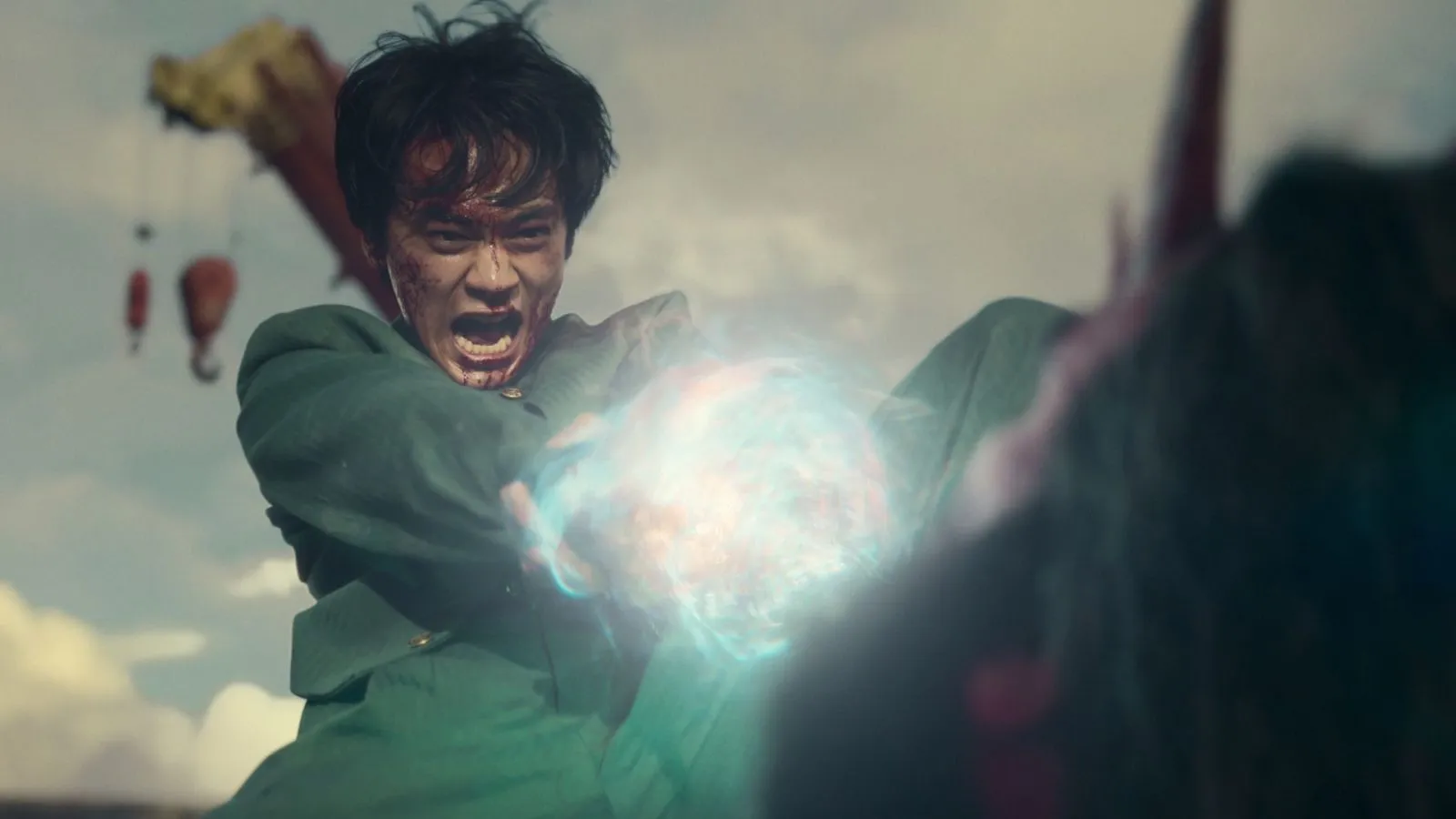
One detail well done in “YYH(N)” concerns adding a layer, so to speak, of realism to the series. So Yusuke (and with him Kuwabara) must be careful in showdown with supernatural beings. Though stronger and more enduring (and more stubborn) than average person, Yusuke will get serious beatings in battle with yokai creatures and there’ll be blood everywhere, so to survive, he’ll have to rely quite a bit on his agility and cunning in battle with opponents, especially until he strengthens his spiritual energy. Also a good detail is that his trademark attack (reigun) has quite difficulties “activating” and finding the right moment to fire this overgrown hadouken (if you’re older and really don’t understand terminology, what can I do for you, if I started explaining and simplifying, this review would be 10 pages…).
Likewise, supernatural beings seem mildly “softened” regarding strength (except demons in finale, but they’re a story unto themselves), so that also gives some dose of “realism” to the series.
When we talk about supernatural beings “YYH(N)” interestingly presented some creatures, which is why the series gets mild horror elements, and we see this already with the first supernatural being Yusuke encounters (when one nasty creature possesses a student from his class), and who’s nasty (in every respect) rival to Yusuke.
If we try to (objectively) assess, “Yu Yu Hakusho (Netflix)” did some other things unexpectedly well. The very fights (fistfights) are very nicely done. As I mentioned earlier, Yusuke (like Kuwabara) must rely quite a bit on his agility and cunning in battle with supernatural beings, but that won’t prevent him from engaging in delinquent fistfighting with same, as well as using space and objects around him to manage. All in all, fights have a mildly “more grounded” approach, which turned out great here (exaggerations should, logically, be left to anime versions after all) Though, the fight with Toguro in finale is a slightly different story. However, Kurama and Hiei, as yokai, don’t have such limitations. For me Kurama’s fight against Karasu is maybe the best showdown in the series.
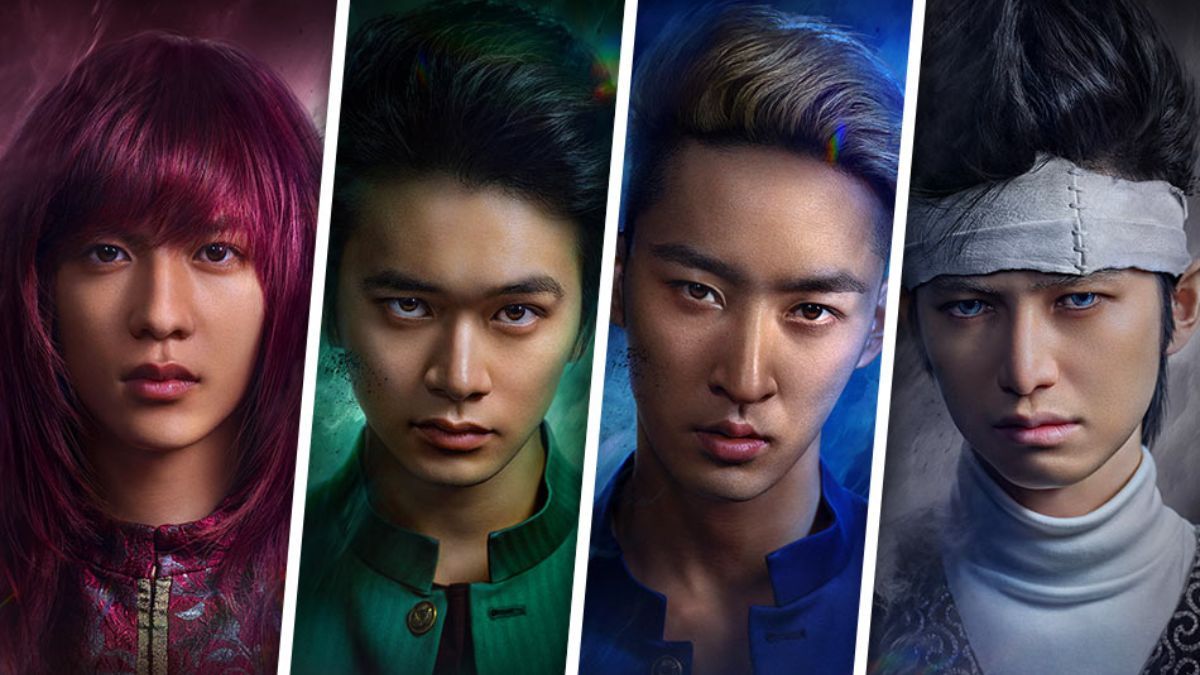
It’s interesting that series creators tried to transfer anime characters’ visual identity as faithfully as possible to live action. Well, they didn’t (expectedly) directly copy characters’ hairstyles (because many would turn out really tragicomic live), but adapted them as much as possible, so you can (if you watched anime/read manga) immediately recognize who’s who. And moreover it’s a bonus they completely transferred their clothing from anime version. This doesn’t apply only to main, but also supporting characters in the series, and especially villains look great.
One more thing that turned out solid is that anime heroes’ characters are quite well transferred to live action. Yusuke is like a cool uninterested character and punk, Kuwabara is impulsive, Kurama has gentle facial features and seems peace-loving and confident, Hiei behaves like lone wolf and not too interested in conversation… even supporting characters turned out well. Botan is still mildly silly, Genkai full of sharp and sarcastic comments (but also very caring), Sakyo is calmly confident and seems not at all afraid for his life. The only mild change (which turned out welcome here) is Koenma whom we see only in adult form (still with pacifier), but now seems quite competent and has a mild dose of authority… though he still has silly reactions.
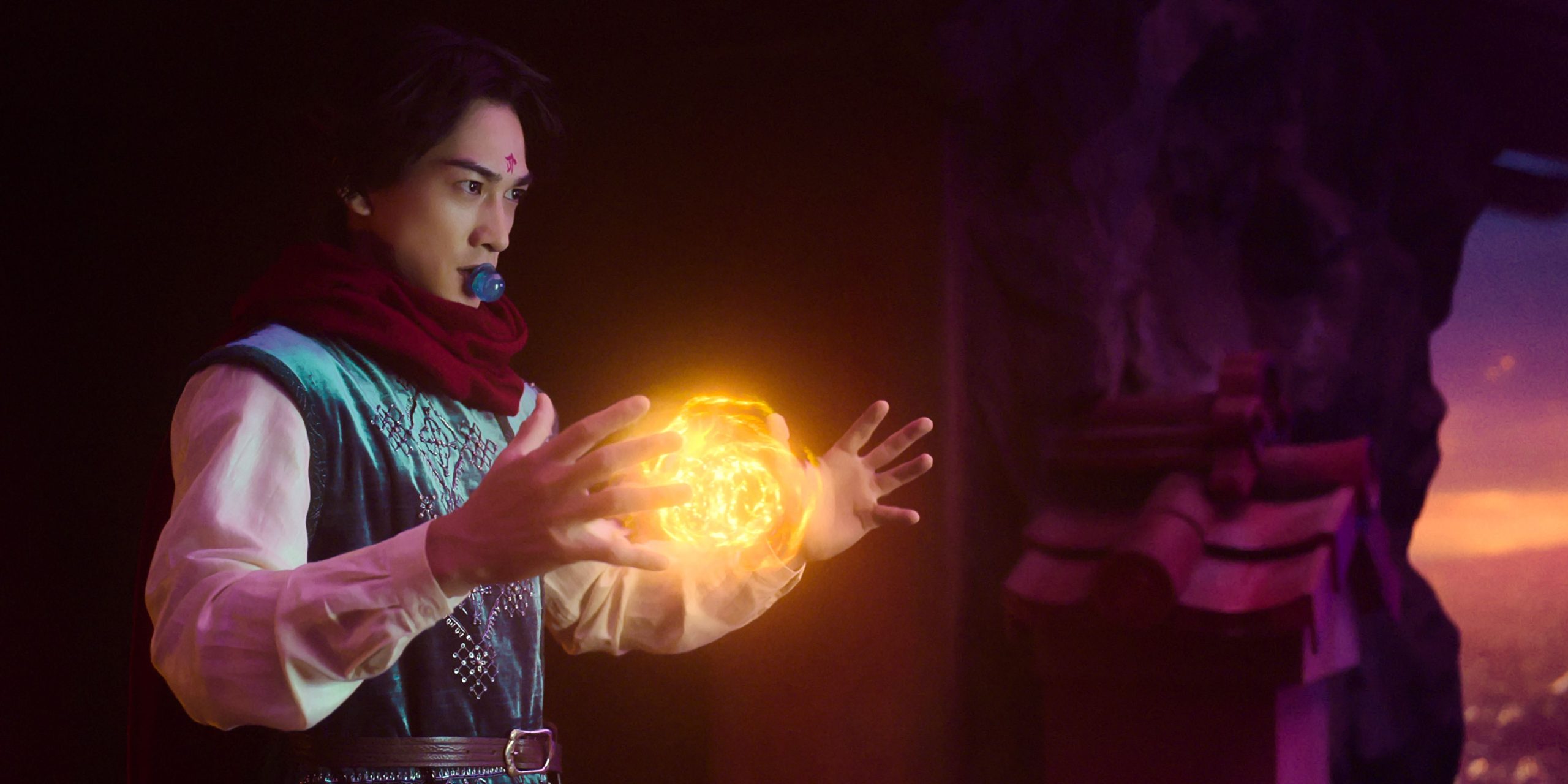
Visually, the series is nicely done. It has that energy to remind of anime series. I assume the series had a moderate budget, but I think it managed to extract maximum from it and didn’t allow the visual element to turn out “cardboard” (only Toguro in the very finale and Hiei’s third eye, i.e., “Jagan” are a bit debatable to me).
As for music, it was ok, but nothing worth remembering.
As for the actors themselves, I must admit none of them are known to me (they mostly acted in some anime adaptations I didn’t watch or their super sentai series), but it really can’t be said they didn’t do an excellent job, especially actors who breathed life into Yusuke, Kurama, Kuwabara, Sakyo (no data on imdb, but it seems to me somehow incredibly familiar from somewhere) and Koenma.
One element that can be both flaw and virtue is the series’ dynamics. The anime itself had fast pace, didn’t have empty running or any fillers (those episodes that have nothing to do with manga and serve to extend series), and this was transferred to “YYH(N)” too. However, considering live has only five episodes into which half the series is compressed, to some it may seem the plot unfolds a bit too fast and quite a bit of content tries to be compressed into little time.
What to say in the end, what grade to give?
“Yu Yu Hakusho (Netflix)” ended up being a solid anime title adaptation. It won’t reach the popularity success status like the live adaptation of “One Piece” title recently had (which, to be fair, surely had a couple times bigger budget per episode, if not more), interesting “Alice in Borderlands,” as well as excellent “Rurouni Kenshin” trilogy. I’d place it in the rank of “Bleach” adaptation (and even “Cowboy Bebop (Netflix),” but for the simple reason this version generally appealed to me). Probably one of the reasons for (only) decent rating from audiences is that this is an adaptation of an old anime title which, despite solid army of fans, isn’t “big” like “One Piece.” It’ll attract attention of anime and Japan lovers, and others will maybe overlook it in the sea of titles that had bigger budget and stronger marketing campaign. And also that the plot is tailored so there most likely won’t be a second season to cover remaining anime episodes. The biggest shortcoming is definitely absence of martial arts tournaments (in anime title two would be held, and both are excellent), as well as visit to demon world.
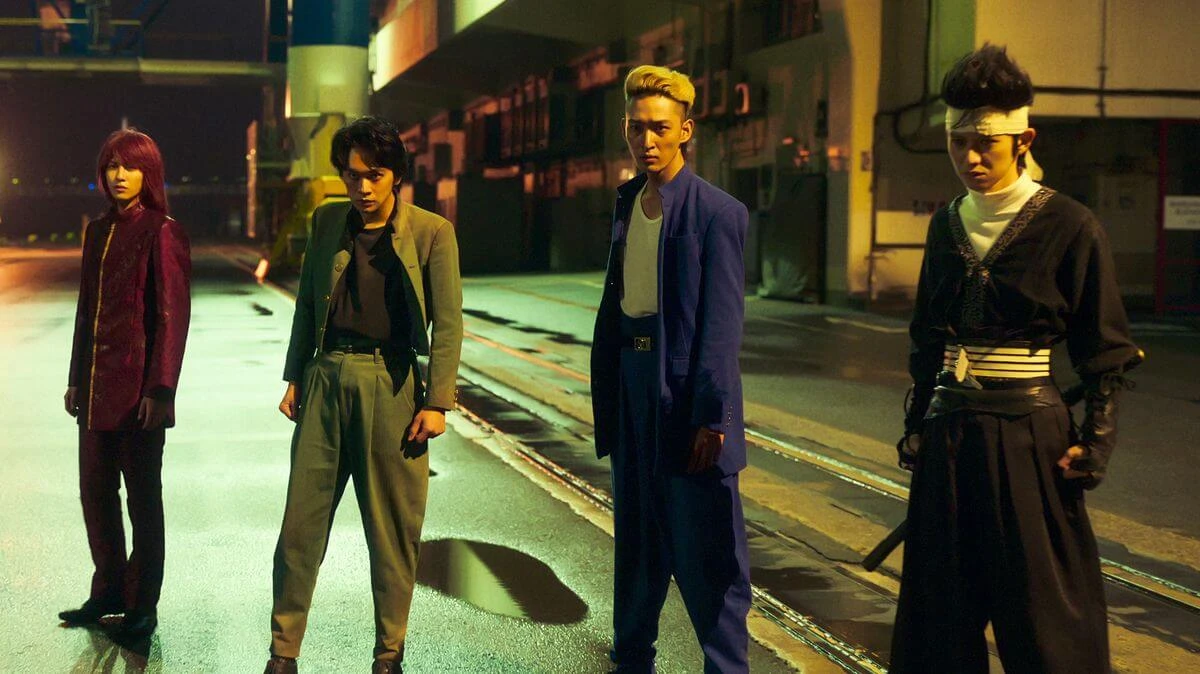
All in all, a solid adaptation, but it seems in many things they played it safe, which will (unfortunately) lead to many quickly fading from memory. But it is, as they say today, a bingeable title. I personally quite liked it.
And you, dear reader, have you watched the (original) anime version?
Trailer | Imdb | Rotten Tomatoes | Metacritic
Release Date: 2023 | Format: Series | Number of seasons: 1 (5 episodes) | Average episode duration: 55 minutes