






Yu Yu Hakusho
There are some series that are simply good because they’re good, but you couldn’t explain why they’re good… in fact, you probably would know, but you simply don’t see the need. They don’t have to be classics (but most often they are), but you simply shrug and say they have “that” something.”
“Yu Yu Hakusho” (also known as “Yu Yu Hakusho: Ghost Files”) is precisely that type of (anime) title. It even had for that 1992 when it came out some retro flavor.
Yusuke Urameshi is a 14-year-old delinquent who doesn’t go to classes and rather fights with whoever he can and doesn’t care about anything. However, an unexpected act of altruism on his part (saving a child from being run over by a car) costs him his life. Time for his soul to go to a better place… or maybe rather worse, because, after all, he behaved like a delinquent. However, his soul is greeted by Botan, an unusually silly girl, who’s some hybrid of Death (Shinigami) and Charon from Greek mythology and who escorts souls to the “Underworld” aka “Spirit World,” ruled by King Enma/Yama (and who “weighs” where someone’s soul should go after death, whether Heaven or Hell). Botan explains to Yusuke that his unexpected act of saving another person and sacrificing his life put the “Underworld” in a puzzle and they’re not exactly sure what to do with him, which attracted the attention of Enma’s son, Koenma (who’s actually in charge of sending souls, sealing, signing and other administration), who decided to give Yusuke a chance to (literally) return to life if his soul survives a series of (shady) tests… which he somehow manages to pull through.
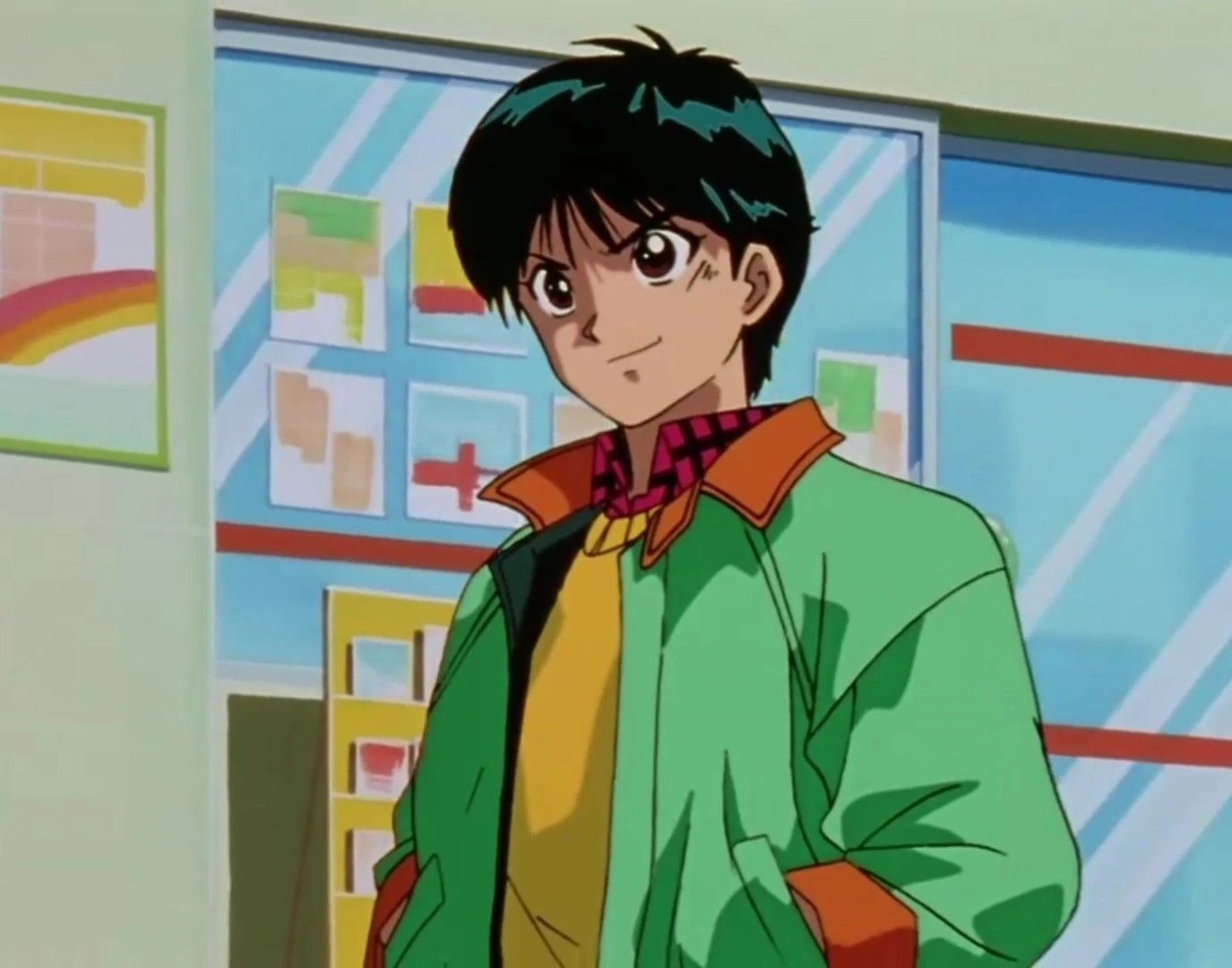
Of course, as when you sign a contract with a provider for TV/internet/mobile, it’s never a clean (or clear) two-way transaction, but they always “dump” all kinds of nonsense on you and complicate your life. So now Yusuke has become… uh, I can’t translate and complicate with explanations now so we’ll stick with the English term… namely, Yusuke has become a Spirit Detective, i.e., has the task to deal with supernatural phenomena in the human world, which most often means demons making various sh… I mean, nonsense.
Solving various mysterious cases, Yusuke will get drawn into the increasingly complicated world of demons and their influence on the human world, as well as into increasing life dangers.
But that doesn’t mean there won’t be good news for him too. Yusuke will have the chance to improve his martial arts skills (before that he was just quite a strong delinquent, but still mortal) and also his spiritual energy (reiki) which will additionally improve his skills and endurance, but also enable him some fancy attacks (like when he positions his fist like when kids imitate having a gun, channels his energy and fires energy projectile from index finger, but the number of “bullets” is limited during one day).
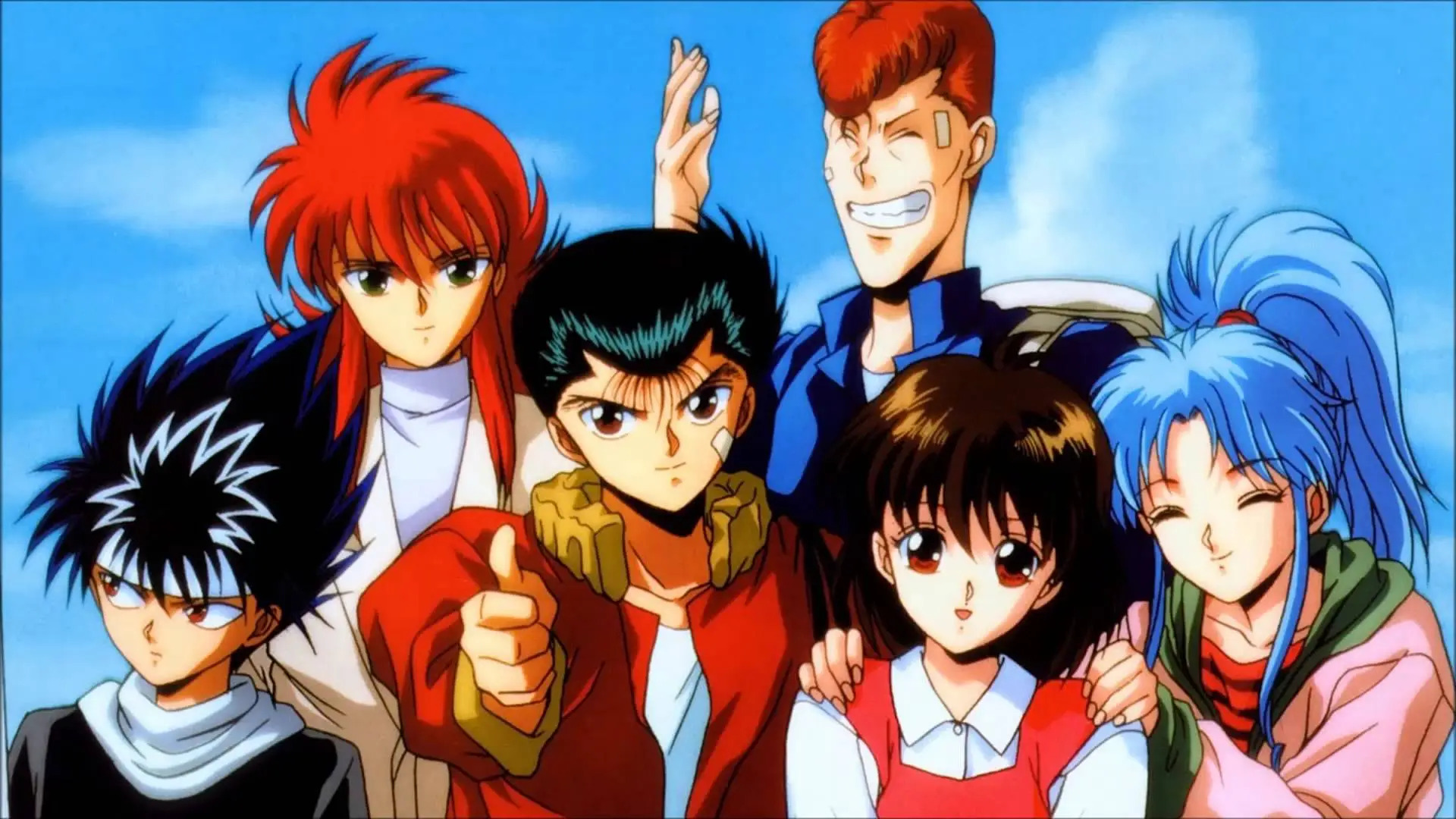
He’ll also get help in the form of unexpected (and very interesting) allies, and former rivals:
- Kazuma Kuwabara – at first glance, the character seems like a cartoon. However, besides funny mug and hair, he’s Yusuke’s school buddy, and also second strongest delinquent in school (and probably city). He constantly challenged Yusuke to a fight to prove he’s strongest… and always lost, but over time his anger toward Yusuke grew into respect. He has pronounced sixth sense (as if he could always sense something “supernatural” even before getting involved in that world), and is also very enduring in fights, and over time also developed the trait to channel his spiritual energy and allow it to take sword form. When not a punk, he’s actually one good guy who adores cats and dreams of continuing education
- Kurama – former demon fox (kitsune) and known thief in demon world. Long ago he fled from demon world (seriously wounded) and hid himself in an embryo of one pregnant woman, and after was “born” and took on another identity. However, as he grew up, he realized he came to love people and especially his mother. Before becoming part of the good guys’ team, he still undertook dangerous supernatural robberies, but for a very interesting reason. Though seeming gentle build at first glance, he was still one of the more dangerous demons that ever existed, so even now he’s a very tricky opponent in battle, especially because of his trait to control plants in various ways
- Hiei – demon who seems like a very cool, arrogant and uninterested character. Originally he was part of a group with Kurama that stole certain artifacts (also for an interesting reason), but later agreed to atone for his criminal acts and become a (reluctant) helper to the aforementioned crew. He sees everyone as rivals and would most like to (again) enter a clash with Yusuke. So he’s some team player lone wolf style, so to speak. He’s definitely dangerous in battle, and possesses some quite tricky powers, like implanted “evil eye” (Evil Eye; Jagan) which gives him one kind of clairvoyance (as well as observing things from great distance) and enhances powers, and moreover this eye can shift into third gear and be even faster and more deadly. On top of that, it seems he possesses a very dangerous ace up his sleeve – Jaō Ensatsu Kokuryūha – what “that” does, I won’t reveal to you, for God’s sake, watch the series. As you can see, it sounds cool in Japanese
And so this foursome solves various complicated cases regarding demons, and often enter martial arts tournaments with demons in Mortal Kombat style. And the very series finale reveals some very interesting details about Yusuke and why he’s interesting to demons.
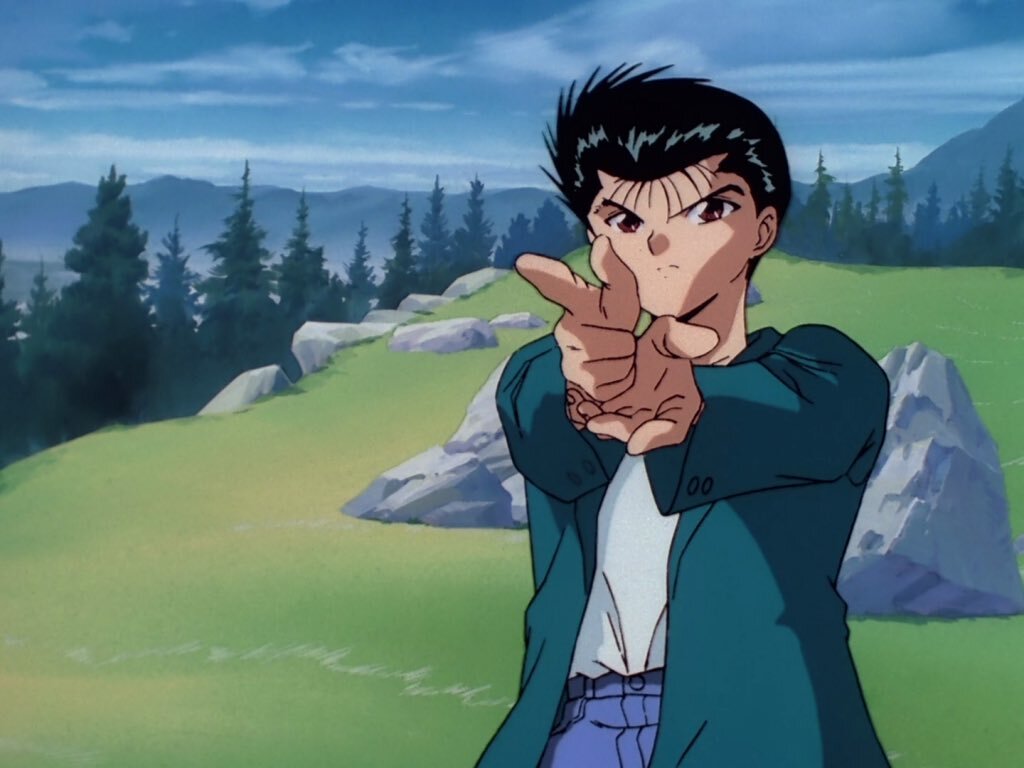
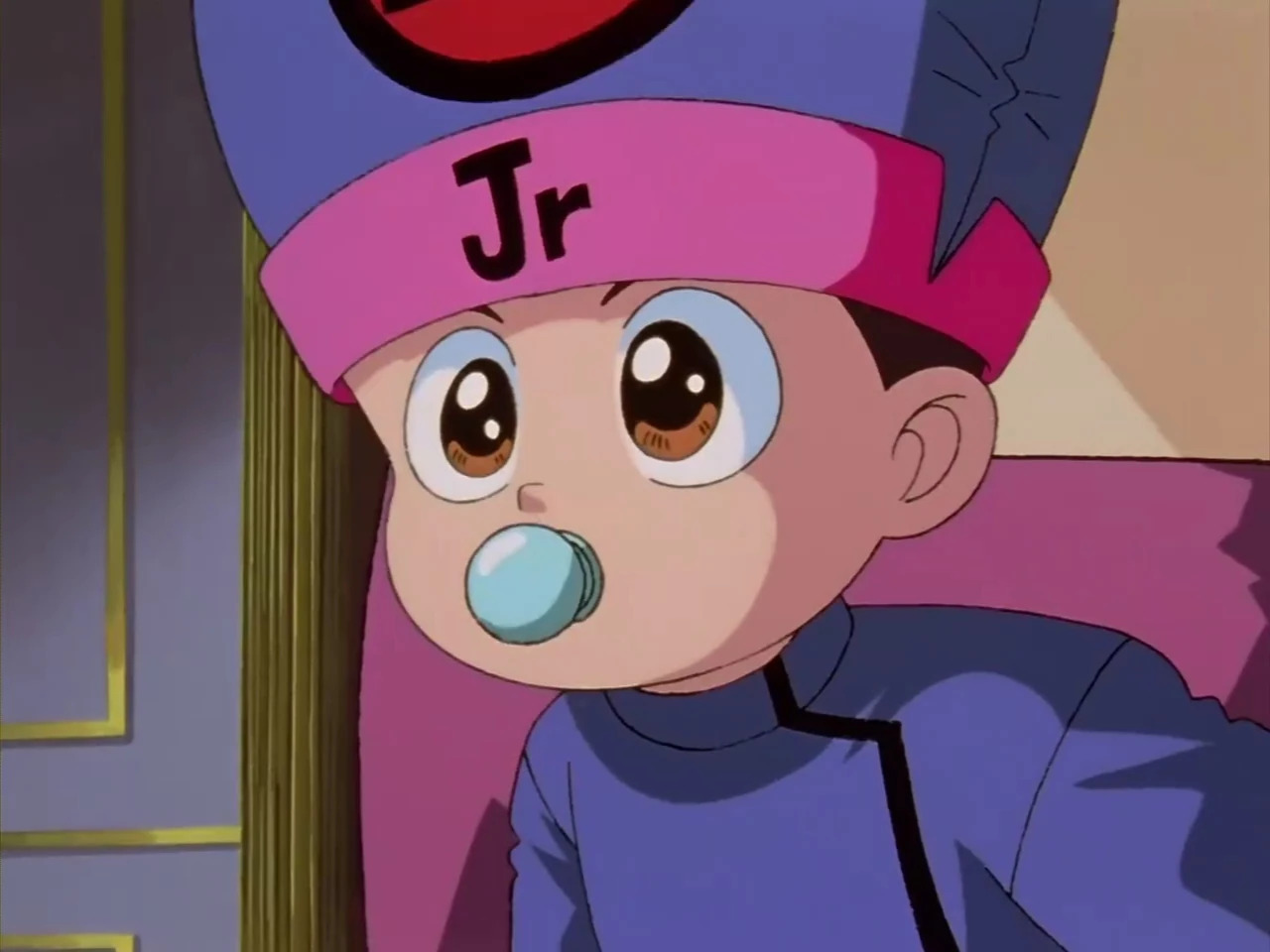
We shouldn’t forget the plethora of characters who support Yusuke and friends. We must mention old Genkai (whom Yusuke often calls grandma), who’s a martial arts master and one of top five masters of wielding reiki (known among both humans and demons), who’s also Yusuke’s mentor (and Kuwabara’s occasionally) and, though seeming quite rough at first glance, is actually a very caring person. Then there’s Koenma (who’s one kind of deity with pacifier in mouth… don’t ask, it’ll be clearer if you watch the series) who is, in a way, Yusuke’s superior and assigns him detective tasks and oversees happenings in spirit world and often more seems to hinder than help. No better is good-natured Botan, our shinigami, who, though good-natured, is most often very clumsy. And finally, we shouldn’t forget Keiko, Yusuke’s (school) friend from childhood, who harbors deeper feelings toward our delinquent.
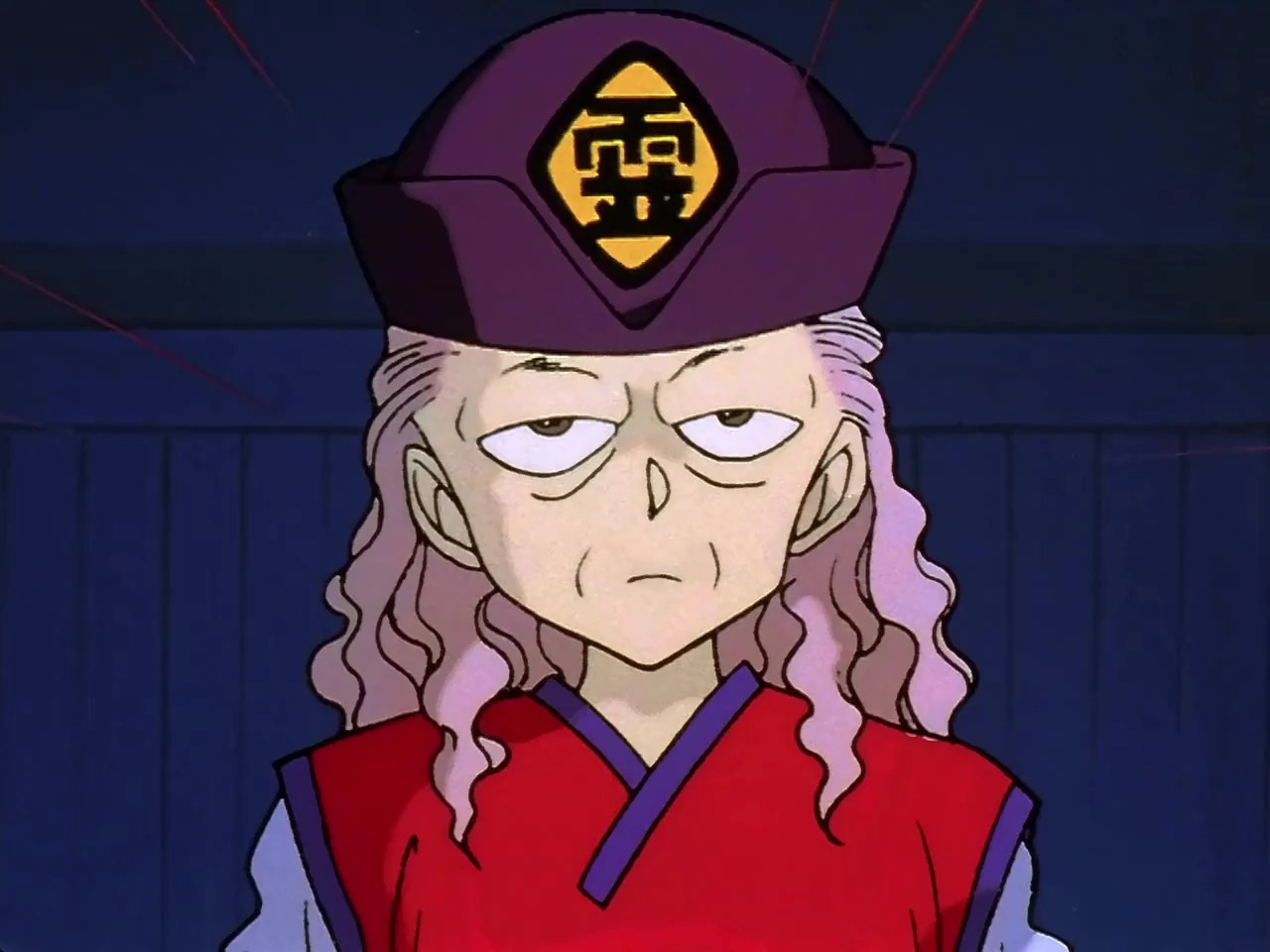
We shouldn’t forget the plethora of characters who support Yusuke and friends. We must mention old Genkai (whom Yusuke often calls grandma), who’s a martial arts master and one of top five masters of wielding reiki (known among both humans and demons), who’s also Yusuke’s mentor (and Kuwabara’s occasionally) and, though seeming quite rough at first glance, is actually a very caring person. Then there’s Koenma (who’s one kind of deity with pacifier in mouth… don’t ask, it’ll be clearer if you watch the series) who is, in a way, Yusuke’s superior and assigns him detective tasks and oversees happenings in spirit world and often more seems to hinder than help. No better is good-natured Botan, our shinigami, who, though good-natured, is most often very clumsy. And finally, we shouldn’t forget Keiko, Yusuke’s (school) friend from childhood, who harbors deeper feelings toward our delinquent.
As for visual and musical aspect, the series had some retro energy even for the period when it came out. But that didn’t affect the series’ quality, but gave it even more flavor. Animation is very good, especially action scenes and tournament fights. Because of that “Yu Yu Hakusho” is often compared with “Dragon mu…”, I mean, “Dragon Ball Z” series (I mean the period before everything went into nebula and Goku and company didn’t become so strong they can destroy planets).
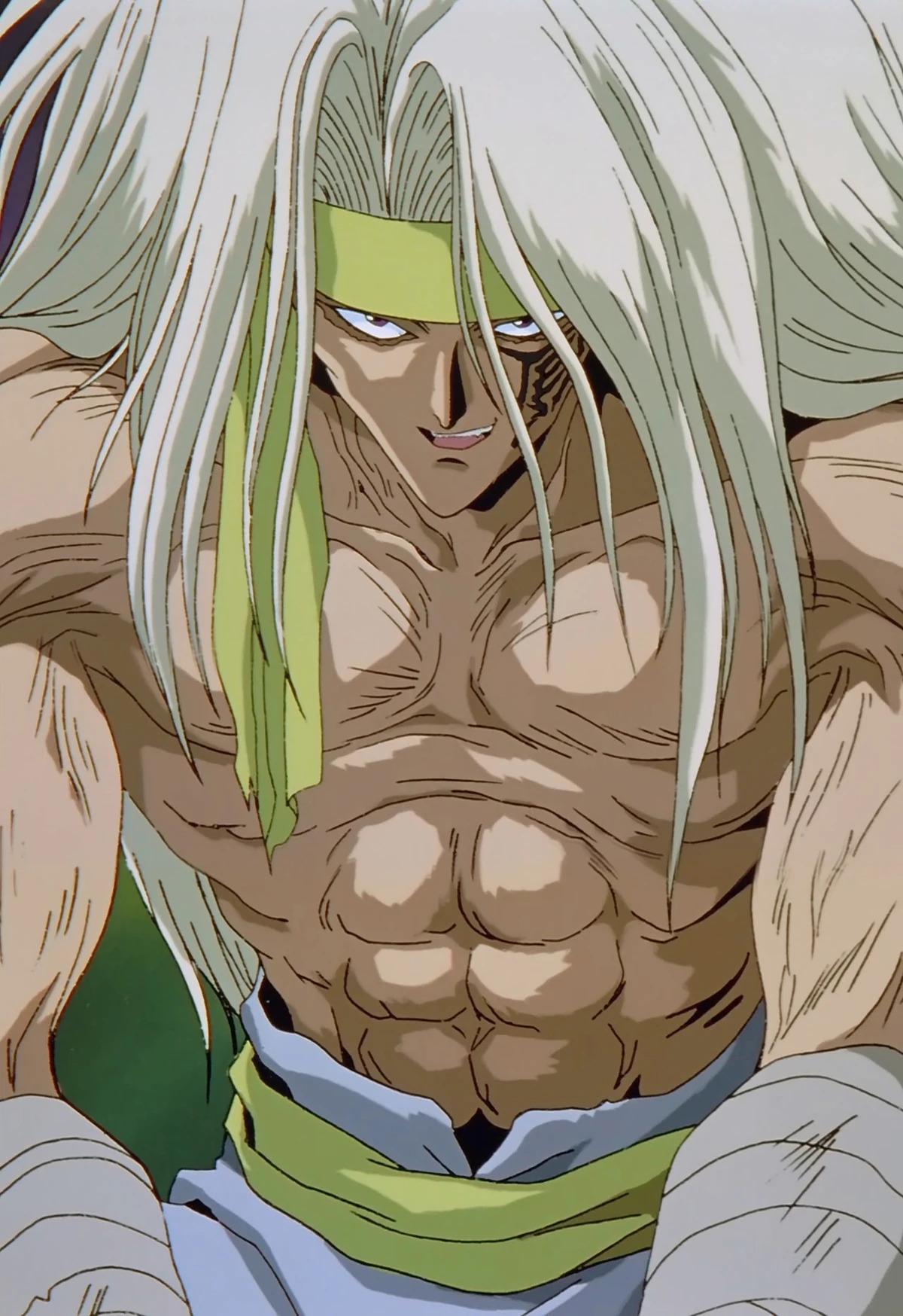
However, “Yu Yu Hakusho” isn’t at all a naive series. It touches on some very serious themes and at moments is very dark, which is why it had to be mildly censored and reworked for (always) squeamish and overly sensitive American market (because it’s terrible if a character in anime title accidentally curses, but it’s not a problem for children to easily access porn sites with all kinds of perversions that long ago lost any logic). So in the Japanese version of the series, Yusuke has no problem showing middle finger when he disagrees with someone about some position (and he mostly disagrees), provoking everyone, has delinquent behavior… although in the end, he’s still, after all, an ok kid… probably…
The series touches quite a bit on themes like life and death (as well as life after death), risk that a person loses their humanity due to life’s temptations (humanity), as well as spirituality. It talks quite a bit about the dark side of human species, and how often we’re no better than demons (which, in a way, makes sense, because demons are always presented to look scary or horrible, which additionally strengthens the effect of their misdeeds, but when you think better, how many people exist in this world who have sick reasonings and actions that are on the level of monstrous), and that maybe there even exists a reason why some supernatural beings want our extermination. Likewise, the series sends a message there exists a chance for redemption in life, if a person is willing to see it and undertake concrete action. All in all, “Yu Yu Hakusho” maybe isn’t too dark and serious (and inclined so much only to adults with philosophical themes) like the series “Cowboy Bebop,” but it’s definitely not childishly naive.
There’s also one interesting detail (and hidden motif) in the series, regarding love. Namely, a huge (but truly huge) number of anime titles, when it comes to elementary/middle schoolers and love in anime titles, mostly “drags” that through some shy eye-gazing, sympathizing, blushing, stuttering doves and similar (through 50 and some episodes), which stretches romance endlessly, which maybe works for little girls, but an adult person has to take probiotics. Here it’s much more directly presented. Keiko is aware she’s in love with Yusuke. Yusuke already at the series’ beginning becomes aware of her feelings, and that he (in some delinquent/cool-guy way) cares very much about her (which he shows by actions when she’s in danger and how then he’s ready even to sacrifice his life). In the end, both are aware that at some point “that” between them will become something more serious, but for now it must be on “standby” because, you see, demon invasion isn’t interested in their love.
And since I already mentioned demons, here I should clarify one thing (which can also be a matter of general culture for Japan lovers), which arose as confusion due to localization for English speaking area. Though the Western term “demon” is used in the series, it’s not exactly accurate. The series uses the term yokai, which is used for supernatural beings, spirits, and even minor deities, which don’t necessarily have to be evil, but can be good too in Japanese folklore (like characters Kurama and Hiei). If it were about demons as the West interprets them (enemies of Good and angels, can only be evil, etc.), Japanese would then rather use expressions like akuma, oni, daemon, kappa and similar.
All in all, “Yu Yu Hakusho” is simply a good old school title and many will rank it among classics without problem. The series (like the original manga) inspired many excellent titles that appeared years and decades later, like “Naruto,” “Bleach” or “Jujutsu Kaisen” (and the manga authors themselves cited “Yu Yu Hakusho” as inspiration for many of their heroes or concepts). The series/manga was simply different from everything that appeared in the 90s, starting with the main character (unlike classic “good guys,” Yusuke is a delinquent, punk, rough and rude, cunning and very shrewd), through (complex) relationships among (excellently developed) main heroes (Yusuke, Kuwabara, Kurama and Hiei), themes it addressed, as well as unique retro flavor it possessed.
Now, what Netflix will do with the live action adaptation arriving December 14, we’ll see. They quite ironed out relations with anime fans thanks to decent first season of “One Piece,” but now it really wouldn’t work in their favor to mess up now with a classic like “Yu Yu Hakusho.”
And you, dear reader, do you plan to watch Netflix’s live action adaptation of the series?
Trailer | Imdb | Rotten Tomatoes | MyAnimeList
Release Date: 1992 | Format: Series | Number of seasons: 4 (112 episodes) | Average episode duration: 24 minutes