




The Sandman
“If dreams disappear, humanity will disappear too” – Morpheus/Dream
The news that “The Sandman,” Neil Gaiman’s cult comic/graphic novel, would be adapted into a live-action series was met with support and enthusiasm from fans… accompanied by mild apprehension about how it would turn out, since “Netflix” took the reins for making the series. When it comes to adaptations of various works (like literary or anime titles) and “Netflix,” the audience is (mostly) already used to expecting results with skepticism. Because, although it’s worthy of respect that Netflix advocates for inclusion in its films/series, they also sometimes know how to make a mess trying to at all costs squeeze in every racial, political, religious, sexual and what not orientation… and sometimes they really overdo it with forcing some things…
Well, Netflix sometimes really hits the golden goose with adaptations (“The Witcher,” “Altered Carbon”), sometimes they screw up badly, not to say f**k up (“Death Note”), and sometimes they make something that you absolutely don’t know why it turned out the way it did and why the audience received the adaptation with hostility (like “Cowboy Bebop 2021,” which, for example, I, in principle, liked).
And then “The Sandman” appeared. This was one of my more anticipated titles this year (along with “Obi Wan,” “Moon Knight” and new seasons of the series “The Boys” and “Love Death and Robots”). It immediately reached number 1 spot in over 80 countries ruled by the “Netflix” empire. Praise for acting and everything… but again, both critics and audiences ended up strangely divided in the end (but unlike “Cowboy Bebop,” the scale tipped to the positive side). Is “The Sandman” simply bad for some, do they have a general gripe with “Netflix,” or maybe they just don’t understand “The Sandman” concept?
There’s no doubt that Neil Gaiman is a talented writer. He can easily, like Murakami, draw you into his unreal worlds. Whether it’s horror happenings in a graveyard, war between gods for human attention, or Norse mythology, everything turns out interesting from this author’s pen. Though I’ve read almost all his works, his comic/graphic novel “The Sandman,” originally released almost 30 years ago, somehow bypassed me and I was more familiar through the internet or some other series that arose under the influence of Gaiman’s work (like the series “Lucifer” and “Constantine”). To sum up, “The Sandman” is Gaiman’s cult achievement and is one of the few graphic novels that managed to reach the “New York Times” bestseller list.
But, (finally) turning to the series…
Morpheus is the King of Dreams (Gaiman’s inspiration is obviously the ancient Greek god of sleep, Morpheus) and one of the seven “Endless” (who, by the way, belong to the DC universe). He rules a kingdom (The Dreaming) that exists thanks to people’s dreams, to whom he sends beautiful dreams or nightmares (The Nightmares) with a certain purpose. One of the Nightmares, named The Corinthian, decided to refuse obedience and stay permanently in the human world, which is forbidden.
Morpheus decides to personally deal with the disobedient Corinthian. However, at the moment when he was supposed to destroy him, he’s captured by an occult ritual of Roderick Burgess, who tried to summon and capture Death (Morpheus’s older sister), to blackmail her into bringing his son back to life. Instead, he summoned Morpheus, took away his artifacts that have special properties (mask, bag of sand and ruby) and imprisoned him in a special glass sphere. However, Roderick isn’t some wonderful broken-hearted aristocrat who wants to do everything to bring back his deceased son, but is one greedy unsung piece of trash who’s horrible toward his younger son (treats him like a servant) and who decided to use the imprisoned Morpheus, which gave him longevity and wealth. The benefit was, of course, also for The Corinthian who could now freely roam the world and never return to the Dream Kingdom.
On the other hand, the absence of the King of Dreams caused a large part of the human population to fall into a coma-like state called “sleepy sickness” from which they never wake up.
However, after 106 years, Morpheus manages to escape from captivity, but things are no longer the same as before. He must restore his kingdom (which almost everyone abandoned and is completely collapsed), retrieve his artifacts (and with that parts of his power) and deal with The Corinthian.
The first season of the series “The Sandman” is, let’s say, divided into two parts. The first part covers Morpheus and his attempt to regain his power, and the second is more of a “detective” nature, when he tries to solve the case of a mysterious girl who could threaten the Dream Kingdom.
The plot itself is quite interesting and holds attention. However, there are other aspects that are really great… and really “Gaiman-esque.”
Maybe let’s start with the main heroes and actors who breathed life into them.
Morpheus/Dream (Dream/Sandman) is specific in himself. He belongs to a (dysfunctional) family of beings that are older and more powerful than most gods and other entities in the DC universe and encompass certain basic aspects/concepts of life (dream, death, destiny, destruction, desire, despair and delirium), so few things can affect them, and moreover each of them has a specific nature. Morpheus, as the middle child, has that moody-gloomy-emo style, while not being much of a chatter fan (except when moments come to him, similar to Geralt), and has quite slow reactions and seems like he understands slowly. Of course, he’s not a retard (moreover, he’s extremely intelligent and has excellent detective skills… which is somehow expected, after all he’s an entity more powerful than gods), but rather an introverted personality type, and somewhat shy. On the other hand, that doesn’t prevent him from often being measured arrogant, as well as often doing reckless things. And if he needs to eliminate people and other beings, he does it without much thought and bringing in emotions.
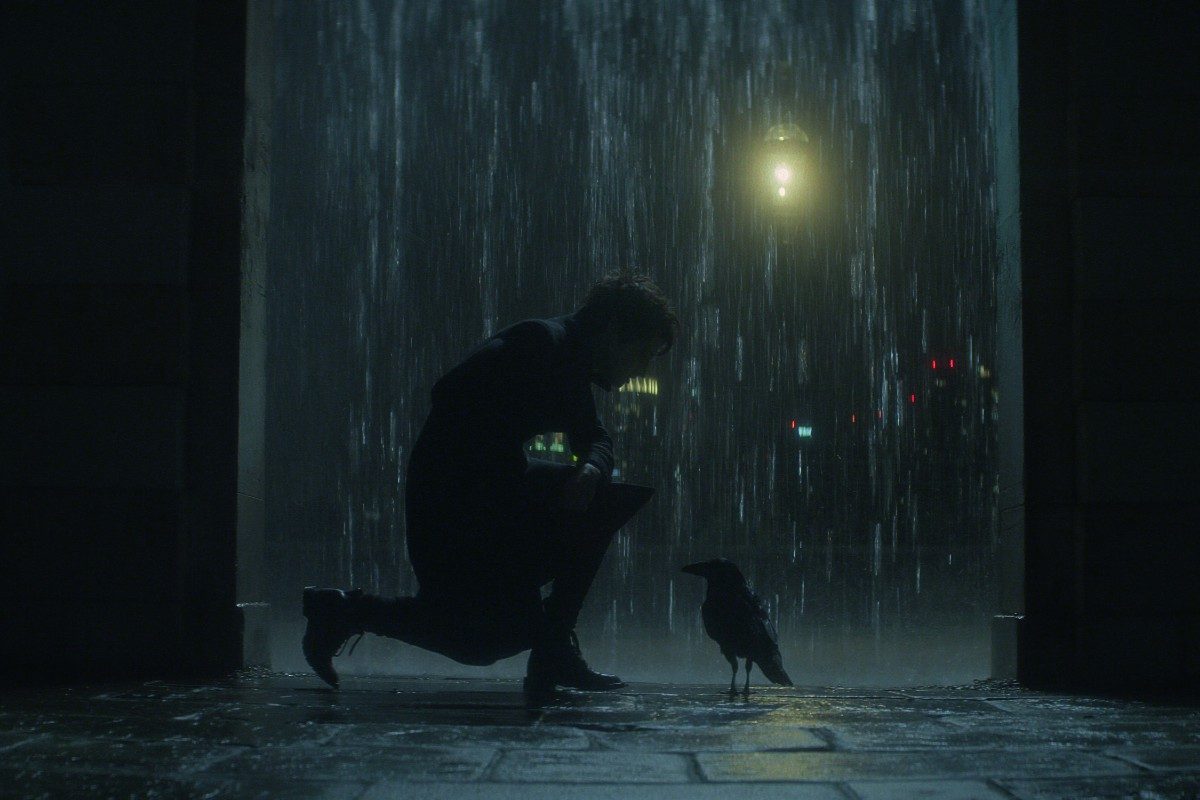
And that’s why Tom Sturridge (“The Boat That Rocked,” “Far from the Madding Crowd”) received praise from both audiences and critics for his acting (the man is such a fan of “The Sandman” series that he tried to find a specific voice for Morpheus, which resulted in a comical situation between the actor and Neil Gaiman). I think it wouldn’t be an exaggeration to say he did a brilliant job, excellently carried the series on his shoulders, and his acting will definitely be one of your first associations with the series.
Of course, what’s a good series without a bad villain… well, a good villain, and Boyd Holbrook (“Narcos,” “Predator,” “Logan”) took care of that with his charismatic psychopath/sociopath/Nightmare/serial killer The Corinthian, who provided a nice counterweight to Sturridge’s Morpheus, whom he had to outwit with various tricks, because The Corinthian has no chance “1 on 1” in battle.
Worth mentioning is also Vivienne Acheampong as the all-knowing librarian Lucienne, who takes care of the dream books (and thus data about people) and is the most loyal servant to Morpheus, who’s moreover his discreet advisor (and in Morpheus’s absence took care of the kingdom as much as she could). The actress did quite a good job as the always calm librarian.
Though there may have been hope that brilliant Tom Ellis would reprise the role (or at least have a small cameo) of sarcastic and goofy Lucifer, the series still stayed with a faithful adaptation of the comic, so the ruler of Hell was presented to us by statuesque Gwendoline Christie (Brienne of Tarth in “Game of Thrones” or Captain Phasma in the newest “Star Wars” trilogy) and her Lucifer is excellent and somewhat eerie. 😅
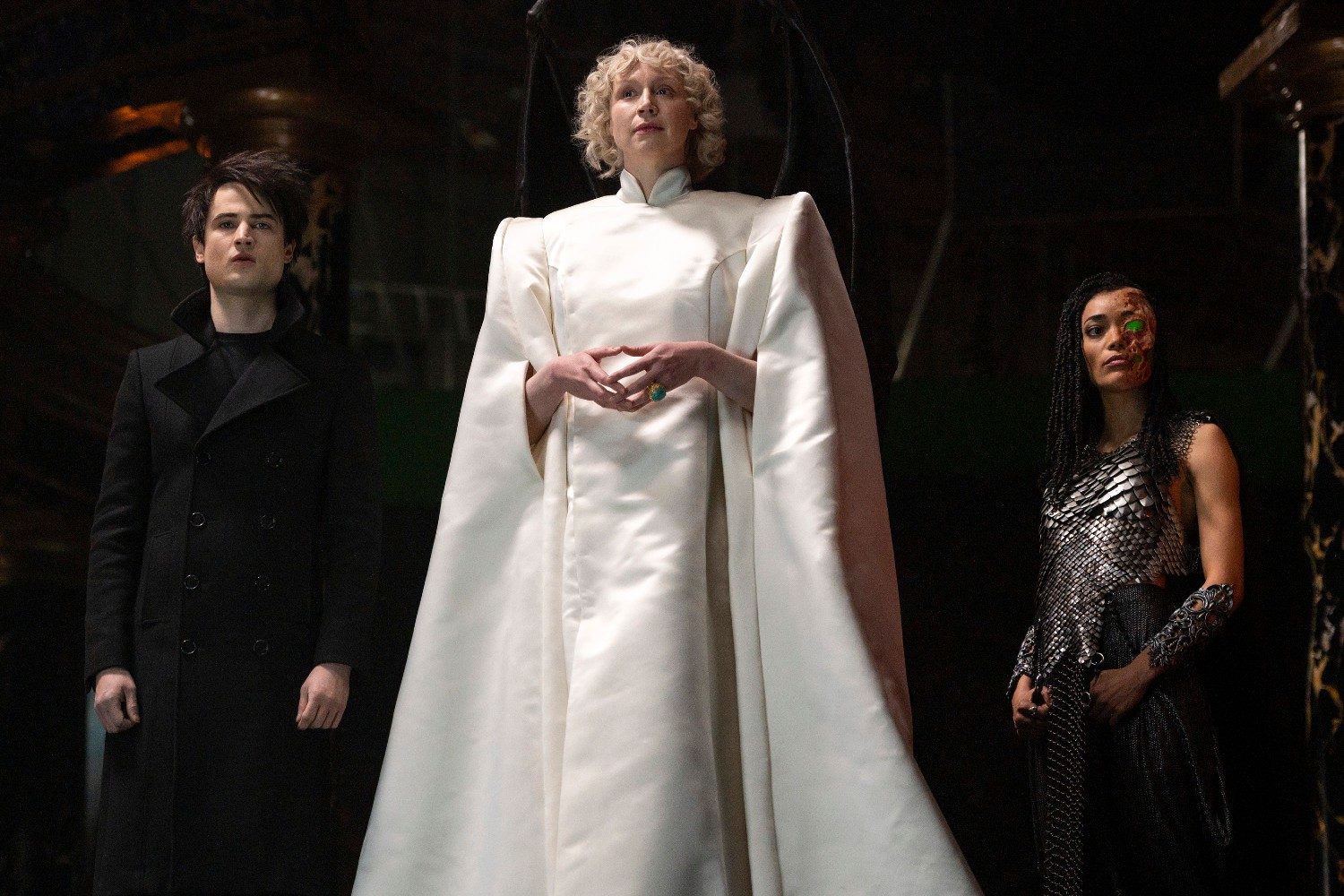
One of the more pleasant and interesting surprises is also the appearance of Johanna Constantine. Though there was hope that Matt Ryan would appear as sarcastic John Constantine, the decision was made to insert his female variant (as supposedly his descendant, though in “The Sandman” world there’s also Johanna Constantine as their ancestor). Talented and charming Jenna Coleman (“Dr. Who”) quite nicely carried the role of sarcastic and somewhat frustrated (and messy) occult detective. Moreover, there are stories about a potential spinoff with her adventures (though I’d prefer they “resurrect” the original Constantine).
Worth mentioning are also the episodic roles of Charles Dance (Tywin Lannister from “Game of Thrones”) as Roderick Burgess, David Thewlis (“WW,” “Harry Potter”) as psychotic John Dee and legendary Stephen Fry as good-natured Gilbert.
What was a pleasant surprise were also the actors who lent voices to Morpheus’s loyal servants. The voice behind the cheeky raven with attitude is comedian Patton Oswalt (“Ratatouille,” “Rick and Morty”), and Mervyn (the pumpkin with bad timing) is voiced by one of Hollywood’s greatest emperors, Mark “Luke Skywalker/Joker” Hamill (aside from having “Star Wars” under his belt, Hamill is also a master at lending voices in various animated works and video games, which includes the voice of Joker in almost all “Batman” titles).
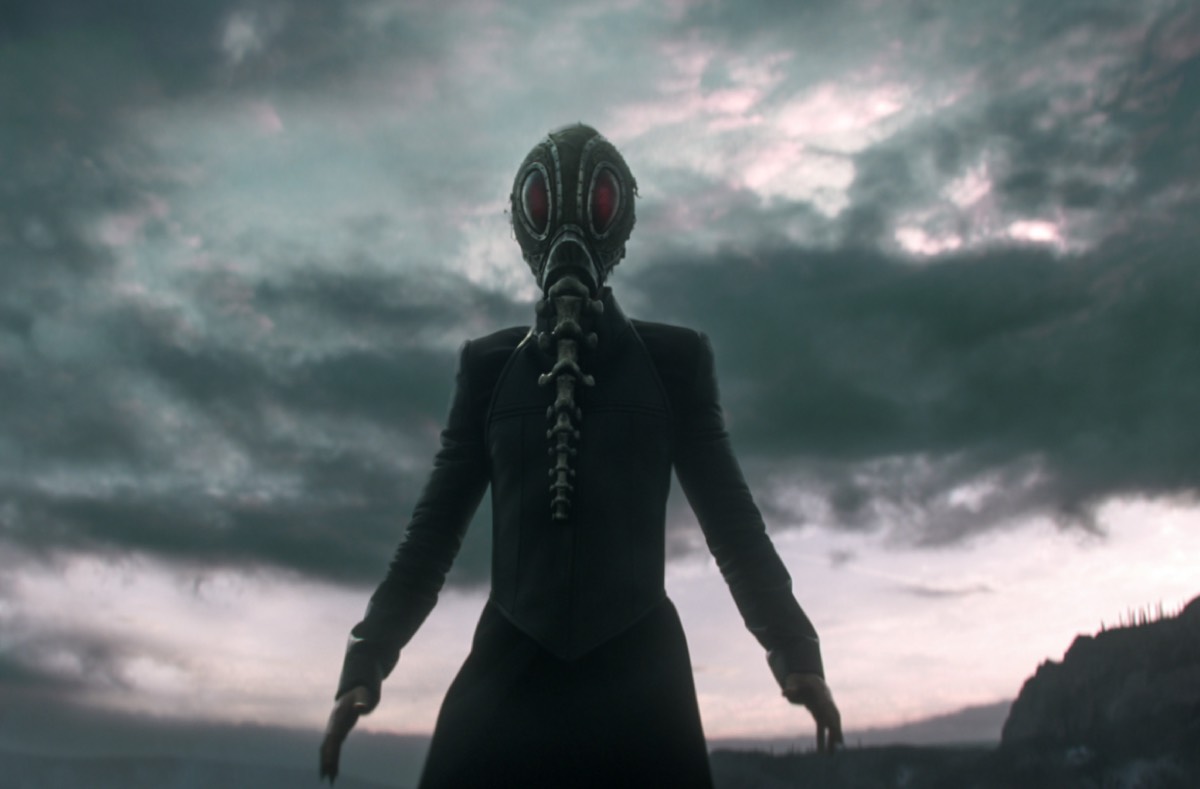
What rivals the actors in the series “The Sandman” is definitely the visual aspect. It’s somehow hard to describe in words, but it seems to me they managed to transfer the atmosphere from the comic and that Neil Gaiman had a lot of say in this element. Regardless of whether we’re talking about Morpheus’s Dream Kingdom, Lucifer’s Hell, nightmares, costumes/makeup for Morpheus or The Corinthian or animations of mystical creatures, the series really beautifully depicts the “walk” between fantasy and horror.
Though I must say that the episodes themselves are quite interesting because of some details that are really unusual, like the “magical verbal duel” between Morpheus and Lucifer, the unusual friendship between Morpheus and Hob Gadling (a man who was granted immortality), although they see each other (literally) once in 100 years, or the possibility of transferring details from a dream to the real world.
Of course, Gaiman’s works wouldn’t be what they are if various philosophical questions didn’t run through them. Whether there’s meaning in immortality, whether situations/people really should change with time or not, the importance of family, friendship, when to punish and when to be merciful… all are themes “The Sandman” touches on. One of the more memorable scenes is the verbal conflict between Morpheus and Lucifer regarding power (Lucifer looks condescendingly at Morpheus and the power of his dreams, especially since at that moment he had regained only a fraction of his power):
Lucifer: “What power would dreams have in Hell?”
Morpheus: “What power would Hell have if those imprisoned here did not dream of Heaven”
Now, what enthused me a bit less in the series… Rose Walker (Vortex) who’s a threat to Morpheus… I don’t know if it’s the young actress or how the series creators envisioned it, but somehow she didn’t leave much of an impression on me.
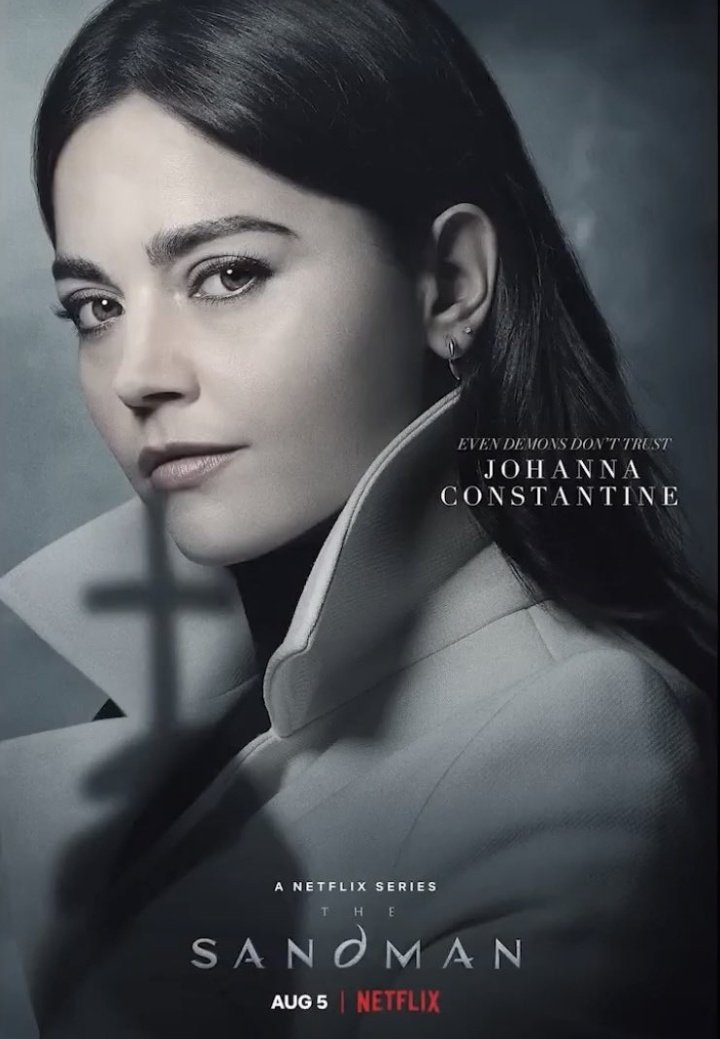
Netflix often knows how to go to extremes and throw around terms like inclusion, gender-blind, gender-bent and what not… that’s not, in itself, bad (because, well, it’s the 21st century…), and many of “The Sandman” heroes (i.e., supernatural beings) can be subject to interpretation regarding appearance, but sometimes it seems like they want to push things by force, so some characters (compared to the source material) are presented as a different gender, skin color, non-binary genders and the like. In the case of “The Sandman” series, this didn’t turn out problematic because the actors did a great job, so everything got an interesting dimension. I absolutely don’t intend to sound discriminatory, I just sometimes wonder if we can see some things as the author envisioned them in the original edition. I understand, it’s not easy for “Netflix” either, it has to balance if it wants subscribers (and therefore money). On one hand it must promote and support the LGBT community, and then on the other hand you have specials with stand-up comedians like Gervais or Chappelle who aren’t afraid to call out the same. But again, not every material created a few decades ago has to be adapted and “modernized” at all costs, that’s why there’s also original (new) production.
But these flaws pale before the quality of the series.
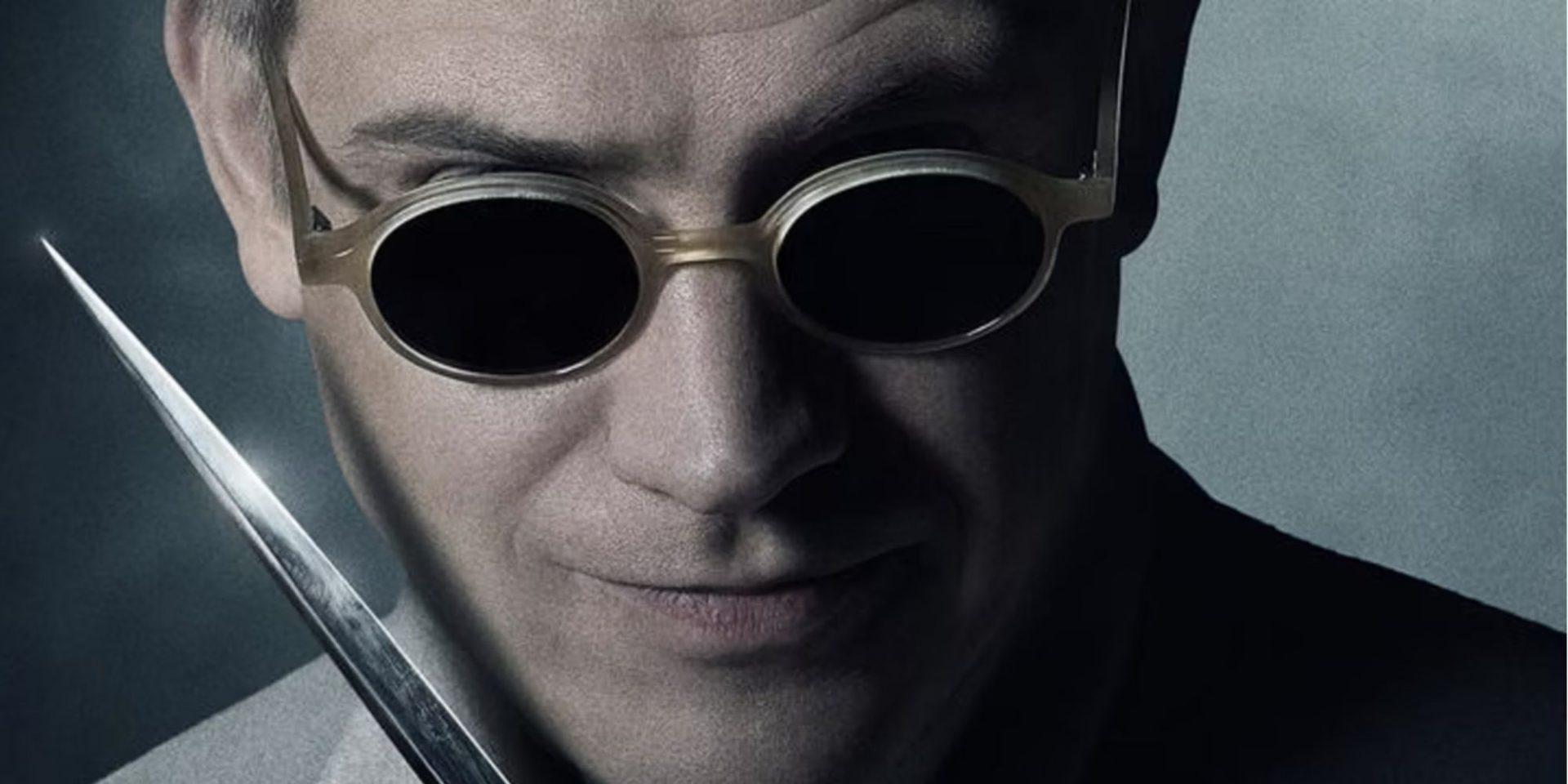
By the way, an interesting fact is that two weeks after the series’ release, an eleventh (bonus) episode was released consisting of two “mini-episodes,” which are adaptations of “The Sandman” chapters 17 and 18, and which is interesting for several reasons (but I’ll leave that for you to discover).
All in all, “The Sandman” is an excellent series that’s really worth watching, and that’s especially true if you’re a fan of Neil Gaiman’s books and graphic novels and his abstract worlds. For now it’s unknown whether there will be a second season of the series, due to its specificity (and the budget allocated for its creation). Hope lies in the large army of fans who managed to pull it off with Lucifer. Maybe #savethesandman will achieve success. And maybe the second season will “wake up” on some other channel.
And you, dear reader, how did you like Morpheus’s adventures? 😊
Latest news: There will be a second season of the series! 😁
Trailer
IMDB | Rotten Tomatoes | Metacritic
Release Date: 2022
Format: Series
Number of Seasons: 1 (11 episodes)
Average Episode Duration: 45 minutes