




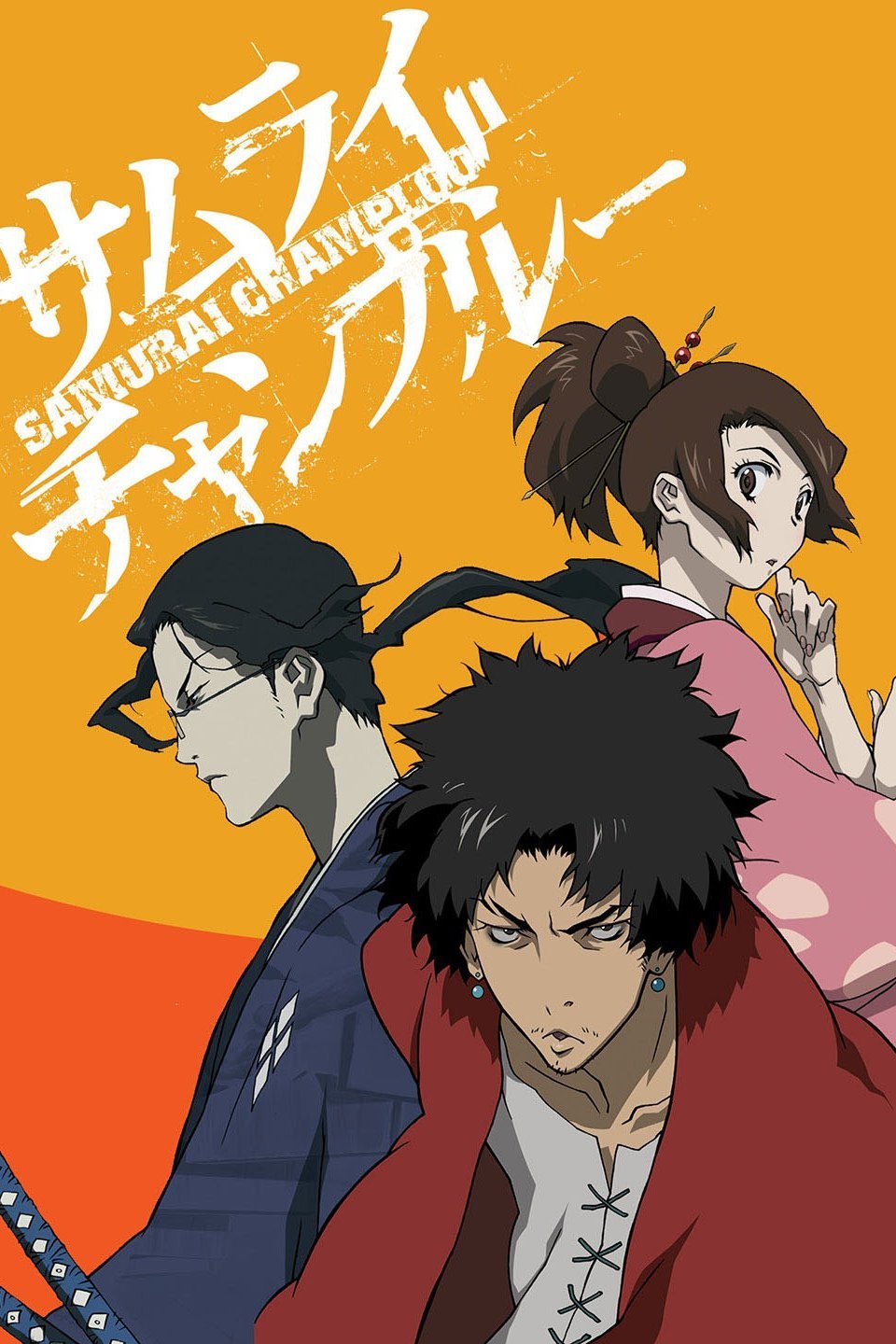
Samurai Champloo
Simply, there are some series creators who are auteurs in the true sense of the word. They know how to make a good thing and that’s that. Shinichirō Watanabe is one of those people. If he wants to make a good anime, he has things he won’t give up on. It must deal with serious, “adult” themes, various genres must be mixed, characters must be unique and memorable… and phenomenal accompanying music is a given.
He achieved his doctorate with “Cowboy Bebop” (unfortunately, though Watanabe wasn’t too involved here, Netflix’s live adaptation didn’t really win audience sympathy… which is a great shame, because this version of the series is also very good). “CB” is simply an excellent series. Not just as anime, but as a series in every respect.
But now we’re leaving space cowboys and jazz and going to (semi-alternative) medieval Japan (and the period of its opening toward the West) and the hip hop world!
Welcome to “Samurai Champloo”!
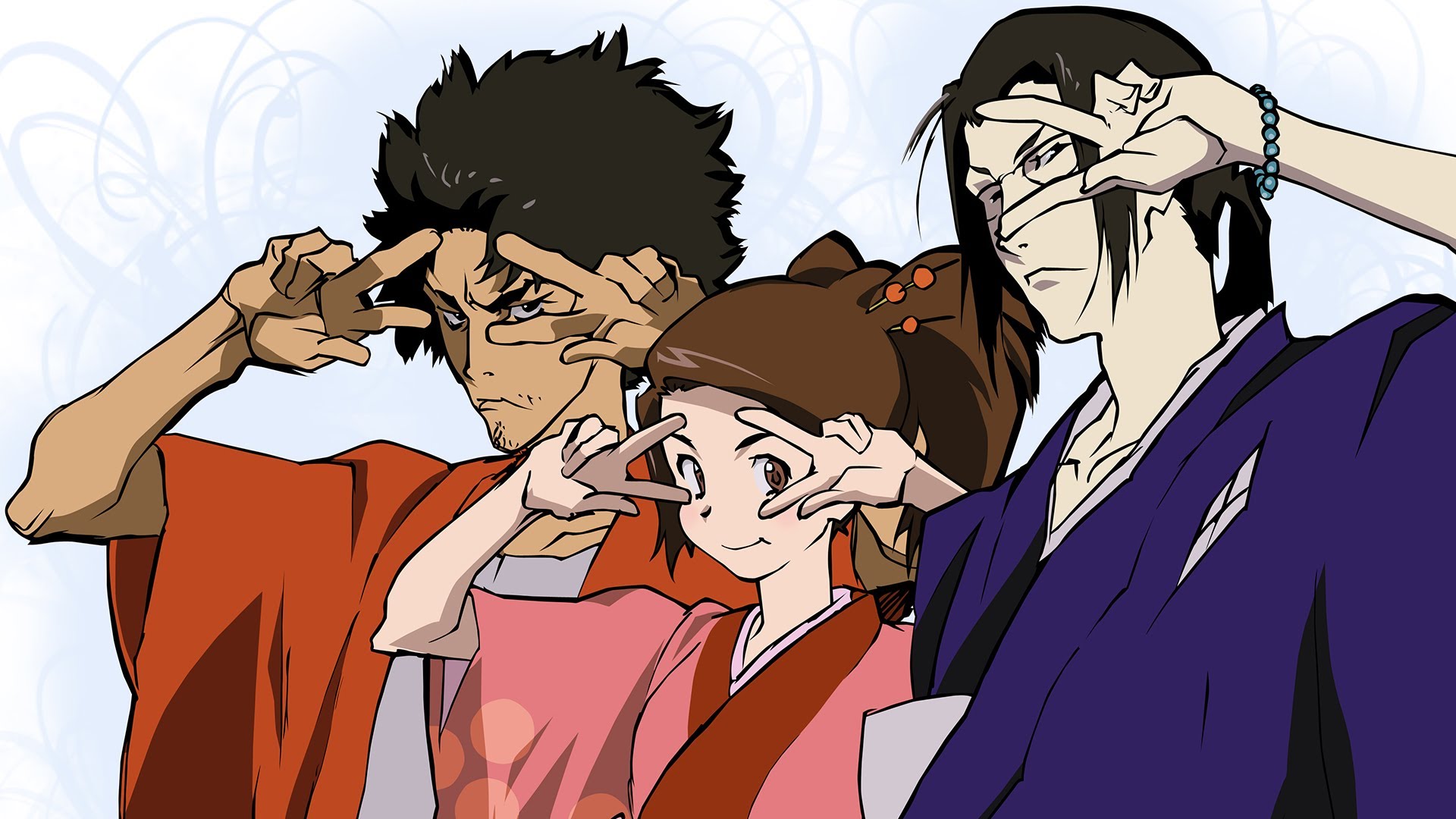
In a small town, a girl named Fuu works as a waitress in a local teahouse. One day, the son of the town prefect (mayor) comes to the teahouse and starts harassing her. At that moment an outcast named Mugen appears, who agrees to save her in exchange for food. Meanwhile, on the other side of town, a ronin named Jin in two moves kills several of the prefect’s bodyguards who were harassing a poor peasant.
A little later Jin stops by the same teahouse and meets Mugen there, who mistook him for the prefect’s bodyguard and the two enter a duel… and manage to burn down the teahouse. Later these two idiots are captured and sentenced to beheading. However, at the last moment, Fuu saves them both and all three ‘hit the road.
Since she has nowhere to return to anymore, Fuu suggests to Jin and Mugen that they become her bodyguards and help her find the “samurai who smells of sunflowers,” with whom she has unfinished business.
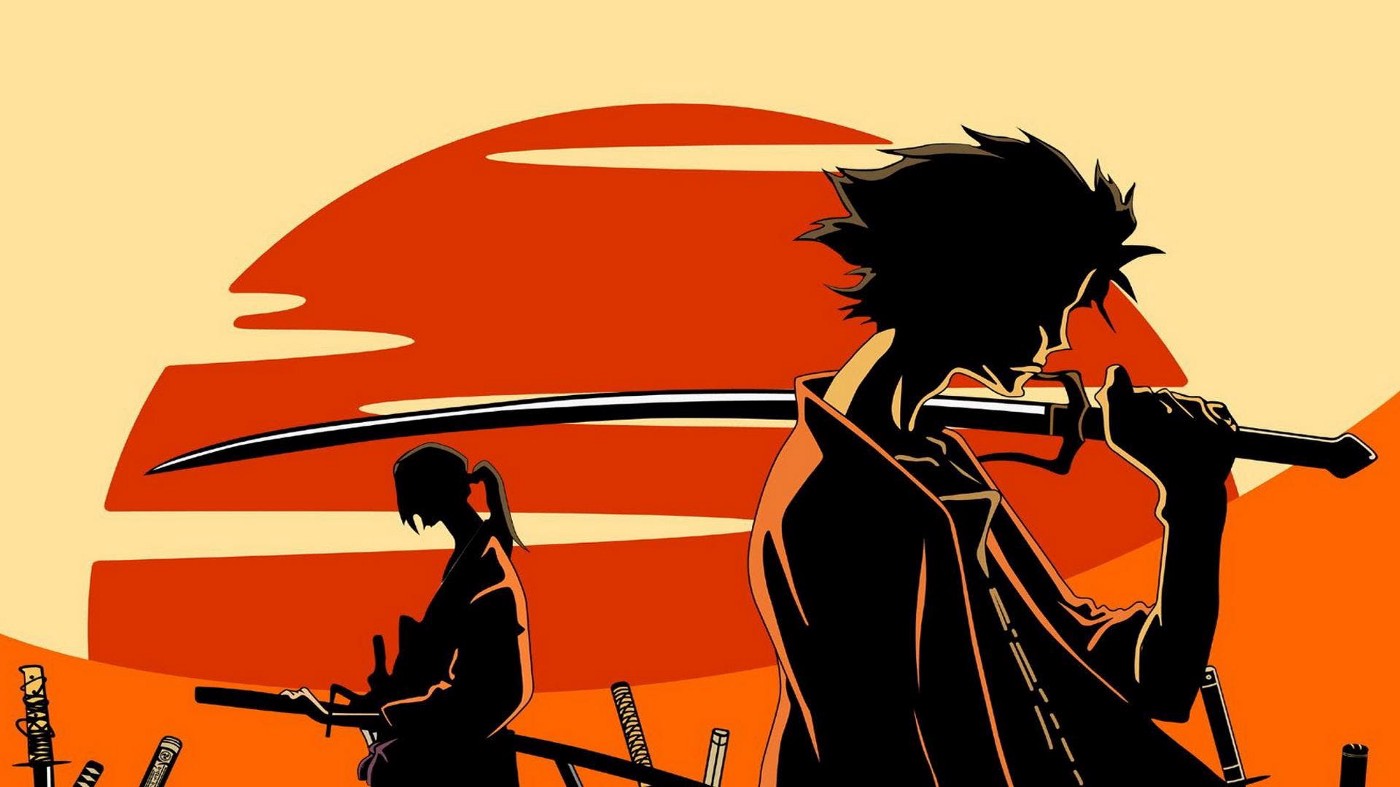
And so this unusual trio sets off on a journey across Japan.
At first glance “Samurai Champloo” doesn’t sound too spectacular, right? Don’t worry, this is just a general introduction to the plot, the situation is abnormal by episodes, but let’s go in order about why this series is phenomenal.
To start with, the main heroes.
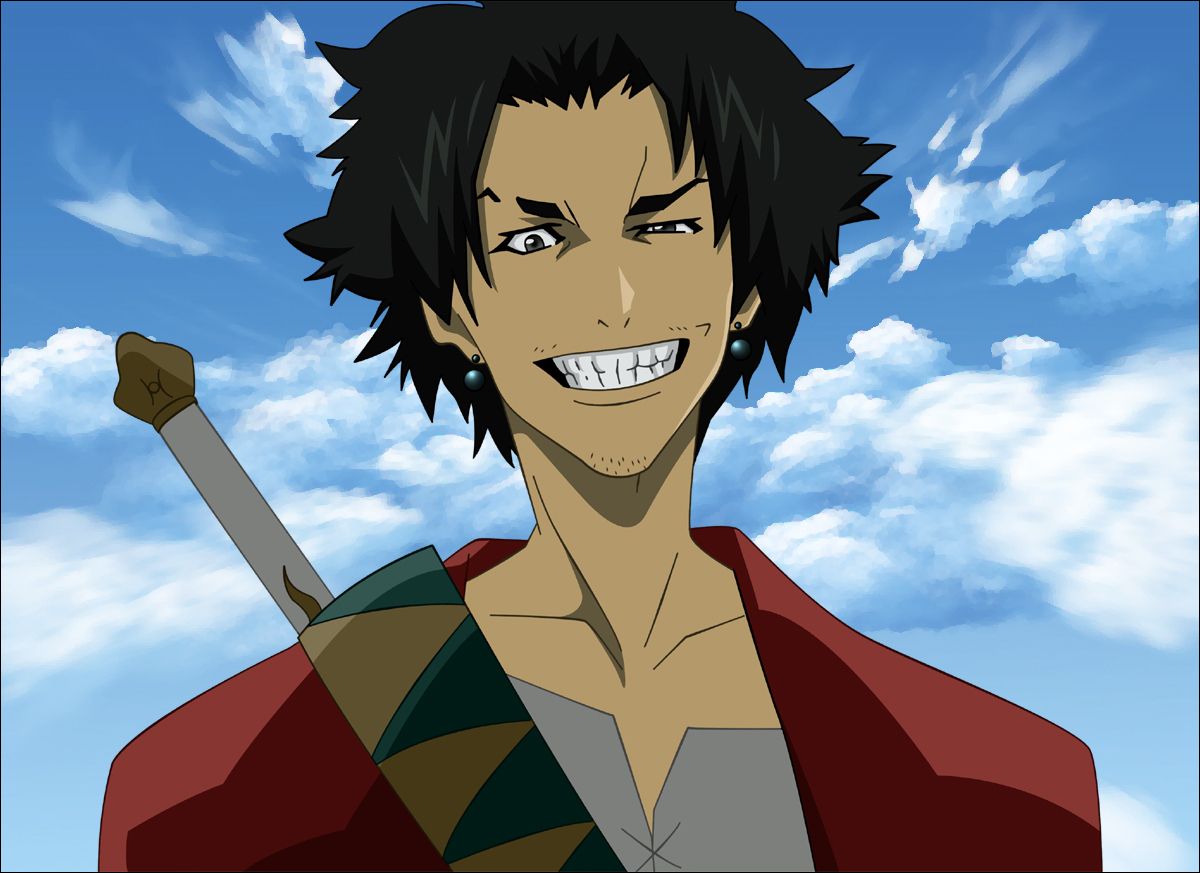
Mugen is a shaggy vagrant-outcast… who will annoy you from the start with how rude, illiterate, careless he is, and he behaves quite idiotically in some situations. However, from a young age he had to manage to survive in harsh environments, and because of that he developed distrust toward authority, and people generally. He’s a self-taught swordsman and in his way of moving and fighting there’s nothing samurai-like, but rather seems like some mix of monkeying around and capoeira. However, it seems that behind this rough jerk hides a person who has a big heart… but also a big problem expressing emotions. An interesting fact is that Mugen was created as someone who should represent the rap ideal and symbol of freedom of expression and deviation from rules.
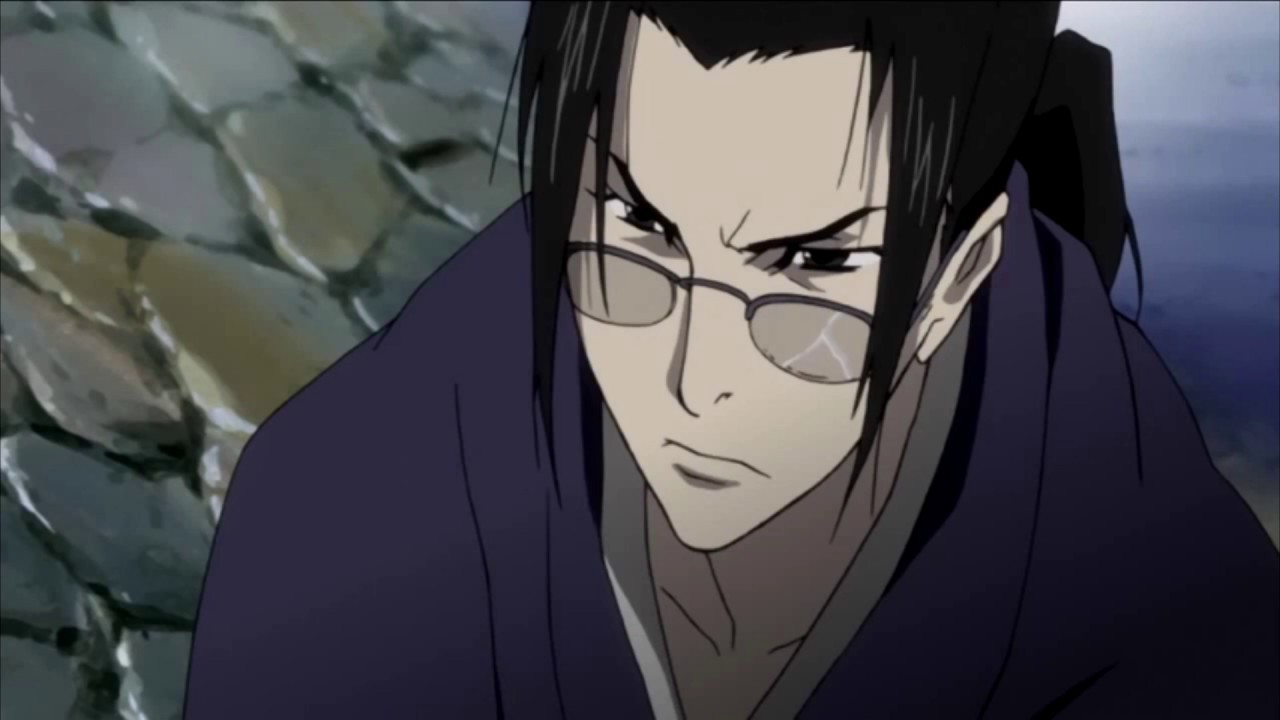
On the other side is Jin, as the obvious counterbalance to Mugen. Jin is the calm samurai-wanderer (ronin). Of calm and stoic behavior and Spartan manner of expression. His trademark is the glasses he uses to mask his face (I guess he figured if it works for Superman, it’ll work for him too). He’s a master of the “mujushinken” Japanese sword style (kenjutsu), which features simplicity and speed, and is specialized in eliminating opponents in one move, possibly two. Though at first glance he should be the embodiment of stoicism, honor and discipline, Mugen and Fuu soon realize that certain people recognize Jin and want to kill him. And as for swordsmen among samurai, I think we can without problem, although he’s very young, put him in Kenshin’s rank (Rurouni Kenshin).
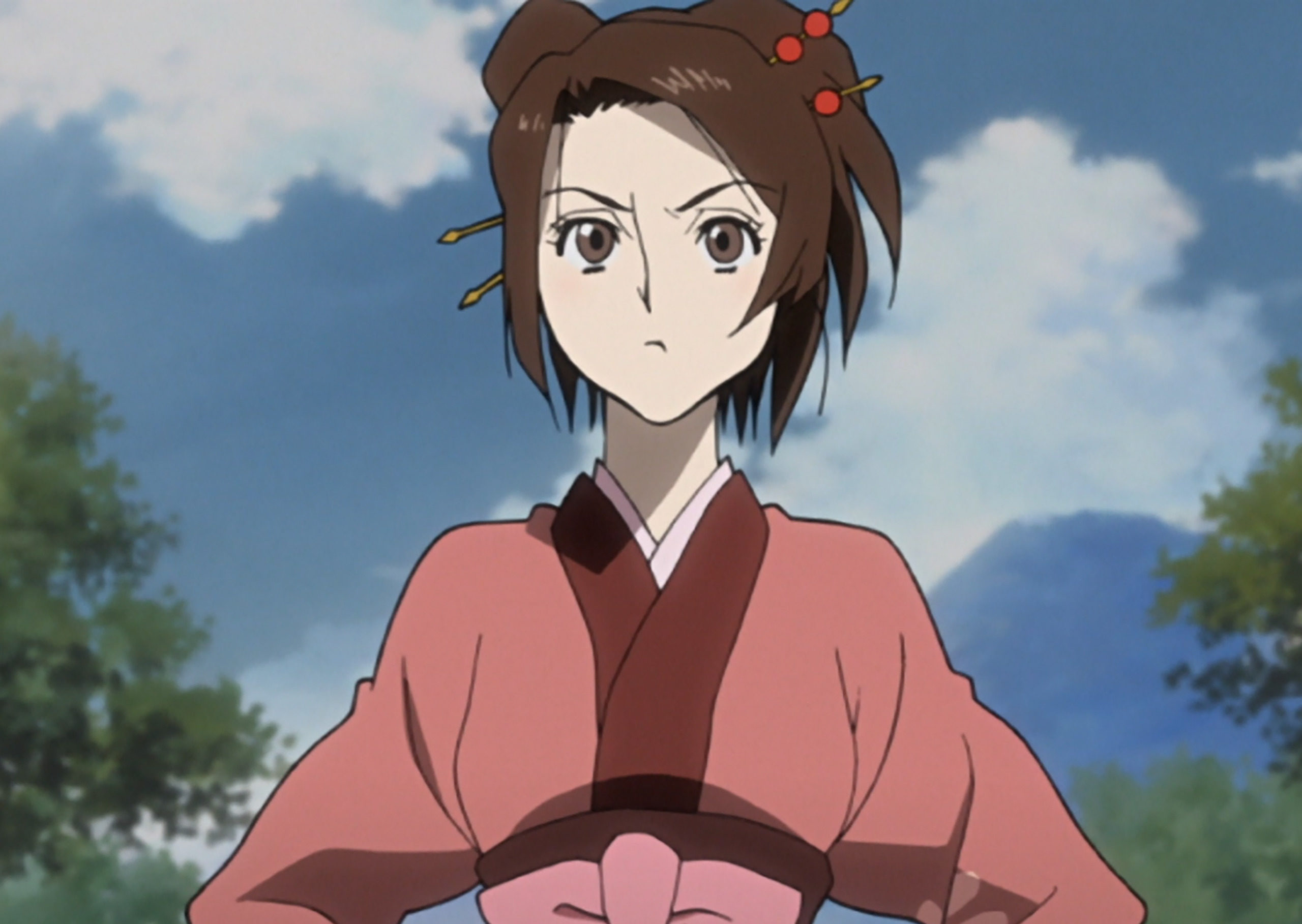
Fuu is the link connecting this unusual duo. Cheerful, good-natured and naive, she’s (most often) the voice of reason of this unusual (and often retarded) crew, and she’s quite resourceful (because she worked various jobs), and knows how to be sassy. One funny detail is connected to her character, which is that she can eat a loooot and is constantly hungry (and a few times she ate so much she literally became fat, sluggish and started speaking comically). But, even so simple, she’s quite a likable character toward whom you’ll quickly develop sympathy. And occasionally you’ll hang out with her silly pet, the flying squirrel Momo.
The next thing that makes “Samurai Champloo” great is also related to the main heroes, and that’s their mutual relationship. Mugen and Jin can’t stand each other at all because they’re two completely opposite people and would most like to put a period on their duel from the teahouse (but they promised Fuu they wouldn’t until they find her mysterious samurai). However, they greatly respect each other’s swordsmanship skills, and often find common interests to temporarily escape from Fuu (e.g., to a brothel). Fuu loves them both very much, though they sometimes terribly annoy her with their behavior (Jin always seems cold and you have to pull words out of him with pliers, and on the other hand Mugen seems quite uninterested and constantly teases her about her appearance and that she’s a typical brat). Of course, you soon get the impression that Fuu harbors slightly deeper emotions toward one of them, but because of the unusual interaction of this trio you won’t be sure toward whom until the very end of the series.
Though the general plot doesn’t seem particularly special, the episodes are a special story in themselves. They mostly follow one comedic pattern: the trio arrives in a town, dead hungry, dirty, grumpy and tired. They try to get some money so they can survive and along the way make some big mess, but moreover help some person in trouble. But no situation this team finds itself in is, to say the least, normal. Fuu, as soon as she separates from Mugen and Jin, falls into some comedic situation because of which she (most often) ends up kidnapped, and it often takes these two half a day to realize she’s in trouble (because they also fall into some stupid situations of their own), so this “bodyguards” should be in quotation marks (because Fuu most likely holds a record in the film world for the number of kidnappings a person can have while in the company of bodyguards). And the situations they fall into range from those related to politics, gambling, food, yakuza, hired killers, painters, all the way to zombies (!?)… which might be strange if we weren’t talking about semi-alternative medieval Japan, so why not insert homages to some famous personalities of that (and later) period, like diplomat Isaac Titsingh (I love when I mention a personality like this as if it’s assumed I know who it is), baseball player Alexander Cartwright or painter Andy Warhol…
Action scenes are also phenomenally done, whether following Mugen or Jin with their unique fighting styles, and the unique visual aspect of the series is equally impressive.
Of course, like “Cowboy Bebop,” Samurai Champloo also has three incredibly strong elements in which they’re quite similar.
The first is the gradual revelation of characters’ pasts. Like Spike, Mugen also has a criminal past and in some subtle way seeks redemption (except at the end of the series we see that one fights more because of hatred, and the other because of love). Jin is like Jet, a big stoic who in the past experienced a great betrayal that changed the course of his life, but they try to live with the consequences (except Jet lost more emotionally and isn’t important to anyone anymore, while Jin because of honor came into a situation where some people want to kill him out of revenge). And there’s Fuu who, like Faye Valentine, has a complicated family situation about which she wants clarification.
The second element is the serious life themes “Samurai Champloo” deals with. Redemption, transience of life, dealing with tragedies, loves that can’t be reciprocated due to circumstances, loss of honor, forgiving someone for abandonment, accepting the past, finding answers to some life questions, difficulty opening up to close people and many other serious (and often painful) themes.
And the third is, of course, phenomenal music. Where jazz ruled CB, here hip hop reigns in SC. The music is great and phenomenal and an excellent addition to your music base (though, at least for me, it still can’t measure up to CB and its opening number). Though, while in CB you could say music is one of the “main heroes” of the series, in SC it’s more like an excellent supplement (but I think it won’t be etched in your head as much).
Regardless of the seriousness it has like CB, SC has a generally more cheerful note and is more oriented toward humor, which is a good thing. While CB’s ending left an (unfinished) bitter taste in viewers’ mouths, SC leaves a slightly more cheerful note, but not quite the happy ending you’d hope for.
Which series is better? In principle I generally agree with these comparisons, and each series has some aspect in which it’s better, though I’d generally give preference to the samurai theme, in the end CB leaves a stronger impression on me.
All in all, SC is a phenomenal series that’s always recommended for viewing and is always highly rated (and on IMDB you’ll find it in “top 250” for series) and it would really be a shame to miss it, regardless of whether you love anime or not.
All recommendations, don’t doubt that. 🙂
And you, dear reader, what do you think, who’s stronger, Mugen or Jin? 🙂
Trailer
Imdb | Rotten Tomatoes | Metacritic
Release Date: 2004
Format: Series
Number of Seasons: 1 (26 episodes)
Average Episode Duration: 20 minutes