





The Song of Achilles
When it comes to choosing books, for me (I believe, and for a good number of other people) it’s based on two approaches: either I choose a book intuitively/instinctively (i.e., something strongly attracts me to the title) or I’ve previously researched the book, reviews and the like (though I apply this more to professional literature). However, in all my intelligence and spirituality, sometimes I pick up some books because I rush in without thinking. 😅
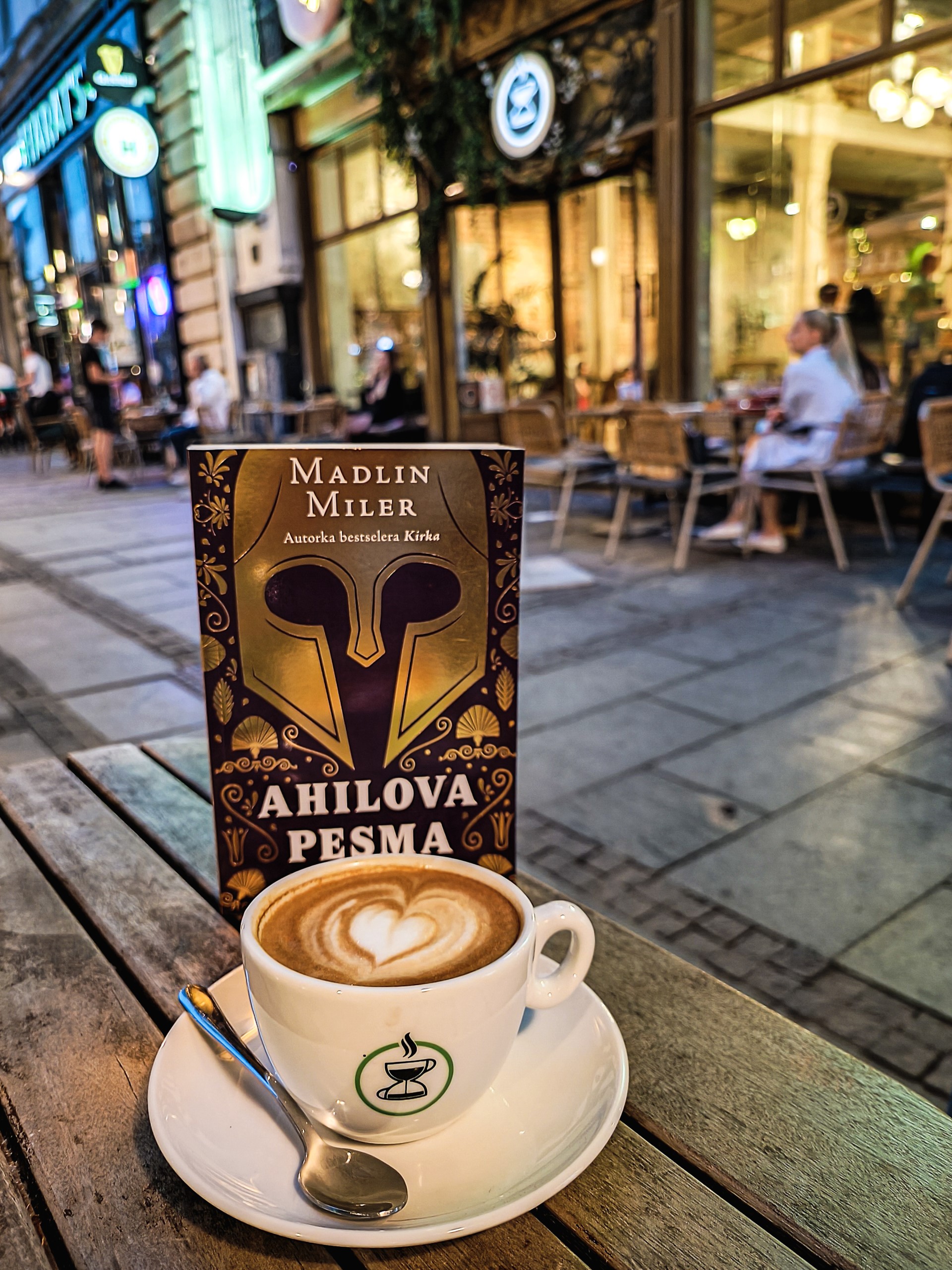
That’s how it was with the book “The Song of Achilles” by Madeline Miller. I see, it’s praised everywhere, suddenly an instant hit, phenomenal book, TikTok craze for it, there was also a discount (“Night of Books”)… and so I buy it.
And likewise, in all my great intelligence and spirituality, sometimes I manage so stupidly and without thinking to blankly conclude some things in all my naivety.
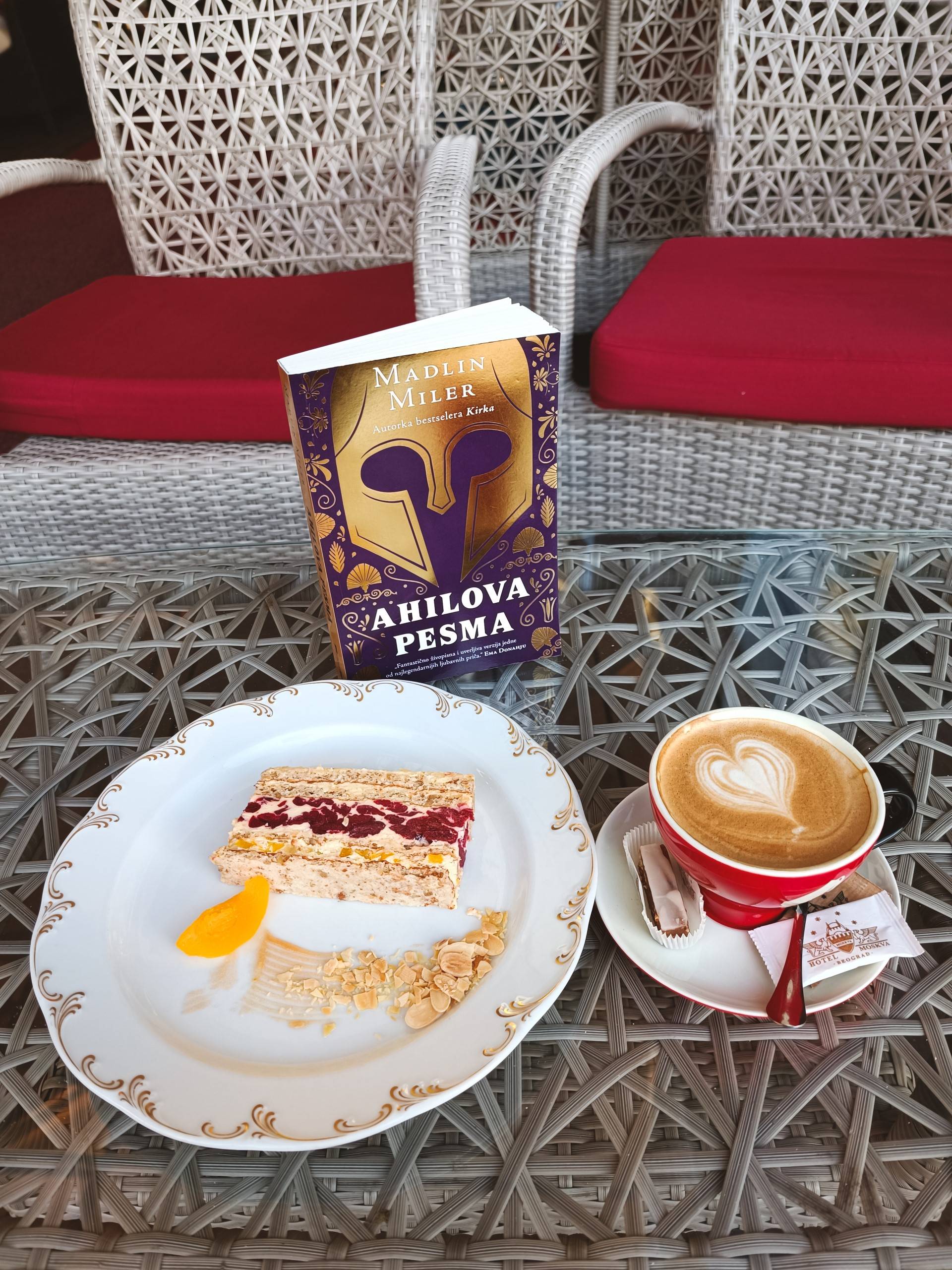
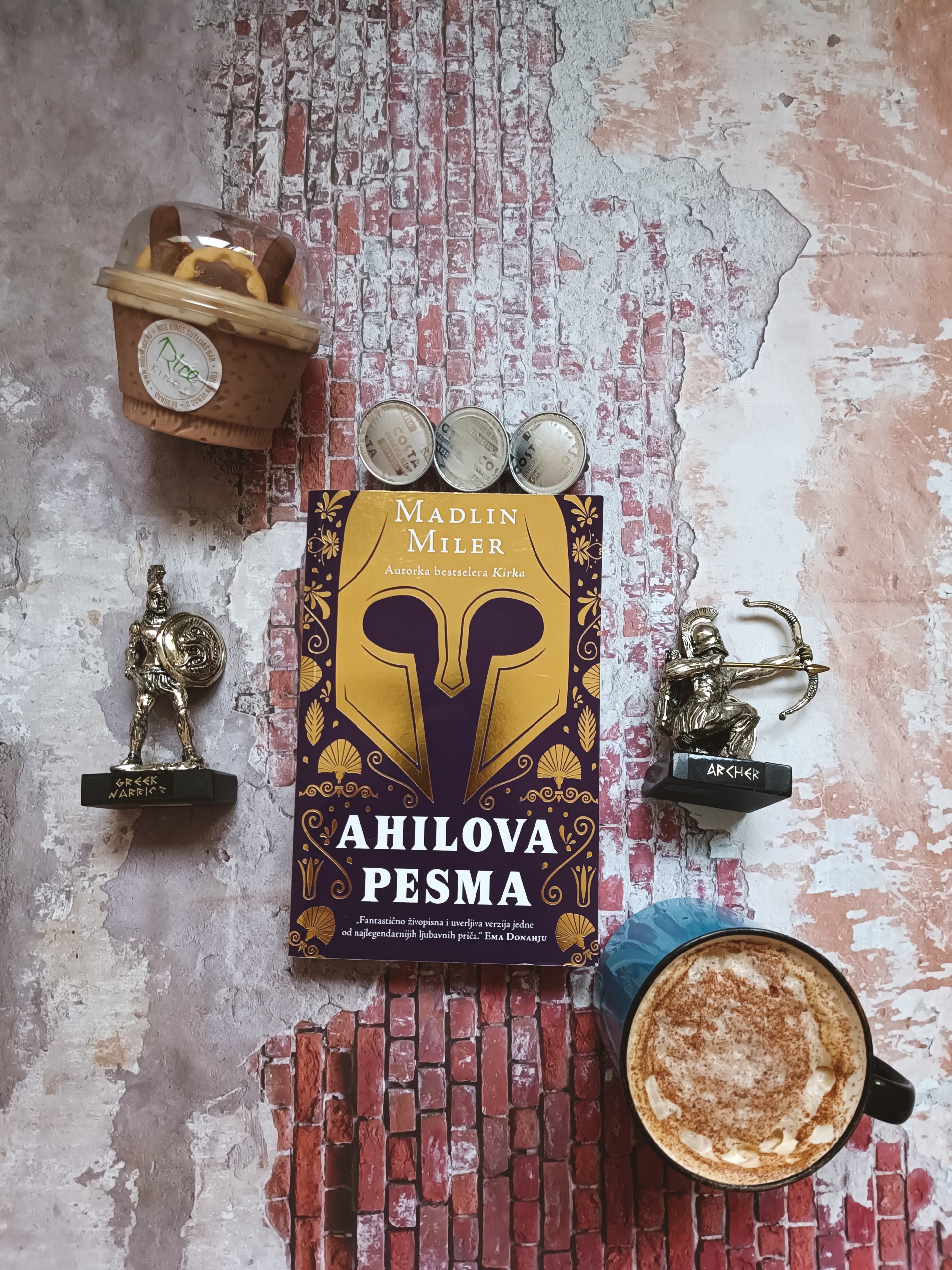
“A fantastically vivid and convincing version of one of the most legendary love stories.”
That’s what it says at the bottom of the title page.
“Hmmm…,” I mumble to myself, “yes, the famous love of Achilles and Briseis was there, but that it’s the most legendary, there were greater loves, maybe I forgot something… hmm… interesting, it turns out Patroclus is the narrator, this will be an interesting approach for him to describe the love of these two… aha, the childhood of these two, okay… wait a minute, what’s this about oiled bodies, Achilles’ muscles, what is this Patroclus babbling about… … … … … … oh Zeus, I think this won’t be that sexy love story I thought it would be…” 😅
At that moment only one more thought crossed my mind.
“Lord, please don’t let this turn into an ancient Greek gay version of 50 Shades of Grey…”
Luckily, it didn’t go in that direction…
Now, jokes aside, let’s get a bit more serious.
Besides it being a hit at that moment, the reason for picking up the title “The Song of Achilles” is also that since childhood I’ve loved mythology, especially Greek (and right after it come Japanese, Egyptian and Norse). I’ve read the book “Legends and Myths of Ancient Greece” by Nikolai Albertovich Kun countless times, as well as “The Greek Myths” by Robert Graves. No kidding, I could recite any event from Greek mythology by heart down to the letter.
And then I “paused” surely for at least a decade (and maybe more) from reading anything related to Greek mythology. 😅
By the way, don’t blame me if I accidentally don’t give too many explanations somewhere, I probably forgot thinking everyone should know Greek mythology… 🤣
Anyway, the plot of the book “The Song of Achilles” is told from Patroclus’s perspective. Patroclus was, by the way, an exiled prince (because he killed a boy, though more to protect himself) who was sent to serve Achilles’ father, King Peleus. Over time, Patroclus and Achilles grew closer, so Patroclus became Achilles’ ward/squire, and later a close friend and companion… except that friendship over time really deepened on a much more emotional level, if you know what I mean…
Patroclus will first take us through his growing up, then arrival at King Peleus’s court, getting closer to Achilles, their training with the legendary centaur Chiron, then Achilles’ hiding at King Lycomedes’ place (when they dressed him in women’s clothing… Achilles, not Patroclus), to the famous siege of Troy, their relationship with Briseis, and finally, their deaths.
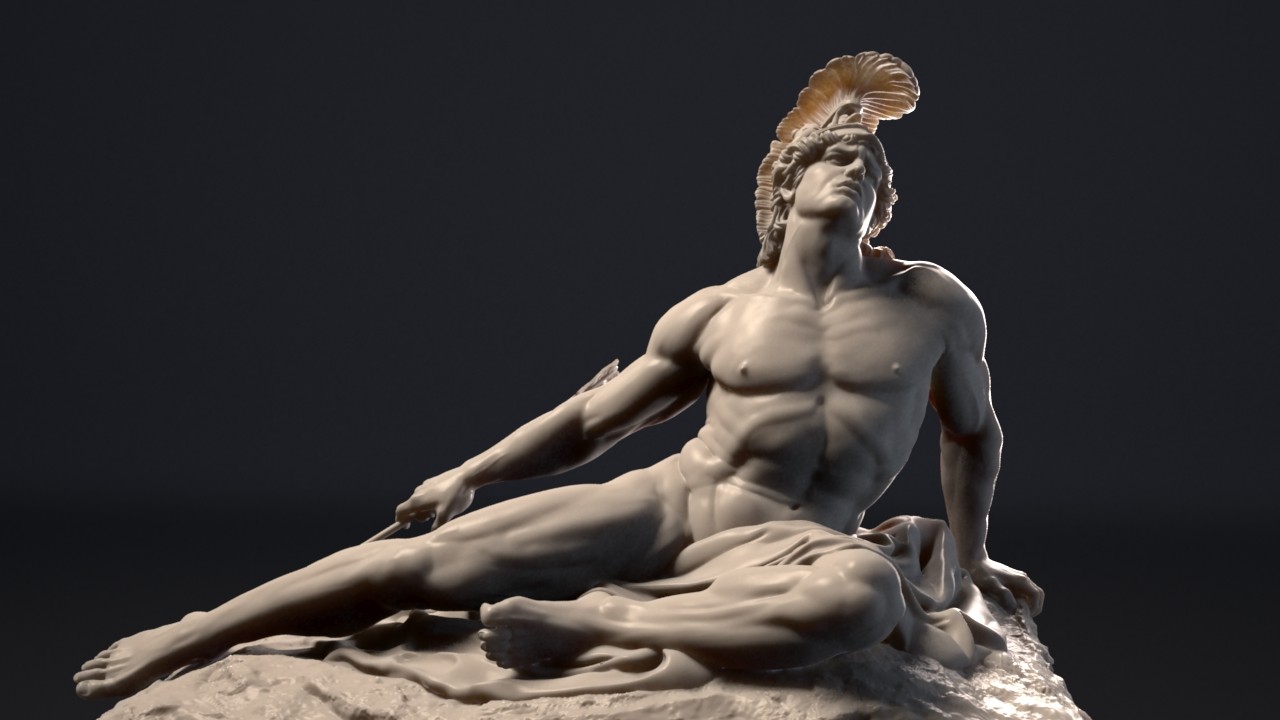
If you (by chance) aren’t familiar with the legend of the siege of Troy and Achilles, here’s a quickly shortened version… a prophecy predicted that Achilles would be the greatest of all Greek heroes (Aristos Achaion), but also that death would find him before his time if he joined the siege of Troy. Other Greek rulers knew they wouldn’t be able to conquer Troy without Achilles, so it was the task of cunning Odysseus (king of Ithaca) to convince Achilles to join them in the greatest war that ever happened (at that time). Achilles’ pride (as well as ego and arrogance) and desire for glory did their work, and he and Patroclus with their compatriots (Myrmidons) joined them in the siege of Troy and the intention to return to King Menelaus his “stolen” wife Helen, the most beautiful woman ever. However, the conflict between the leader of this siege, the vain King Agamemnon, and young prince Achilles (about subordination, but also Briseis, as well as their characters), caused Achilles to refuse to participate in further war, which is why in the second half the Trojans beat up the Greeks so badly they almost chased them to their ships. Agamemnon, like foreign commentators with Djokovic, “changed his tune” and started begging Achilles to help them, to which arrogant Achilles snapped back like a taxi driver at Slavija “I don’t give a damn.” Finally, Achilles (heavy-heartedly) took pity on Patroclus’s plea that he dress in his armor, just to scare the Trojans with his appearance, so they’d think Achilles returned to battle. Despite great success (Trojans driven back to Troy’s gates and Patroclus’s heroism where he killed many warriors, including Sarpedon, son of god Zeus), Patroclus fell at the hands of the legendary Trojan hero, Prince Hector. Learning that Patroclus died caused such pain and rage in Achilles that he went into super Saiyan mode and destroyed the Trojan army, killed Hector and in the process humiliated this hero’s corpse to the anger of the gods. But soon Achilles also fell at Troy’s gates.
I know it’s a spoiler, but again, not everyone knows Greek mythology, and it’s not enough to just have watched the movie with Brad Pitt. 😆
Now, I’d leave aside going too much into the book’s plot itself and Patroclus and Achilles’ relationship for simple reasons. First, entering into a debate with me about Greek mythology is like entering into a debate with Jordan Peterson (on, well, any topic)… you know from the start you’ll lose, and moreover I’ll bury you with a pile of information. 😁🤣
Second, the literature that the author most likely chose as the basis for her novel should also be taken into account. Namely, you may have (like me) read the aforementioned book by Kun and/or Graves, who used Homer’s “Iliad” as the basis for describing the Trojan War (for Graves, to be honest, I can’t remember, I read it long ago, I’d have to refresh my memory, but I think the basis is also the “Iliad”). However, there are other ancient writings that describe this period a bit differently. And that concerns the relationship of Patroclus and Achilles. Because, regarding their relationship, there are interpretations that their relationship varied from extremely close (like brotherly), to a deeper relationship that was at the level of platonic (forbidden) love, to them actually being in love. It’s complicated to explain, it has to do with interpreting life in ancient Greece and views on homosexuality and pederasty (because, yes, technically, Patroclus was older than Achilles), but on the other hand they also chased women, ugh what do I know, no one knows anymore if they were straight, gay, bi or something fourth. If you’re really interested, google it. 😅 There’s of course also the relationship of these two toward Briseis, because according to one literature, Achilles was in great love with Briseis, and with Patroclus he was a friend, and according to others maybe these two loved each other and Achilles wasn’t very interested.
Basically, accuracy isn’t worth discussing, so let’s focus on the book itself.
What was really interesting is how quickly this novel reads. There are descriptions of people in Patroclus and Achilles’ lives, some places in Greece, as well as events (like war), but primarily the focus is on how Patroclus experiences Achilles and his growing up, as well as their relationship. Simply put, the central figure is their (but primarily Patroclus’s) emotions. These two ancient heroes are portrayed in some more vulnerable, gentler version, but without some exaggeration going the way of some emo pathos and the like. Toward the rest of the world, they, or better said Achilles, should be strong, proud, arrogant. But when it’s just the two of them, they become milder, gentler, even somewhat more naive like children. As much as on one hand such a portrayal of Greek heroes is unusual (at least to me), on the other hand it’s charmingly appealing.
Of course, sometimes I got the impression that perhaps there’s too much drama and pathos in their relationship, and maybe exaggeration. For example, Patroclus was close to Achilles, his companion, and perhaps lover, but I never experienced him as overly weak. He was perhaps gentler of the two, but by some logic, being older, he was also a role model for Achilles. I mean, sometimes you’re not sure which of them is more active and which more passive in their relationship… and yes, now I’m also aware how strange this sounds when I say it aloud… (“Muahahahahaha…” – note from the subconscious). And moreover I don’t really remember him being presented as such a weak soldier who only when he put on Achilles’ armor briefly became a dangerous warrior. On the other hand, Achilles is sometimes presented as too spoiled and as if he only has eyes for Patroclus.
But again, this is based on mythology, and it’s perfectly fine to give the writer freedom of interpretation, even a bit of reworking some details.
Particularly interesting is also their relationship toward Achilles’ mother, Thetis. Patroclus obviously fears her (both because she’s a goddess and also Achilles’ mother), and on the other hand Achilles has toward his mother some strangely neutral relationship, as if he tolerates her because he must (probably because Thetis condemns their relationship and believes Patroclus isn’t worthy of Achilles).

One detail that was strange to me is the author’s attitude toward the mythological aspect itself. For example, in a couple of parts where Thetis is described, I had more of an impression that she’s not presented as some terrible goddess (in the sense of power toward humans), but literally terrible, as if she came out of Japanese horror, complete with some kind of teeth and facial pallor… like some water vampire or whatever… And one scene where the god Apollo is mentioned and his black eyes, after the description of Thetis I felt he probably looks like some zombie or Orc or something third. Only Chiron is described more or less sensibly to me. And on the other hand, I hoped for more appearances of gods and their descriptions.
Curiosity, “Achilles’ heel” isn’t mentioned at all.
So you get the impression that the novel “The Song of Achilles” is trying to remain in some element of “quasi-realistic.”
Again, you must take my comments with reservation, and view them more as comments of a grumbler who mumbles more about how he would describe events from Greek mythology and give me a slightly bigger dose of rawness and add that male-female aspect.
But all in all, “The Song of Achilles” turned out to be an excellent novel in the end, imbued with touching and emotional energy, and really gets a recommendation for reading, as a nice summer hit.
And you, dear reader, how well do you know Greek mythology? 😊
Author’s website
Book price: Vulkan | Laguna | Makart
Ratings (and purchase) on foreign sites: Goodreads | Amazon | Audible | Bookdepository | LibraryThing | Waterstones