




Zero to One
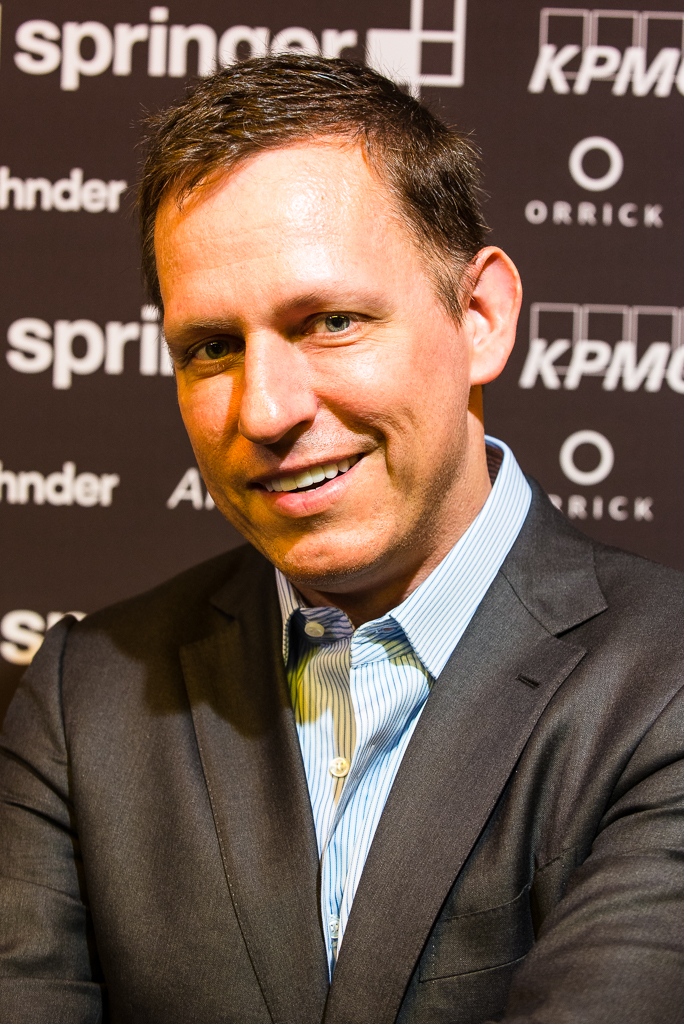
For people from the world of (IT) entrepreneurship, this man is no stranger. Peter Thiel, originally from Germany, is a well-known entrepreneur and investor. This billionaire is one of the founders of “PayPal” (online payment and money transfer system), “Palantir” (big data analytics) and “Founders Fund” (investing in startup companies… their portfolio includes SpaceX, Airbnb, Lyft, Spotify…). As an angel investor, in 2004 he invested $500,000 in “Facebook” (and was one of its first external investors) in exchange for about 10% stake in the company (at that time FB’s value was somewhere around five billion dollars). During 2012, Peter Thiel sold most of his stake in FB… and earned a bit more than a billion dollars! With all his investments, Peter now “sits” on about seven (7) billion dollars.
Nice… solid cash…
For many, Peter Thiel and his opinion (and views) on the topic of entrepreneurship, technology and investing are highly valued and gladly heard.
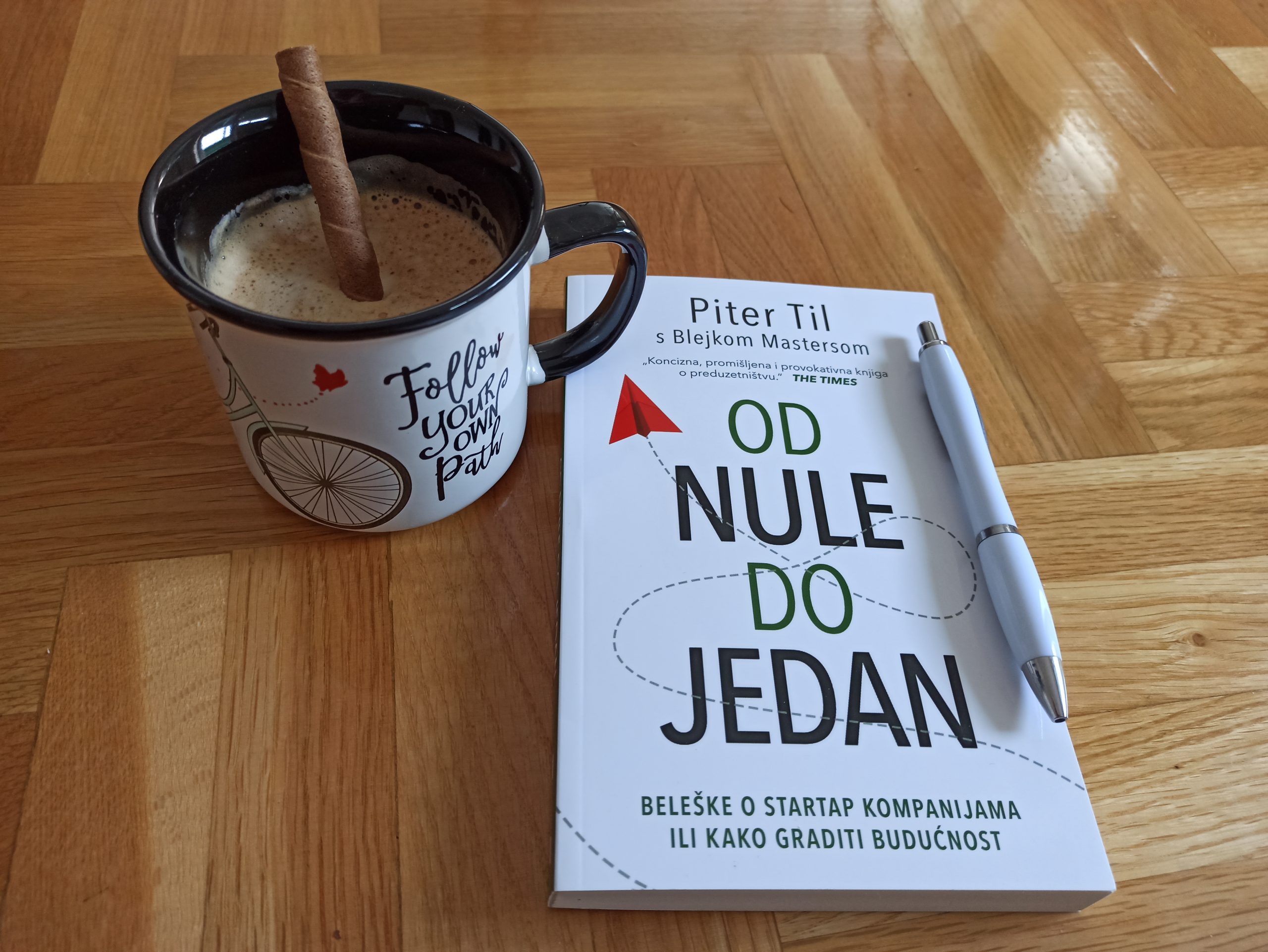
Perhaps that’s why it’s no surprise that, shortly after its appearance in 2014, Thiel’s book “Zero to One” became a kind of modern (business) classic and one of the most frequently recommended books for topics that include the words “business,” “startup,” “investments” or “IT”……… or “Peter Thiel.”
Is “Zero to One” worthy of such (modern digital) enthusiasm, or, to use an old Serbian word, “hype”? 😀
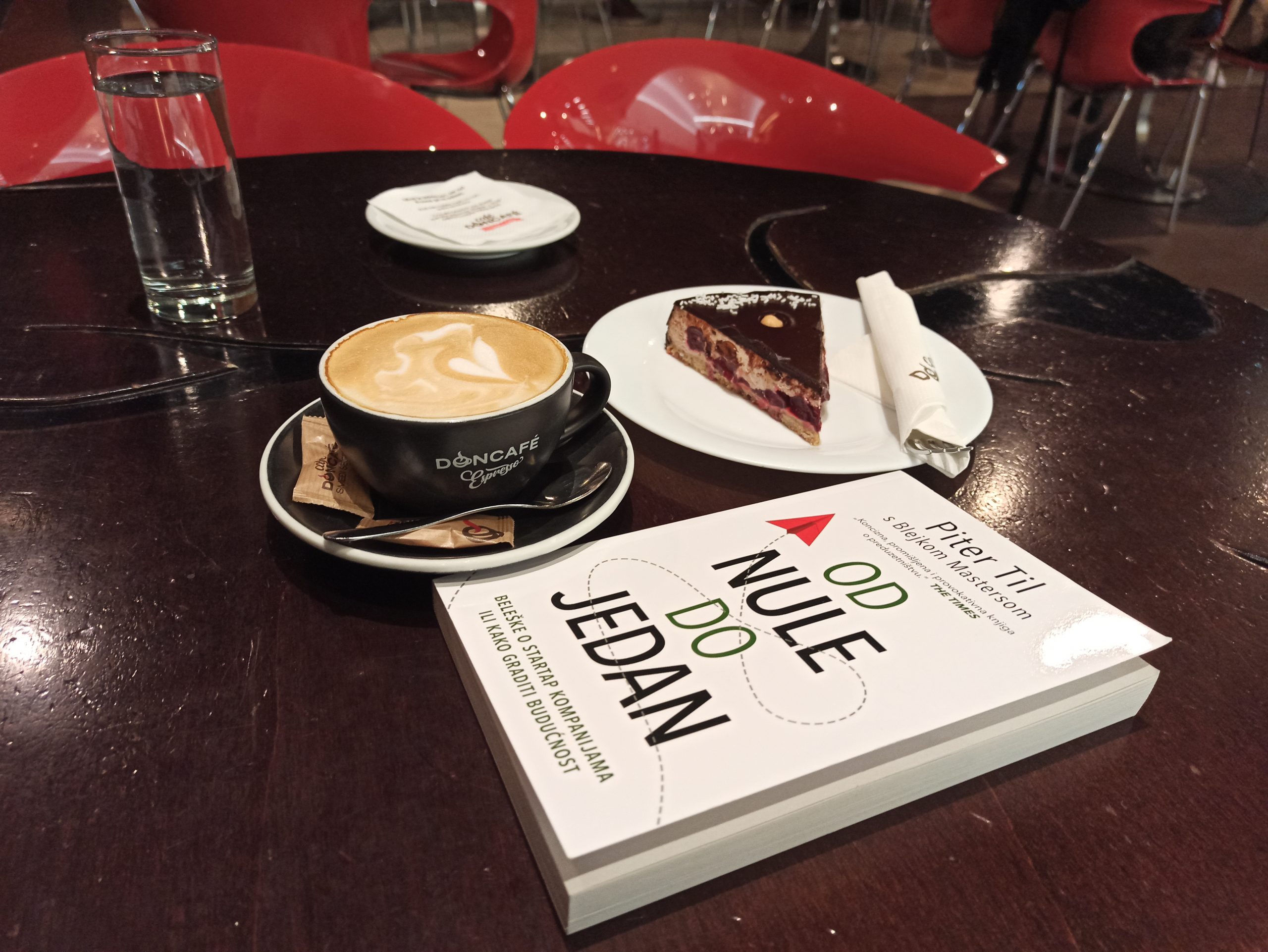
Let’s see…
It’s interesting that this book was created based on a course on startup companies that Thiel held at “Stanford,” and that one of the students (Blake Masters) was quite a nerd and took really detailed notes (obviously so detailed that they served for revision and preparation for a wider reading audience).
About 220 pages of the book are divided into 14 chapters (plus conclusion) and cover different, yet quite connected topics related to the future of companies (and their management) and technology.
If I tried to express the essence of the book “Zero to One” and what the writer (i.e., Peter Thiel) wanted to say, it could be:
“If you’ve created something new (or drastically improved something existing) where progress already exists, you’ve moved yourself (i.e., your company, and the world) from one (1) to n-number.
But if you’ve made something completely new (innovative), where there hasn’t been progress for a long time, that’s a move from zero (0) to one (1)… and that’s really great news both for you and for the world.”
Of course, with this “essence” I certainly haven’t said much (actually, I probably said nothing :D). But again, if the world of entrepreneurship and innovation were so simple and clear, we’d all be entrepreneurs and innovators (though I can’t help but wonder, haven’t almost all of us, thanks to social networks, declared ourselves some kind of “entrepreneurs,” “influencers” and the like?).
Based on the literature I’ve read so far (specifically related to entrepreneurship), I’d dare to make a division of books from this field into:
- practical entrepreneurship
- emotional/holistic entrepreneurship
- philosophical-theoretical entrepreneurship
- (other) entrepreneurship
Entrepreneurs/businesspeople, don’t laugh at me, this is just my rough division, I know it doesn’t make much sense.
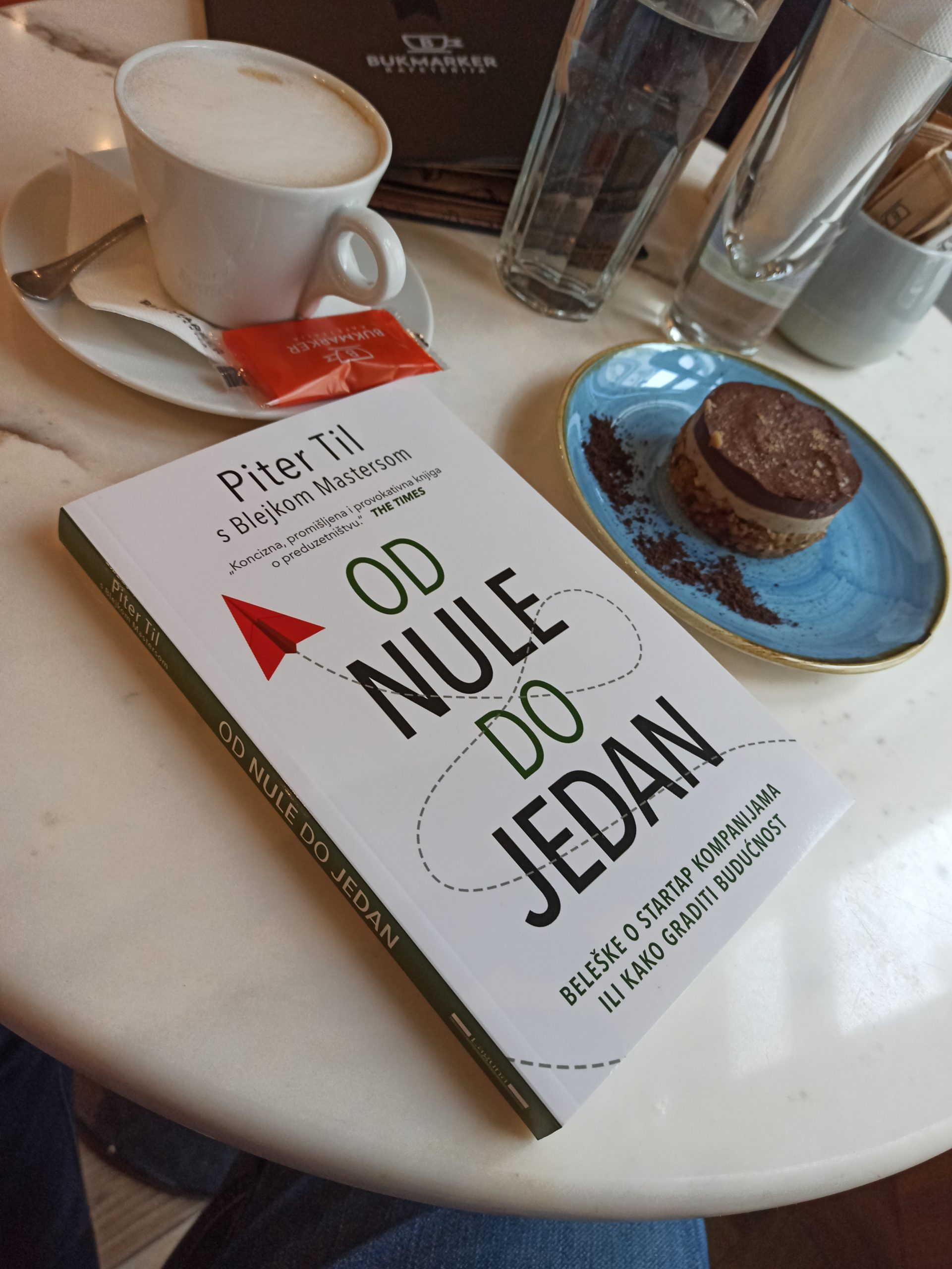
When it comes to “Zero to One,” I’d place this book in some intermediate category, specifically, between the third and fourth. Here you won’t encounter too much advice on taking concrete actions, i.e., how to solve some situations (as in “Bears on the Path”), nor that more emotional approach in the entrepreneur-client relationship (as in “The Perfect Surprise”). Peter Thiel in “Zero to One” has his own method where he presents a (personal) philosophical approach to entrepreneurship (and its defining), combined with the “experience” of his companies (where he was either founder or investor or advisor) and touching on the history of other companies, but also taking into account political-economic situations in different (time) periods, as well as his views on the future evolution of computers (i.e., artificial intelligence), big data and machine learning, with a look at the future of “clean technology.”
Maybe someone, while reading this review, will think: “Sounds like a very interesting book, and obviously you like it… but this review lacks that energy of optimism and enthusiasm you have when you really like a book?”
If (by chance) someone thought this… they weren’t far from the truth.
My biggest “problem” with this book is that, in fact, I don’t even know what to think about this book as a whole. Perhaps the closest impression of this book would be: “Quite a solid book with some very interesting ideas and positions, and several excellent passages worth pondering, analyzing and meditating on.”

What I didn’t like so much (better said, maybe it was unnecessary) is the subtle (but still obvious) glorification of companies like PayPal, Palantir, SpaceX (where, you know, Thiel has a stake) and his buddy Elon Musk… but again, it wasn’t unexpected that something like that would happen, right? 😀 Also, the last two chapters (“Seeing Green” and “The Founder’s Paradox”), i.e., those last 50 or so pages, somehow deviate quite a bit from the rest of the book for me… in fact, they deviated so much that my eyes really hurt. I don’t know why, but they spoiled my impression of the book a bit.
But in any case, you’ll read quite a few interesting things (and views) on the topic of competition, monopoly, progress, types of optimism and pessimism, setting healthy foundations for a company, the importance of sales, as well as why people stopped searching for secrets.
Some interesting sentences in this book:
“In the business world, at least, Shakespeare proves superior to Roth: inside the enterprise, people become obsessed with their competitors for career advancement. Then the firms themselves become obsessed with their competitors in the marketplace. Amid all the human drama, participants lose sight of what matters and focus on their rivals instead.” (interesting, but also painfully true position about some companies’ approach)
“Technology companies follow the opposite trajectory. They often lose money for the first few years: it takes time to build valuable things, and that means delayed revenue. Most of the value of a technology company will come at least 10 to 15 years in the future.” (though, I think that with the drastic acceleration of both technology and business, this number of years to achieving profit will become shorter and shorter, and in the future few companies will have that luxury to be a “loser” for so long with a higher goal in mind… unless they’re preparing some big, innovative BOOM!)
“Thiel’s law: a startup messed up at its foundation cannot be fixed.” (actually, it can be fixed, it’s just that it’s a devilishly hard job that requires upper management to realize in time that some things must be fixed as soon as possible, otherwise this law will indeed be accurate)
As well as many other interesting passages… 🙂
All in all, “Zero to One” is a solid book about entrepreneurship. You’ll encounter quite a few interesting chapters (better said, passages) that can give you some interesting perspectives regarding various topics related to entrepreneurship (already mentioned a few paragraphs ago). But I think this book doesn’t have what could be called “replay value.” Maybe it’s worth rereading when you push through some 10-15 years of running companies and gain some business (and life experience), and then discover some new insights in this book? Who knows… 🙂
And you, dear reader, would you prefer to focus more on “from one to n-number” or “from zero to one”? 🙂
Book price: Laguna | Delfi | Vulkan | Korisna Knjiga
Ratings (and purchase) on foreign sites: Goodreads | Amazon | Bookdepository | Audible | Waterstones | Penguin Random House