






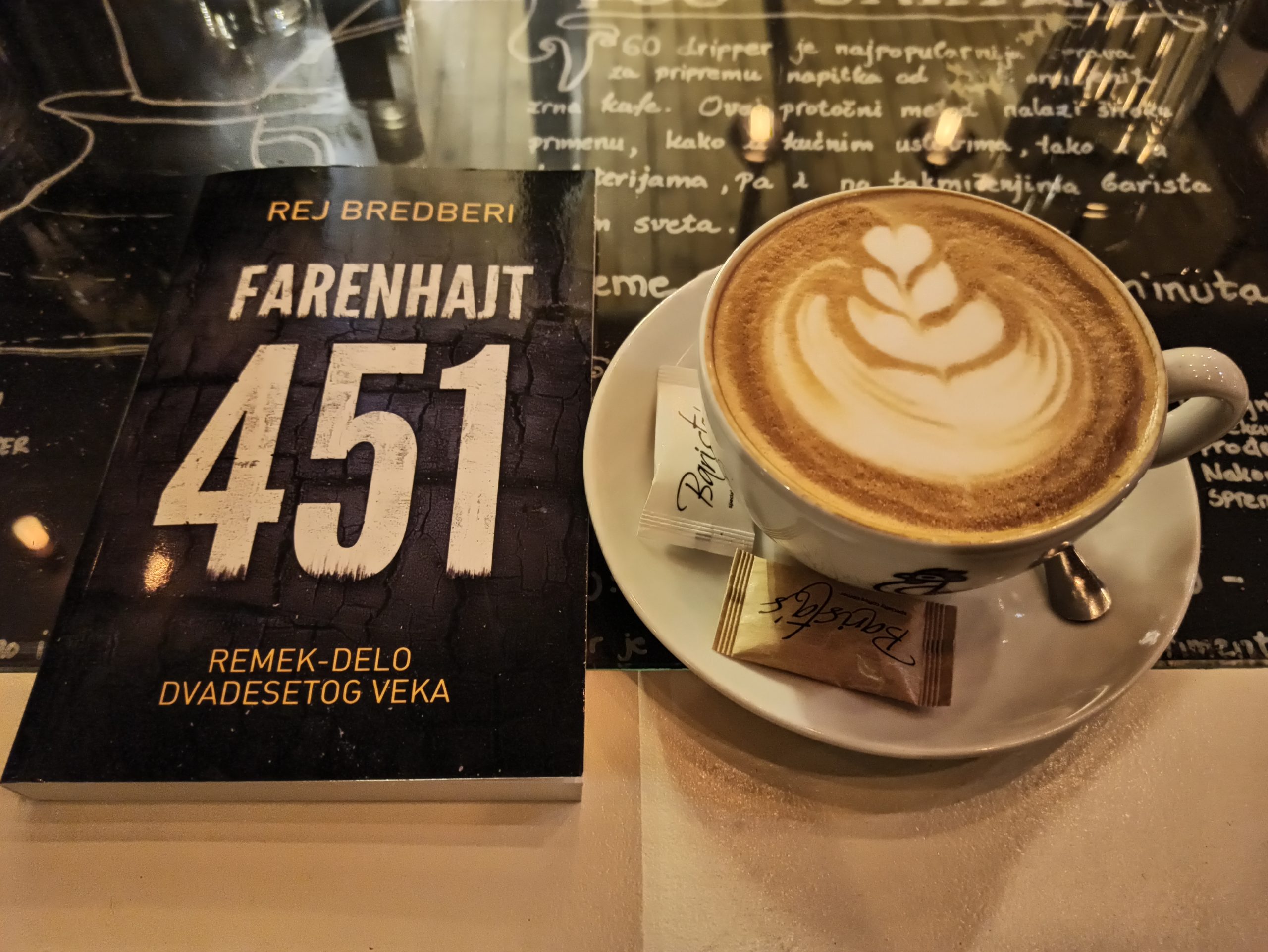
Fahrenheit 451
When I finished reading Ray Bradbury’s book, “Fahrenheit 451,” I wasn’t sure I could, like many, so easily award it the flattering title “masterpiece of the 20th century.” Does that mean the book is bad? Far from it! But for you to award a book such a title, several conditions need to be met, at least in my opinion.
Some might say I’m too strict with the late Bradbury and that I should take into account that the book originally appeared in 1953, but we know very well that the past (i.e., previous centuries, i.e., the “limitations” of the time) isn’t a relevant factor for the creation of excellent works.
However, where “Fahrenheit 451” definitely triumphs over millions of other literary works is the idea, i.e., the premise of the book.
Somewhere in (future) America, in the year of our Lord 2049 (one interesting fact: when the book originally appeared, the future was set many years earlier), Guy Montag is a proud firefighter. He saves cats and kittens from fires, has a brilliant smile and every year poses for the sexy firefighters calendar wearing only a helmet from his uniform, which women (for reasons unclear to us men, you know) sigh over, moan and scream like crazy…
…except that’s not the situation in 2049. Let’s start from the beginning…
Somewhere in (future) America, in the year… (we’ll fast forward)… is a proud firefighter. Like every firefighter, his basic task is to burn down houses (you read that right), if necessary with all the people in them (you read this right too), that hide books (yes, yes, you read this right too). Besides such an “interesting” occupation, our hero Guy is married (no children) and leads a quite routine life in that scre… um, strange future.
And so, one evening, our Guy is returning from work and meets his young neighbor Clarisse, whose open mind and quite liberal way of thinking both surprise and confuse him (considering the environment rigorously sanctions such a free way of thinking). However, Guy starts to become increasingly intrigued by Clarisse’s attitude toward life and people (being in the present moment, smelling a flower, observing stars, being open in communication, discovering details about her family), that he began to look forward to these meetings with his young neighbor. But if you expected adventures of a naughty neighbor and firefighter neighbor… I have to disappoint you, because Guy soon learns that Clarisse has disappeared and feels something isn’t right with her “disappearance.” And not just that. Clarisse has, consciously or unconsciously, put a “worm” in him. And that’s self-examination, his way of thinking and outlook on the world.
But life goes on… and so one evening, while preparing a house full of books for burning, two incredible things happened to Guy. First, he secretly took one book and hid it on himself (which is already a criminal offense, and the punishment is usually death). And second, the woman who lived there refused to leave her home, and set herself on fire along with all the books in front of the fireman. Shaken, Guy returns home, and then tries to find out from his wife Mildred if she heard what happened to Clarisse, to which she says she heard that Clarisse died in some accident, and her family moved away.
Guy feels that from everything happening, he’s not feeling well anymore and falls into bed, and thinks aloud about quitting being a firefighter, which terrifies his wife, who doesn’t want to be left without her TV family (more on that later).
As if the situation isn’t complicated enough, Guy gets a visit from his boss, Captain Beatty. This (seemingly measured but cunning) man seems to sense what could be the reason for Guy’s “illness,” so he slowly begins, as if casually, to talk about how and why books lost their value, how technological progress brought its advantages, how the role of firefighters changed over time and other “educational interesting facts”… and incidentally “reminded” Guy that any book found with a firefighter must be handed over within 24 hours, otherwise the book will be burned by colleagues… along with that firefighter’s house… and probably the firefighter himself.
Soon after, Guy realizes he can’t hide anymore, so he reveals to his wife that he’s been collecting and hiding books in their home for some time, and that they should start reading them, and see what thoughts are hidden in them. However, his wife isn’t at all thrilled with this idea and is afraid of the consequences of such action, and even more afraid of losing her lifestyle and her TV family. In translation, his Mildred is a lost cause.
Guy then remembered old Faber, a former literature professor (from the period when books weren’t banned) and decides to visit him and try to find out the real truth, what happened to books, and the world. Initially cautious and skeptical (after all, Guy is a firefighter), Professor Faber soon realizes that Guy is one of the rare people who has started to think with his own head and question the truth served to him… in other words, on the way to “seeing the light.” And there an alliance is formed that will change Guy Montag’s life from the root… and there will be a price he’ll have to pay for his choice…
I mentioned at the beginning that the biggest asset of the book “Fahrenheit 451” is the idea about what direction our society could end up going. The most devastating thing is that modern society has already deeply stepped into “Fahrenheit 451.” Media (in collusion with politicians) dominate, manipulate and brainwash the people, serve them cheap and low-quality entertainment and thereby distract their thoughts, censor freedom of thought, as well as creative and unconventional thinking (hence the burning of books), spread disinformation and… um, you get it (“By God, thin ice, you’re already entering my territory…” – note from subconscious). Sounds familiar? Don’t we already have a similar situation when it comes to media and their quality? By the way, in an old interview, Bradbury stated that he wrote “Fahrenheit 451,” not to predict the future (where for example books would be burned or people would live completely blinded and manipulated), but to prevent it.
In what direction modern society has been moving the last decade (“More like the last two-three decades…” – note from subconscious), one gets the impression that Bradbury predicted the future rather, unless people “wake up”… or better said, wise up… or rather said, start educating themselves?
Anyway, “Fahrenheit 451” hides several interesting concepts.
At one point I mentioned “TV family” (although it appears in only a couple of events, the significance of “TV family” is, in my opinion, so great that I must mention it). I have to tell you that, although this concept from the book’s description didn’t seem clearest to me, I got the impression it’s something quite disturbing, especially if we take this today’s world, where people (even without corona) have become quite alienated from each other (even within families themselves under the same roof) and turned more to forms of digital entertainment. “TV family” represents some concept where viewers have some kind of “live” interaction with… well… um… a bunch of fictional characters. You talk to these imaginary people, share your stories with them, follow their lives and similar… and your friends (like, two-three) can come to your place and participate together. And the more of those “TV walls” you have (which literally cover the entire wall… hence you know, bookshelves have no point), you can participate more in their lives (and it seems they in yours), which is like some… uh, premium subscription and privileges/bonuses that unlock.
Why is “TV family” so frightening here? For several reasons (let’s mention at least four). First, it serves as an element of (subtle) social control and creating obedience. Second, “TV family” creates the illusion that time spent with them is always ideal, which literally “drives” people to direct their emotions toward the virtual, because there everything is always great (a kind of drug), while your “real, actual family” isn’t always ideal. Third, you don’t think about whether everything is really okay with you and the world (for example, why don’t the Montags have children and are they aware that the population is decreasing, why can’t Mildred remember where she first met Guy, as well as whether they’re aware their country is on the verge of catastrophic war, which is served to the people as a “quick war” that will end in victory in 48 hours). And fourth, it serves as an escape from reality, and from yourself (Guy’s vision of Mildred’s drug overdose). And there are many more reasons.
In translation, imagine a perversely sick and stupid reality show (“That at least isn’t difficult” – note from subconscious), combined with a news program and who knows what, it’s interactive and you spend the entire blessed day in front of it (go through Netflix+HBO+Amazon Prime+DisneyPlus+video games+pornography+Kitchen24+TopShop+God-knows-what), where they constantly manipulate you, and you pay heavily for that service. And then that squared. I sincerely hope media moguls don’t read books and don’t get some sick ideas (though “Fahrenheit 451” has already been filmed, so my condolences to both my and future generations). Quite disturbing.
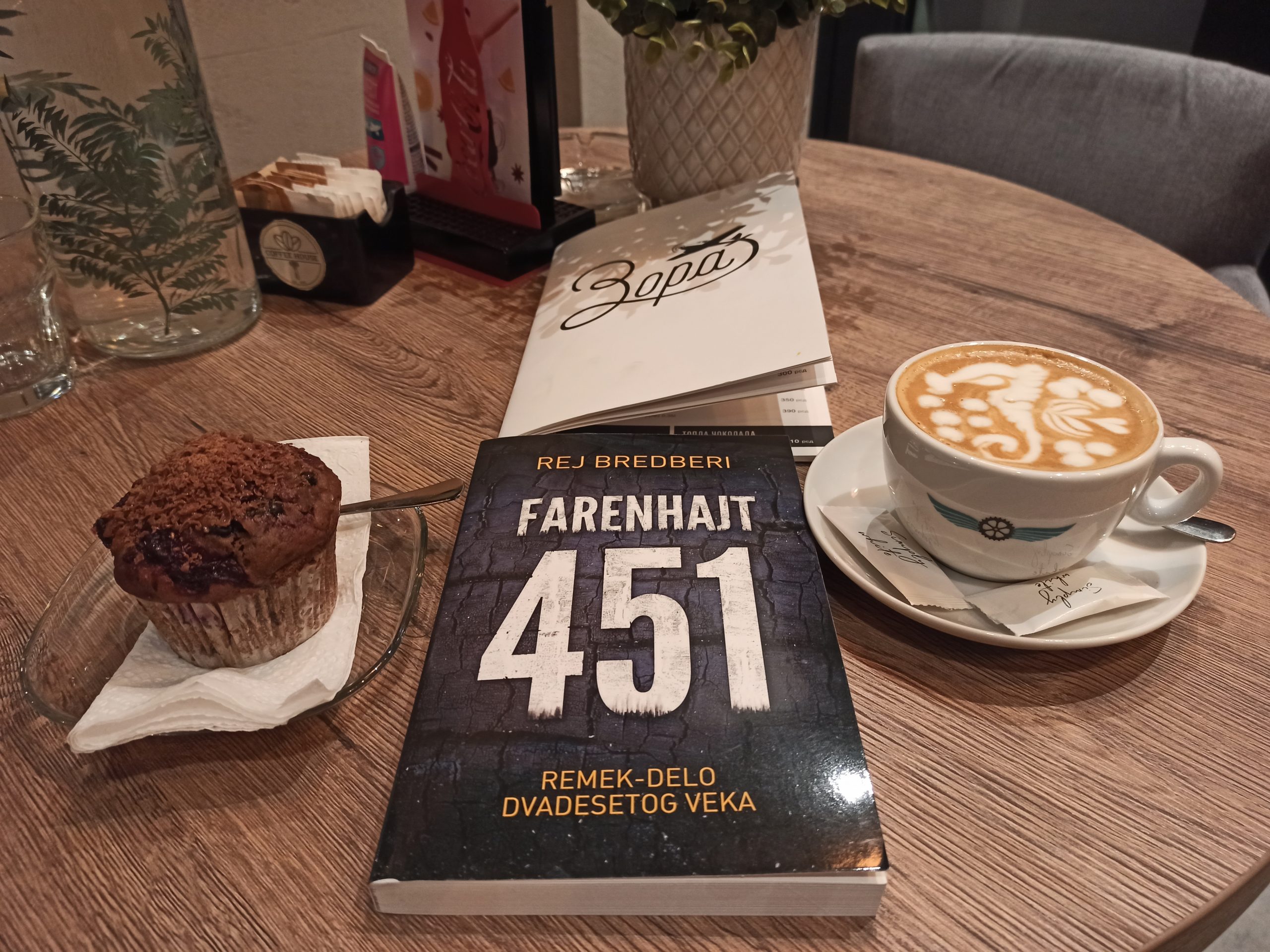
You know how (in our time) some fire stations have dogs that serve in searching for injured or fire victims? Well, in 2049 the cute dogs have been replaced with creepy mechanical dogs (who no longer search for fire victims) through whose bodies flow poison and electricity, who can smell tens of thousands of people and tirelessly search for them, and from their mouths can in a second shoot out some needle full of narcotics and on the spot incapacitate (and kill the victim), all accompanied by creepy growling. I mean, I’m really not freaked out by watching (and even yawn or sleep through) horror films (what vampires, aliens and predators :D), but because of my vivid imagination, I got a bit of chills when I imagined what kind of mechanical beasts these could be. Of course, mechanical beasts actually symbolize control of the people by the authorities, as well as the possibility of how technology can become twisted and dangerous.
I believe you’ll find it interesting to try to interpret the psychological profiles of characters from this book yourself, especially Guy Montag, Mildred, Captain Beatty, Clarisse and Granger. You’ll see what I’m talking about…
“Fahrenheit 451” has three chapters, i.e., parts (“The Hearth and the Salamander,” “The Sieve and the Sand” and “Burning Bright”), as well as an “Afterword” (short but interesting). The book has about 200 pages and can be read relatively quickly. Though I have to admit, my reading went slower, somehow, as if the writing style and way the plot unfolds didn’t particularly “suit” me. Of course, this is just a subjective feeling, but it surprised me too, considering the interesting topic, that I didn’t read it in one go, but often took breaks of several days between readings. Who knows…
This work by Ray Bradbury is often quoted and is considered to have given quite a bit of inspiration to film cinematography, especially for futuristic (sci-fi) films. It immediately struck me how much the film “Equilibrium” was inspired by this book, which the director himself confirmed (and only now do I see how really short a review I wrote for one of my favorite films -.-).
I haven’t (yet) seen film adaptations of this novel, but I’ve heard mixed opinions (it seems everyone expected much more from the films).

Interesting fact: for the novel’s title, Ray Bradbury got inspiration from information that at somewhere around 451 Fahrenheit (about 232 degrees Celsius) paper begins to burn by itself (of course, this number isn’t absolute and varies… because it also depends on the type of paper :D).
Interesting fact 2: although considered a classic, the book throughout its history has also been quite contested and criticized.
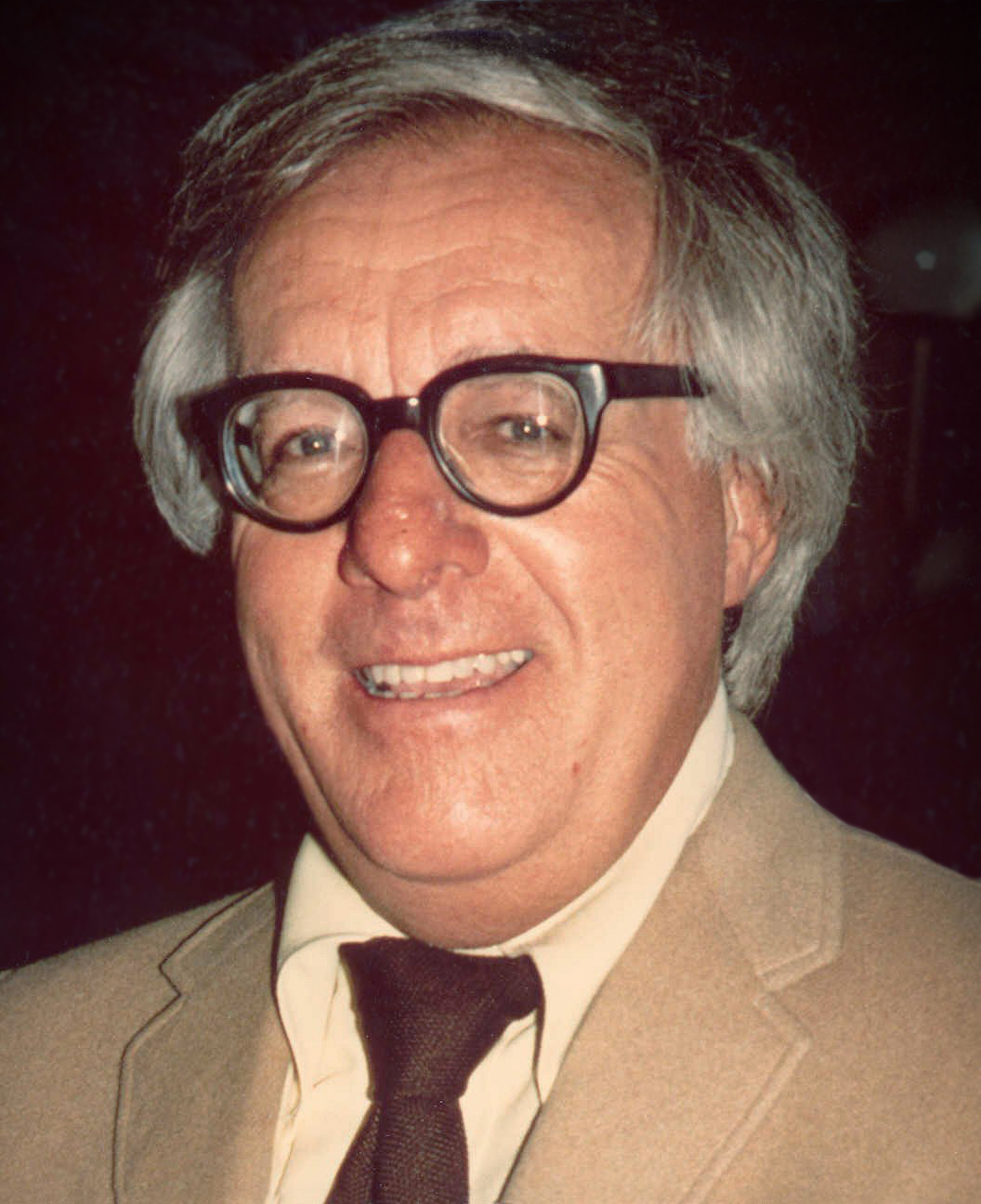
All in all, “Fahrenheit 451” isn’t a masterpiece to me, but it’s definitely a classic with its idea. I think it would be a shame if you missed reading it and then judging where we are in relation to that (hopefully alternative) world from 2049.
And you, dear reader, does it seem to you that we’re already living some version of “Fahrenheit”? 🙂
Author’s website
Book price: Laguna | Delfi | Vulkan | Makart
Ratings (and purchase) on foreign sites: Goodreads | Amazon | Bookdepository | Audible | Waterstones | Penguin Random House