
Tesla: Inventor of the Modern Era
“I don’t regret that others stole my ideas, but I regret they don’t have their own” – Nikola Tesla
When it comes to Nikola Tesla, we can all agree he had a very interesting life as a scientist. A man who was (and for many things still is) ahead of his time. When we read about his life from various sources, we often can’t be sure what’s reality and what’s myth.
We like to claim him in these areas (although, objectively, it was long ago established where he was born and what nationality he was, what citizenships he had and so on)… but people around him also liked to do that with his inventions.
However, if we tried to eliminate the “magical element” surrounding his life, who then was Nikola Tesla really? How did this dreamer and visionary cope with life?
Perhaps Richard Munson’s excellent biography “Tesla: Inventor of the Modern” will help us with that.
The author obviously decided to gather all possible information about this great scientist – from works of other biographers, records from many libraries to research centers (from America to Serbia), and then nicely shape everything into one very interesting story about Nikola Tesla’s life.
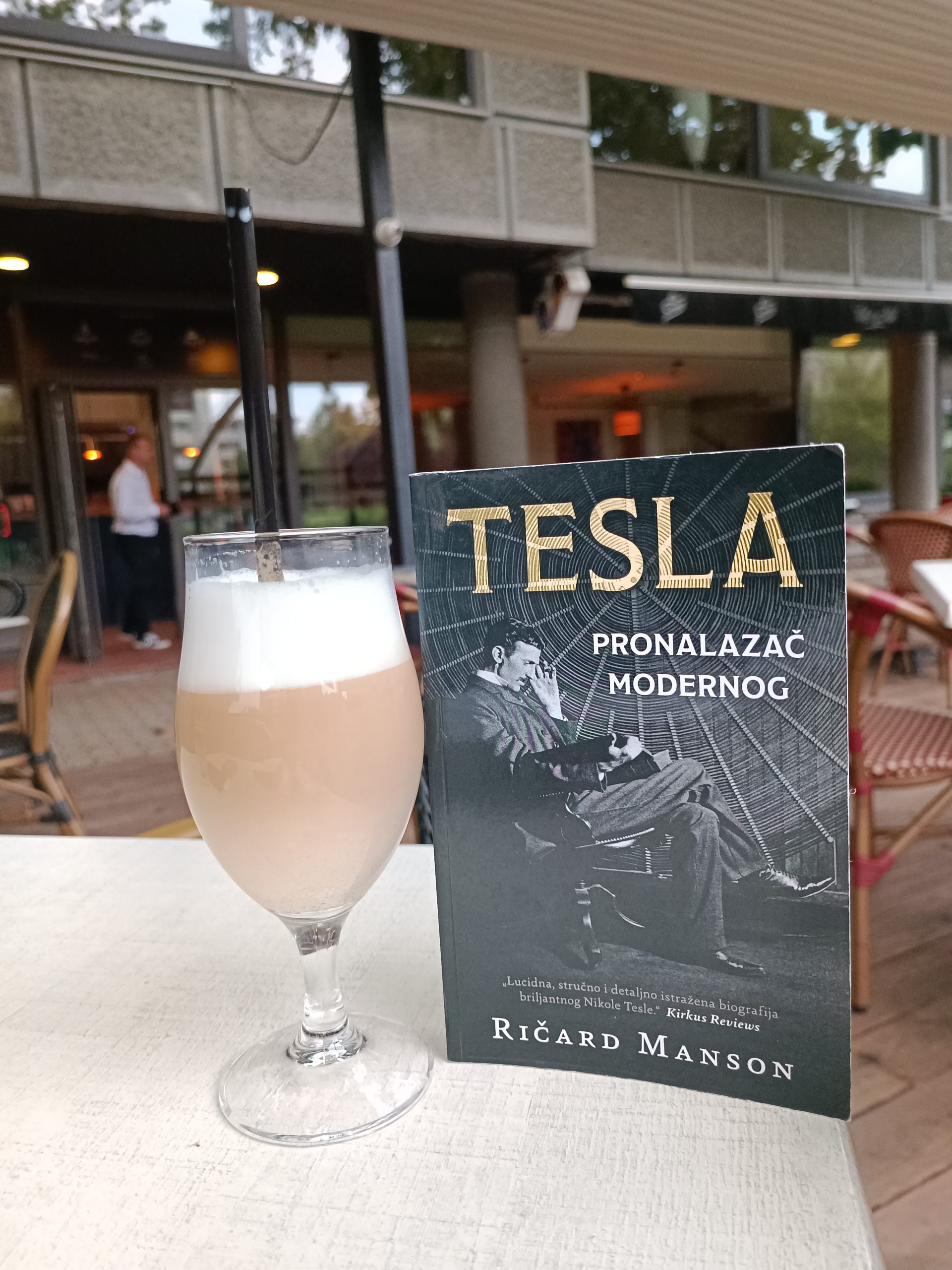
The work “Tesla: Inventor of the Modern” begins from the moment of his birth (exactly at midnight between July 9th and 10th, 1856, in the middle of great thunder), where we meet members of his family, with greatest focus on his father Milutin (very educated and disciplined priest, and also writer, poet and philosopher) and mother Đuka (though she didn’t know how to read and write, she was very intelligent, tireless worker, and herself inventor of many practical tools for everyday work). Of five children they had, the impression is that the biggest favorite was Nikola’s older brother Dane, who was very gifted. He died at 12 years old (Tesla was then only seven) and his death “hung like a cloud” over the family his whole life (more on this later why this is important, to understand Tesla as a personality).
One of the important motives (which ran through Tesla’s entire life) that perhaps most stimulated Tesla’s creative side was isolation. The remote areas where he lived stimulated Tesla to better observe nature and people around him and to start researching and experimenting.
Besides struggling with his thoughts, Tesla also struggled with health and several times his life was seriously threatened (which also led to his fear of germs, which is why throughout life he avoided physical contact with people in any form).
Tesla also had to struggle with his father about his future. Milutin wanted his son to follow the priestly path, but Tesla was persistent to follow the engineering path, so he found himself in Graz and enrolled in Polytechnic School, where he stood out as a very talented and diligent student. And later his path led him to Budapest, because he heard that “Thomas Edison is building a telephone exchange” there.
And from there history begins…
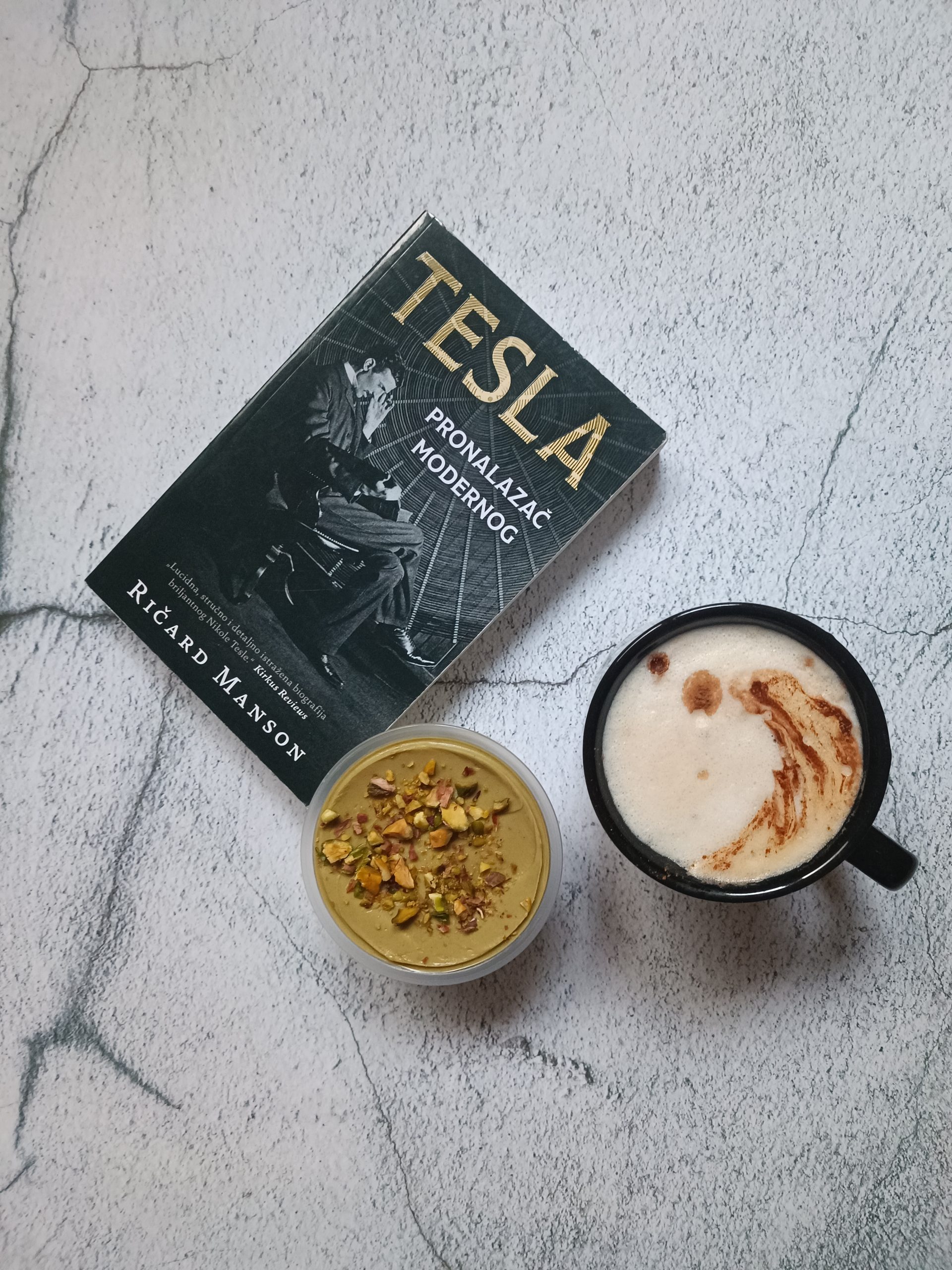
In 1884, Nikola Tesla steps on New York soil, and his life as a scientist (and person) will never be the same.
The biography “Tesla: Inventor of the Modern” will lead us in a very dynamic way through Tesla’s creative process. We’ll see how he conceived prototypes of various devices in his head, as well as what direction the idea of electricity and current led him, which led to creation of the now famous “alternating current,” which is why his whole life he was in conflict with Edison and his followers in the famous “war of currents.”
We’ll learn what all devices he created during life and how they found application (or will yet find) in our everyday life.
We’ll see what relationships he had with people during his life and how they defined him, from Thomas “direct current” Edison, gifted engineer Antoine Szigeti, inventor and businessman Westinghouse (who was perhaps Tesla’s greatest ally during his life), refined couple Robert and Katharine Johnson (who remained in good relations with Tesla until the end of life), Marconi, Mark Twain, Mihajlo Pupin, J.P. Morgan and many other figures of that era.
The biography will reveal to us how scientists, journalists (as well as broad masses) experienced Tesla’s demonstrations of experiments (though introverted by nature, Tesla was incredibly talented and charismatic entertainer), as well as how he was experienced by many professional journals.
We’ll see Tesla from rich man (who, again, spent almost all money on science and experiments) to almost, well, beggar’s staff.
And so all the way to his death. He died in his sleep in room 3327 (divisible by three, of course) of the “New Yorker” hotel on (Serbian) Christmas 1943, in his 87th year of life.
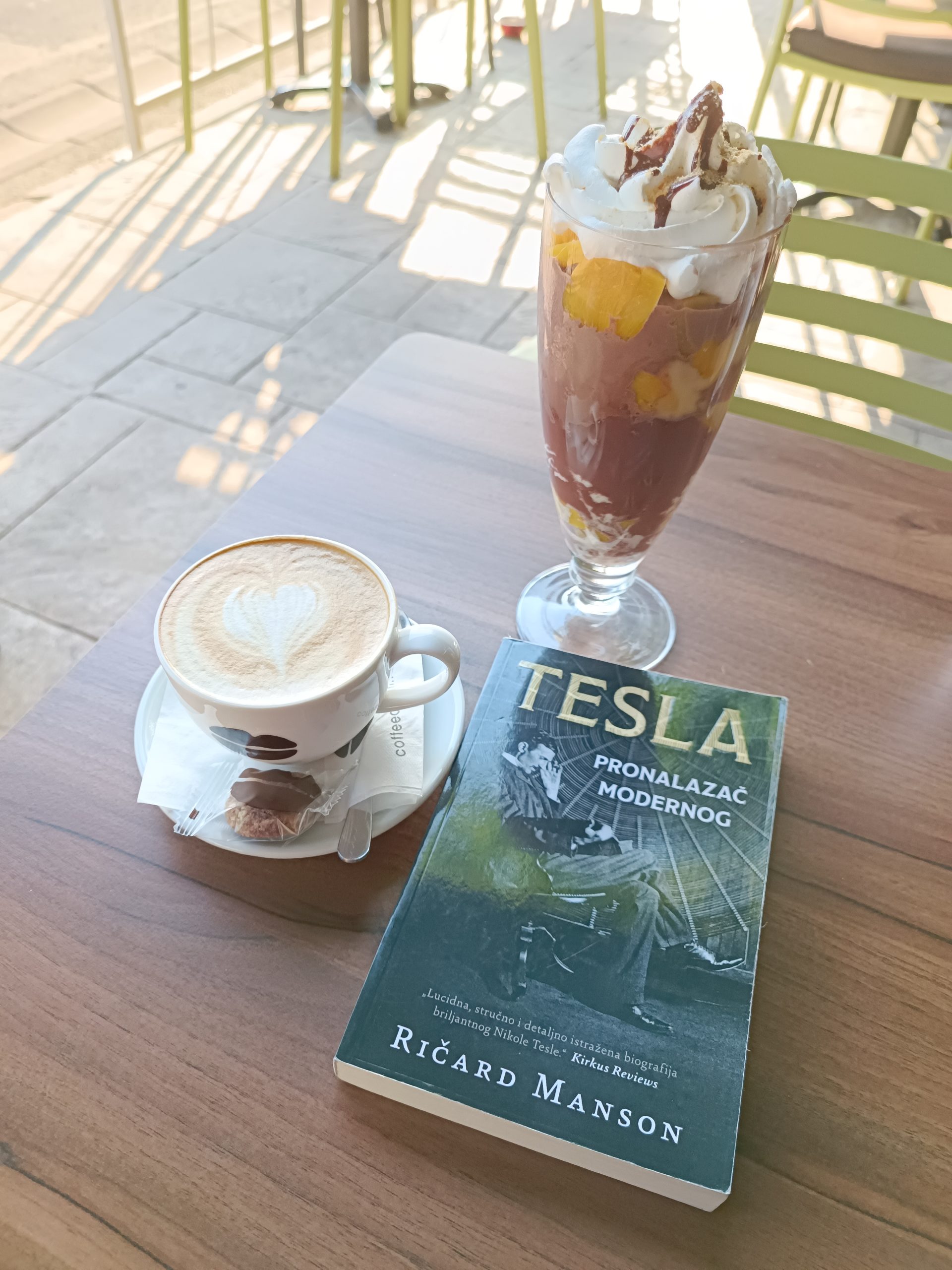
What makes the biography “Tesla: Inventor of the Modern” incredibly interesting and dynamic (I’m not kidding at all, this isn’t some dry biography) is a pile of information and details you perhaps didn’t know (or forgot) about Tesla, which will prompt you to think about what kind of man he really was.
Various Tesla statements (both in public and addressed to certain people) in oral and written form, anecdotes, situations when he gambled and was a passionate smoker (and how he conquered many urges with willpower, and especially which book greatly influenced him), habits and rituals he had while working in laboratories or living in hotels.
Then there’s also Tesla’s obsession with wireless communication and wireless energy transmission, i.e., “energy for all”… which apparently didn’t appeal to wealthy individuals (it’s interesting to debate whether J.P. Morgan at one point denied Tesla finances because he didn’t honor the initial agreement on what he should create for the invested money, but invested it in his experiments… or because he was afraid Tesla was on the path to creating something with his experiments that would bring many corporations, including his own, to bankruptcy). Likewise, we’ll see that in old age Tesla was also developing technologies that could stop, i.e., make war obsolete (e.g., “death ray” which every country would have), as well as for potential communication with beings from other planets. And we shouldn’t forget that Tesla is considered the true inventor of radio (which was confirmed by the U.S. Supreme Court eight months after his death) and “father of robotics.”
The biography will touch on many of Tesla’s unthinking (not to say stupid) business moves that cost him opportunities to be a very rich man (because he needed money to finance his experiments), for which you’re not sure whether he acted in naive idealism (or ignorance) that people will willingly give him money themselves because he creates projects that help humanity… or because he was simply terribly incompetent businessman.
We’ll see how Tesla knew how to be a very contradictory man in his statements (especially in old age). He could be very charming, and sometimes very clumsy… and apparently also knew how to occasionally exaggerate some things. And sometimes to swallow pride and bury “hatchets.”
The question also arises whether Tesla was perhaps “too much a poet and visionary” and “so ahead of his time” (as chapter titles of the biography read) and devoted too much time to constructing machines and conducting experiments in his head, while many other researchers and engineers worked in practice and surpassed Tesla. Some think perhaps Tesla promised too much, or was simply very slow in materializing his ideas. And some simply think he was a “prophet of the future.”
Simply, “Tesla: Inventor of the Modern” has too many interesting and intriguing information to all fit in this review, which is why I leave it to you to definitely read this biography.
Ah, yes… I remained indebted for one interesting fact from the beginning of the review. You perhaps didn’t know, but Tesla especially as a young man grew up with very little self-confidence. His brother Dane’s death greatly influenced this, from whose death his parents (and especially father Milutin) never recovered. Of course, no parent can ever recover from a child’s death, but here we’re talking about parents glorifying the potential of their deceased son so much (though he truly had it) that whatever Tesla did was never enough. But later he fought with this with willpower. So if you ever feel discouraged or your self-confidence has fallen, remember that even the always (excessively) confident Tesla experienced this, and because of his parents… and fought with it. And then surely you can too.
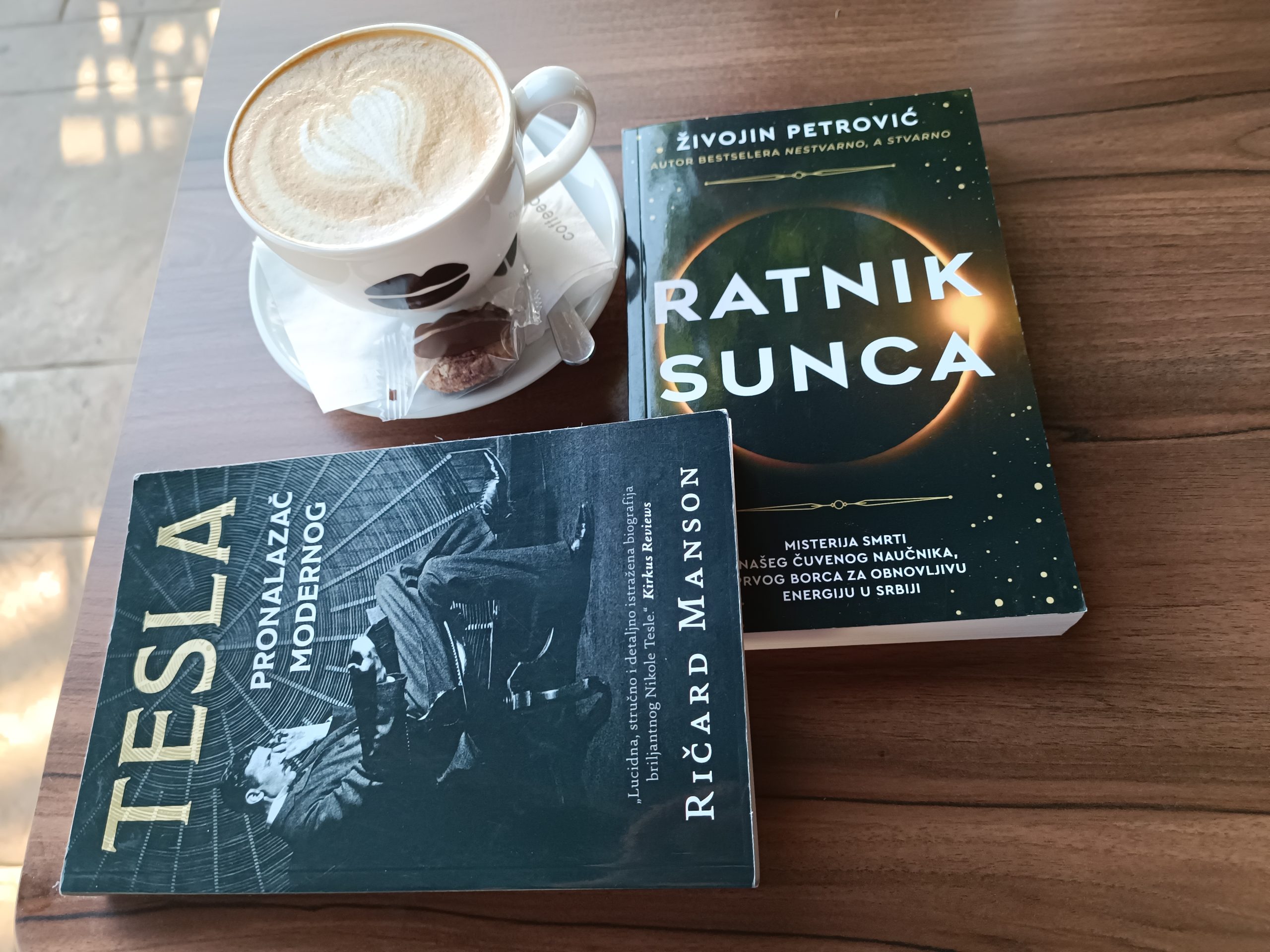
And one more interesting fact that shows how wrong parental approach can cost a lot. In his second year of studies, Tesla decided to be an excellent student and “buckle down.” When he came to his parents at the end of the academic year, instead of (expected) praise, father Milutin criticized his achievements and work habits. Tesla, many years later, discovered a box with his father’s papers, and in it letters from several professors with recommendations that Tesla should rest more and avoid overexertion. This so broke Tesla and destroyed his ambitions that in his third year of studies he started going “wild” and turned to gambling, and didn’t attend lectures, which caused him to lose his scholarship (the irony is this later broke Milutin’s heart, which is why he became seriously ill and later died. Unlike him, mother Đuka wisely knew how to deal with Tesla and with one action led Tesla to rein in his vice with willpower).
And finally, one more interesting fact. Tesla’s interest in electricity wasn’t ignited by school or books, but by his cat… who was called Cat. This discovery of electricity from petting Cat (and I’m aware how strange this sounds when read), even disturbed Tesla’s (always) curious mother, who told him “Stop playing with that cat, you’ll start a fire.”
And there you have it, the biography “Tesla: Inventor of the Modern Era” has only 320 pages, and I haven’t revealed even a fraction of the interesting facts in it. And considering how nicely and dynamically it’s written, it reads very easily, you won’t even notice how time flies with it.
Absolute recommendation from me and surely one of the better biographies I’ve read! 🙂
And you, dear reader, do you know who Tesla’s great love was? 🙂
Author’s website
Book price: Laguna | Delfi | Vulkan | Makart
Ratings (and purchase) on foreign sites: Goodreads | Amazon | Audible | Waterstones | Barnes & Noble