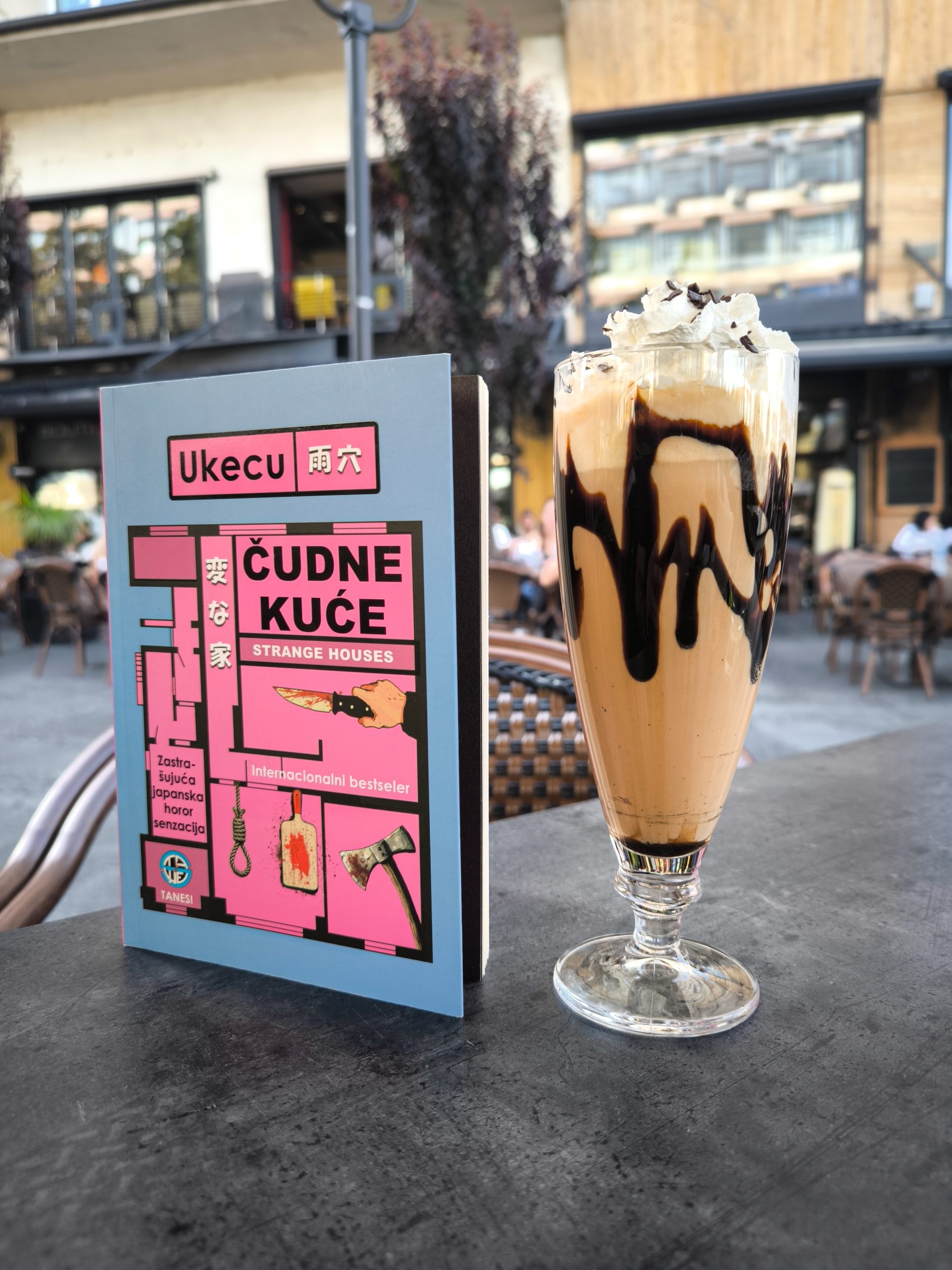




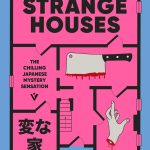
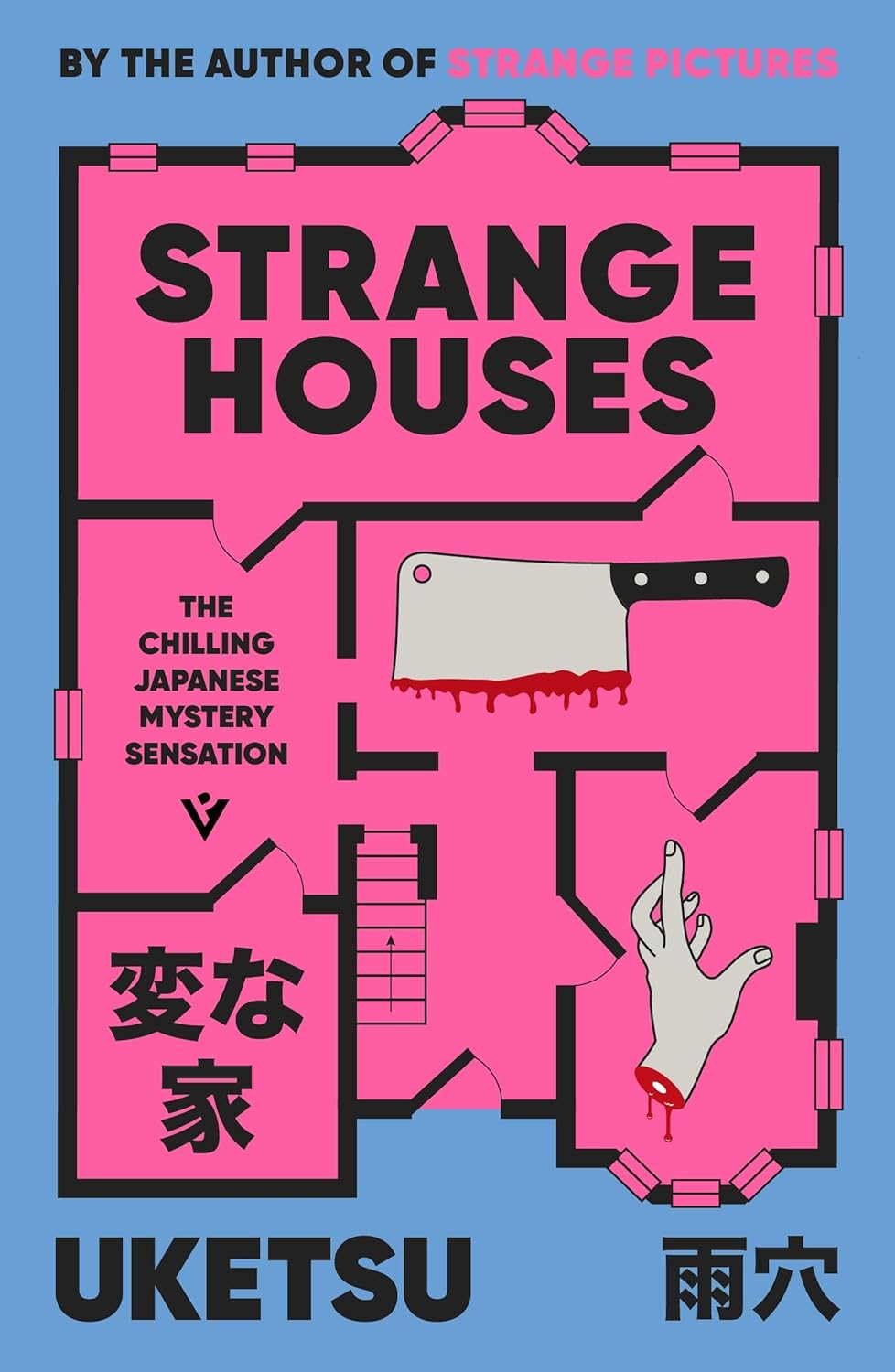
- Uketsu’s “Strange Houses” is an atypical blend of crime, mystery, and horror, told almost entirely through dialogue, theories, and the analysis of unusual house plans
- The novel reads quickly, holds your attention easily, and draws the reader into an investigation whose dark twists aren’t easily predictable, although the second half demands a bit more concentration
- It’s not a masterpiece, but it is a pleasant literary refreshment worth the time of fans of Japanese authors and unconventional mysteries
“Blood will call forth blood. The stones moved, and the trees spoke.” — William Shakespeare (“Macbeth”)
Uketsu has, in a short time, become a small (internet) sensation, and not only in Japan. He is a YouTuber, writer, and musician whose identity is unknown (allegedly only about 30 people know it), because in his videos he always appears with a white (and somewhat creepy) mask that induces a (mild) unease. And it was precisely with strange videos that made viewers uncomfortable that he gradually gained popularity.
As a writer, he gained popularity with his crime-mystery-horror books, where he also inserts various diagrams, sketches, and images that are part of the narrative of his works.
Before us is his first book, “Strange Houses,” published in 2021 in Japan, and translated into English in 2025. That is, for the rest of the world.
The main character is a freelance journalist and specialist in the occult, who in the book is simply called… the Author. And one day our Author is called by an acquaintance of his who asks for his opinion about buying a house… primarily because he’s troubled by an enigmatic space on the ground floor of the house, between the kitchen and the living room.
This started to nag at our Author, so he decided to now call an acquaintance of his own, Kurihara, who is a designer at a large architecture firm, and forwarded him the plan of the house with the enigmatic space.
What was supposed to turn into a casual chat between the Author and Kurihara about the potential purpose of the mysterious space became a theorizing about the generally very unusual and not-quite-sensible layout of the rooms in the whole house, where everything seemed to revolve precisely around that small space, which led the two acquaintances in a rather unusual and dark direction of theorizing — perhaps a married couple with a child once lived there… and that this family killed their guests, and that this small enigmatic space served for moving unhindered through the rooms of the house.
The Author was nagged by all of this, but it was still in the domain of theorizing. But the news that appeared, that in Tokyo the body of a man missing his left hand had been found, now confused the Author. To “expel” this bother from his system, the newspaper’s editor suggested to the Author that he simply write an article with his musings.
What the Author couldn’t have assumed is that someone would read his article more carefully, which is why he soon received an email from a reader (Yuzuki) who thinks she might have some information regarding that house.
The meeting between the Author and Yuzuki went unexpectedly… because she said she suspects that the former residents of that house killed her husband.
And suddenly, this turns into an investigation by the Author, Yuzuki, and Kurihara, and a theorizing and brainstorming about what happened to Yuzuki’s husband, as well as the origin of the mysterious married couple and their child… or maybe there was more than one child…
And what the answer behind this mystery and potential horror is, you’ll find out with Uketsu’s “Strange Houses.”
This is indeed a strange novel/novella. Almost the entire thing is written in the form of dialogue (and trialogue) whose central figure is the Author (along with Kurihara and Yuzuki), the observing and analyzing of plans and sketches of particular houses (as you can see in the images… if you buy the book 😁), as they try to uncover the origin and history of the family of murderers, the significance of the mysterious left hand, how many children there had to be in such families (you read that right), as well as whether all of this has some occult nature from some earlier times. At the end of the day, are the house plans even accurate, given their illogicalities?
“Strange Houses” places the reader (along with the protagonists) in the role of a detective, but not in the classic sense that you have to notice potential clues in the house plans (although you’re welcome to try), but rather in the style of film thrillers and horrors, where unexpected (as well as tense and dark) details about the mysterious family are slowly revealed to the reader/viewer. And it holds your attention, for the simple reason that the chances are very small that you’ll deduce what this trio will uncover in their investigation, so you too become interested to see what the book’s author envisioned as the culmination and epilogue of the investigation.
In principle, the book reads very quickly and isn’t tiring to follow, because the protagonists make an effort to, even though they theorize a lot, somehow, how should I put it, rationalize and meaningfully present their theories (and at moments even flights of fancy). The only place where the reader might have to focus a bit is the second half of the book, but nothing overly complicated.
Although it has 178 pages, part of the book “goes” to the house plans, and the dialogues themselves read quickly, so this is a book that can be finished in a day or two at a relaxed reading pace.
An interesting detail is that Uketsu once stated that the reason he wrote the novel in the style he did… is that he doesn’t have the skill to write a classic novel. 😅
However, it’s obvious that this style of writing and hybrid genre found its audience. In Japan alone, this author’s books (so far he’s written four, and we can grant him a writer’s “tenure” from 2021 when this book came out) have sold over three million copies, and with translation into other languages as well, that figure is probably much higher.
As I said, “Strange Houses” isn’t a masterpiece, but it’s a pleasant refreshment in the literary world. I’ll certainly read his next book, “Strange Pictures,” on some occasion.
And you, my dear reader… when was the last time you read a more unusual book? 😊
Rating: 3.5/5 ☕
Worth your time if you like: atypical crime-thrillers and horror mysteries, and Japanese authors in general