






The Boy in the Striped Pyjamas – A story that breaks your heart without a single drop of blood
It’s never easy when you pick up books about World War II, especially those that touch on the Holocaust. Somehow you’re not quite convinced that there will be (at least some semblance of) a happy ending somewhere in there, although you hope for it in your heart. However, no matter how difficult the theme, there are also some touching moments that make your breath catch.
What’s interesting about this book is that it’s one of the books I read fastest in recent times. It’s also interesting that this is one of the rare books where I felt a mild aversion toward the main character, even though he himself isn’t to blame. The main character is only nine years old! Don’t get me wrong, I really love children and have a good relationship with them, but for this little boy, some stars have aligned that don’t work in his favor.
Meet nine-year-old Bruno. He lives in Berlin with his mom and dad and his sister Gretel who is 12 years old (about whom Bruno often says she’s “a hopeless case”). He lives in a house that has five floors, they have servants (among whom little Bruno has the best relationship with the maid Maria). Bruno lives a fairly comfortable life and has never been hungry or thirsty. He also has three good friends from school. He wants to be an explorer when he grows up… or he could be a soldier like his father. He doesn’t like history, but he loves literature. By the way, his father was relatively recently promoted to commandant in the army.
However, Bruno’s life changes radically when he has to move from Berlin with his family. Namely, on one occasion his parents had the Fury and a very beautiful aunt as dinner guests who was kind to Bruno and Gretel, however, they had to go to their rooms afterward and couldn’t attend the dinner. Shortly after that, they had to move, because he got a big promotion then and it wouldn’t make sense for father to move to another city and be lonely, right?
And so they moved to “Out-With”.
By the way, the year is 1943.
You can already sense which direction this is going, right? I’ll just “throw in” that little Bruno doesn’t know how to properly pronounce the name of the man he calls the Fury, and he doesn’t know how to properly pronounce the name of the place they’ve come to either.
Little Bruno doesn’t like the place he’s come to, because his friends aren’t there, some soldiers are constantly hanging around who are always visiting his father (especially Lieutenant Kotler, in front of whom Gretel constantly smiles and twirls her curls, and it seems his mother finds him charming too), of the servants he knows only Maria is there, the house is “only” three floors and there are no others nearby and, all in all, he hopes they won’t stay here long.
However, what caught Bruno’s attention is that not far from his house there’s some kind of fence, and that on the other side of that fence some people live. And because of that, he decided that, following the example of explorers he admires, he would discover who these people are. And so one day he went alone to the fence and started walking along it. He found it strange that everyone was dressed in the same (and dirty) striped pajamas, and they all looked very thin and sad (unlike some of the German soldiers, who seemed to be in good spirits). And so on that walk along the fence, Bruno comes across (on the other side of the fence) a small thin person. A boy in striped pajamas sitting on the ground, who is, it seems, his age.
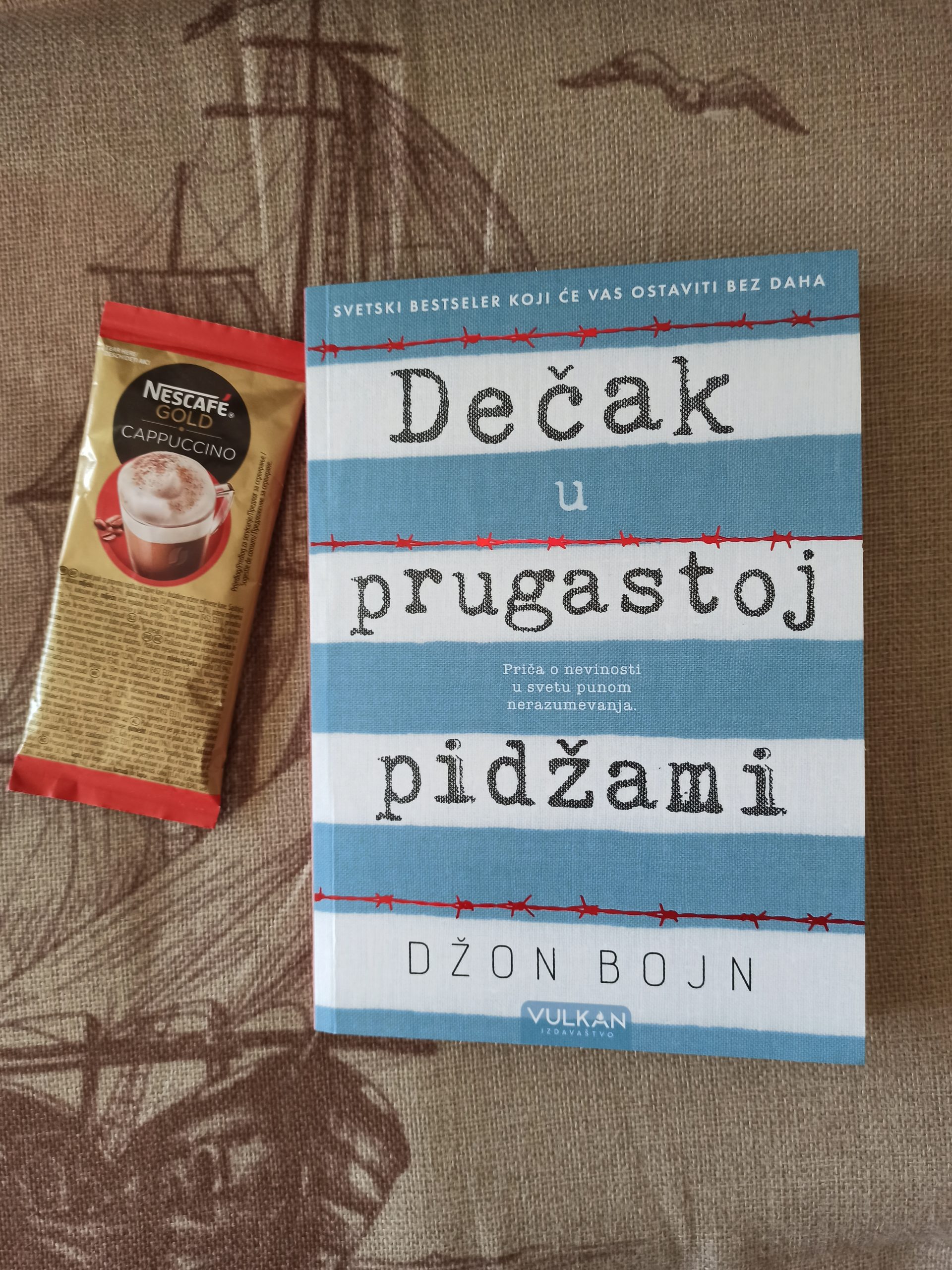
And so Bruno and Shmuel met. Bruno visited him almost every day, so they became relatively good friends (although they couldn’t play, because each had to stay on his side of the fence). And somehow Bruno’s life became more bearable. However, time flew by relatively quickly in Out-With, so the family was supposed to return to Berlin. Bruno was very sad because of this. And Shmuel was very sad too, because, besides Bruno leaving, he now can’t find his father. And so an agreement was made between two friends that, before Bruno’s departure, they would discover together where Shmuel’s father is, and thus have one adventure of their own to remember.
Ugh, if this doesn’t seem too serious to you, you’ll see how you’ll be swallowing hard on the last ten pages of the book.
Oh, my Bruno… I’m trying to remember myself when I was nine years old. I’m not saying I was an overly smart child who understood what was happening around me, I was certainly, like a good portion of children, a bit spoiled too. But dude, I don’t remember being so sheltered from life that I couldn’t understand that there’s a war, that all children aren’t always well-fed or don’t have toys or a warm bed and that the atmosphere isn’t always cheerful everywhere (people from these parts definitely know that). But Bruno seems like he’s been living under a rock or came from the village of Badenschwitzenmitzenburg, where all 108 inhabitants live happily in big houses and have servants. However, everything Bruno says or thinks has that pure childlike innocence and you don’t feel such spoiledness, so because of that you have mixed feelings about this kid. In fact, you’ll often have the feeling that you’d most like to slap your forehead when you hear everything Bruno says (with the comment “I can’t believe he said that”). And yet, maybe the writer’s intention was to create such a child, who has no awareness of what’s happening around him, so often seems to have no feelings or tact when he misinterprets things that are painful and sensitive. I don’t know, I’m not smart enough to say.
The central events revolve around Bruno and Shmuel’s conversations. How they grew up in different environments, lived their lives (and how Shmuel’s life took a drastic turn, which Bruno can’t understand). In fact, it seems that one of the main motifs of the novel (at least that’s how I experienced it) is Bruno’s lack of understanding that the world doesn’t function the same for everyone and that things aren’t at all how they appear. For example, Bruno doesn’t understand why on the other side of the fence children don’t play, when there are so many of them (and he’s practically alone in the house without company), why everyone is dressed the same, don’t those on the other side of the fence have a market, cafés… why is Shmuel so happy when Bruno brings him pieces of bread or cake crumbs (of which Bruno knows he “pockets” a little, because he gets hungry by the time he reaches the fence), why can’t they play together… even things they agree they don’t like (like Lieutenant Kotler) have different perspectives on why they don’t like them. In other words, Bruno has absolutely no idea that on the other side of the fence is a concentration camp where Jews are housed.
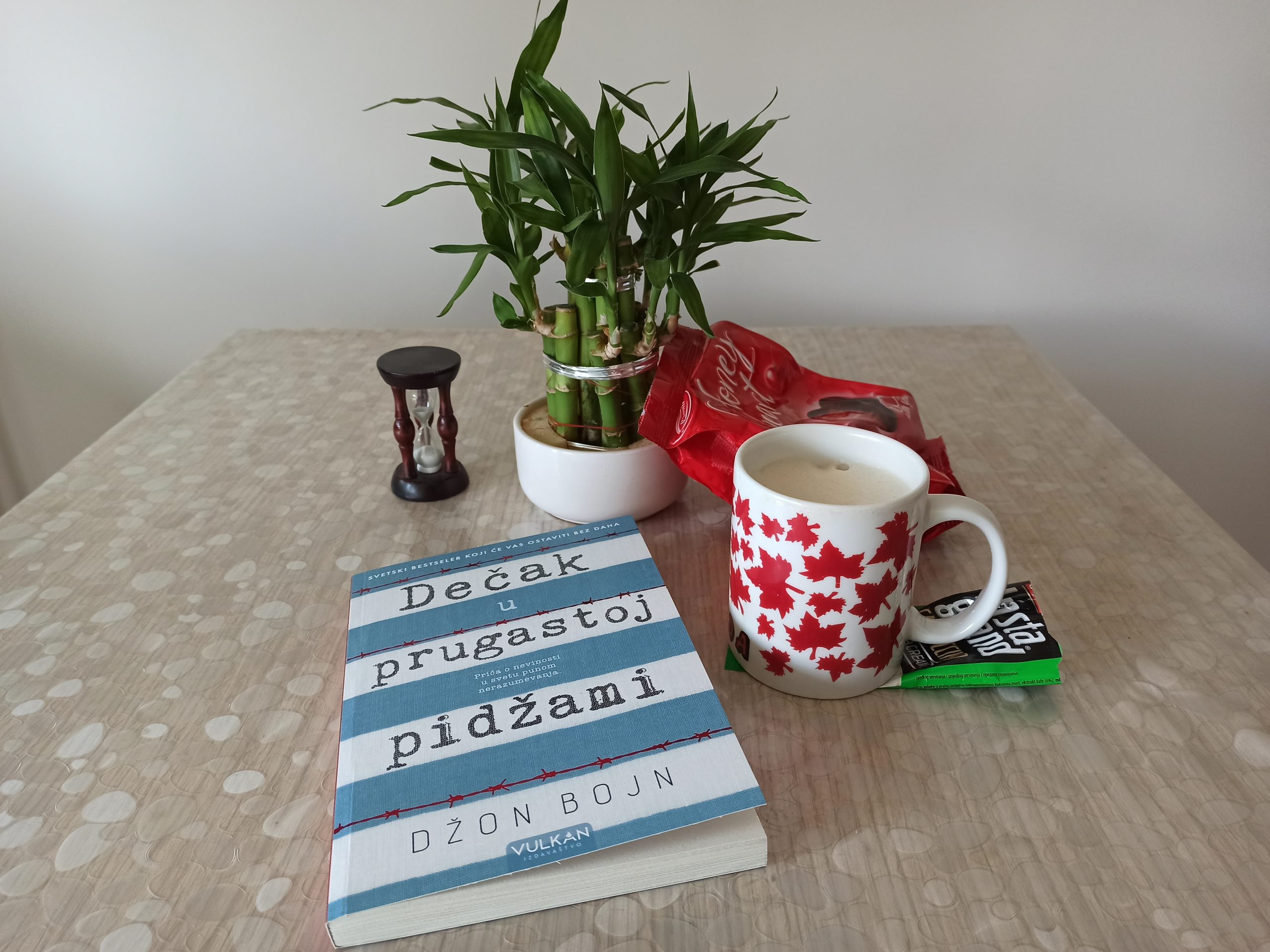
One of the novel’s motifs is also family relationships, i.e., Bruno’s relationship with other people. He’s at war with his sister (Gretel constantly nags him, but considering she’s 12 years old and acts like a pest… it must be puberty hitting her :D), he has a normal relationship with his mother, he greatly admires his father (but is also a little afraid of him), he occasionally talks with the maid Maria about various topics (which Maria has trouble answering for many reasons), he has a decent relationship with the other servant Pavel (though, for example, he doesn’t understand why they say Pavel is a doctor but works as a servant and cook for them), he can’t stand Lieutenant Kotler (and doesn’t understand why his mother likes him). There are also some other relationships where little Bruno isn’t a direct participant, but he doesn’t understand how adults think.
All in all, you shouldn’t be surprised if little Bruno annoys you all the time with his overly naive, innocent and sincere behavior. Because that same behavior will “win you over” in the end in the last chapter, when you see how he is… well, let that remain a secret for those who haven’t read the novel yet.
How the relationship between Bruno and Shmuel will continue to develop, as well as the other participants in the events, and in which direction life will take them, you’ll find out if you read the novel “The Boy in the Striped Pyjamas” (and if you read it, you’ll hate me for this sentence).
The novel isn’t at all tiring to read, especially since the intention is to tell events as a nine-year-old sees them. Don’t let these 200 pages fool you, “The Boy in the Striped Pyjamas” can be read in one afternoon, you’ll see for yourself why.
The genre could be classified as “fictional Holocaust drama” (I don’t know a better description). When such a book is written, it will definitely not pass without controversy. So it was with this novel. There are many (historical and technical) inconsistencies for which this book has been challenged, but it has also been praised for reminding us not to forget the Holocaust. But again, if you were to think that this is a book that children should read to understand what was happening then, I think that would be a big mistake, and they would misinterpret many things. That’s why this book is definitely more for adults who have already encountered information about this period, so they know what was really happening.
But “The Boy in the Striped Pyjamas” is a work that will definitely not leave you indifferent. 🙂
And you, dear reader… ugh, I don’t know what to ask you, how did you feel after finishing the last chapter?
Book price: Delfi | Vulkan | Makart | Knjižara Sigma
Ratings (and purchase) on foreign sites: Goodreads | Amazon | Bookdepository | Audible | Waterstones | Penguin Random House