





The Briefcase
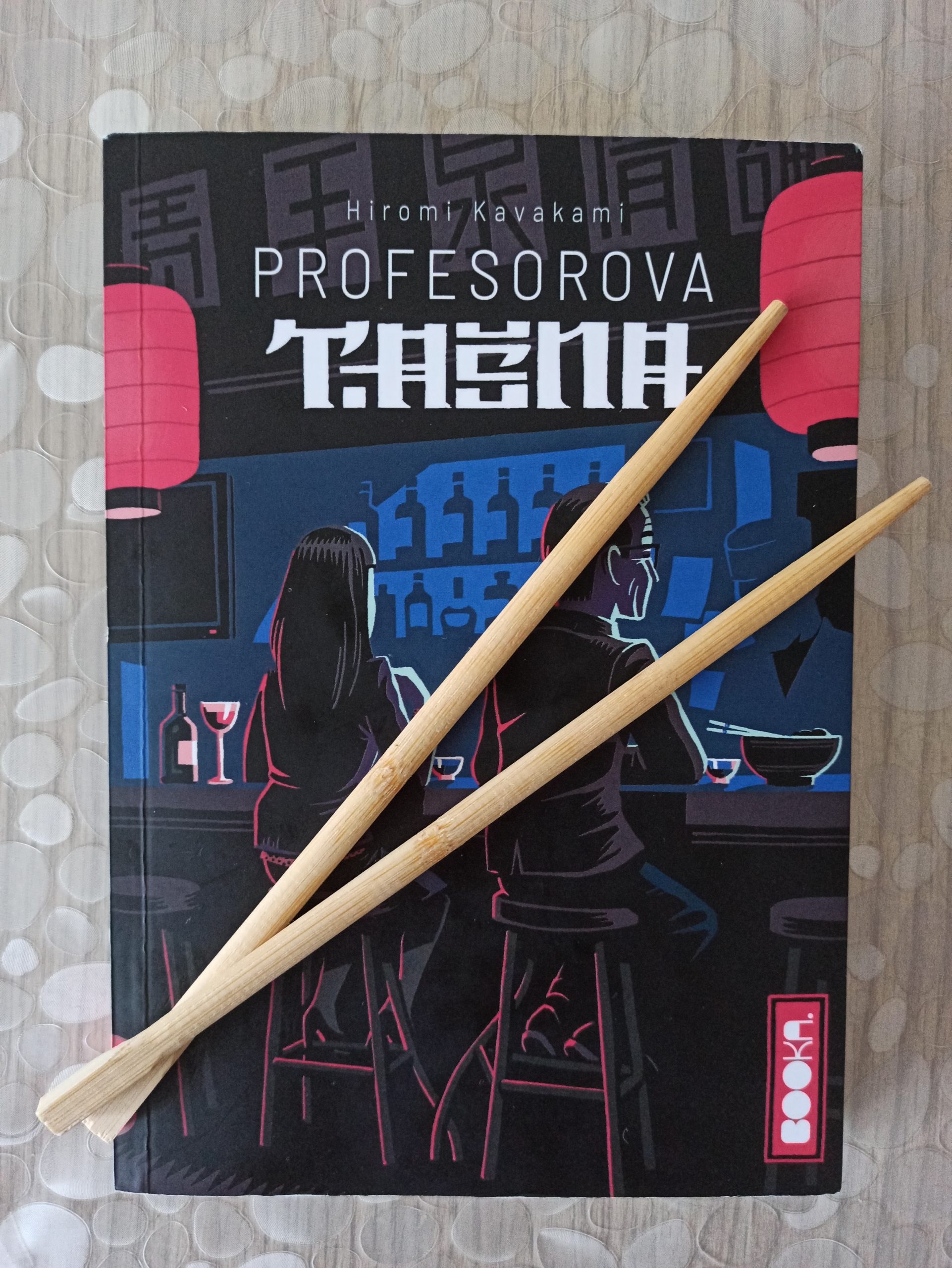
When you finish reading The Briefcase by Hiromi Kawakami, you’ll be left with mixed feelings. And not in the sense of whether the book is well written or not—stylistically, it absolutely is. The confusion is more emotional: you won’t be sure whether you’re supposed to feel happy, sad, nostalgic, lonely, or something entirely different. One thing is certain, though—this book will definitely make you hungry, you’ll see why. 🙂
Tsukiko Omachi is in her late thirties. She works a rather uninspiring job, with hours that are long (and frankly longer than they should be). She has no friends, hasn’t been in a relationship in a long time (and seems to have gotten tired of failed ones), has no particular ambitions, goals, or even hobbies. Well, if we stretch the definition of “hobby,” we could count her occasional trips to bars, where she indulges in excellent food and excessive drinking.
One day, during her “hobby time,” Tsukiko runs into her former Japanese (technically, native-language) teacher, Harutsuna Matsumoto—a sharp old fellow pushing seventy—who shares the exact same “hobby” (enjoying food and alcohol), and who always carries his old briefcase with him wherever he goes.
As time passes (or perhaps it’s more accurate to say as the seasons pass), this unusual pair, first through accidental encounters (and later on purpose), begins to form… well, at the very least, a strangely intimate bond. They mostly meet at a bar—usually the same one—where they savor various snacks and large amounts of beer and sake, while attempting to have conversations. But the differences in age, upbringing, and temperament constantly tangle things up. They always address each other as “Tsukiko” and “Professor.” Then, suddenly, weeks go by without them seeing one another, and when they finally meet again, everything picks up exactly where it left off.
Soon, it becomes clear to Tsukiko that she is thinking about the Professor more and more (and since she always refers to him that way, it essentially becomes his name), and that perhaps her feelings have taken a stronger form… something resembling love. Yet she herself isn’t sure whether it really is love. Putting aside the obvious age gap (though nowadays that hardly raises eyebrows—especially when the older party is wealthy and the younger is attractive—then you even earn an article in the papers), Tsukiko frequently doesn’t know how to behave around him, because his reactions are unpredictable. Not in the sense that he might have a secret BDSM chamber in his apartment, or that he’s a compulsive gambler or races cars illegally instead of feeding pigeons. His unpredictability lies in his very old-fashioned manners (regarding gender dynamics), his constant corrections of Tsukiko’s speech, his shock at her ignorance of poetry, and his occasional—let’s say—“retiree-like” behavior (for example, expecting Tsukiko to accompany him to the market or mushroom picking). On top of that, he tends to reveal fragments of his past in vague and undefined ways. And for reasons of his own, he is highly defensive when it comes to displaying emotion. Speaking of the Professor’s apartment (since Tsukiko stops by a few times), it is filled with all sorts of undefined relics of the past.
Of course, Tsukiko herself is far from ideal. As mentioned earlier, she has her quirks. But more importantly, it seems that she often doesn’t know what she wants out of her life. And except when it comes to the Professor, she doesn’t seem very willing to risk or care about other people’s opinions. She’s not even sure how to respond to the advances of a potential suitor. At times, she gives off an impression of being cold, maybe even arrogant (and occasionally rude).
Now, whether Tsukiko and the Professor will become something “more,” or whether the point lies precisely in that strange relationship—held together by food, alcohol, and occasional outings—you’ll find out if you read The Briefcase. 🙂

As I mentioned at the beginning, all kinds of emotions emerge while following the odd dynamic between Tsukiko and the Professor. Yet the ones that surface most often are loneliness, sadness, melancholy, and brief bursts of affection. These are, in fact, the core themes of the novel—those enchanted circles of love and solitude. No matter how amusing Tsukiko’s inner monologue and adventures might be on one page, the shadow of sadness and isolation is always close behind, and it never leaves you indifferent.
Another particularly interesting aspect of The Briefcase is the amount of attention given to ritualistic pleasures associated with Japanese food and alcohol. While reading, there will be more than a few moments where your mouth waters, and you’ll catch yourself wanting to snack (and toast) along with them. Even though the dishes mentioned aren’t extravagant or elaborate, the subtle descriptions of the meals ordered by Tsukiko and the Professor could easily tempt you to fry up some tofu, slice it into pieces—and maybe open a bottle of something. 😀
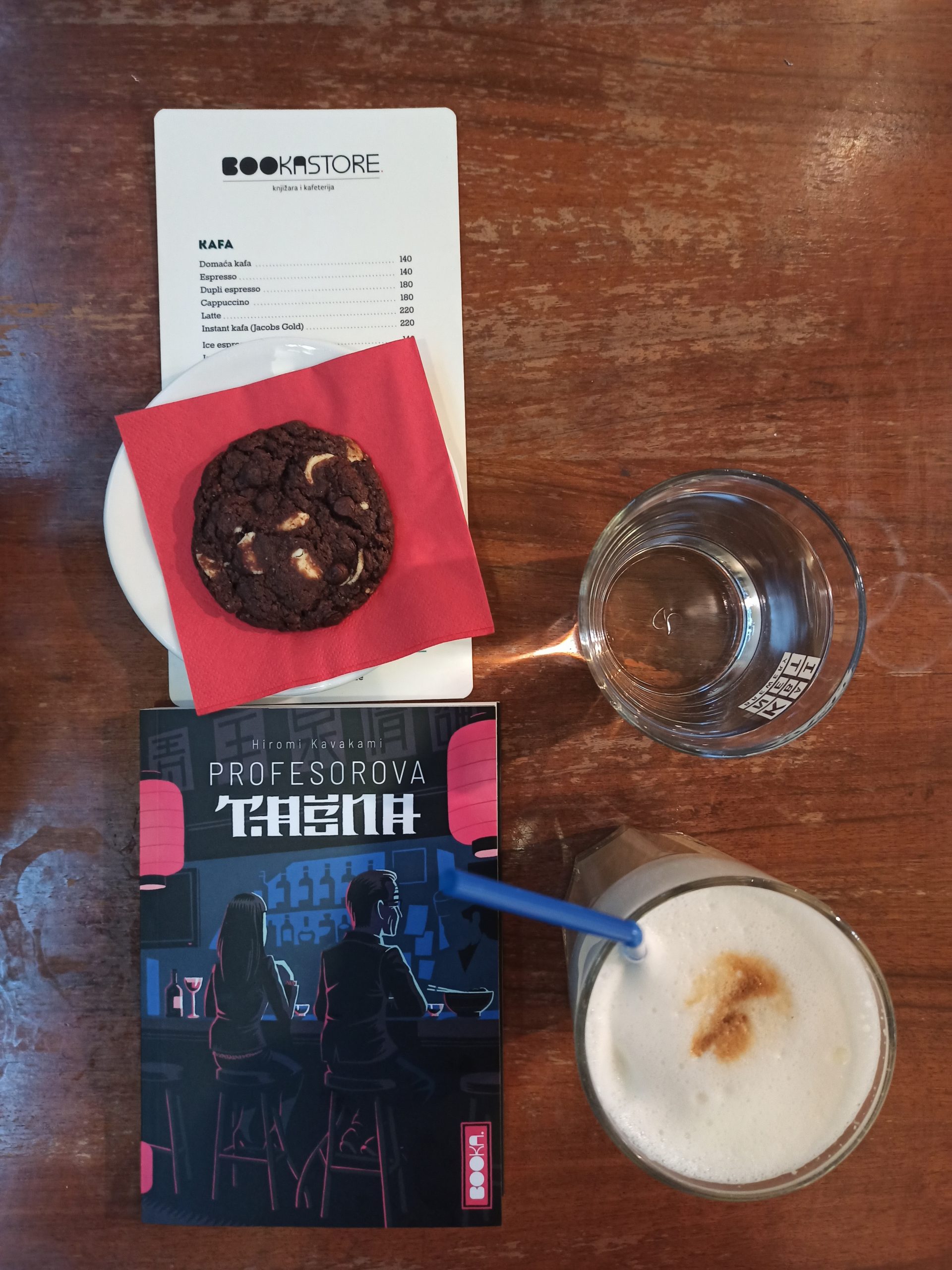
It’s not at all easy to write a novel primarily about loneliness (and the struggles of love) without making it either boring or so bleak that you give up halfway. Kawakami manages to avoid that trap. The Briefcase reads quickly and smoothly, despite the emotional weight of its themes.
All in all, this is quite an interesting title—there’s something oddly appealing, humorous, old-fashioned, and elegant about it, even with the many (lonely) feelings woven into it. Though, perhaps it’s not the best book to pick up when you’re feeling sad or lonely—unless you’re that type of person who, when feeling down, chooses activities that intensify those emotions. X)
All things considered—warm recommendation.
And you, dear reader—do you remember a time in your life when you too were caught in that strange enchanted circle of love and loneliness? 🙂
Book price: Booka | Vulkan | Delfi | Makart
Ratings (and purchase) on international sites: Goodreads | Amazon | Bookdepository | Kobo