


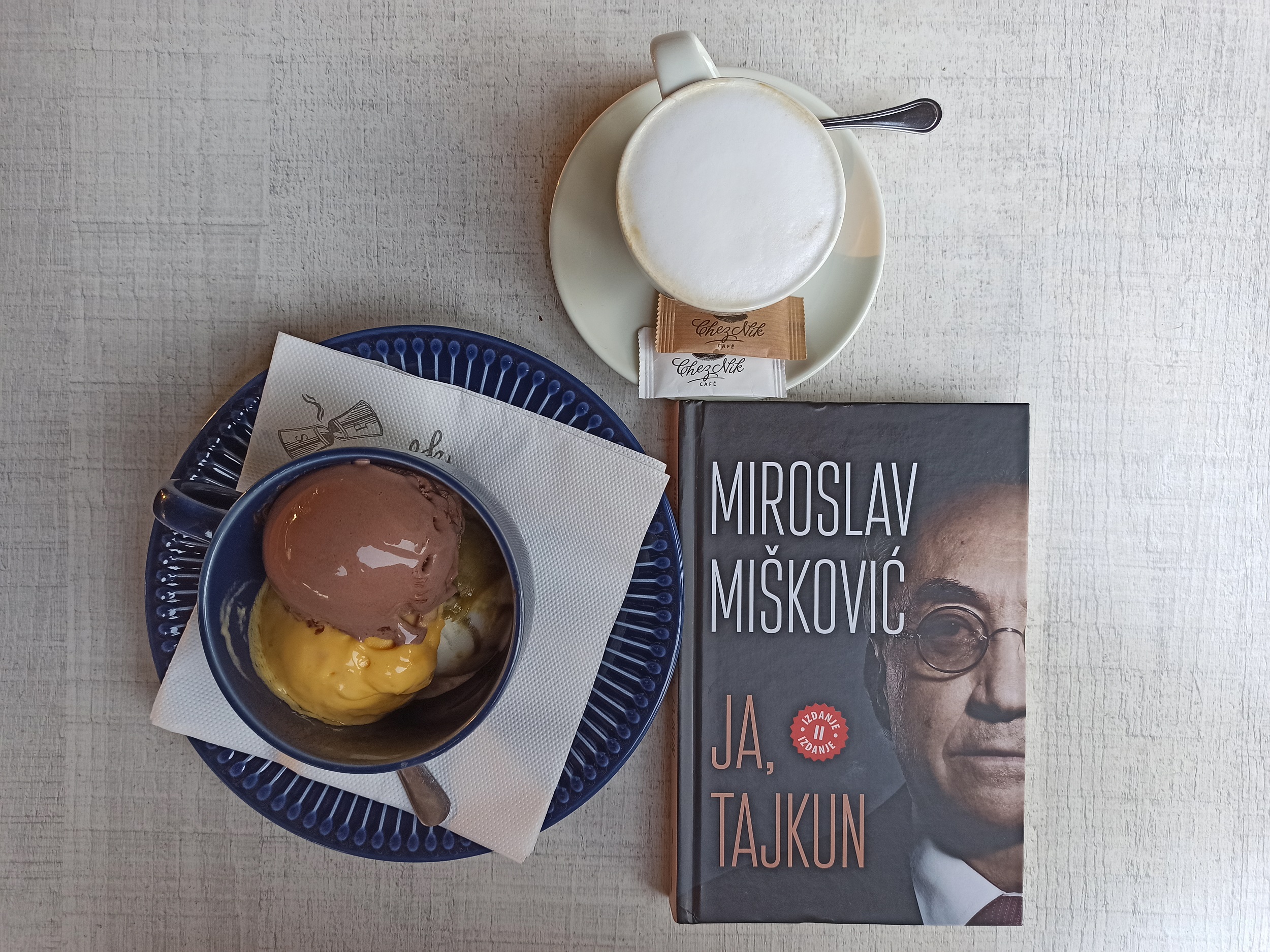
I, Tycoon
After twenty-eight years of silence, Miroslav Mišković spoke up, Serbia’s biggest businessman from the late 20th and early 21st century.
Why was he silent? Why did he speak up now?
No, I didn’t write this, it says on the back of the book, “I, Tycoon”… though, now that I’ve said this out loud, it somehow sounds both bombastic and mysterious…
Ahem… anyway…
I wondered how reading this book would go, but I can’t say I wasn’t interested. After Bojan Leković’s story about “KupujemProdajem” and his vision of how to run a company and face challenges, and then Bill Iger’s life path from “ABC” to “Disney,” I wanted to read some variant of a business-autobiographical book again. Somehow just at that moment the news appeared about “Delta House,” and relatively before that the news that Mišković is withdrawing from operational management of “Delta.” Maybe because Iger’s biographical story was still fresh in my head (as well as the fact that he also withdrew from “Disney” at the moment when the company was at its peak), so I decided to give the book “I, Tycoon” a chance.
I’m not a politics fan, and I had a feeling there would be comments about the state here. Of course, reading the book, it was clear to me that all this has roots in the distant past for him (Mišković) and that he had to touch on the state and its relationship with him.
But again, the fact can’t be overlooked that “Delta” is a large company and there had to be some knowledge and skill to bring it to what it is now. And that’s the part that interested me, the small secrets of great entrepreneurs.
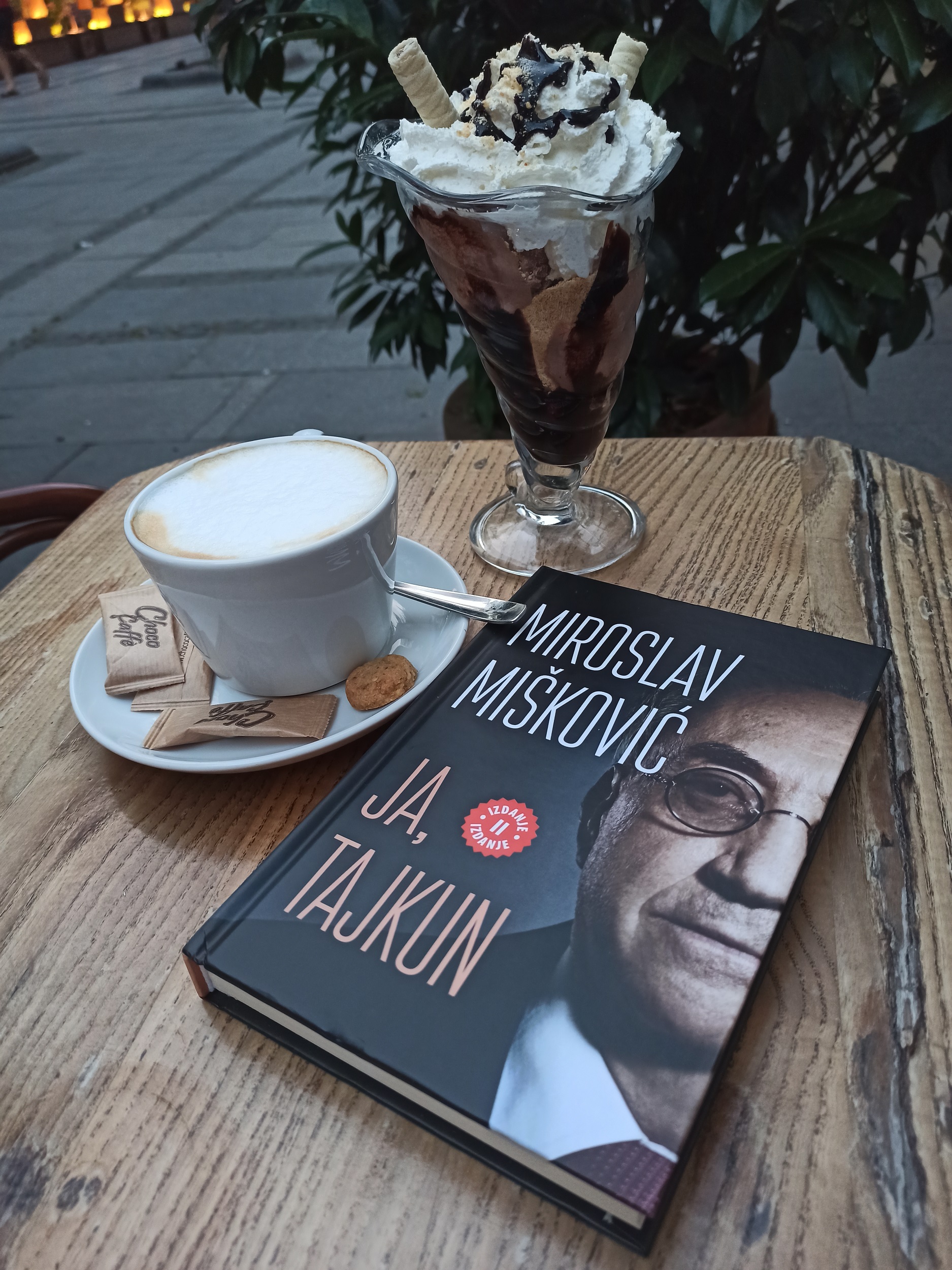
The book is divided into several chapters, and each begins with an introductory part in which the author touches on the period between 2012 and 2017 (the period of the famous arrest, indictment, trial and outcome), and then we’re subtly transferred to the distant past and Miroslav Mišković’s career breakthrough – from “Jugobanka,” through “Župa,” entering the FRY government, to the famous February 4, 1991, when the company “Delta 2M” was registered… to see today, 30 years later, where “Delta” is on the map of Serbia and the region.
What else will we discover in the book “I, Tycoon”?
Miroslav Mišković will tell us how his path went and what moves he made in his career, especially when he was in more serious management positions in companies. How he communicated with people (whether they were directors of other companies, his subordinates or politicians), what tactics he applied to achieve his results, changes and methods he tried to implement in his companies’ work.
But he’ll also reveal some less known details… like personally experiencing the period of arrest, kidnapping by the Zemun clan, as well as what kind of relationship he had with Milošević, Tadić, Đinđić, Nikolić, Vučić and how he perceived them as personalities.
We’ll see how the creation of “Delta Bank,” “Delta Insurance” and “Maxi” went, their sale and why Mišković decided on those moves.
Mišković will touch quite a bit on his (financial) successes… but also (financial) failures, either through purchases or because his plans weren’t realized (failed merger of retail chains “Delta,” “Agrokor” and “Mercator”; then why he considers the sale of “Maxi” was equivalent to a national catastrophe although it was sold for more than 900 million euros; his vision of “Belgrade Waterfront”).
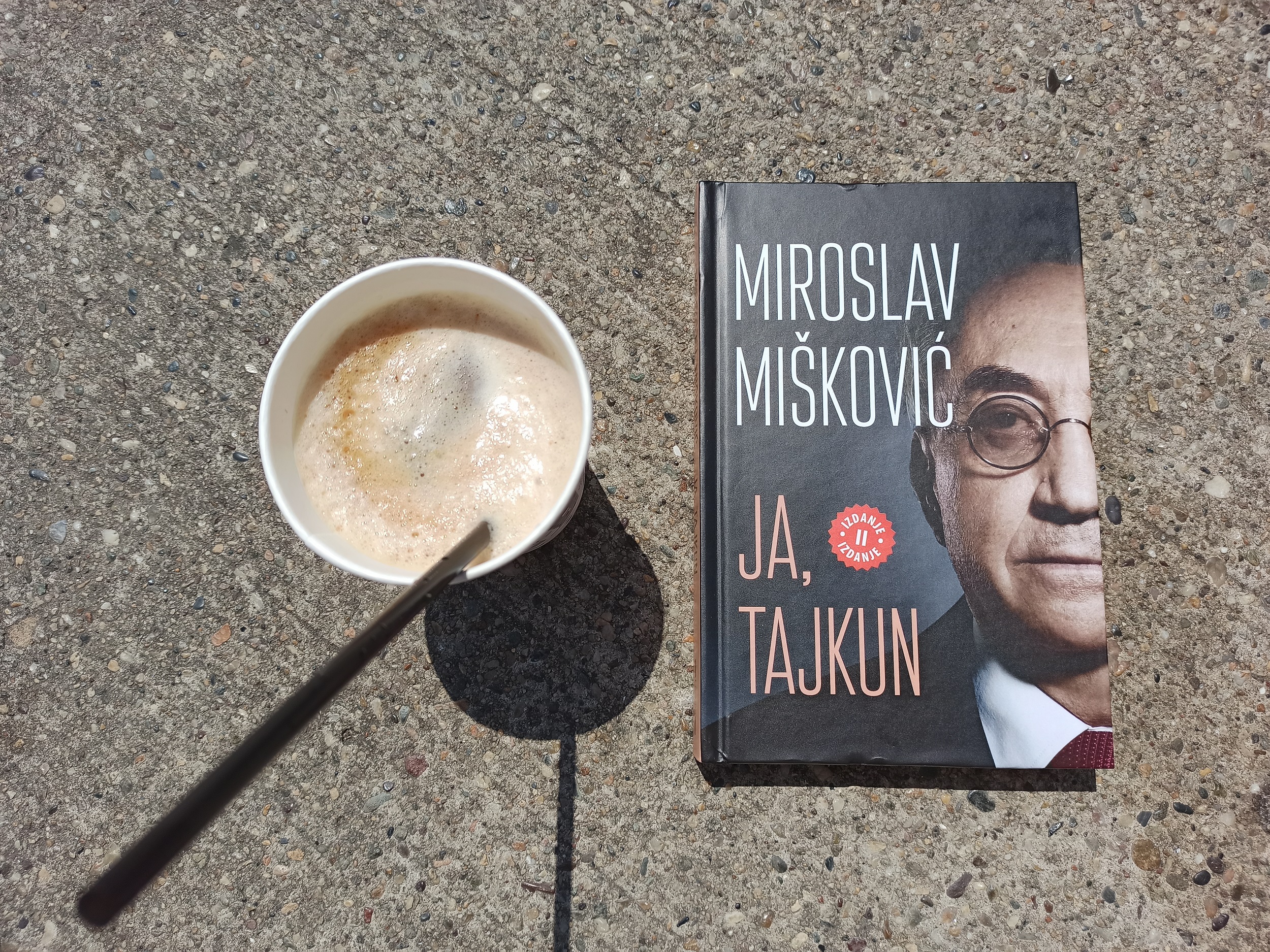
We’ll discover answers to questions like “How he really earned his first million,” “Why women are his ace in business,” “Whether he contributed to building the temple on Vračar,” “Why ‘Delta’ avoided doing business with the state,” “Was ‘Continental’ overpriced,” “What activities his company didn’t want to engage in,” “Why agriculture is potential Serbian oil,” as well as many other pieces of information.
“I, Tycoon” also reveals quite a few interesting/likeable anecdotes related to his Morava nature, car purchases, doing business in Russia, sneaking through “Maxi,” opening the first office, fishing stories…
But what’s also there are quite a few delicate questions and thoughts, which are equally political and economic and which will interest those who are entrepreneurs or thinking of getting into those waters. Which is whether and how much this area is suitable for entrepreneurship? Can a domestic entrepreneur cope with (for)eign entrepreneurs in Serbia, does he have sufficient state support? Do we generally have the right picture of entrepreneurship? Is it really a boss who just comes for the market, or maybe that boss had to grind for decades to reach that level to slow down and just come for the market… and does he even slow down? Is this region fertile ground for success, or will we come to a situation where we have to plant the seeds of those fertile ideas in some foreign lands (I have no idea where this poetic sentence came from)?
You can love Mišković or not, agree with him or not, say he’s this way or that, but “I, Tycoon” doesn’t really present some idealistic, romanticized idea of entrepreneurship that we often have. Yes, people have some idea that can help others… but they also want to earn from that idea and its realization. Because we all need money for life and realization of our ideas (anyone who thinks otherwise, feel free to contact me so I can give them my account number, let them transfer part of their salary to me every month, let’s see how long that will work ^^).
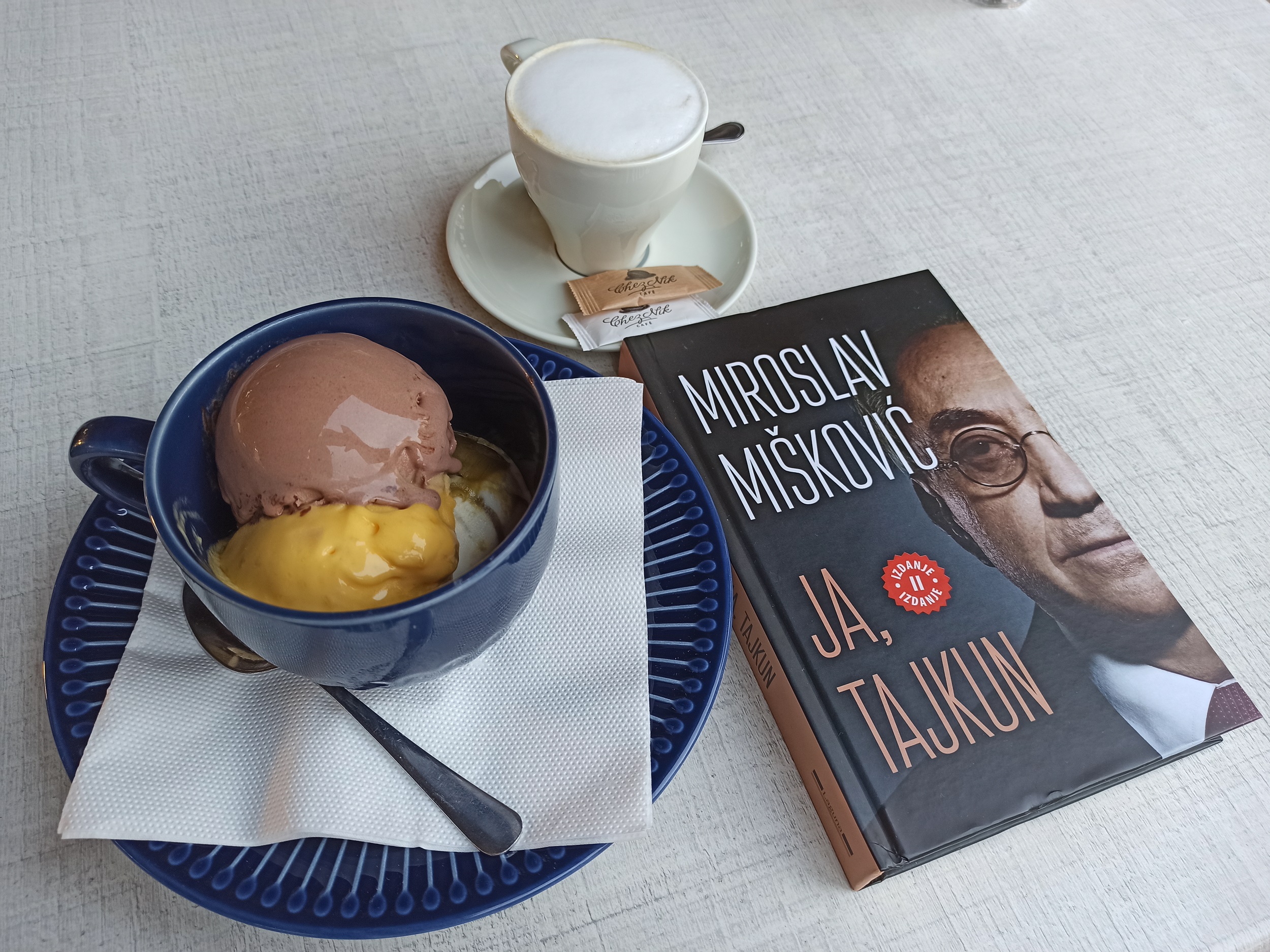
“My specialty is that I know how to create and sell companies… I didn’t hide the recipe. Make a company, raise its value and sell to a global player.”
“In business, the one who understands there’s no golden goose that doesn’t dry up lasts.”
“Defeats in business should be accepted as inevitable.”
“From the beginning I had big expectations and constantly set the bar at a higher level. It takes a lot of strength to keep up with that. I could also scold them terribly. They call it ‘blowing up’…”
“I say about myself that I’m sometimes impatient, of hot temper. I don’t tolerate inconsistency, frivolity and incorrectness. I can yell and leave a meeting. I did that with ‘Wrigley’ company too…”
These are the author’s words in this book. They’re not taken out of context to present the author as a tyrant, but to present a more realistic, rawer feature of entrepreneurship. As they say, the author pulls no punches…
…which doesn’t necessarily have to be a bad thing. I assume that’s also an advantage of years and experience and when you tumble through life through all sorts of things. Then you say it as you please, without beating around the bush. ^^
What maybe surprised me most about “I, Tycoon” is how easily the title reads (238 pages), just like “Bears on the Road” and “The Ride of a Lifetime.” Maybe it was interesting to me because I’m a relatively younger generation (“Ahem…” – note from subconscious), so it was interesting to hear about that period of the 70s, 80s, 90s and how things functioned then. And everything’s packaged so it’s not tedious to read.

I don’t have any excessive complaints about the book. Maybe I would have liked there to be fewer details related to state/politics (but again, I also understand why the author touched on this topic), and for that space to be used for more practical, entrepreneurial stories… I think it would be interesting to read some study, case study or similar where we could see how “Delta” solved some concrete situations that are current today and which entrepreneurs would like to read, especially if they have a vision of more serious growth for some company. I don’t know, maybe this is an unnecessary comment, ignore it. 😀 And the chapter (completely in italics) where Mišković addresses the Court was a bit unusual for me… I wasn’t sure if that was supposed to be in the spirit of Caesar’s rhetoric or Hamlet’s monologue… um, ignore this unnecessary comment too. 😀
Regardless of what opinion you have about Mišković, I think it doesn’t hurt to read the book. It’s not expensive, and it can be interesting for you, to see how business once functioned and the transition to modern times.
But you won’t discover some deeper secrets and “tricks” of business here (expectedly).
And whether Mišković is a tycoon or taikun… time will tell. We, ordinary people, aren’t able to see the whole picture. But you know what they say, the truth is somewhere in the middle.
And you, dear reader… do you know who or what a tycoon is? 😀
Miroslav Mišković’s website
Book price: Laguna | Vulkan | Delfi