





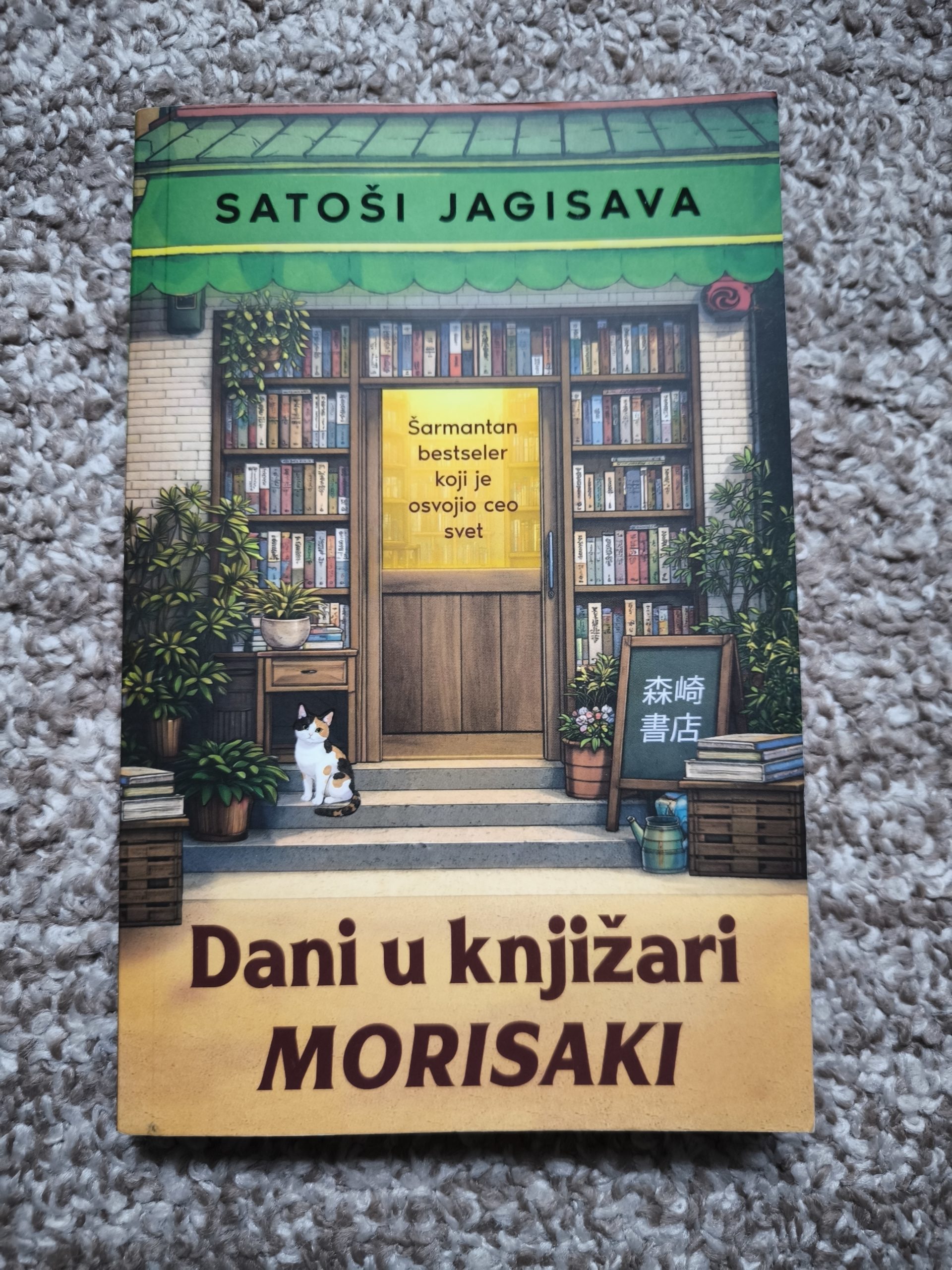
- After her boyfriend announces he’s marrying someone else, twenty-five-year-old Takako quits her job and takes up her eccentric uncle Satoru’s offer of the tiny room above his second-hand bookshop in Tokyo’s Jimbocho district.
- There, among the stacks of old books, at the Saveur coffee shop and in the company of new friends, she slowly rediscovers reading – and her appetite for life.
- There’s no mystical transformation and no grand turning point: Satoshi Yagisawa’s Days at the Morisaki Bookshop is a short, warm, simple book about how small everyday things and the right people help you turn the page.
“If I hadn’t come to that bookshop, I’d probably still be living without any direction. The books are part of it, of course, but so is the fact that I met all sorts of people there, learned all sorts of things, and finally began to sense what really matters to me… That’s why I’ll never forget the days I spent at the bookshop.” – Takako
Some books don’t have to be masterpieces or turn into classics. It’s enough for them to be charming and simple. And to stir up a few good feelings in the reader.
Days at the Morisaki Bookshop by Satoshi Yagisawa is exactly that kind of book.
Meet Takako. She finished her studies, moved to Tokyo, landed a job at a decent company — and met a man there, with whom she was about to mark a year together. At twenty-five, this young lady had a perfectly respectable life.
Right up until her boyfriend told her he was getting married… just not to her.
As it turns out, he had been cheating on her the whole time (or rather, cheating on his girlfriend with Takako, who was effectively the mistress?) and clearly never considered the relationship with Takako to be serious. Naturally, that wasn’t enough for him – stone-cold (and with an enthusiastic smile on his face), he added that he still intended to see Takako from time to time.
And so our good-natured Takako’s entire emotional world collapsed. Soon after, she quit her job too (not only did that creep work there, so did his fiancée, in another department of the same company). It looked like she’d have to go back to her hometown (on the island of Kyushu), because there was no one around to rescue her from the sadness and the emptiness that had settled in.
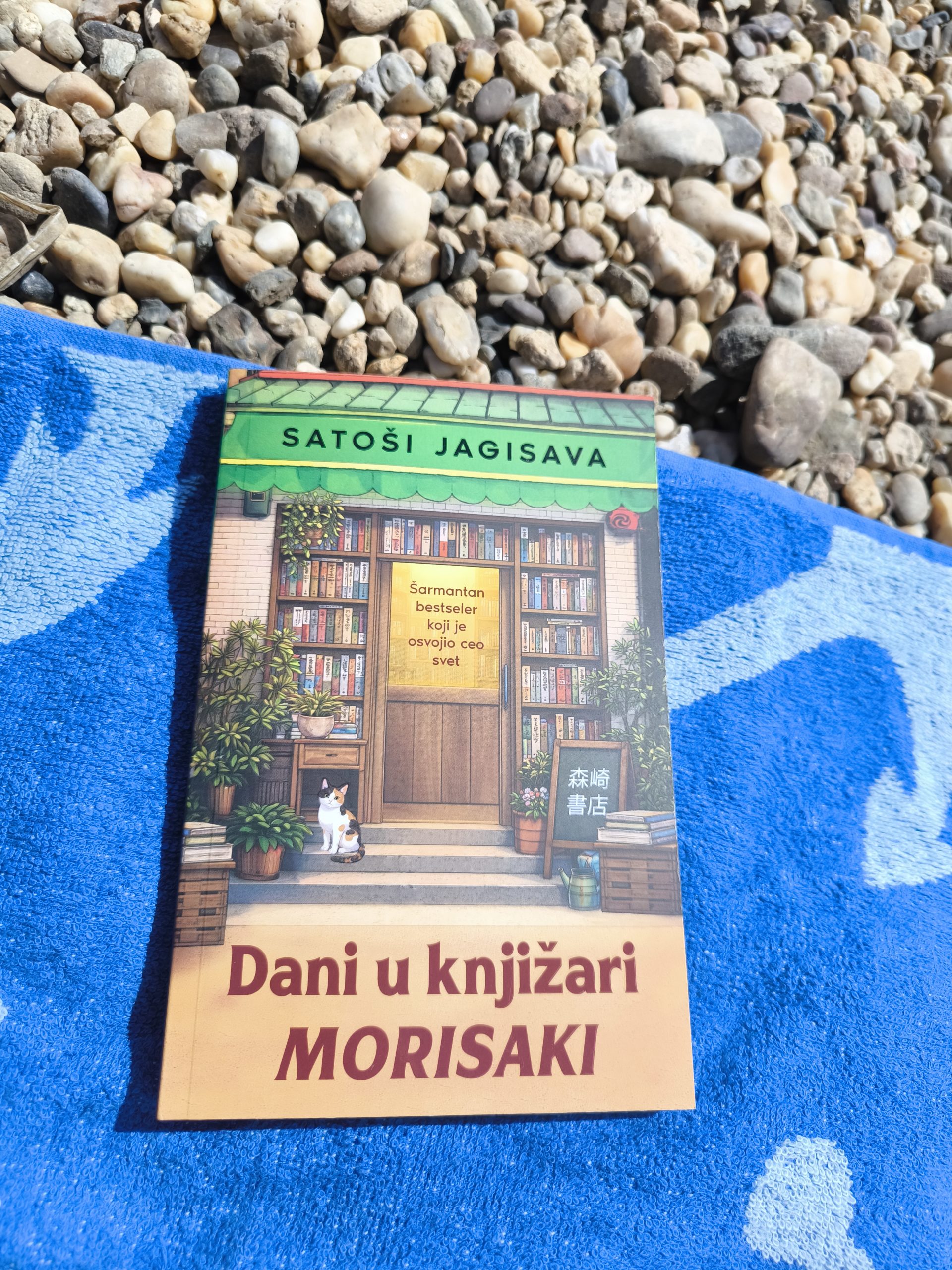
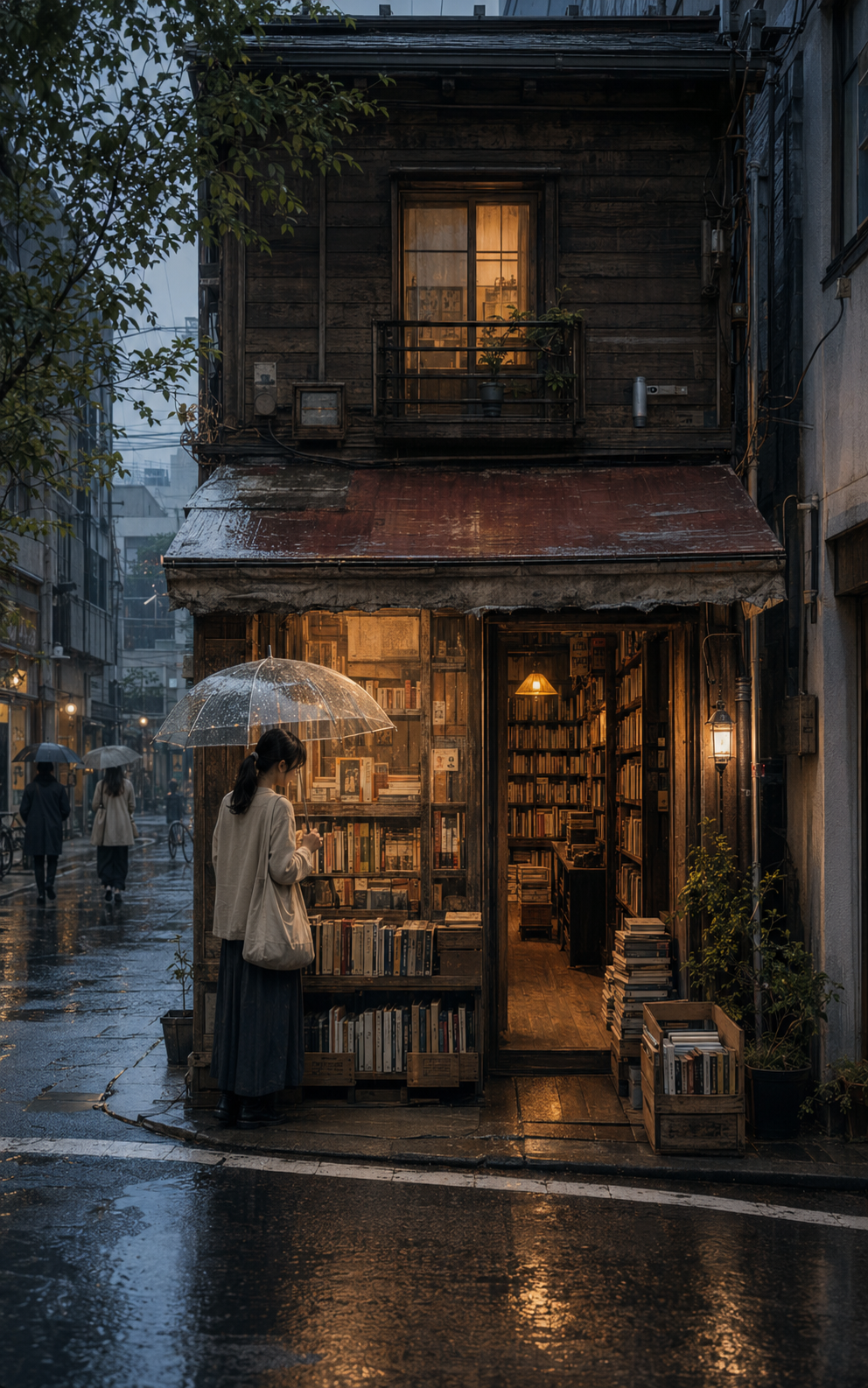
But it turned out that her uncle Satoru – whose wife had left him some years earlier – was living in Tokyo, in another part of the city (and we all know how enormous Tokyo is). Out of the blue, he invited her to stay with him for a while, until she pulled herself together and worked out what came next. Her uncle, whom she hadn’t seen in years, not since she was a child, ran a second-hand bookshop in the famous (bookselling) district of Jimbocho, and he was a bit of an eccentric. Now he was offering her the tiny room upstairs above the shop (also crammed with books), in exchange for helping out a little with the rare customer.
Takako accepts without any great expectations… completely unaware of just how much her life is about to change.
At first, Takako is fairly apathetic and uninterested – in the books, in the bookshop, even in her uncle. But her goofy, energetic uncle has his own way of coaxing her back into gear. He takes her to the local coffee shop, Saveur, and introduces her to its witty owner (everyone calls him the Boss), to the lovely waitress Tomo, and to a shy young man named Takano (who is secretly in love with Tomo). Then he nudges her to go out and explore Jimbocho a bit (and discover the charm of the other little places and the people in them).
And on top of all that, Takako unexpectedly decides to pick up a book… and discovers just how thrilled she is by the idea of reading again, of losing herself in the work of all sorts of famous authors (Japanese ones especially).
What else is in store for Takako and her goofy uncle Satoru – you’ll find out if you read Days at the Morisaki Bookshop.
The book doesn’t have a complicated plot. It all comes down to Takako and Satoru, each in their own way, stepping out of their shells and, at a certain point, having to face down some of their old fears.
We watch Takako rediscover her love of life, take part in what’s happening around her (some of it tied to the bookshop, some to Tomo and Takano, and even to an unusual man named Wada who frequents the aforementioned coffee shop), finally manage to turn over a new leaf – and even be there for her (by now very dear and very close) Uncle Satoru in a rather difficult family situation.
Days at the Morisaki Bookshop runs to just 140 pages and can genuinely be read in a single afternoon – and not only because of the page count. The book is remarkably light and easy to read, and it holds your attention precisely through that simplicity.
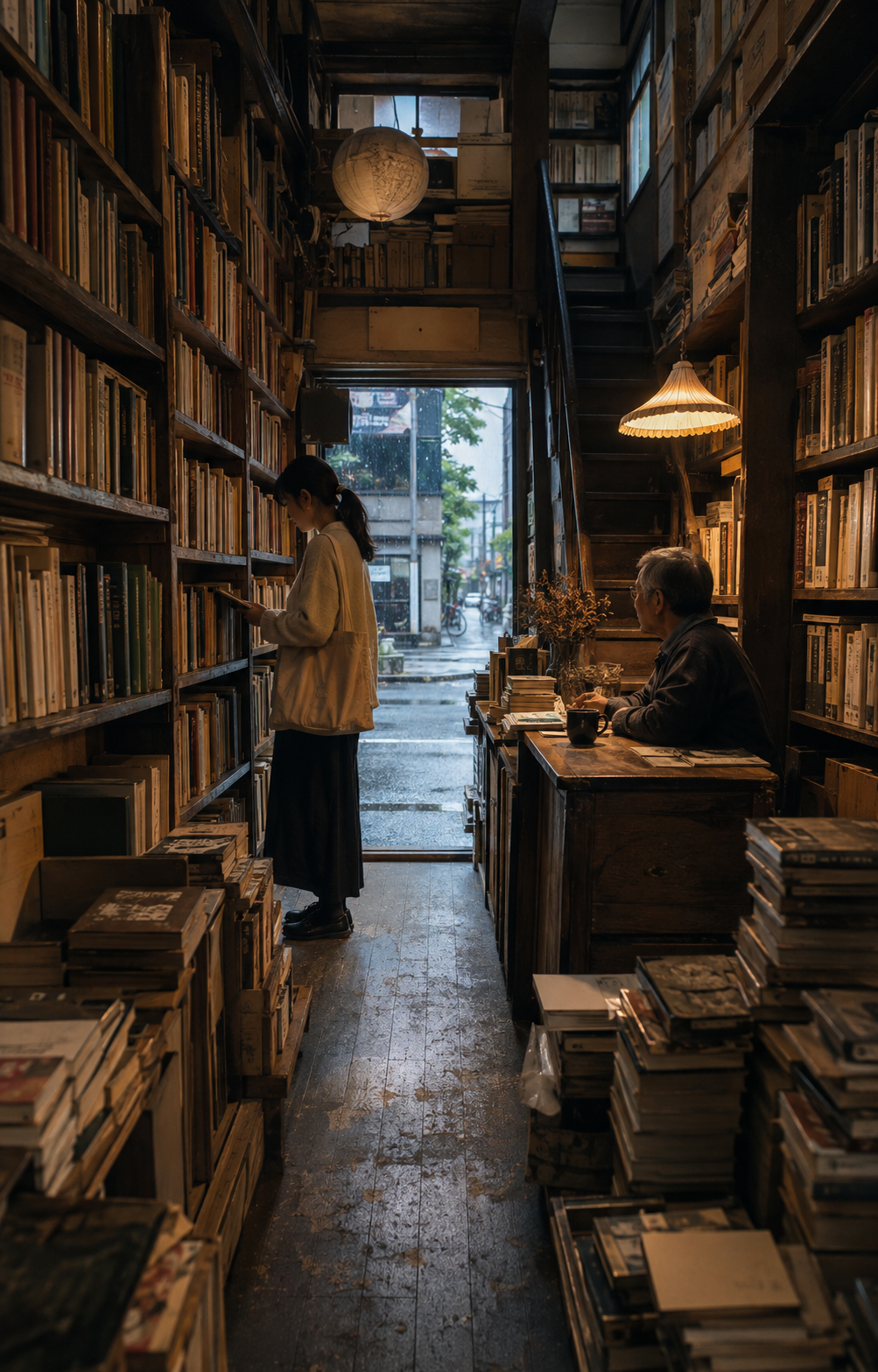
This is an inspiring book… but not in the sense of those popular motivational books repackaged as a story or a novel. The reader connects with Takako easily, for the simple reason that we’ve all been through (or are going through, or will yet go through) that phase of life… when life knocks you to your knees and it feels like your whole world is caving in over circumstances that aren’t even especially dramatic, and that you neither caused nor deserved… but that leave you in such a state of apathy that you’d happily spend your days in bed with the covers over your head and never leave the house, or just watch Netflix and eat ice cream out of the big tub and, again, never leave the house… and, while you’re at it, not talk to a single soul. Takako doesn’t undergo some mystical transformation or a fateful, life-altering event… just a few simple everyday happenings, the odd activity, a small step outside her comfort zone and a couple of people close to her are what help her find the strength to turn the page.
All in all, this is a lovely little book and it’s worth reading. It later got a sequel, as well as a film adaptation. A fun detail: the book was published in Japan back in 2010, and only had to wait thirteen years for its English translation — but in no time at all it had charmed non-Japanese readers too.
And, of course, let’s stress that this is, after all, a novel about the love of books and bookshops. 😊
And what about you, dear reader… have books ever given you back your faith in life, the way they did for Takako? 😊
Rating: 3.5/5 ☕
Worth your time if: you love Japanese literature, lighter novels, books with a smaller page count, and inspiring titles that skip the tired motivational clichés