






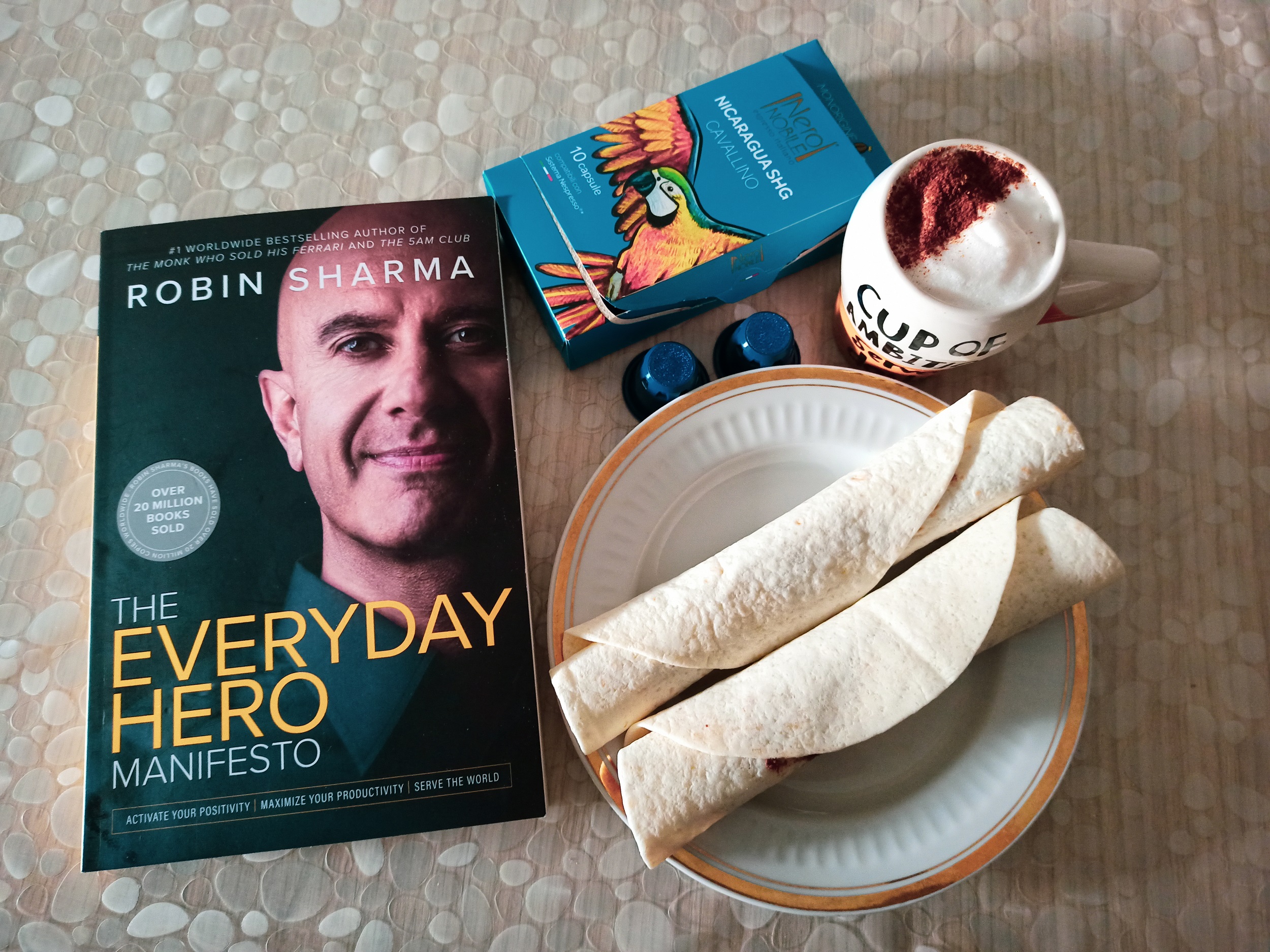
“The Everyday Hero Manifesto” is Robin Sharma’s 13th book. Someone might say the number 13 is unlucky, but for me number 13 has always had good meaning (maybe because I myself was born on February 13… or maybe because I’m a bit silly)… and as far as I’m concerned, “The Everyday Hero Manifesto” hit a good number.
The world is, in principle, well acquainted with Robin Sharma. This likeable, good-natured and introverted 57-year-old Canadian drew attention to himself with his second book, written almost a quarter century ago, “The Monk Who Sold His Ferrari.” The book became a global megahit, so it can be said without exaggeration it’s a classic for books in the field of personal and professional development. You probably knew yourself how for years now, precisely this book is among the first recommended to someone who wants to “enter the world of personal development.”
Robin over the next two decades published quite a few good books in the field of personal/spiritual and professional/career development (“Greatness Guide,” “The Leader Who Had No Title,” “Secret Letters from the Monk Who Sold His Ferrari” and others). So three years ago he again made a big boom with the book “The 5 AM Club,” which I also liked (especially the last 50-60 pages), where through a fictional story he showed some concepts and action rituals that a person should apply by getting up early, and use those one-two hours of earlier rising (compared to the average person) for their improvement and gain a great advantage. This became so popular that even now there are various groups (you can find them on Instagram) of early risers who share pictures and stories inspired by Robin’s book.
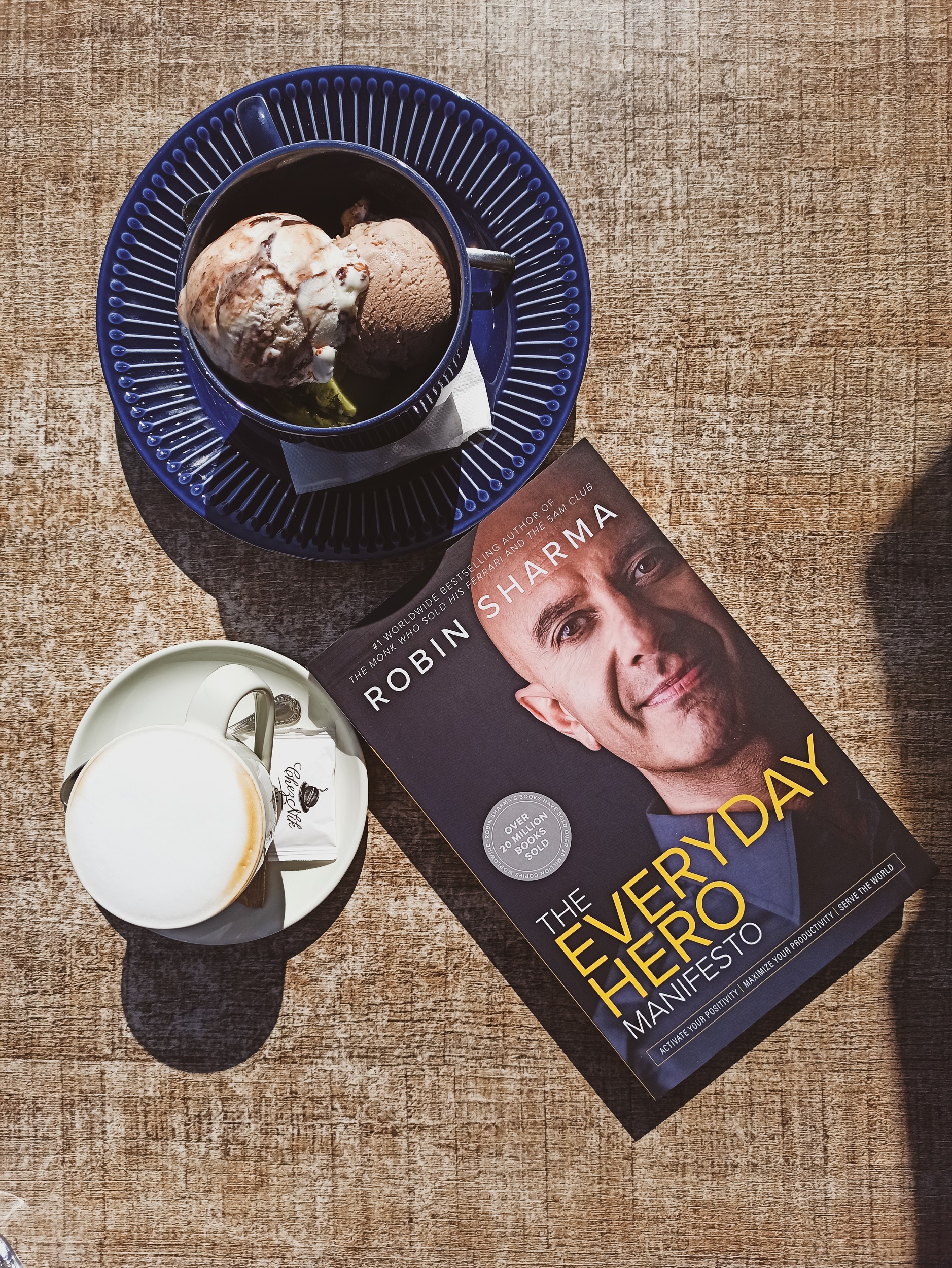
And as for the book “The Everyday Hero Manifesto,” I think things went to a much, much better and higher level here.
From the moment Robin started sharing on social networks photographs and comments while working on the book “The Everyday Hero Manifesto,” I began to get the impression this will be something different. I don’t know what and how, but I sensed something. As if this book will be the true culmination of Robin’s accumulated knowledge and experience, and that this will truly be a book for everyone.
That’s why I bought it as soon as I saw it at the airport. Although I knew there would be a Serbian translation soon, I didn’t want to wait, and I wanted to read it as Robin really wrote it, so something wouldn’t be “lost” in translation, because I had a feeling there would be a lot of “Robin’s terminology” here. And I’m glad I wasn’t wrong with the decision.
As far as I’m concerned, this book far surpasses both “The Monk” and “The 5 AM Club.”
What’s this about?
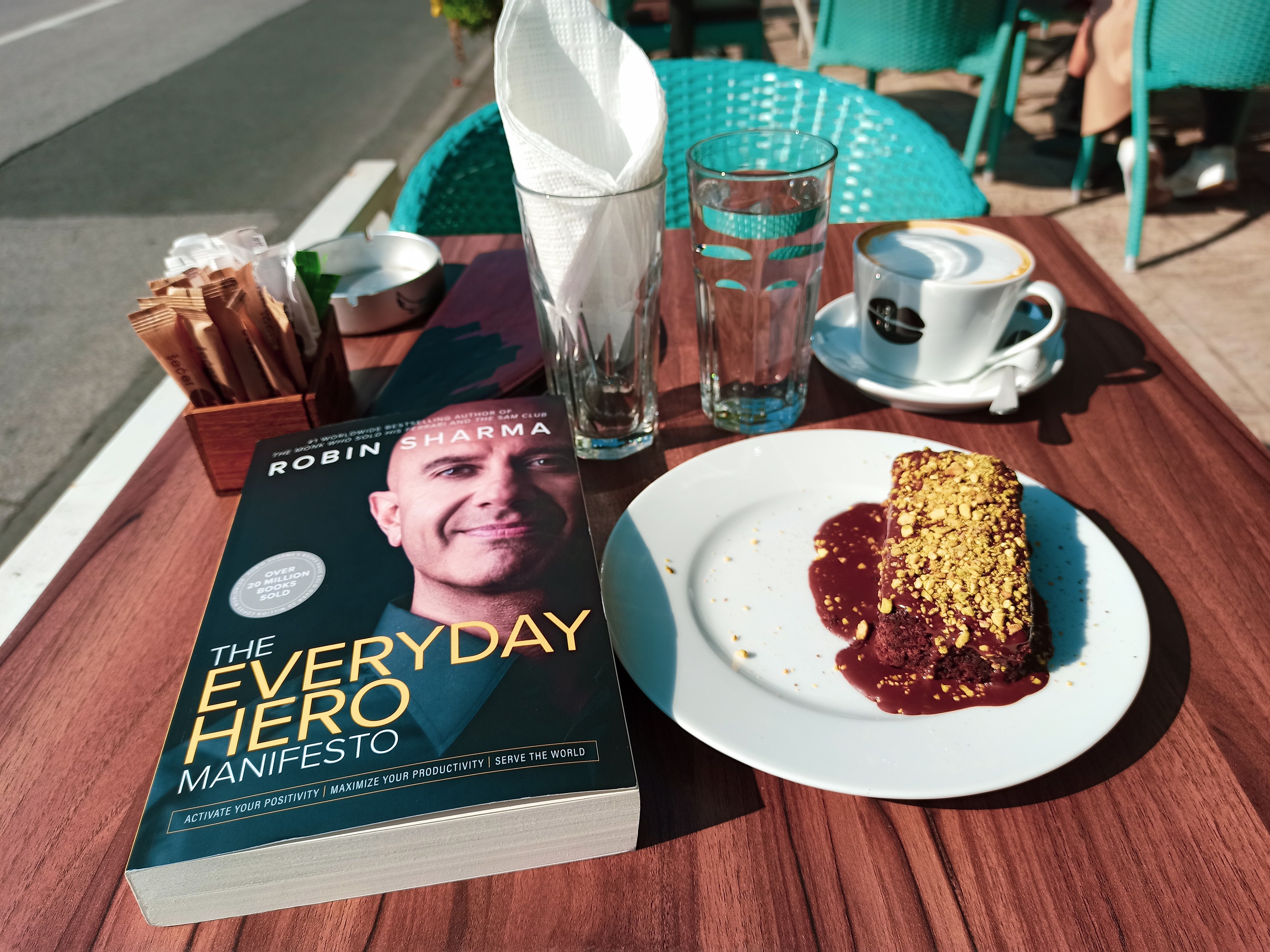
Robin with this book moves away from fictional stories and again the accent is on him as narrator. Imagine you found yourself with Robin for coffee in the garden of some pleasant café in some city anywhere on the planet. The atmosphere in the café is pleasant, in the background some relaxed music is playing. Coffee has just arrived (let’s say some cappuccino), and you simply say “Robin, share your accumulated wisdom from your life, both for life and career, and I’ll see what’s applicable to me.”
And Robin Sharma starts talking… a good 380 pages. Yes, I think this is Robin’s most voluminous book. The man nicely decided to tell everything he has to say.
The book is divided into 101 chapters of different lengths (from one to five-six pages) and they don’t have some chronological or conceptual order. You can read whichever chapter you want and in any order (but of course, the recommendation is still in order for first reading :D).
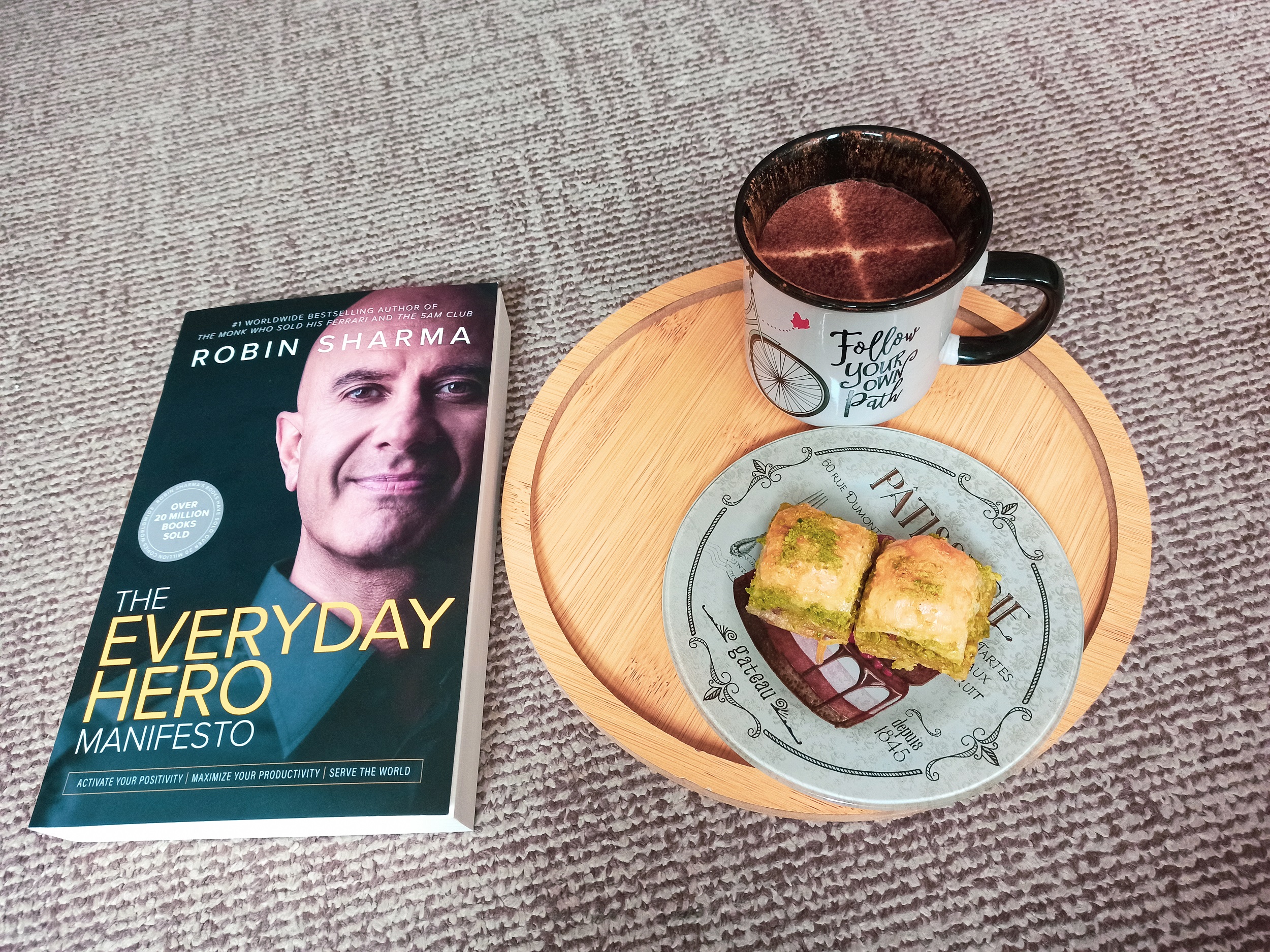
In the book “The Everyday Hero Manifesto” Robin will tell us a lot about his life, some of his (and others’) anecdotes and lessons he learned from them, his rituals, so we’ll have the opportunity to get to know this author on a slightly more intimate level. Some chapters will have a bit more “poetic” ring, where Robin will simply want to raise our energy and spirit. And then there are chapters where Robin will start talking about quite concrete things, like processes, methods and techniques you’ll be able to apply to the development and growth of your personal/spiritual aspect, and which show us why Robin is such a sought-after speaker. And let’s not forget chapters for those who want to raise their career, entrepreneurial spirit or company to a higher level, with various methods, approaches and views on business (realistically, a man who advised NIKE, Oracle, NASA, Yale, Microsoft, Starbucks, PwC, as well as many world-famous athletes and artists would surely have something smart to say, right? :D).
“The Everyday Hero Manifesto” is a book I read slowly. Because here there’s a lot of both information and emotions. And one reading won’t be enough for you. But that’s why a marker or pencil will be mandatory to mark parts you’ll want to read again.
One of the book’s most important aspects, which made this become his best book for me, is precisely that he shared a large number of concrete and applicable information. And until recently many of those pieces of information and techniques were mostly available at his seminars and gatherings or online seminars and courses (and I can confirm that, because I listened to some myself). Some things that may have been partially known to you from his earlier books are expanded, and there are quite a few new things for us/you here, which are quite detailed explanations, both for personal and professional development. Whether we’re talking about (since I read the book in English and listened to some courses and webinars, I’ll stick to English expressions, because I don’t know how everything was translated in the Serbian version and whether something was “lost in translation”) “4E – 4 Interior Empires (Mindset, Heartset, Soulset, Healthset),” “The 7 Threats to World-Class,” “The Peak Productivity Strategies Pyramid,” “The AFRA tool,” “The 3 Step Success Formula,” “The 8 Forms of Wealth,” “Weekly Design System,” “How Superproducers Do It,” “The 4 Major Communication Practices of Movement-Makers,” “The CGA Index” and many other principles and systems… I saved the best for last, which is “The Troll Deconstruction.”
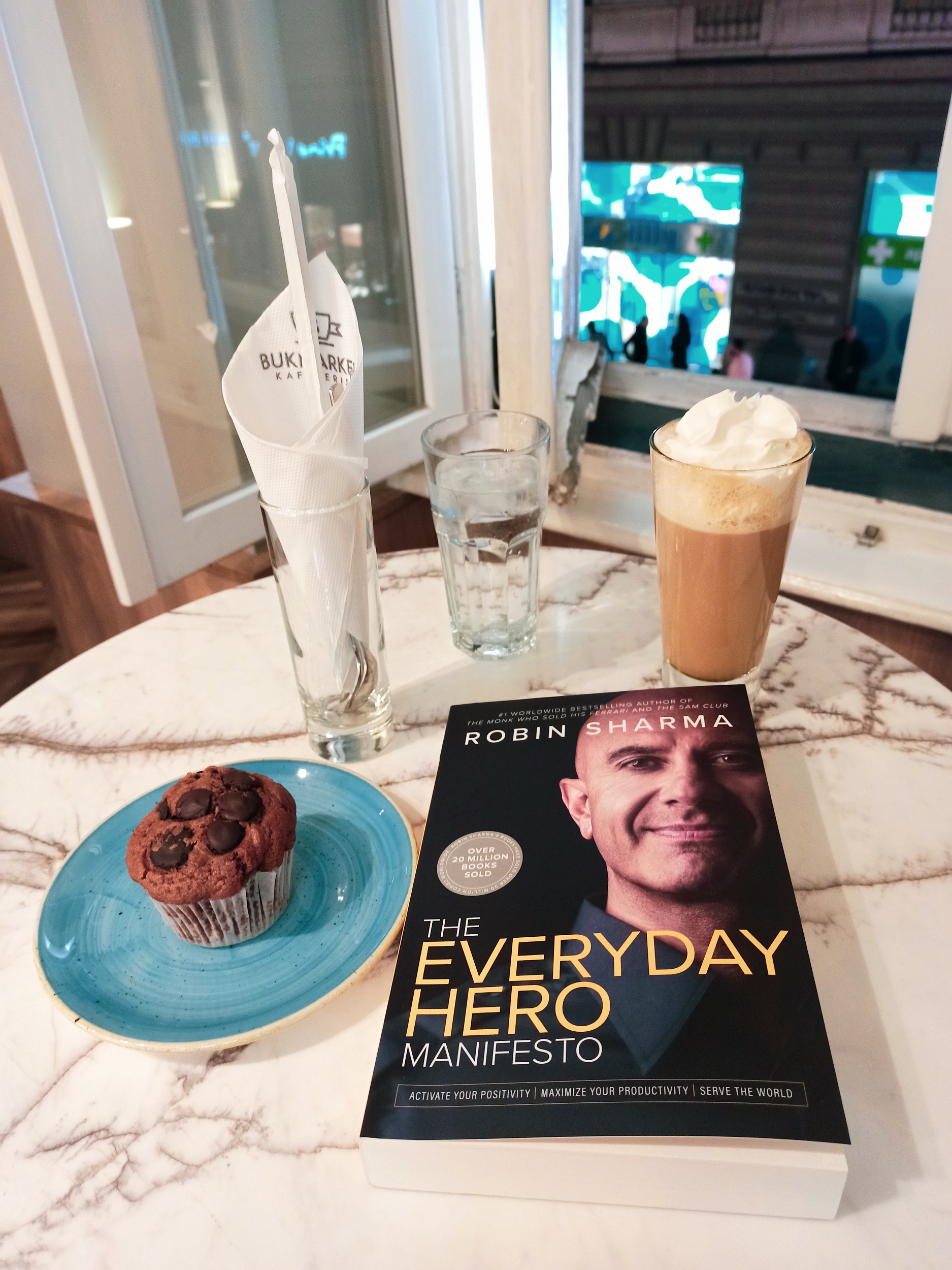
It’s a nice thing that you can incorporate all these techniques individually, the one you believe would suit you best, and some of them are (personally verified) applicable. 🙂
It may be that years, experience, education or deep thinking are speaking through Robin (though most likely it’s all together), but reading this book, you have the feeling this is a book that should motivate you, but not tell you fairy tales. Quite a few various motivational “speakers,” “coaches,” “trainers” (I know I could also be classified into these three categories, but I deliberately distance myself from them and have reasons for it, which you’ll read below), “entrepreneurs” and similar fanatically talk about success, high energy, motivation, money, “hustle 24/7” and such, that it becomes obvious how unnatural, artificial and fake that is (today I call all such things “photoshopped” for short), that it has a countereffect on many people and not only doesn’t motivate them, but does the opposite and makes them feel bad because “how are these others so easily successful, and just for me it’s not working,” and that’s wrong what they’re doing to people. Likewise, Robin also experienced defeats in life (mentions some in this book), and he occasionally mentions it’s okay to feel bad, have bad days, failures… the point is just to muster strength and dive into our strength, faith and weirdness (uniqueness) and pull “greatness” out of ourselves.
Likewise, Robin will confirm for you it’s okay to fight for success, that money is necessary and can greatly support happiness (and let’s not fool ourselves, that is the truth. You most often hear the paradox that “money is evil” precisely from people who have the least of it), that there are people who are evil and who will try to exploit or deceive you… the point is just not to allow ourselves to become like this last category of people. The point is that, however hard it is, we maintain that stoicism in ourselves and kindness toward the world… but of course, not to be fools. The old “When someone throws a stone at you, you throw bread at them,” and we want to maintain gentleness, should be revised to “When someone throws a stone at you, you be in armor and throw bread at them, or don’t be near the fool with the stone at all.” 😀

There are quite a few similarities when he talks about business too. Although he advised many successful people from various fields, Robin also collected knowledge and lessons from them. “The Everyday Hero Manifesto” shows us how the world’s most successful people have their rituals, how they stand behind the position that maintaining top service is most important, and that one of the keys to success is not the intention to reach the top, but also to stay on it, to always innovate and be even better. You could see that yourself in the example of some athletes, artists and companies (I always remember e.g. “Kodak,” “Nokia” or “Blockbuster”) who “fell asleep on the laurels of success” and didn’t continue to improve or adapt to changes… and on the other hand you have examples who’ve been precisely for years and decades at the top in their industries, and try to constantly maintain enthusiasm and quality.
I’d like to share some of Robin’s thoughts from the book with you at the end, and I’d gladly keep them in the original, English language:
“When no one believes in you is when you most need to believe in you. Those committed to the fullest expression of their native genius know that self-faith and staying true to yourself and your mighty mission – especially in the face of ridicule and uncertainty, attack and adversity – is the gateway into legendary.”
“Yet I’ve learned that not feeling okay is absolutely okay. That when we are not experiencing the kind of worldly productivity valued by majority, we are likely advancing our spiritual productivity. A difficult day for Ego is a splendid day for a soul.”

“Nothing you work on will ever be perfect, even if it’s your magnum opus.” (This is actually good news)
“In a civilization that makes us feel guilty, damaged and demeaned unless we are perfect, successful and running eighty-three advanced performance practices a day, maybe – just maybe – we should make peace with balance.”
“Some people among us are very badly damaged. They have, generally though no fault of their own, been traumatized by harsh events, scarred from terrible tragedies and enormously injured by unexpected treacheries.
They deserve our empathy, our understanding and our good wishes.
Yet this doesn’t mean in your enlightened self-interest to make them your business partner or your buddy or your spouse. Because people who are hurting badly commonly hurt people badly. And those in severe pain cause you severe pain.
Such people are pretty much guaranteed to devastate your creativity, suck your productivity and drain your energy.
Because they can’t stop being themselves.
Sure, you can keep seeing their best and loving them. Just do it from afar.” (I don’t know if you can imagine how much truth is in these words)
“The main reason to keep pushing for better – even when you are at the top – is not more fame, fortune and adulation. It’s to experience even greater personal growth, to befriend even more of your unseen talents and to uplift the caliber of your character by pushing yourself to produce even more jewels while dutifully serving the shippers of your most supreme spiritual self.”
“Legendary producers are professional resters.
The people who are able to consistently perform extraordinary work are those who out-focus, out-invent and out-work everyone around them. When they work, they really, really work.
And after they’ve expressed their mastery in a hot burst of gargantuan glory, they go dark.
They regenerate. They refuel. They replenish. They renew. They read. They walk. They improve their cooking, watch great films and have fun with their family. And they nap (napping is my secret weapon).”
“Don’t let a lack of public success stop you. Your nobility and quest for amazingness beg that you persist.
No matter how many trolls come out to play.”

For me “The Everyday Hero Manifesto” is convincingly Robin Sharma’s best and most mature book. It deserves to be on your shelf and for you to return to it occasionally, on the path of your personal growth.
This book is good both for people who want their professional growth, either within a company or as entrepreneurs. Robin Sharma has always focused his work toward creating creative and empathic leaders who strive to inspire and uplift people around them, while being ready to go in the direction of finding what could be called “mastery.”
And so Robin talked with us over coffee, revealed a few more details from his life, a few more anecdotes, thoughts, as well as concrete techniques for development on personal and professional levels.
As far as I’m concerned, absolute recommendation for this book.
I hope he’ll visit Belgrade sometime, it would be nice to hear him live too.
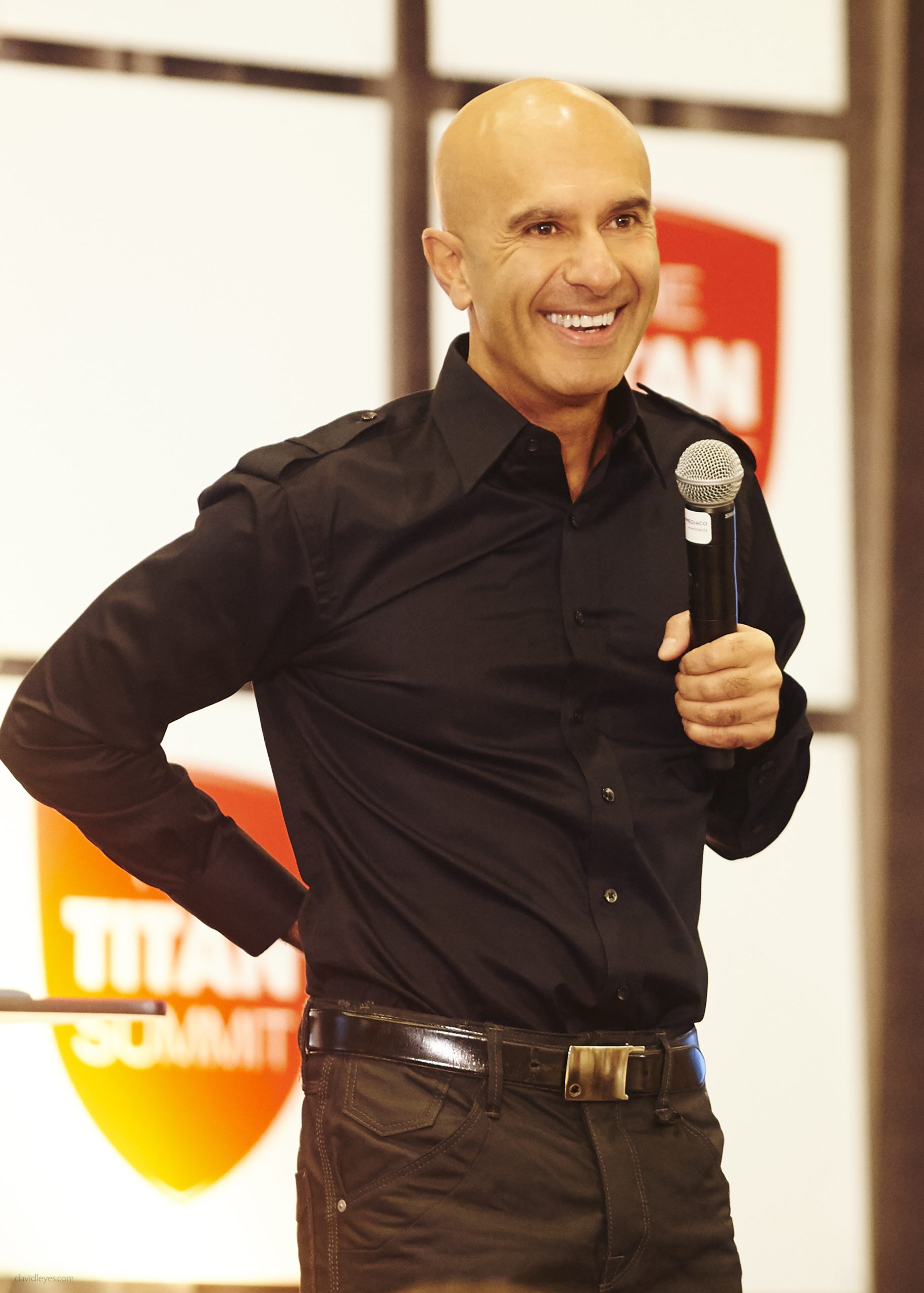
And you, dear reader, are you also ready to discover the hero in yourself? 🙂
Robin Sharma’s website
Every day hero manifesto site
Book price: Vulkan | Makart | Edicija
Ratings (and purchase) on foreign sites: Goodreads | Amazon | Audible | Bookdepository | Waterstones