







The Book of Five Rings
“If you wish to control others, you must first control yourself” – Miyamoto Musashi
Some books are truly very universal and specific. They change their meaning and reveal new horizons to us as we mature.
“Meditations” by Marcus Aurelius, “The Art of War” by Sun Tzu, “Tao Te Ching,” “I Ching”… even the Bible in a way.
However, there are some books from this category that can be maybe a bit challenging if you don’t have some specific prior knowledge… not so much because they’d be complicated for reader, but because it can happen that reader overlooks quite a few details.
Such situation could happen with title “The Book of Five Rings” by Miyamoto Musashi.
I wouldn’t want to write too much here about Miyamoto Musashi… for simple reason he’s one of my favorite historical figures and quite certainly I’d “drown” review (and thereby you) if I write about him. So I’ll just mention couple pieces of information, as matter of general knowledge.
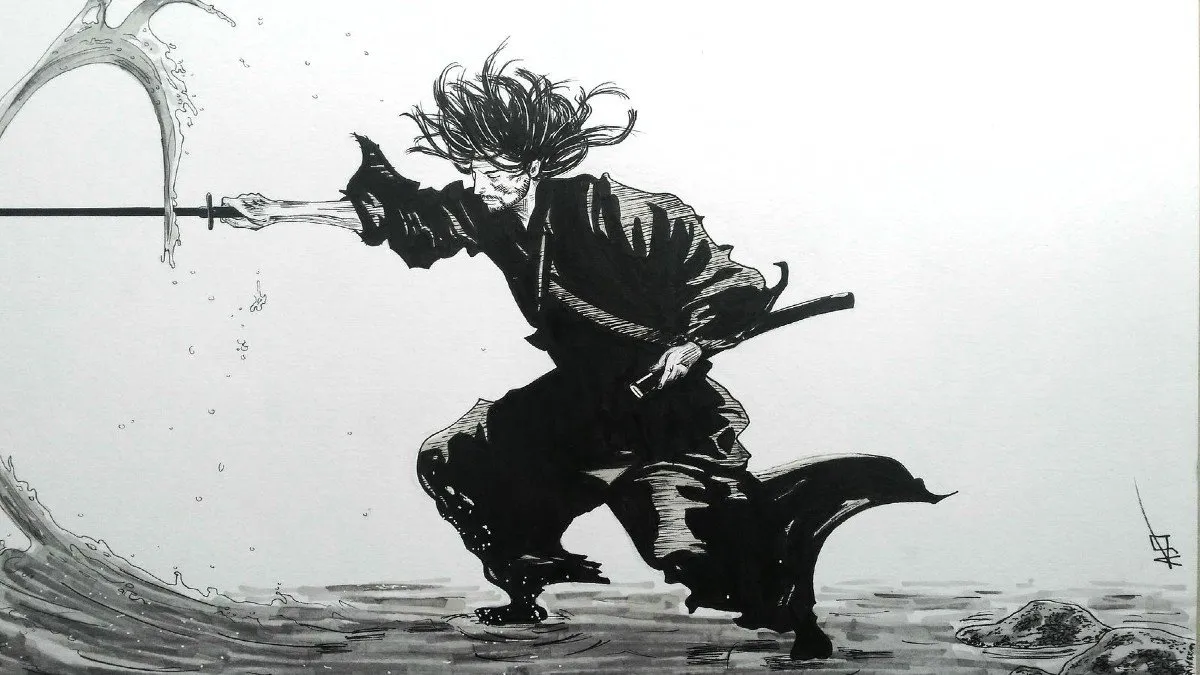
Miyamoto Musashi (1584 – 1645), known also as Shinmen Takezo, was swordsman, strategist, philosopher and ronin (samurai without master). Official record is he was undefeated in 62 duels, after which he retired (interesting fact that in distant second place is swordsman Ito Ittosai with 33 “victories”). He’s founder of sword fighting style (Niten Ichi-Ryu). He bore (better said, people attributed to him) honorary title Kensei (sword-saint, which was attributed to rare people whose skills with sword were considered legendary). Besides “The Book of Five Rings” (which we’ll address here), he wrote one more little book, “The Path of Aloneness,” which is in form of aphorisms, and concerns some of his views on martial arts, but also his life philosophy.
And so our Musashi, at full 60 years, undefeated in duels, climbs mountain and starts writing everything he learned about Way of Sword, i.e., martial arts (but also life itself).
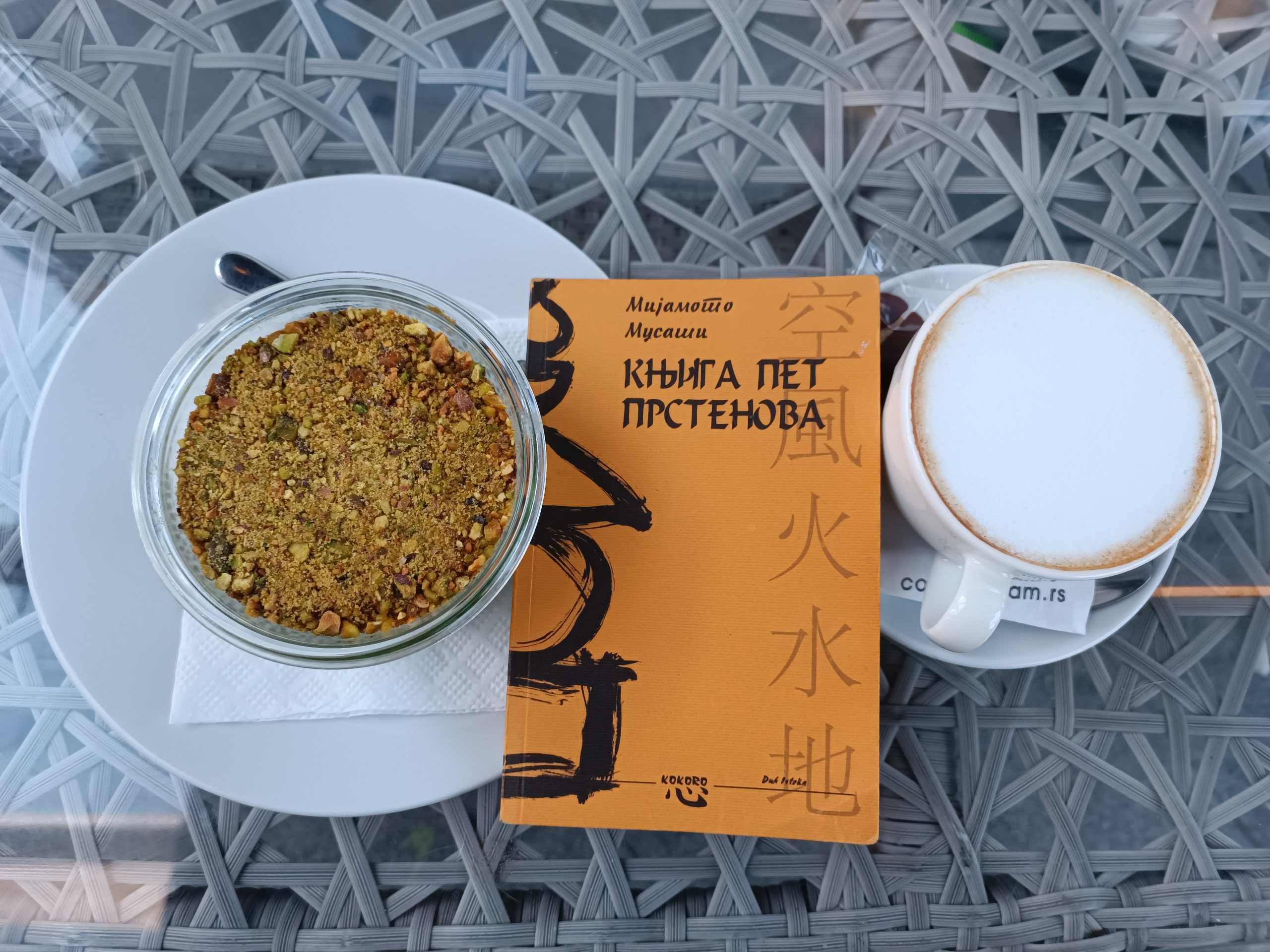
“The Book of Five Rings” is divided into five chapters:
- “The Earth Chapter” – represents Musashi’s brief overview of Way of martial arts and views on his fighting style
- “The Water Chapter” – Musashi takes position that you should make your mind like water, that it can take shape of drop or great sea (in sense of adaptability). Here he covers stances one should take in battle to defeat opponent
- “The Fire Chapter” – here Musashi writes about actual battle flow, as well as importance of warrior’s spirit
- “The Wind Chapter” – Musashi briefly in this chapter touches on other fighting styles too
- “The Void Chapter” – shortest but most important chapter (and how short it is, shows that I’ll convey it to you later almost in entirety)

I mentioned at beginning that some books provide more if you have some concrete prior knowledge (or experience)… in case of “The Book of Five Rings”… that’s martial arts. Since I have some modest (decade-long) experience in training martial arts (and otherwise I’m fanatic for same since childhood and adore all books and films with this theme, as well as martial events), I could understand some elements of book concerning battle itself, as well as their application to life… though they were often shaped with mildly philosophical note.
“Wait, so what should we do who haven’t had contact with martial arts, what does book mean to us?” Well because this pocket book of barely hundred pages has some wise passages worthy for life.
Like…
Today, in all arts – including art of bow and arrow – there’s much flower, but little fruit. In decisive moments, such arts will prove useless and turn out to be wrong.
For those who’ll learn my martial art, these are rules for its application:
- Always be sincere
- Practice diligently
- Touch all arts (feel all arts)
- Know ways of all occupations
- Know advantage and disadvantage of everything
- Develop discerning eye in all things
- Understand what cannot be seen with eye
- Pay attention even to small things
- Don’t get involved in unnecessary and useless things
On path of martial arts, state of mind doesn’t differ from your ordinary state of mind. In both everyday and military activities, your mind shouldn’t change in slightest, but should be open, clear and sincere, neither too tense, nor allowing it to slacken even slightly; it should be centered – don’t allow something else to distract its attention, let it move calmly, not allowing it even for moment to stop.
Journey of thousand kilometers begins with one step, so think without haste. Every day surpass yesterday’s self. Today surpass those who are worse than you, and tomorrow those who are more skilled than you.
To become opponent means you think as if your body became opponent’s. When looking at world, people are inclined to think someone who committed theft and locked himself in house must be strong opponent. But if you think about this from opponent’s angle, he thinks whole world is against him and has nowhere to escape. Man who locked himself in house is pheasant. Man who prepared to cut him down is hawk. This requires lots of practice.
And here are parts that make essence of “The Void Chapter” (read carefully and think about written):
Essence of void is in absence of every form and (its) unknowability. This I see as void. Void is, of course, non-existence. If you know existing, know non-existing too. This is true void. To be in world and poorly see things, to be unable to distinguish one thing from another and consider this void – that’s not true void, but confused mind.
On path of martial arts, you’re warrior, but if you don’t know principles of battle you won’t be on path, you’ll be confused and won’t do things you should. Though you’d call it void it wouldn’t be true void.
Warrior certainly learns path of martial arts, invests great efforts in other military achievements and isn’t in dark at all about path he’s guided by. He isn’t confused at all nor is lazy in any moment of day. He polishes two hearts – his mind and will, and sharpens two eyes – broad observation and focusing vision. He isn’t clouded at all, but rather disperses clouds of confusion. You should know this is true void.
Let sincerity be your foundation, be guided by right mind, broadly perceive martial art, have clear and right understanding (of things) and think comprehensively. Accordingly, you’ll make void as path, and see path as void.
At book’s end there are displays of couple of Musashi’s (simple) drawings.
I know, I know, it seems like philosophical booklet… well, it partly is (this is especially contributed by Musashi’s quite undefined writing and presentation style) and seems it’s closely connected only with martial arts, but there are some details worth knowing. Though he wasn’t classically educated man, he believed everything should be approached strategically (he wasn’t classic samurai-idealist who’d just sacrifice his life, but used his head). He believed in path of mastery for each person, whether it’s sword, tea ceremony, writing or painting (many considered Musashi great sumie artist too). For that time, he didn’t allow religion to advocate his sword style (as was case with many). Also, he draws many parallels between path of swordsman and path of carpenter, from manner of creation to achieving mastery.
This is title everyone should read at least once in their life. But there’s no doubt for many (especially those striving for some mastery in martial arts, business or to improve their discipline) “The Book of Five Rings” is work they periodically return to (and I’m one of those people myself). So it deserves recommendation.
Deeper analysis of book would quite prolong this review, but I think then it wouldn’t be exactly interesting to everyone.

And for those interested in Musashi’s life, besides old films, there’s very beautiful book series “Musashi” by Eiji Yoshikawa to be found. It’s older book (and mildly romanticized and maybe parts are fictional, but epic), but it’s great for reading.
And you, dear reader, how familiar are you with Miyamoto Musashi’s figure and work? 🙂
Book price: Kokoro | Babun | Vulkan | Delfi