





The Art of Thinking Clearly
“What people are best at is interpreting new information so that their prior conclusions remain intact” – Warren Buffett
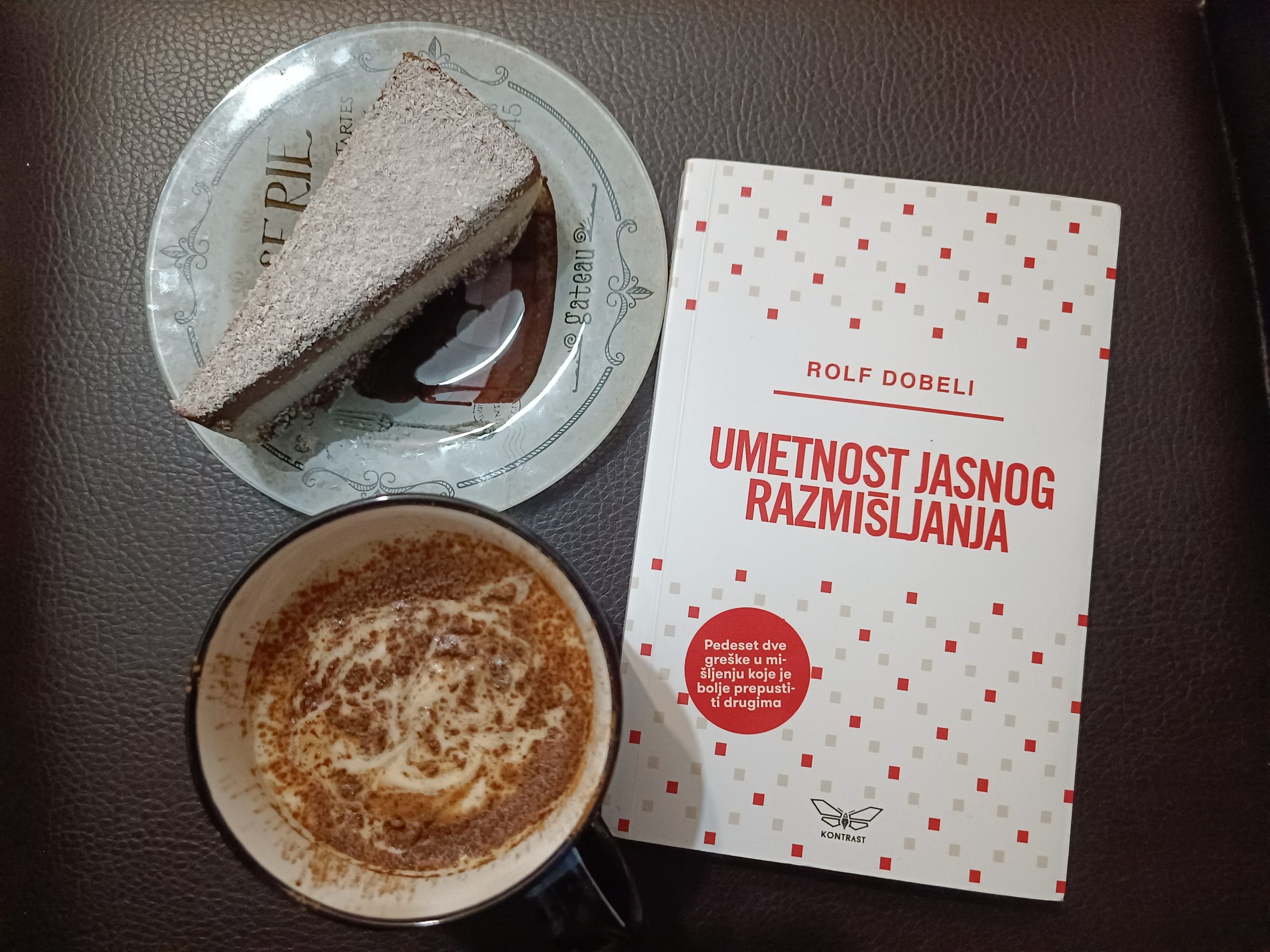
“The Art of Thinking Clearly (52 Thinking Errors You’d Better Leave to Others)” is a truly interesting book that holds your attention from the very beginning.
The reason is simple.
No matter how strong your emotional and intuitive capacities are, regardless of your IQ, no matter how resourceful you are, no matter how well-read you are, well regardless of your (private and professional) success, you’ll be surprised when you discover how many systematic (and even childish) thinking errors you make, which have perhaps caused great damage to your financial status, career, happiness or in conducting deep intellectual conversations (or at least slowed you down on the path to achieving the aforementioned).

It’s interesting that the author of the book “The Art of Thinking Clearly,” Rolf Dobeli, isn’t some psychologist, economist, linguist or scientist. On the other hand, he’s a member of the “Edge Foundation” (which gathers scientific and technological intellectuals), “PEN International” (world association of writers) and “Royal Society of Arts” (organization dedicated to finding practical solutions to social challenges), and moreover he’s the founder of the non-profit organization “World.Minds” (which gathers many influential and successful people from around the world). It seems this man can perhaps share something smart with us. We definitely both agree that you shouldn’t read the news and that abandoning them will make you happier. 😁
The author made an effort to design each chapter (one chapter – one error) according to a similar principle, which makes it easier to follow the topic and allows you to quickly go through them:
- The introductory part covers some historical event, anecdote from the author’s past, or some hypothetical question, which should introduce you to a certain (logical) error that’s the chapter’s topic
- Then follows the definition of the (specific) thinking error and attempts to explain why that error happens to us
- The author will often pose a simple hypothetical question by which he’ll show us how (almost) everyone (without thinking) makes a thinking error, which is a very good and useful detail, because it explains why we made that error (i.e., to lead to the “aha effect”)
- Then the author will present a few more examples from practice or some research
- And finally there’s a lesson on how we could potentially avoid that error in the future
This is, approximately, in rough outline a description of each chapter, but they’re not strictly predefined (the author will sometimes deviate from the aforementioned order).

“The Art of Thinking Clearly” is nicely and very clearly written, and reads easily, and curiosity always pulls you to move on to the next chapter, so it never becomes boring for a moment (I mean, if you’re interested in this kind of topic 😅). Today it’s not easy to find a book that manages to combine an entertaining character with a deep (and serious) topic, without reducing the intellectual level of investment by either the author or the reader.
Who is the book “The Art of Thinking Clearly” for? Well, for everyone who wants to bring their Ego and way of thinking/reasoning in check a bit, as the French would say. Rest assured that you’ll, if you’re honest with yourself, recognize yourself in a large number of errors.
This book can serve you to rethink when you find yourself in some life situation. I’d recommend the book to anyone who’s employed (i.e., works in any position), and especially to directors and those who manage teams/departments/sectors.

And moreover the book has quite a bit of information that could be part of your general culture.
All in all, “The Art of Thinking Clearly” is a book that really doesn’t hurt to read. 😊
And you, dear reader, how many thinking errors mentioned in this book do you make? 😊
Author’s website
Book price: Kontrast | Vulkan | Delfi
Ratings (and purchase) on foreign sites: Goodreads | Amazon | Bookdepository | LibraryThing | Waterstones