






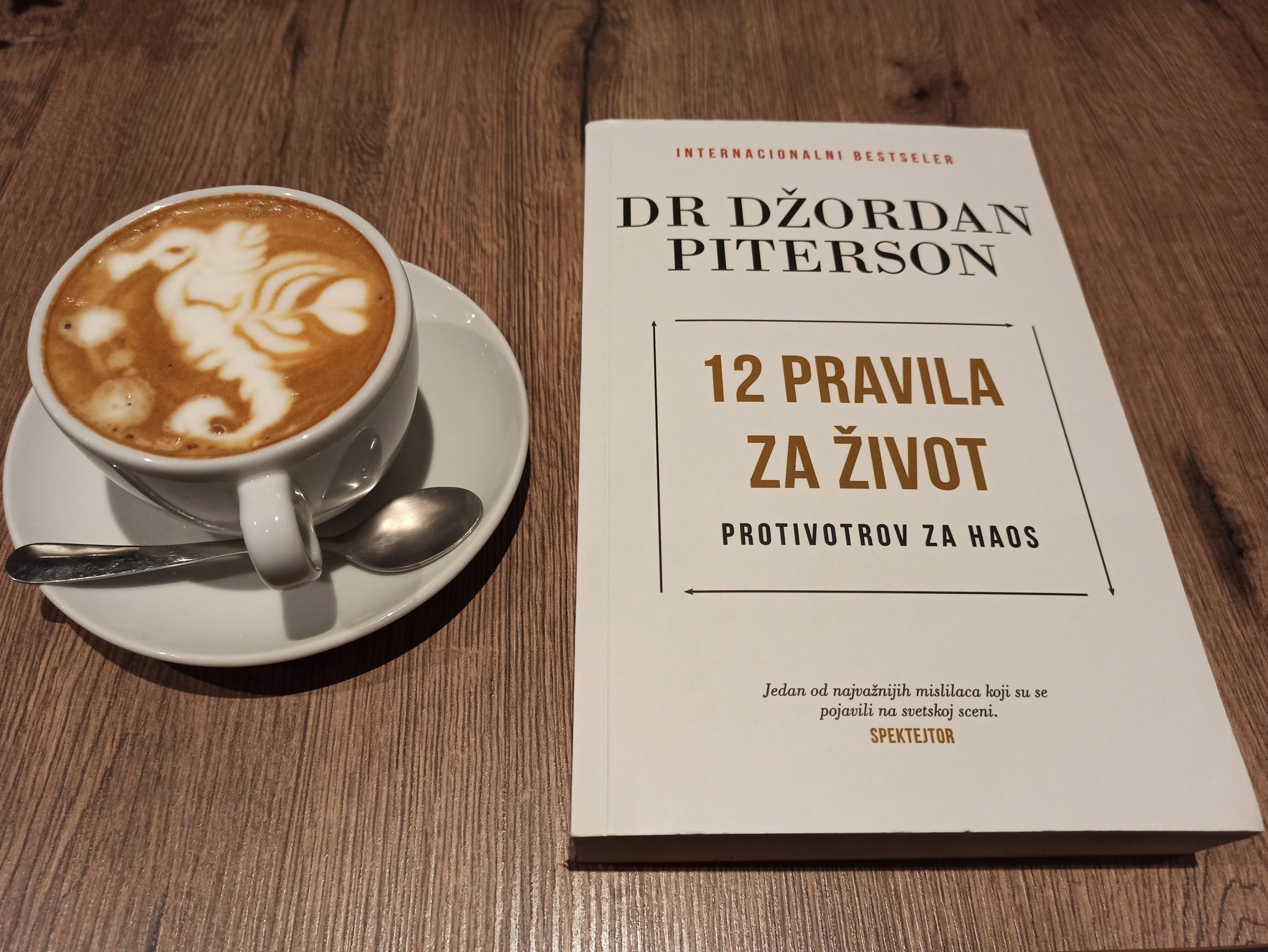
12 Rules for Life – Jordan Peterson without a filter
In my work with people, I occasionally encounter those who often aren’t convinced by what I can tell/point out/explain/ask them. You can see they simply think “it’s not that I don’t believe you, but you’re not (yet) some authority in the field of working with people.” And I absolutely respect that, seriously. My time will come. 😀
And that’s why I’m glad I read Dr. Jordan Peterson’s book “12 Rules for Life: An Antidote to Chaos.” Now I can calmly tell people: “If you don’t believe me about certain things, like self-examination, analyzing yourself, confronting yourself, trying to be more honest with yourself (and with people around us)… please read ’12 Rules for Life.’ You’ve most likely heard of this book and its author. Probably a lot of people in your circle have read this book, and everyone was thrilled. The man is older, more experienced, and probably smarter than me (“In this case we’ll make an exception, so probably and certainly will be treated as synonyms…” – note from subconscious). We agree on quite a few things, so let him confirm some things for you.”
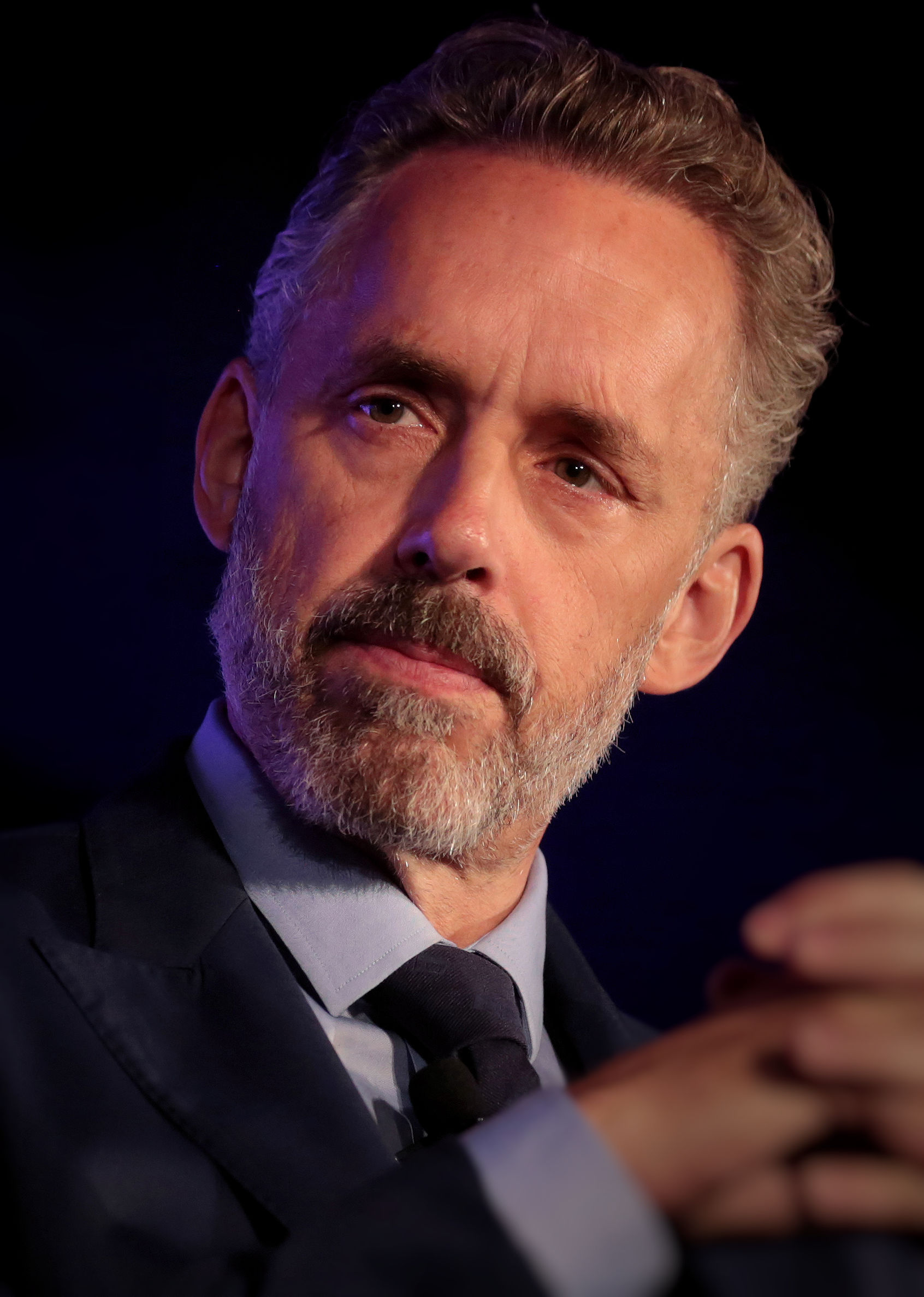
I’ll be honest: I only relatively recently heard about Jordan Peterson, mostly because I noticed that more and more people in my (both physical and digital) environment are getting excited about the book “12 Rules for Life” (which, at that time, had already been sitting on my shelf for months, never getting its turn to be read). Then I stopped reading all other books, and started with this one. And I started underlining it, adding comments, question marks, exclamation marks, going back over some passages and chapters. Then I researched the author himself a bit. Although it seems he just suddenly appeared on the scene, behind him is quite a bit of YouTube lectures, appearances in various podcasts, debates and whatnot. He was in Belgrade this year due to health problems. All in all, an interesting character, this clinical psychologist and professor.
Don’t get me wrong, I disagree with him on many things. But we have some positions and arguments that overlap, especially from the psychology field, which is primarily the focus of this book, so I won’t deal with his religious or political views… though I have to admit they’re quite interesting and quite (honestly and openly) direct. Moreover, for many people his views are quite controversial, but I get the impression that he tries to support his arguments quite “research-based” with arguments from different literature… and that he often couldn’t care less about subtle, tactical attacks and low blows from others, and wants to expose that immediately. And he doesn’t shy away from entering debates to clear some things up, he’s ready to hear others, but also wants to give his position on some things (if you’re interested in more, there’s, for example, a recording that many believe made him famous, or how he “shut down” a feminist, and someone even compiled inserts of his “comebacks” from various debates and TV/radio appearances). Though, there are also people who believe his approach is some kind of, so to speak, “next-gen psychology.” And honestly, a lot of it is simply his views on certain situations. And maybe it has something to do with him being Canadian. X)
And as for the book itself…
“12 Rules for Life” is divided into 12 chapters, i.e., rules:
- Stand up straight with your shoulders back
- Treat yourself like someone you are responsible for helping
- Make friends with people who want the best for you
- Compare yourself to who you were yesterday, not to who someone else is today
- Do not let your children do anything that makes you dislike them
- Set your house in perfect order before you criticize the world
- Pursue what is meaningful (not what is expedient)
- Tell the truth – or, at least, don’t lie
- Assume that the person you are listening to might know something you don’t
- Be precise in your speech
- Do not bother children when they are skateboarding
- Pet a cat when you encounter one on the street
Of course, some of these rule titles are already obvious at first glance, and some require you to arm yourself with a bit more patience while reading a particular chapter. And yet, each chapter is done in the form of a serious essay.
It’s hard to summarize in a few sentences what all this book covers. The general interpretation is that this is a book that says suffering is built into the structure of our Being and that we have a choice whether to retreat from it (suffering), or face it, as well as that we must set some rules in our lives, otherwise we’ll sink into chaos. But it’s not good to go with overly strict rules either, that’s the opposite extreme compared to chaos. It’s about that, some thin “line” we must find.
My interpretation of this book goes a bit further and deeper. I experienced it as a book of questions that should be honestly asked of yourself, as well as giving honest answers to them. But really honest answers, because we often have a habit (i.e., our Ego) of not even giving ourselves honest answers about what we should do in our lives, but prefer to deceive ourselves with diplomatic and “sycophantic” answers. But also that we need to (mentally) “toughen up” a bit and not be so “sensitive” about some things.
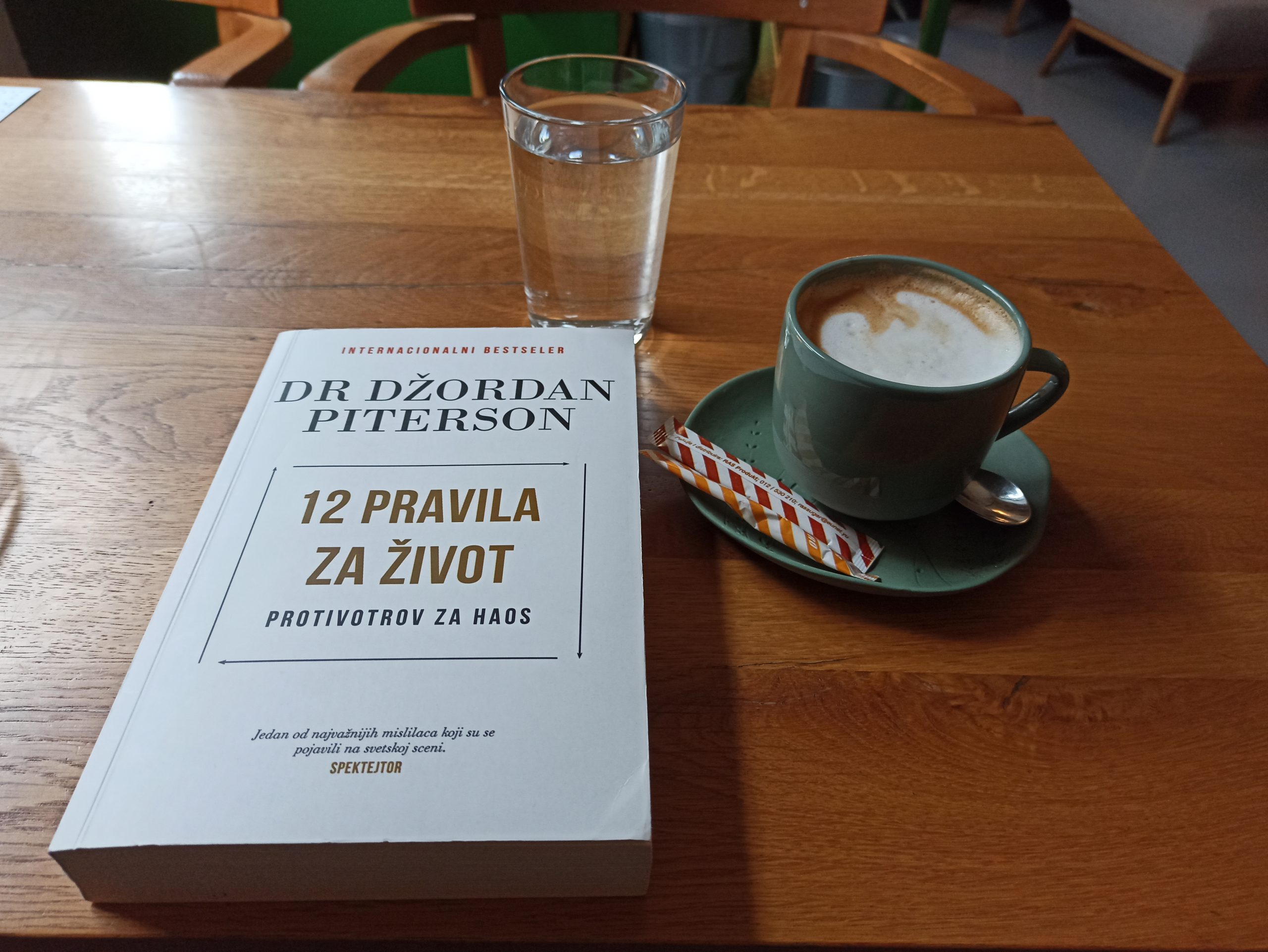
The book “bought” me already on the first pages of the first chapter/rule (“Stand up straight with your shoulders back”), where he described the life and functioning of lobsters in the fight for territory, and how defeats make drastic biochemical changes in their bodies and (literally) lead to brain breakdown and the creation of a new, subordinate brain (my comment: phenomenal parallel with human nature and how we similarly behave when we experience defeat, i.e., we retreat and become increasingly insecure in ourselves, instead of facing our defeat and moving on), as well as how the laws of nature and social hierarchy function everywhere on a similar principle, whether it’s lobsters, chickens or humans.
Also in the first chapter (but it runs through later ones too) is an excellent part about people who try to remain nice, endure and “swallow” a lot inside themselves, and find it hard to believe they can also respond (snap back) to people who deserve it. However, these people, over time, become quite bitter and then harm themselves (and their health) the most.
And I’d add (also first chapter) the part about how (which is his practice as a clinical psychologist) Peterson first wants to see if his clients sleep well (and that it’s more important to always wake up at the same time, even if they don’t go to bed at the same time) and whether they have a good and strong breakfast. Because irregular sleep rhythm (i.e., waking) + bad breakfast (sugars and simple carbohydrates that lead to sudden rise and fall of sugar) + stress/frustration/anger/anxiety/depression/whatever = psychophysiological instability (in other words, you don’t know where you are or what you’ll do with yourself, and you want to change the world).
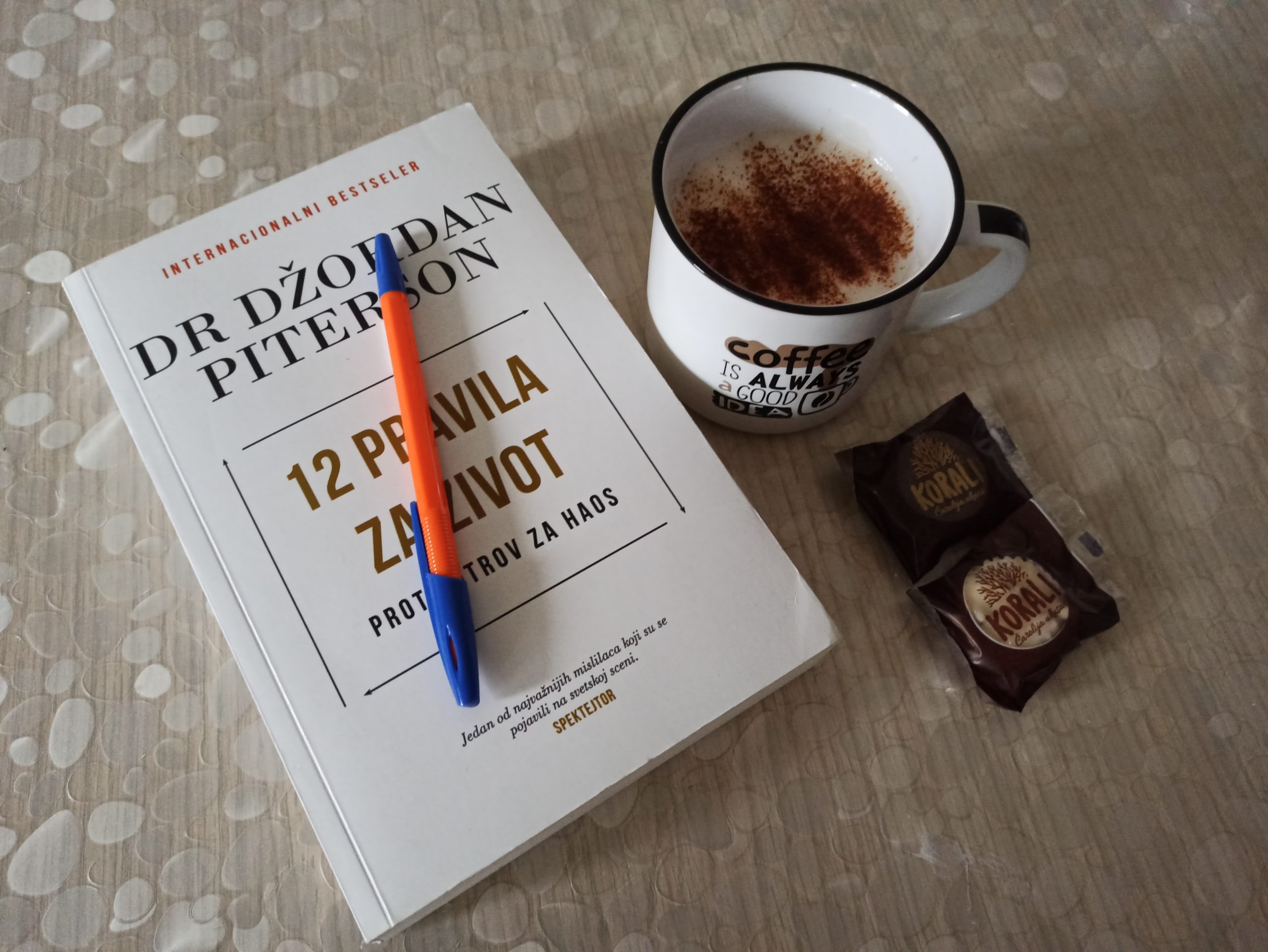
Peterson touched on numerous topics in “12 Rules for Life.” Accepting the darkness within; warning that you must take care of yourself; addiction; communication with friends and partners; not burdening yourself with comparing to others; before you start “lecturing” others or sharing your “knowledge” on how you’d run your country’s politics, try first to get your own life somewhat in order; finding ways to guide your children; trying to find your purpose; being more honest with yourself (and as much as possible with others); how creating an overly safe environment (“glass bell”) limits people and makes them too sensitive (and easily offended), and prevents their development (because we need challenges in life if we want to progress); what problems can arise in male-female relationships; loss of values and weaknesses of Western culture and much, much more.
What’s interesting about this book is that it doesn’t try to be witty (as many authors of books from the domain of psychology or motivation do), and that is, in fact, its big plus. Peterson will refer to (and compare with) religion, mythology, psychology, philosophy, psychiatry, biology, history, evolutionary anthropology, stories from the Bible, Harry Potter, “The Lion King,” Pinocchio… all in order to try to clarify some positions. The best thing about it all is that near the end of each chapter/rule, he starts asking concrete, life questions, as well as ideas of what could be done, which leads to suddenly everything you read before (and maybe thought at some point what’s the point of all this or how dry it is) beginning to bring the puzzle pieces together and the “aha (so that’s what he meant)” effect.
Many criticize that Peterson, despite all the arguments he cites, is actually just trying to impose his opinion. I only agree in the part that in this book there’s quite a bit of his opinion and interpretation of things (“Which is somehow logical because, OH DISCOVERIES, he wrote this book…” – note from subconscious), but I didn’t get the impression of any such “imposition” at any moment. He is, if you look at some recordings, a pretty good rhetorician and you wouldn’t want him as an opponent in debates, and he’s quite sure of his positions, but far from being right about everything stated (some things in his book I, for example, interpreted completely differently than him, and I’d have my strong arguments to support my positions). But I attribute this a lot to his direct and immediate nature. These are people with the attitude “I’m tired of these tactical-subtle statements and reverse psychology that should make me look stupid or like a villain, say what you really think.”
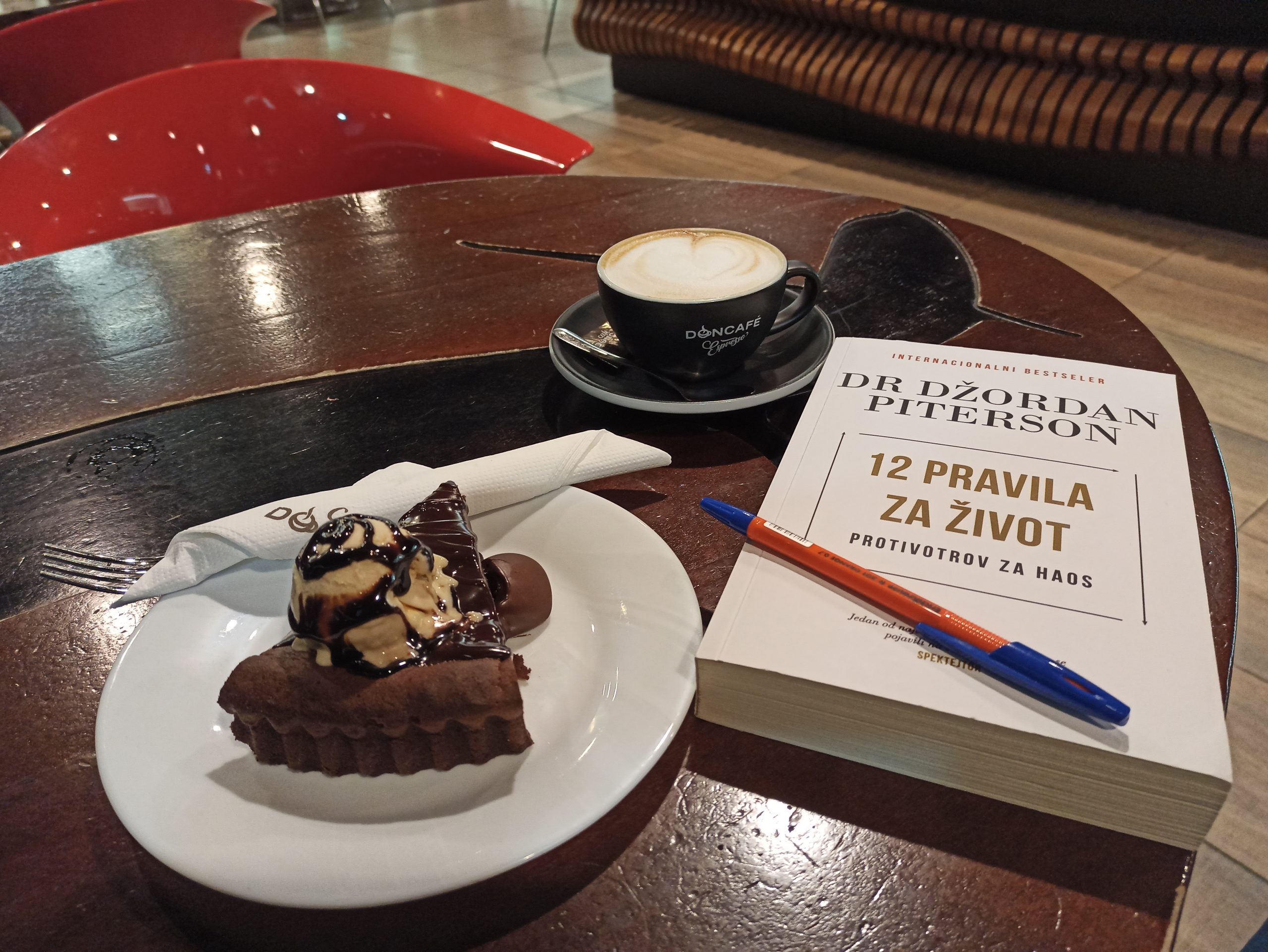
The last chapter deviates a bit from all others, because it has a quite personal note. Namely, Peterson shared some of his family situations in this chapter, with special emphasis on his daughter’s health problems and how he (i.e., the whole family) dealt with it and what they all had to do. This chapter is quite “powerful” because it shows us how we should be more focused on the present moment and appreciate “small, simple” moments in life, as well as that we shouldn’t sweep our problems and dark moments under the rug, ignore them and pretend they don’t exist, but we also shouldn’t spend hours and months “killing” ourselves over something that’s happening to us, but should “limit” the time for that to a minimum, and for the rest of the day not focus on it anymore.
I’ve copied a passage for you, I believe you’ll better understand what I mean:
“Schedule some time for talk and thought about the illness or other crisis and how it should be managed every day. Do not talk or think about it otherwise. If you do not limit its effect, you will become exhausted, and everything will spiral into the ground. This is not helpful. Conserve your strength. You’re in a war, not a battle, and a war is composed of many battles. You must stay functional through all of them. When worries associated with the crisis arise at other times, remind yourself that you will think them through during the scheduled period. This usually works. The parts of your brain that generate anxiety are more interested in the fact that there is a plan than in the details of the plan. Don’t schedule your time for worry in the evening or at night. Then you won’t be able to sleep. If you can’t sleep, then everything will go rapidly downhill.”
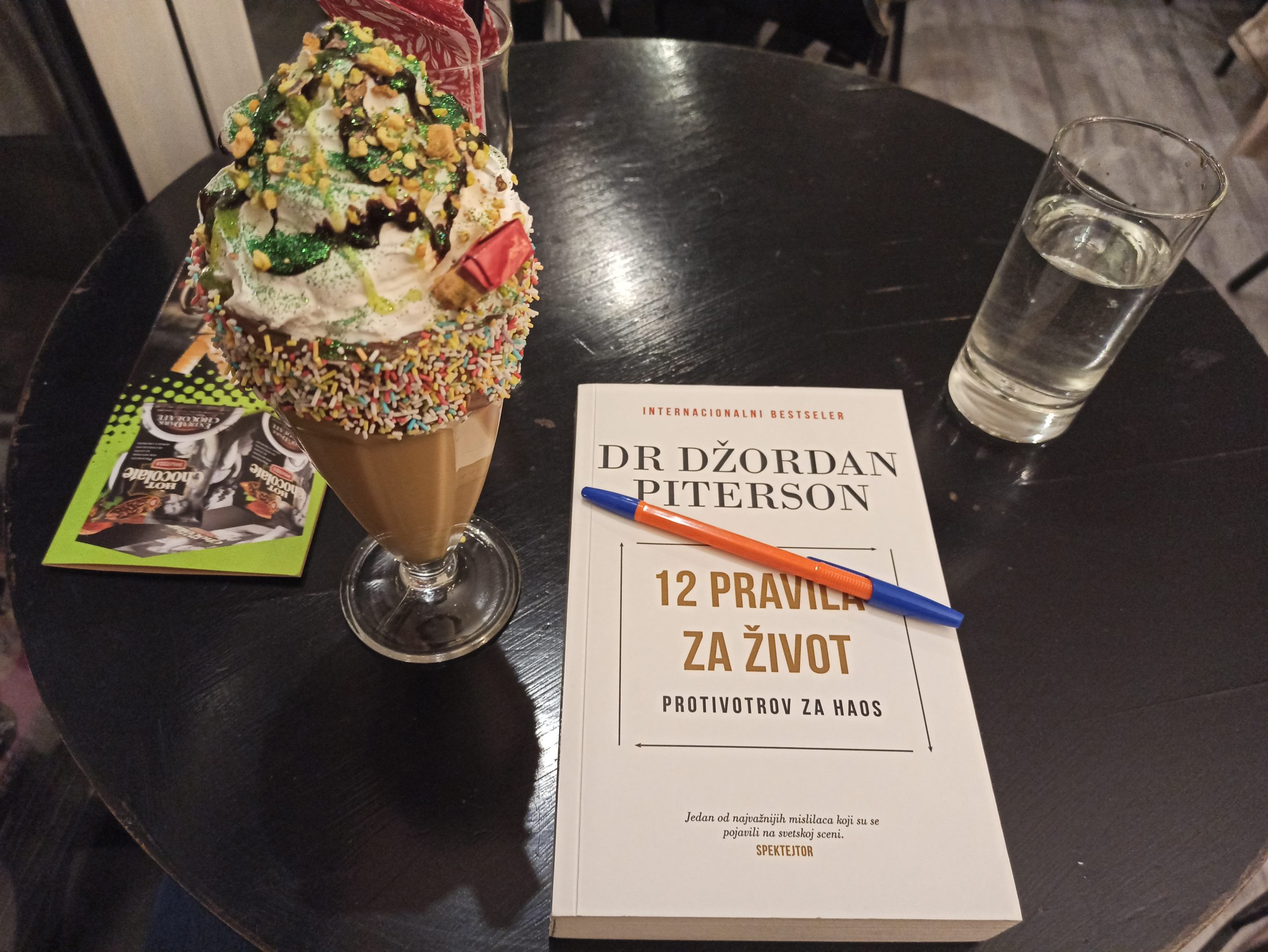
As can be seen, this is a quite serious book, not at all classic motivational “nonsense” or flowers and butterflies. This is a book that must be read slowly and carefully, parts underlined or highlighted, and thought about what was read. And after a couple of weeks, pick it up again and browse through it. And then occasionally pick it up and browse like that.
I never joke when it comes to books from the domain of psychology, psychiatry, motivation, HR, communication, management, leadership and generally personal and professional development. I’ve read a lot of them, found very few that are really worth it, reviewed even fewer (and even of those reviewed, not all had absolute praise and recommendation). This is one of the books I can praise and recommend, and even gift (to someone who’s really interested in a serious look at life and psychology).
It’s not that there aren’t arguments speaking in favor of Jordan Peterson being one of the “more dangerous” personalities for the modern world, because he presents a lot directly and wants to break some myths. And I wouldn’t be surprised if (maybe) he ends up in the future on the list of (most) significant thinkers of the 21st century.
Absolute recommendation from me for the book, and I’ll definitely read his first book (written 20 years ago) “Maps of Meaning: The Architecture of Belief” in the near future, but also when the sequel to the book “12 Rules for Life” appears here (currently in English “Beyond Order: 12 More Rules for Life”), which should (hopefully) appear in March next year.
And you, dear reader, do you have your own “antidote to chaos”? 🙂
Dr. Jordan Peterson’s website
Book price: Harmonija knjige | Dereta | Vulkan | Delfi | Makart
Ratings (and purchase) on foreign sites: Goodreads | Amazon | Bookdepository | Audible | Waterstones | Penguin Random House